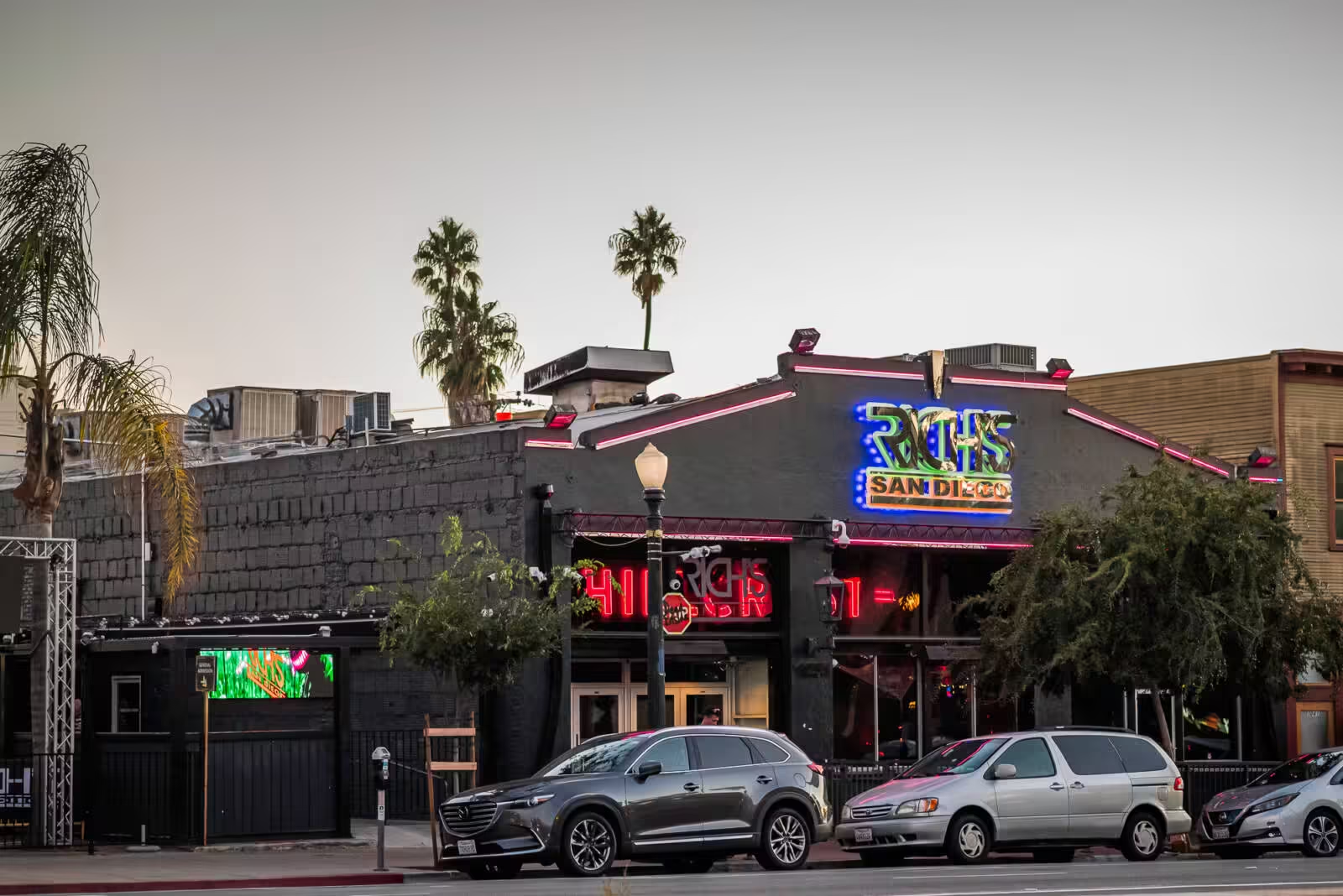

In the past decade, the historic LGBTQ+ neighborhood Hillcrest has recorded the highest number of total hate crimes of any neighborhood in the city.
However, hate crimes in Hillcrest have dropped since 2025, with other neighborhoods recording more hate crimes than Hillcrest for the first time since 2016. Some Hillcrest residents, business owners and San Diego Police attribute the decline to the introduction of Automated License Plate Readers in July 2024.
Many of those same supporters now fear the number of hate crimes will spike once again if some city council members have their way, officially putting an end to the mass surveillance tool.
On Nov. 16, San Diego City Council will vote on whether or not to end its contract with the company that runs the license plate reader network, Flock Safety.
Councilmember Stephen Whitburn, who represents Hillcrest and surrounding neighborhoods, paved the way for the vote after publicly reversing his stance on the license plate readers.
The division between those who support license plate readers and those who oppose them is blurry.
Oxean Eddie Rey has worked at gay bars and clubs in Hillcrest for decades. Rey has witnessed targeted attacks escalate from assailants throwing rotten eggs to others firing pellet guns and, on one occasion, shooting a real gun into the air to frighten employees.
“It’s no longer just kids throwing eggs. Now it’s like they’re creating a plan. And what’s next? Like, at what point do those eggs turn to pellets? Do those pellets turn to guns?” Rey asked.
In May 2024, Rey was struck in the eye in a pellet gun attack.

Rey recalls immediately thinking he and his two coworkers, who were also shot at, were hit by real bullets and were going to die.
“Whether it was a bullet, a polymer pellet, a BB, or a gel, it could have been a spit wad. The intent and the violence and the trauma are still there,” said Rey in a Nov. 10 interview.
Rey’s eye is permanently damaged and he suffers from PTSD. The assailants were never caught.
After the investigations generated no leads, Wahl installed ALPRs and smart streetlights at 14 locations in Hillcrest ahead of July Pride festivities using an emergency clause in the city’s use policies.
When pellet gun shooters came again to queer clubs in September, this time the automated license plate readers captured the car.
Within two months, four 19-year-old men were arrested in the attacks.
“The cameras don’t always just act as a way to solve crime, but I think they do act as a deterrent from people wanting to do crimes in the first place if they know there’s no way around them getting caught,” said Ryan Bedrosian, the owner of Rich’s Nightclub and president of the Hillcrest Business Association board.
Bedrosian has installed three ALPRs of his own around the nightclub. When an issue occurs, or investigators request help with a crime, Bedrosian finds the car and screenshots it, then sends it to SDPD.
“The proof is there that the cameras work. The other side of that is just fear,” Bedrosian said. “If there was any proof that the cameras in San Diego were being misused or that the safeguards in place weren’t sufficient, our stance on whether to keep the technology or not would absolutely be different.”

San Diego Police Chief Scott Wahl and Mayor Todd Gloria, who previously served as council member for Hillcrest, agree and have touted the surveillance tool and the safeguards San Diego has in place to prevent misuse.
“It’s deeply frustrating on our end that we let the politics of the conversation overrun the reality of what we’re trying to do is keep people safe, and somehow we’re being made out to be the bad guys for wanting to have this technology to keep people safe,” Wahl said in an interview on Nov. 5. “It helps everybody. It helps protect everybody, including our migrant community.”
The surveillance cameras have helped solve other hate crimes, said Deputy District Attorney Matthew Greco.
License plate readers were credited with tracking down two young men who were charged with defacing murals and signs in Hillcrest with swastikas and homophobic slurs.
“The police weren’t pulling over every single vehicle that had a physical description. They only pulled over the vehicle and investigated the vehicle that had the specific license plate identified,” said Deputy District Attorney Greco.

Lt. Nicholas Dedonato, who oversees SDPD’s hate crime unit, noted that many hate crimes take place from a vehicle, which makes the ALPR cameras so useful.
“All of the incidents prior to the ALPR cameras being installed had gone unsolved. Immediately after the cameras go up, that’s when we start generating leads and we’re able to actually act on something,” Dedonato said.
In the most recent public targeting of the gayborhood, an egging attack at people outside queer bars in June 2026, San Diego Police Department found the perpetrators so quickly that the young suspects had yet to dispose of evidence inside the car after passing an ALPR in the Mount Soledad area.
“Without the ALPR, we never would have found them, at least that night, with evidence that ties into the scene,” said Capt. Matt Dobbs, who is in charge of SDPD’s western division that covers Hillcrest.

Those arrests and convictions, as well as the falling hate crime rate, mean Hillcrest still has fierce defenders of the technology, no matter the privacy concerns.
“Can you imagine if they remove these cameras? It is a greenlight for all these haters,” said Nicole Murray Ramirez, a longtime gay Latino activist in San Diego who supported, and still supports, the technology.
But not all LGBTQ+ community members and organizations support license plate readers.
“When we give up privacy to feel more safe, sometimes that has not historically led to very good outcomes for queer and trans people, for brown and Black people, for undocumented folks,” said Jen LaBarbera, the interim managing director at Lamba Archives, San Diego’s only LGBTQ+ community archive.
Today, Rey, one of the victims in a 2024 pellet gun attack, is more concerned about privately-held ALPRs that lack the rules around automatically deleting video, storing data onsite, citizens oversight boards, audits of searches and refusal to share with ICE that SDPD does.
“The conversation extends beyond the Flock cameras,” Rey said. “I just think the Flock cameras are an easy target.”
Source: timesofsandiego.com