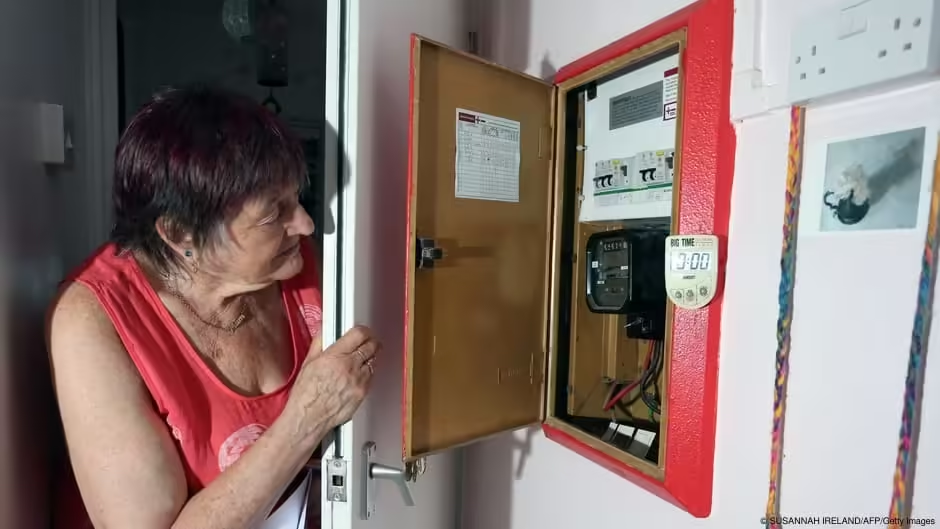

Germany’s governing coalition has agreed to reduce electricity tax for households and businesses.
The cut will lower the electricity tax rate for 2027 to the European minimum level.
The agreement between Chancelor Friedrich Merz’s conservative CDU/CSU and his junior coalition partner, the center-left Social Democrats (SPD)was reached after multiple failed attempts.
Funding for the tax cut has only been secured for the year 2027, but the coalition stressed in a summary document of the agreement that it aimed to achieve a “permanent reduction.” An extension is contingent on finding a way to fund it into 2028, according to the paper.
The coalition partners said that the tax cut will be funded by surplus funds from subsidies under the renewable energy bill, as the government anticipates lower demand for renewable energy subsidies next year.
The government is also to introduce a three-month cap on fuel prices in January.
The CDU/CSU and SPD promised in their 2025 coalition deal to cut taxes for all consumers, but initially only applied a reduction for industry, agriculture and forestry. Wednesday’s agreement extends cuts to households and to businesses that did not qualify for the initial reduction.
Germany has some of the highest electricity prices in Europein part thanks to shocks following Russia’s 2022 invasion of Ukraine and by the United States and Israel’s war with Iran.
The Wednesday agreement still needs to be incorporated into the 2027 budget. The budget must then be cleared by the parliamentary budget committee, with the lower house of parliament, the Bundestag, expected to give final approval on November 27.
The 2027 federal budget proposal marks a major shift in German fiscal policywith Berlin taking on increasing debt, citing the need to finance repairs to the country’s crumbling infrastructure, carry out the energy transition and expand and modernize the military.
Source: www.dw.com