Summary: Cookbook author Georgeanne Brennan traces a lifelong interest in Eastern Europe, from a 1960 exchange-student interview in Laguna Beach to piroshki from a Moscow pushcart and borscht on the main square in Kraków, and finds the flavors closer to home at a Santa Rosa deli and a Healdsburg bistro. A new book, “Lozhka” by Alissa Timoshkina, sends her to the quince tree for a Crimean Jewish borscht, and the recipe follows.
“It was more than a meal. It was a story.” — Georgeanne Brennan
Visiting Eastern Europe by the Cookbook
by Georgeanne Brennan
NAPA VALLEY, Calif. — Eastern Europe has always fascinated me and by extension, its food. I’ve had the good fortune to visit some of the eastern countries, most recently Hungary, to feast on the local fare, but once home, where to find those flavors, those dishes? Where to get goulash, piroshki, borscht, plum dumplings, the fish soups of the Volga and the Danube?
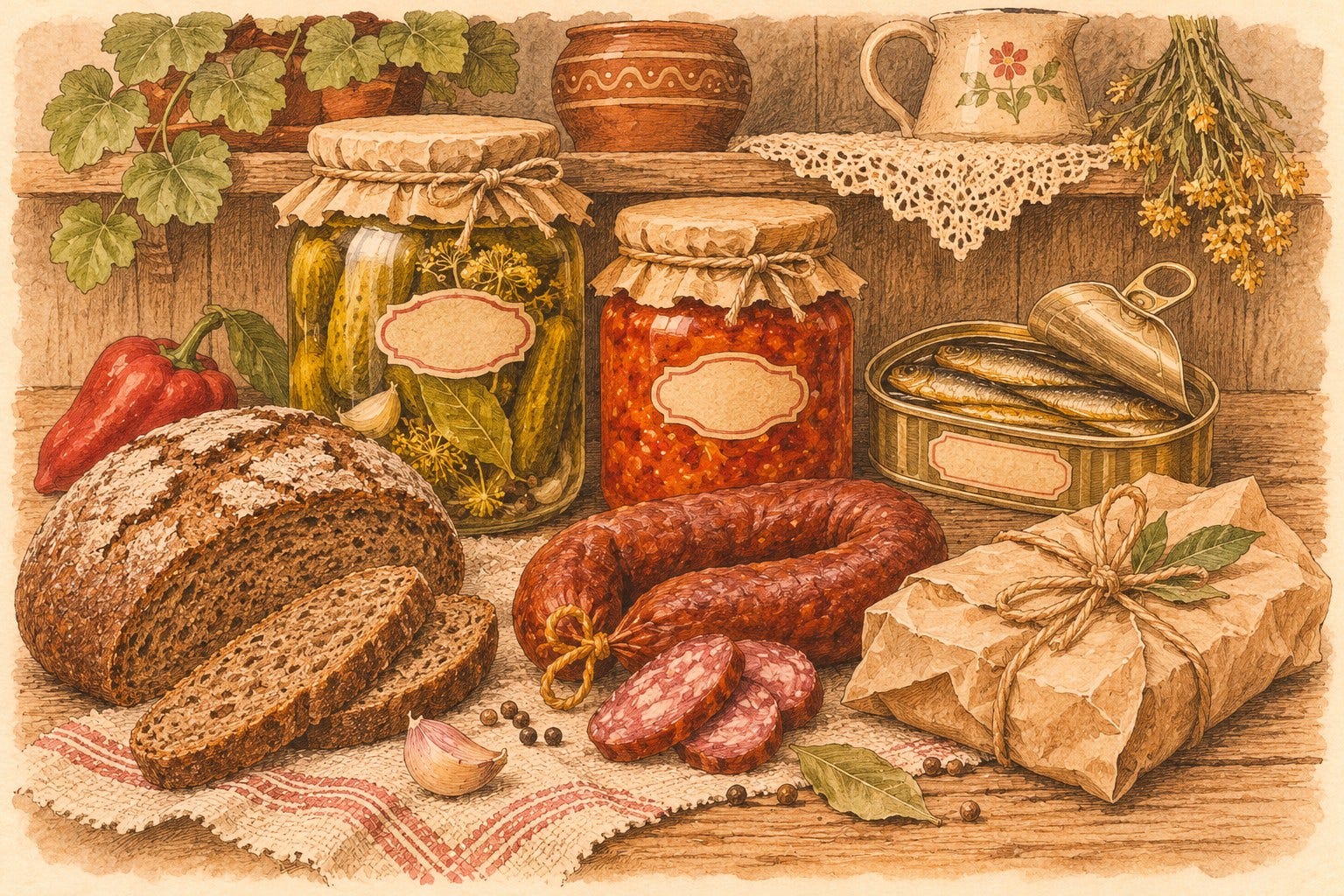
The closest I’ve come is the European Food Store and Deli in Santa Rosa, with its imported condiments, canned and packaged foodstuffs from all over, including Ukraine and Russia, plus a good selection of Eastern European breads. Restaurant-wise, there is Alesta in Sebastopol, with a selection of Balkan dishes among its Greek and Turkish fare, and Tisza Bistro in Healdsburg, which leans toward schnitzels (a favorite dish of mine) and other German dishes. Sadly, I missed Napa’s Rotation: Feast It Forward when it hosted Ukrainian chef Anna Voloshyna for an entire month.
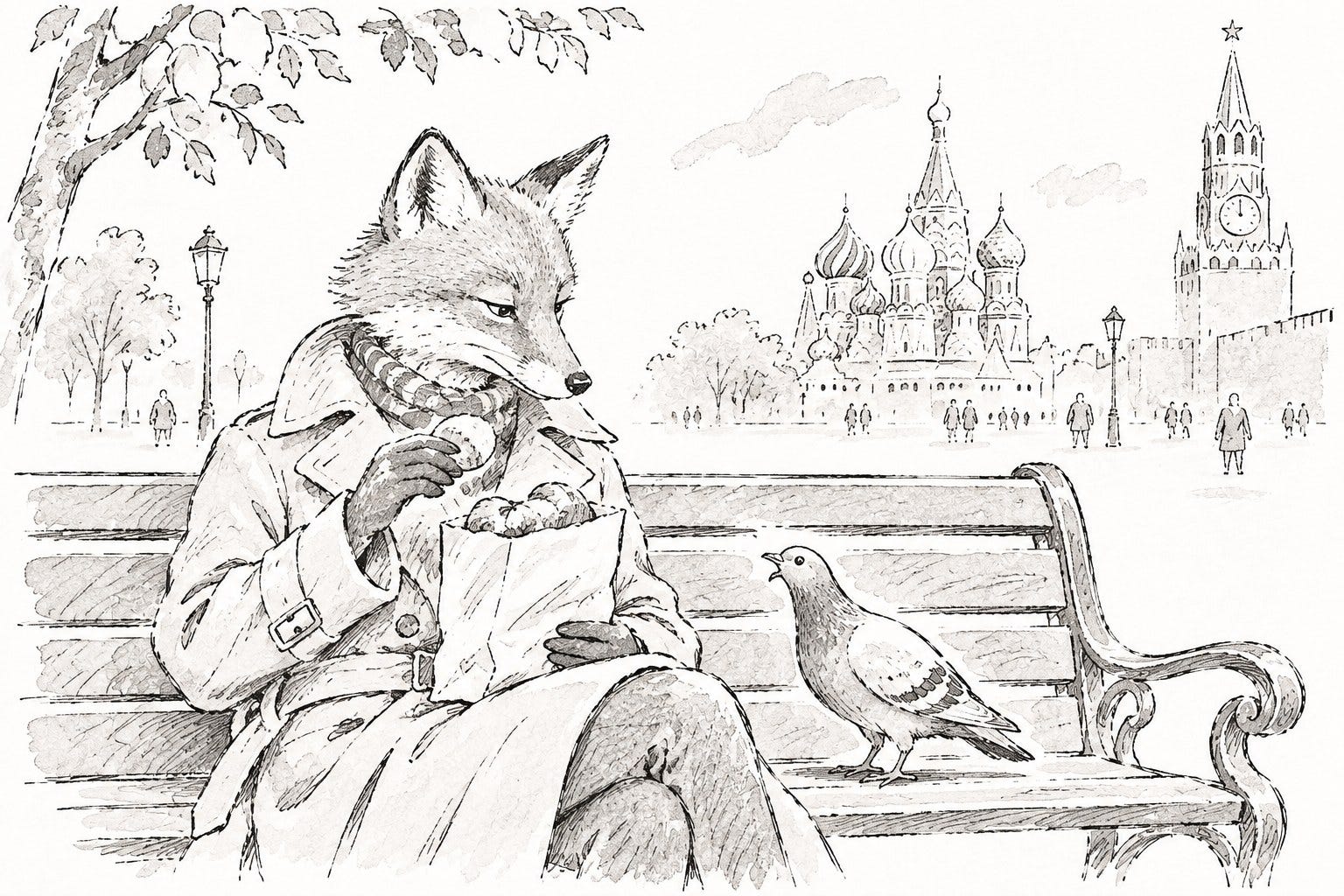
My interest in Eastern Europe goes all the way back to my high school in Laguna Beach, which had an American Field Service program for exchange students to study abroad during their junior year. I wanted desperately to go. Part of the application process was an interview for the finalists, where I was asked various questions by the panel. The most important one was why I wanted to spend a year in another country and what country I would choose if I could. It was 1960. I said I would like to go to a country as close to Eastern Europe as possible because I thought the more we could understand about the countries under Soviet rule, the better the world would be.
At that time, those countries included East Germany, Poland, Hungary, Romania, Bulgaria, Latvia, Lithuania, Ukraine and so many more. Four of us were selected from my high school, two boys and two girls. Our names and dossiers were sent to the international office of the organization. I crossed my fingers every night, hoping I would be chosen. I wasn’t. Neither was the other girl. Instead, both boys were chosen. We were told “girls tend to present more problems than boys.”
By 1963, I had nevertheless lived in Switzerland, West Germany and France, as near to Eastern Europe as I could get, and I discovered that knowing a culture meant knowing its food. In Giessbach, Switzerland, I worked as a hotel maid and ate the boiled potatoes slathered with melted cheese in the cavernous downstairs kitchen with the other maids. In West Berlin, where my new husband was studying German, my favorite place to eat was the third-floor cafeteria at the KaDeWe department store, where I had currywurst and kartoffelsalat and, for a special occasion, schnitzel. In France? For a treat, my roommate and I went to the workers’ restaurant next to our third-floor walkup apartment in Aix-en-Provence and ate whatever was the plat du jour, from kidneys in mustard sauce to roast chicken with pomme purée.
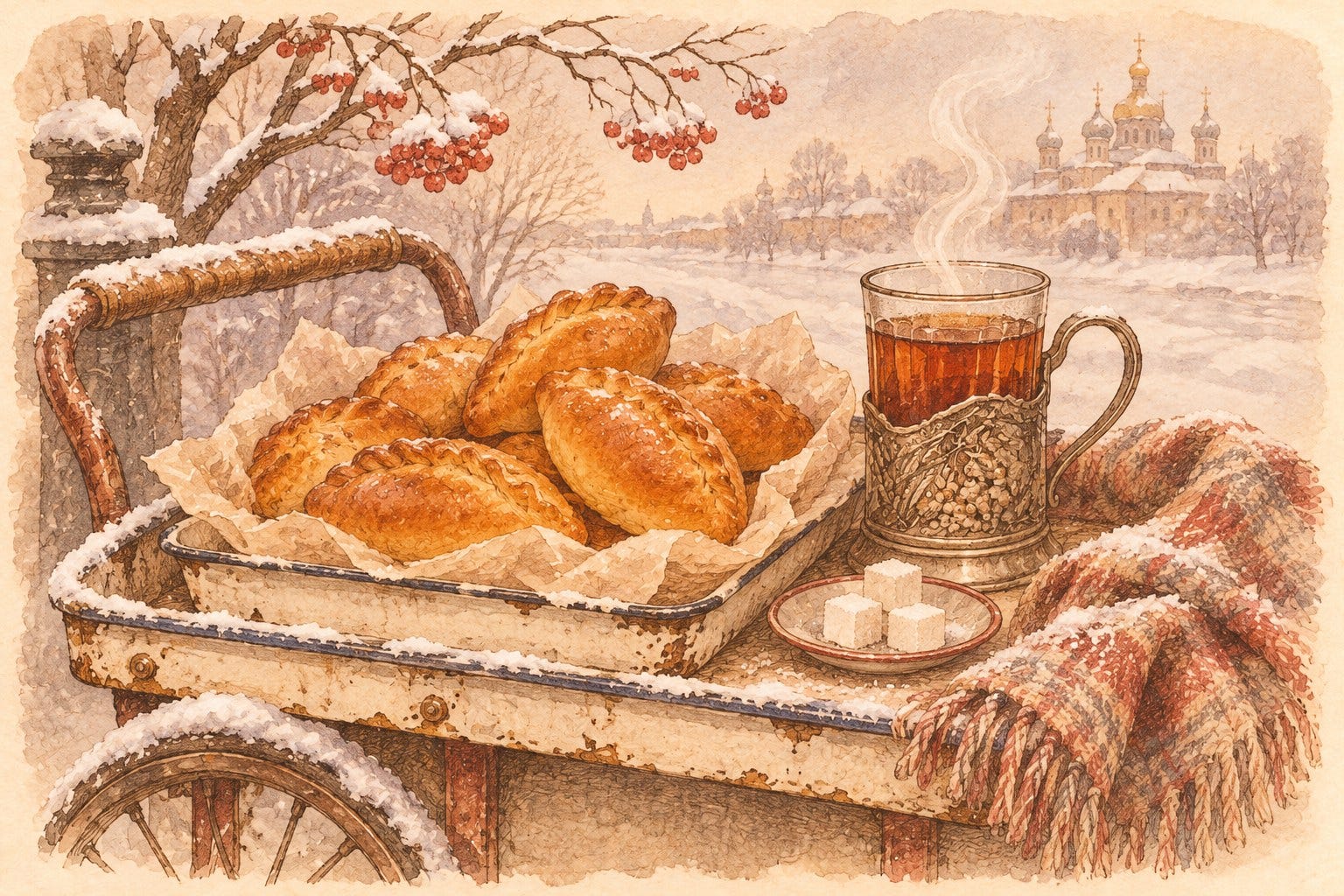
In the years to come I visited the USSR itself and later many of its former Eastern European satellites. In Mikhail Gorbachev’s St. Petersburg and Moscow I ate piroshki from a pushcart and chicken Kiev at a white-tablecloth restaurant, jellied cakes and coffee in a steamy cellar tea shop. On a street corner I was offered a tin of caviar in exchange for my Levi’s, but I was too scared to accept.
In Erfurt, formerly in East Germany, I ate its famous Thuringer wurst and in Rostock, on the Baltic, pickled herring and fried fish sandwiches. In Budapest I ordered goulash and in Kraków, on the Rynek Główny main square, a big bowl of borscht.
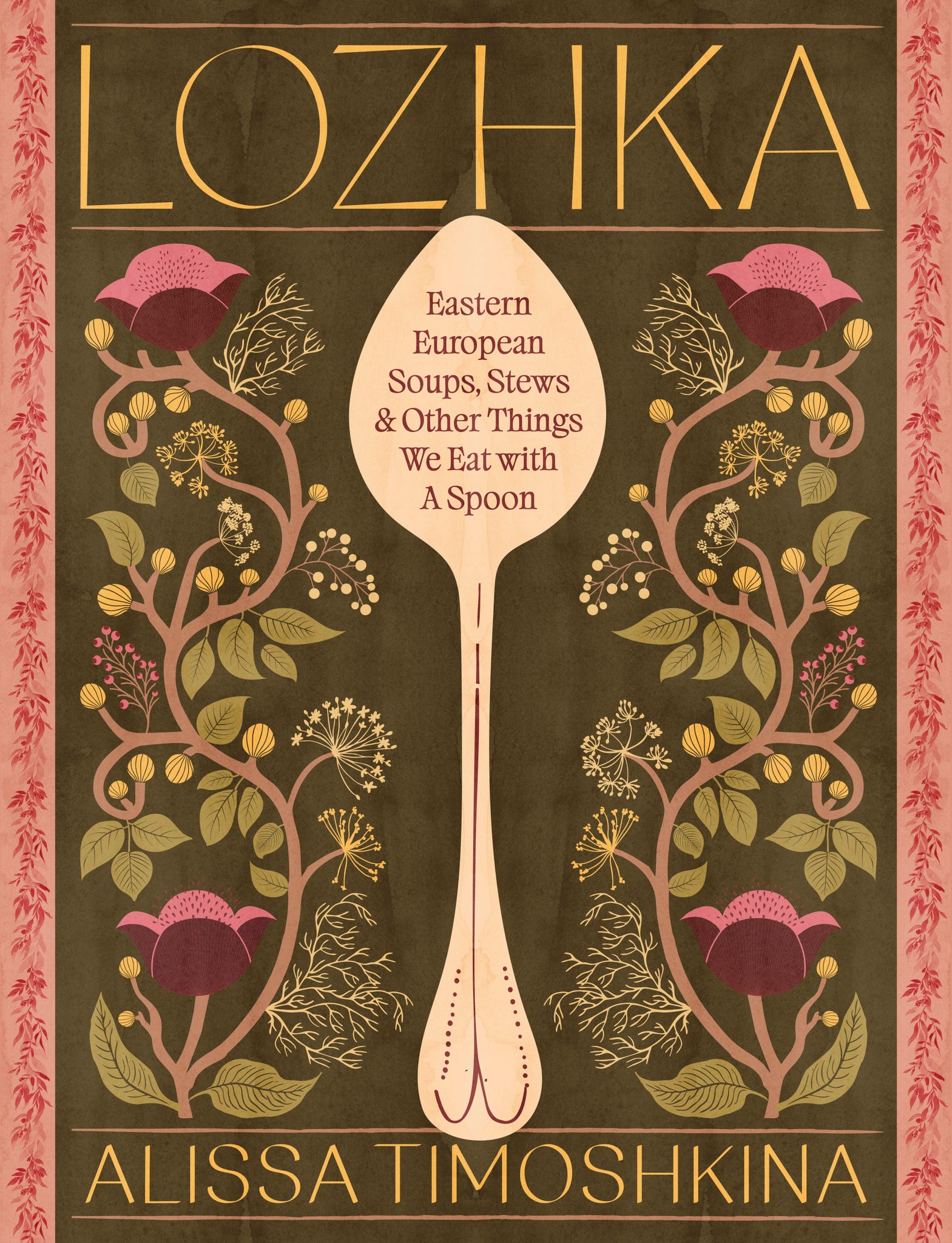
I’ve only experienced the tiniest bit of the myriad, distinct cultures of Eastern Europe, but through a new book, “Lozhka: Eastern European Soups, Stews & Other Things We Eat With a Spoon,” by Alissa Timoshkina, I find myself immersed in the food and history of that part of the world.
The author provides in-depth information about the place and the history of each region and each dish, evoking memories of traditions that may be passing or that we, as travelers, can no longer access.
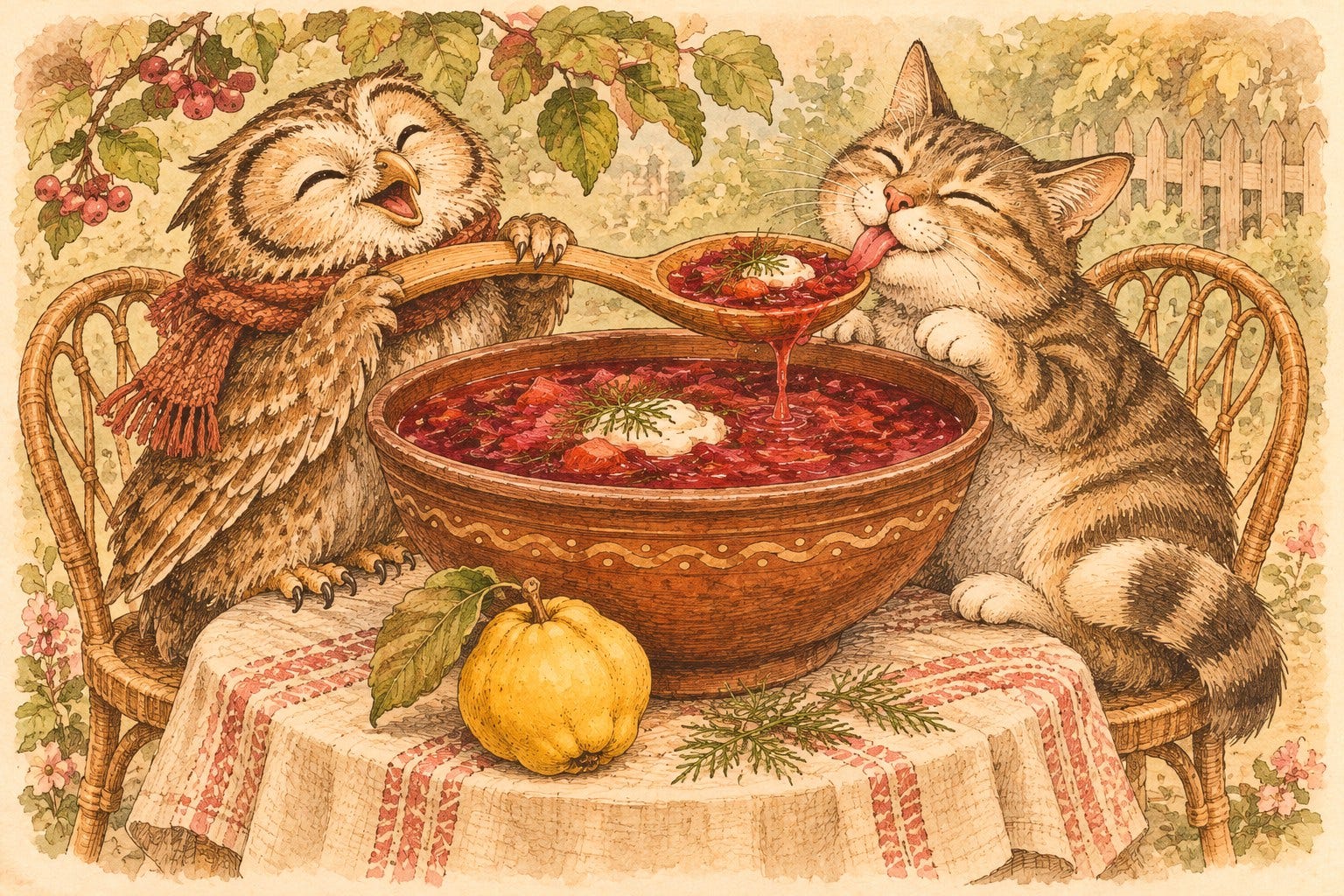
It is my kind of book. When I received it, I read it from cover to cover, putting sticky notes on the first round of recipes I wanted to try. Since my quinces were ripe, I turned immediately to the recipe for Crimean Jewish Borsch (the author’s spelling), made with not only beets, cabbage and potatoes but also quince. As I simmered and stirred, I reflected on how many women before me, halfway around the world, might be doing the same thing, having picked or purchased a few quinces, just as I did. Ridiculous, I suppose, but it gave me so much pleasure to make and serve that soup. It was more than a meal. It was a story.
Below is the recipe, excerpted from the book. I had most of the ingredients on hand and purchased the beets, dill and cabbage. I opted to grate the beets, which worked well, and I used tomato paste, not fresh tomatoes. Fortunately, a nearby bakery had rye bread, which I toasted and rubbed with garlic, as instructed. Wonderful with the soup. Don’t skip that part. For some of the other recipes I want to try I may need to go to the European Food Store for some of the ingredients and also have one of their sandwiches, to which I’m looking forward. Food adventures are always rewarding, even if they come vicariously from reading a cookbook.
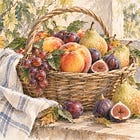
Quince, the fragrant fall fruit in this week’s borscht, belongs to a plant family that includes two far more common orchard fruits. Which family is it? Find the answer at the bottom of the page.
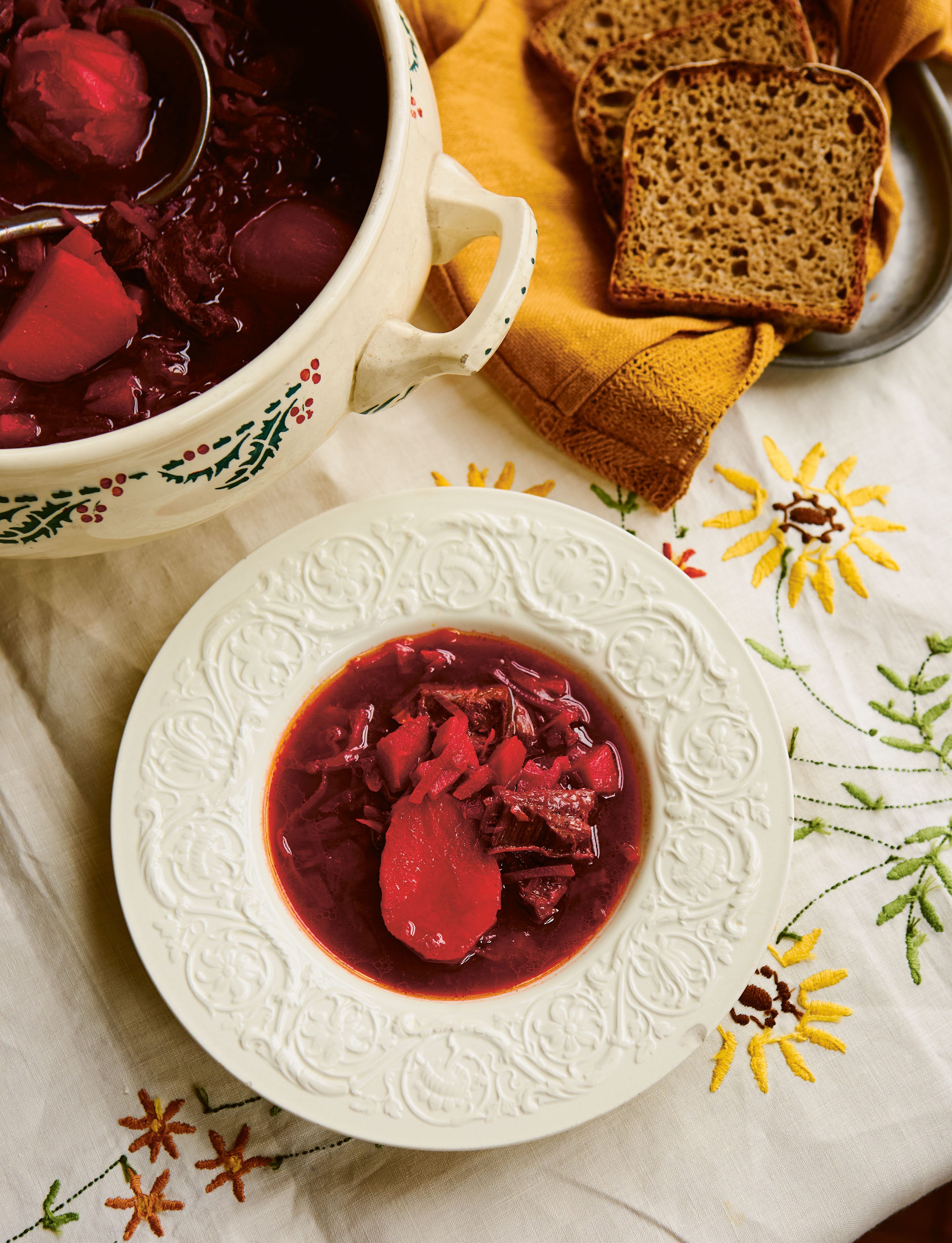
From “Lozhka” by Alissa Timoshkina (Quadrille, October 2026)
I have created this recipe based on the beautiful stories of my great-grandmother, Rosalia, who grew up in Crimea. Flawed as it may be, my memory of her is forever associated with two fruits, persimmons and quinces, as they featured so prominently in her stories of the past. I am so grateful to have been raised by a woman who was not only a wonderful home cook but an exuberant and generous storyteller. Rosalia was lucky to have been born into a relatively fortunate Jewish family that afforded them a good diet and made the most of the fertile climate of Crimea.
Quince has a beautiful-sounding name in Ukrainian, ayva (pronounced eye-va), and it has featured in so many stories of Rosalia’s Crimean childhood, from making quince jam with her sister, Lily, and their housekeeper, Daria, to enjoying plates of quince borscht served from a porcelain tureen. This recipe is a delicious example of just how regionally and seasonally diverse Ukrainian borscht can be, with the fragrant ayva giving the soup a distinct tang and aroma.
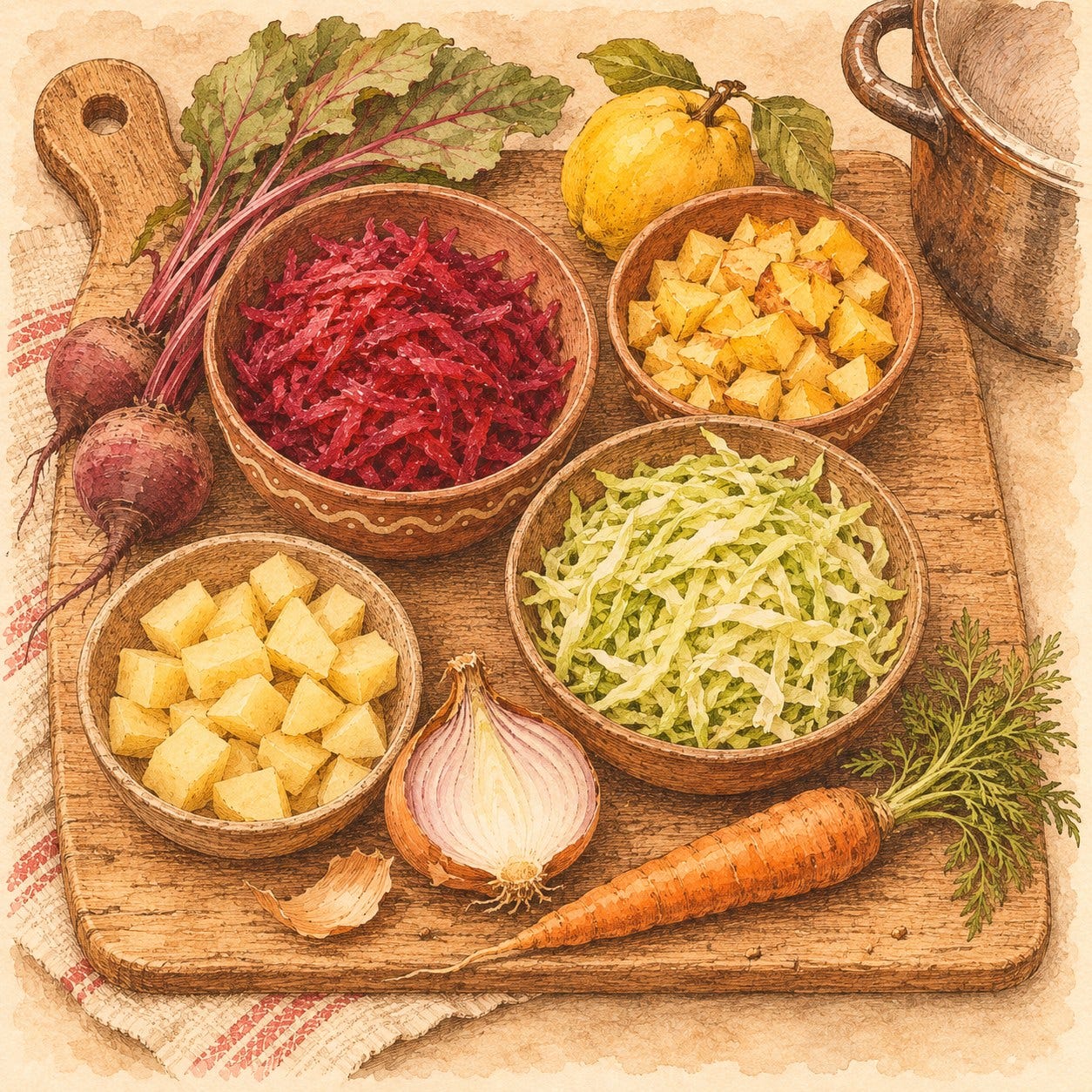
Start to finish: Up to 24 hours
Servings: 6 to 8
Neutral vegetable oil, for frying
1 large onion, unpeeled, washed, halved
1 pound 2 ounces beef brisket, short ribs or oxtail
1 carrot, whole
1 parsnip or celeriac (celery root)
2 bay leaves
6 to 8 black peppercorns
1 tablespoon fine sea salt, or to taste
1 tablespoon neutral vegetable oil
1 medium carrot, grated
1 onion, finely chopped
Salt and black pepper, to taste
3 to 4 medium beets, peeled and grated or finely julienned
1 teaspoon sugar
2 tablespoons tomato paste or 2 fresh tomatoes, grated
1 to 2 large quinces, peeled, cored and cut into medium dice
2 large potatoes, cut into medium dice
¼ white cabbage, shredded
To make the stock, heat a drizzle of oil in a large stockpot or saucepan. Sear the onion, cut side down, along with the beef on all sides for 5 to 8 minutes. Add 2½ to 3 quarts (11 to 14 cups) water along with the rest of the stock ingredients and bring to the boil. Skim off any scum that has risen to the surface, then simmer gently for at least 2 hours (3 to 4 hours for best results) until the meat is tender. Strain the stock, reserving the meat. Discard the aromatics. Taste and adjust the salt and pepper to your liking.
Meanwhile, prepare the soup base. Heat the oil in a deep saucepan over medium heat. Sauté the carrot and onion with a pinch of salt and pepper until golden. Add the grated beets, sugar and tomato paste or tomatoes. Fry gently until soft and sweetened. Add the stock to the pot and bring to a simmer, then add the quince, potatoes and cabbage. Simmer for 20 minutes until everything is tender and flavorful. Taste and adjust the seasoning, balancing sweet, sour and savory for the perfect borsch flavor. Shred the reserved meat and return it to the pot.
Let the soup rest for a few hours or overnight, if possible; its flavor improves with time. When ready to serve, ladle the soup into bowls and top with chopped dill. Serve with a slice of garlic-infused rye bread. You can also add a dollop of sour cream, of course, but I prefer to let the tang of the quince shine brightly.
Excerpted from “Lozhka: Eastern European Soups, Stews & Other Things We Eat With a Spoon,” by Alissa Timoshkina, Quadrille 2026.
—
Georgeanne Brennan is an award-winning cookbook author who divides her time between her farm in Northern California and a home in Provence. Learn more about her at her website.
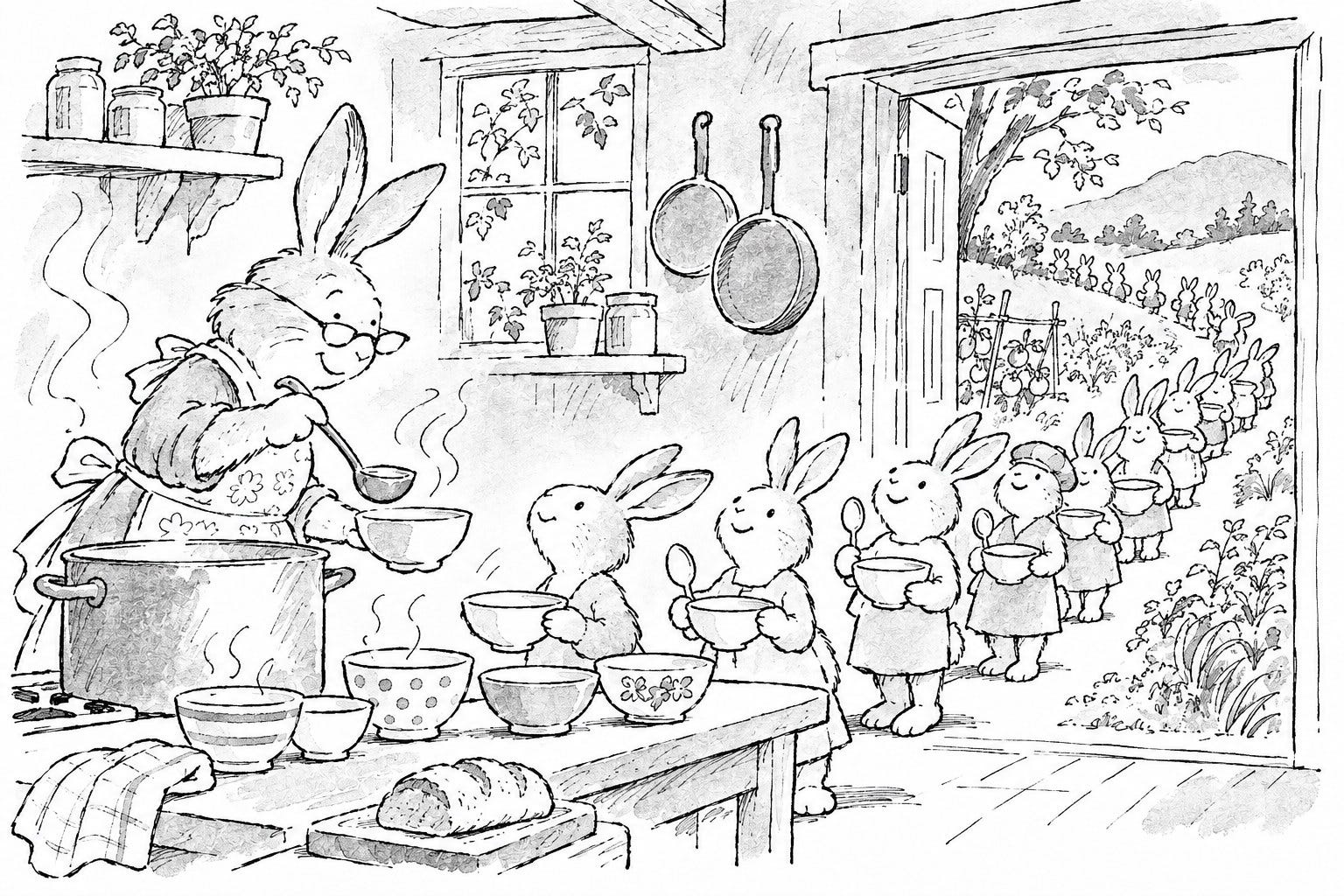
By Edward Lear
The Owl and the Pussy-cat went to sea
   In a beautiful pea-green boat,
They took some honey, and plenty of money,
   Wrapped up in a five-pound note.
The Owl looked up to the stars above,
   And sang to a small guitar,
“O lovely Pussy! O Pussy, my love,
    What a beautiful Pussy you are,
         You are,
         You are!
    What a beautiful Pussy you are!”

Pussy said to the Owl, “You elegant fowl!
   How charmingly sweet you sing!
O let us be married! too long we have tarried:
   But what shall we do for a ring?”
They sailed away, for a year and a day,
   To the land where the Bong-Tree grows
And there in a wood a Piggy-wig stood
   With a ring at the end of his nose,
             His nose,
             His nose,
   With a ring at the end of his nose.

“Dear Pig, are you willing to sell for one shilling
   Your ring?” Said the Piggy, “I will.”
So they took it away, and were married next day
   By the Turkey who lives on the hill.
They dined on mince, and slices of quince,
   Which they ate with a runcible spoon;
And hand in hand, on the edge of the sand,
   They danced by the light of the moon,
             The moon,
             The moon,
   They danced by the light of the moon.
About the author: Edward Lear (1812–1888) was an English artist, illustrator and writer best known for popularizing literary nonsense through poems, limericks and imaginative tales. A Victorian writer, Lear first gained recognition as a natural history illustrator before turning to the whimsical verse that made him famous. His work helped establish literary nonsense as a respected form and is often discussed alongside that of Lewis Carroll and later writers who embraced wit, musicality and surreal humor.
“The Owl and the Pussy-Cat,” published in 1871 in “Nonsense Songs, Stories, Botany, and Alphabets,” ends its wedding feast with “slices of quince” eaten with a “runcible spoon,” a word Lear invented and never defined. It is the quince, and the spoon, that earn it a place beside a book of Eastern European soups titled with the Russian and Ukrainian word for spoon.
Are you a poet, or do you have a favorite piece of verse you’d like to share? Napa Valley Features invites you to submit your poems for consideration in this series. Email your submissions to [email protected] with the subject line: “Poem of the Day Submission.” Selected poets will receive a one-year paid subscription to Napa Valley Features (a $60 value). We can’t wait to hear from you.
Pick your favorite caption or add your own in the comments below.

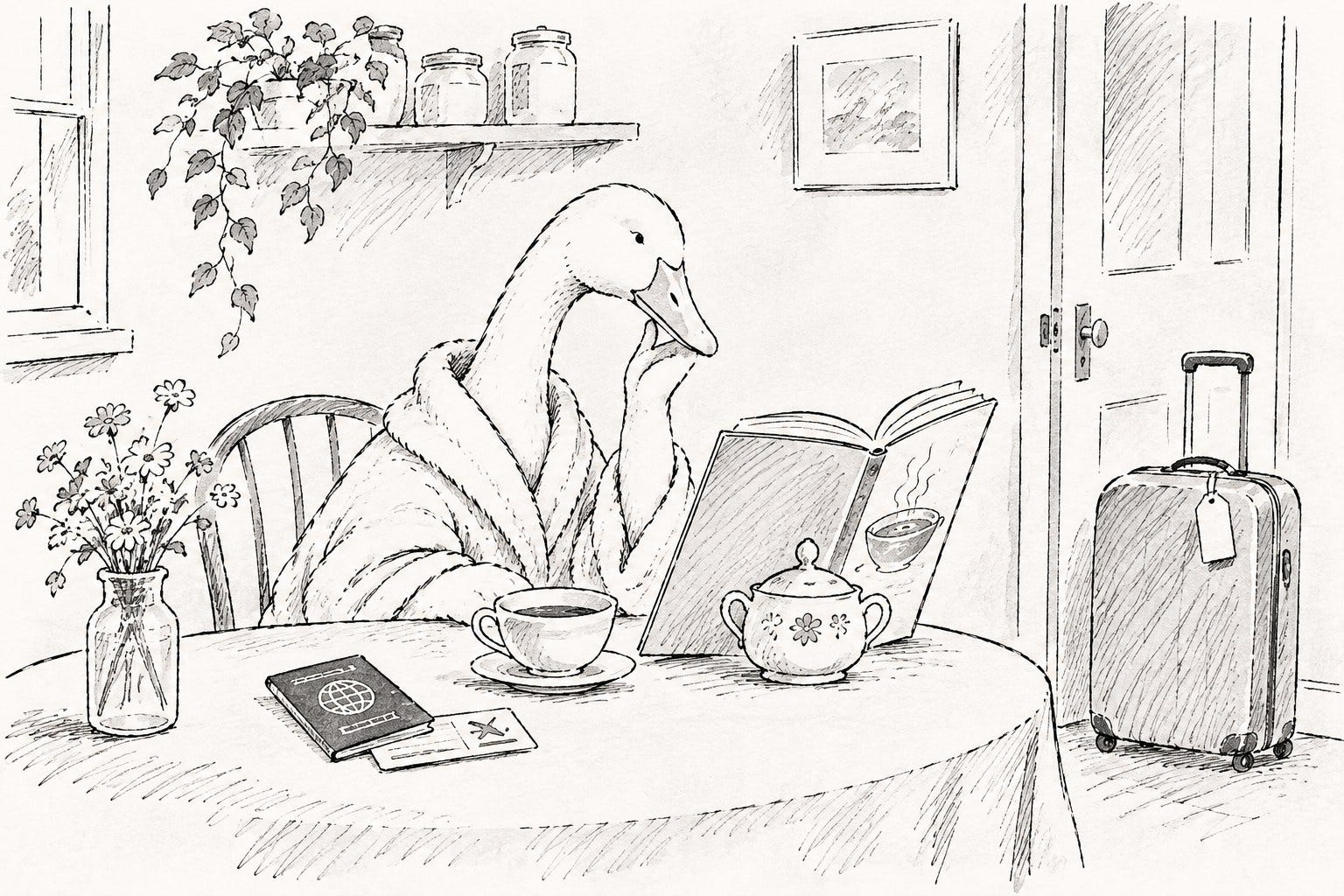
“I’m on page 212. Dinner is on page 4.”
“These aren’t bookmarks. They’re promises.”
“Tonight we travel. Tomorrow we shop.”
“Every recipe has a story. This one has a grocery list.”
“Don’t ask what’s for dinner. Ask what’s for the next six months.”
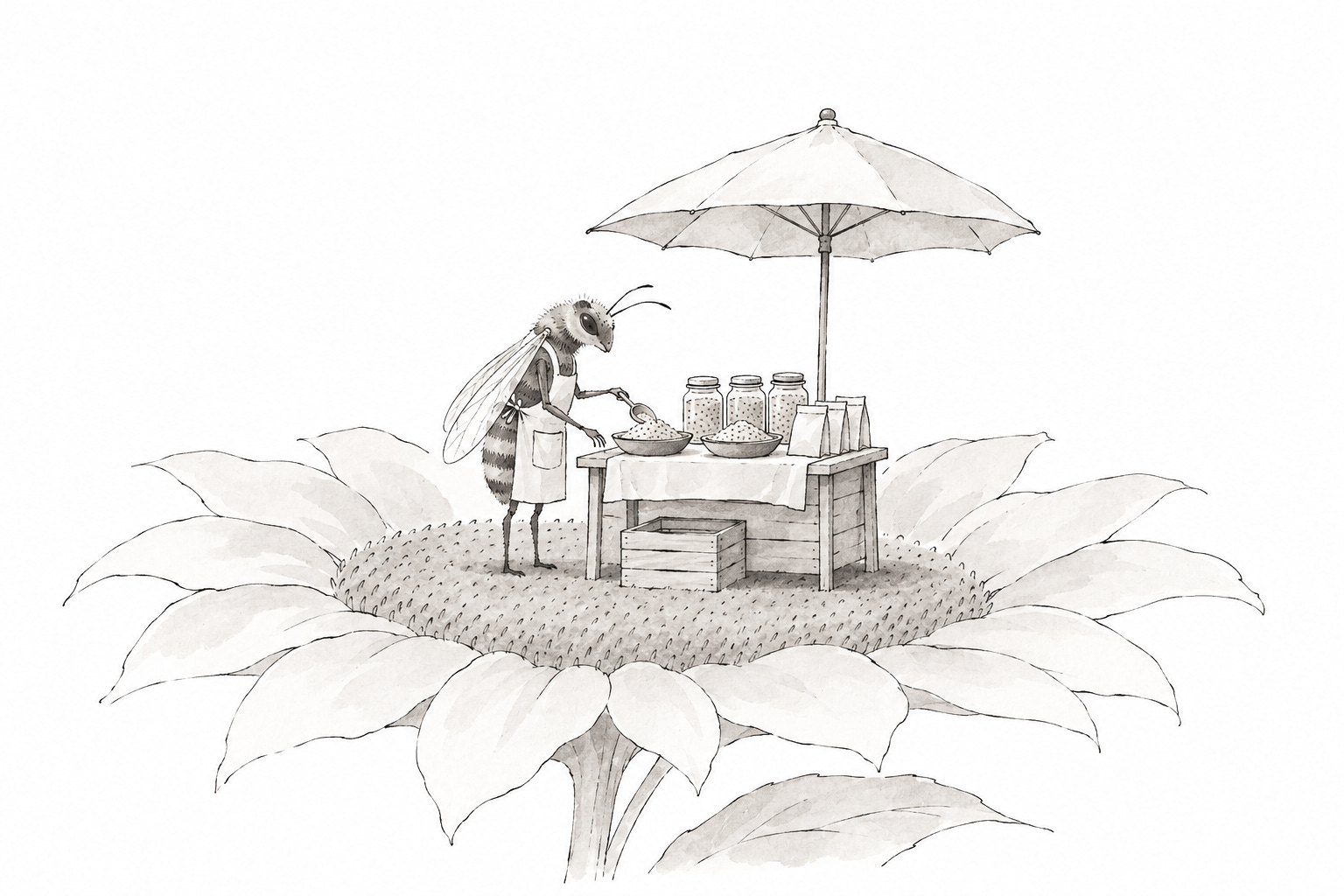
In “Friday E-dition: For Yountville Veterans, ‘Jimmy’ Brings the War Home Again,” two captions tied, each with 40% of the votes: “Small batch. Very small. Mostly just this flower.” and “Well, they used to say water was free, too.”
“I used to give it away. Then I read about value-added.”
“Everything here is single-origin.”
“Small batch. Very small. Mostly just this flower.”
“The hive calls me a disruptor.”
“Well, they used to say water was free, too.”
Answer: B. The rose family
Quince (Cydonia oblonga) is a member of Rosaceae, the rose family, in the same subtribe as apples and pears. Like them it is a pome, a fruit whose flesh grows from the flower’s receptacle around a core of seeds, which is why a raw quince looks like a lumpy, hard pear. Unlike its cousins it is almost never eaten raw; cooking turns its astringent, pale flesh soft, fragrant and, with enough time, pink.
The distractors are the families of fruits quince is sometimes confused with or cooked beside. Citrus belongs to Rutaceae, the rue family. Persimmons, the other fruit of Rosalia’s stories, are Ebenaceae, the ebony family. Figs are Moraceae, the mulberry family, and pomegranates are Lythraceae, the loosestrife family.
—












—
The views, opinions and data presented in this article are those of the author and do not necessarily reflect the official policy, position or perspective of Napa Valley Features or its editorial team. Any content provided by our authors is their own and is not intended to malign any group, organization, company or individual.
Our illustrations are produced through a multistep process of generative tools, digital sketching and photo editing, often starting from our own images or sketches.
Source: napavalleyfocus.substack.com