
Want to bookmark your favourite articles and stories to read or reference later? Start your Independent Membership today.
Already a member?
Log in
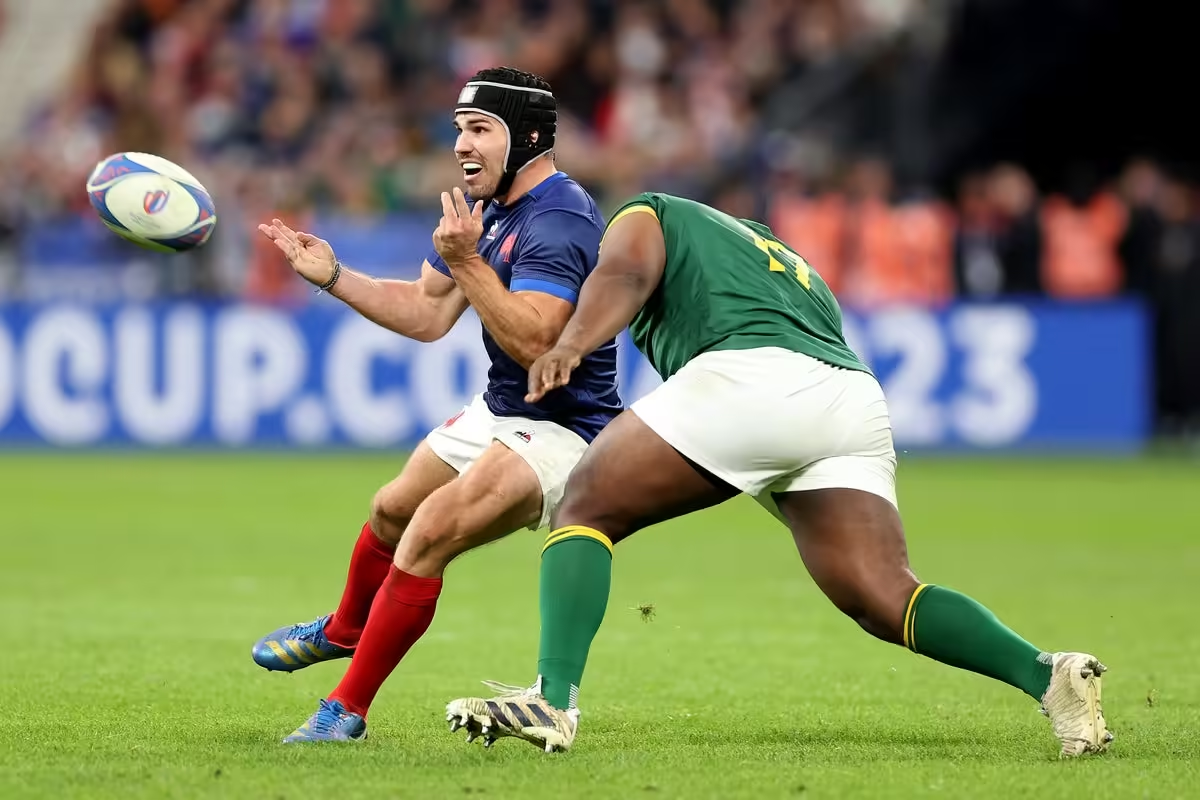
It would, in a different scenario, be a page out of the Rassie Erasmus playbook. Moving a scrum half of otherworldly play-making gifts to fly half? One can just imagine the Springboks supremo, who has challenged plenty of rugby’s conventions, licking his lips at the prospect were South Africa to develop a talent of that type.
Of course, for France, necessity has been the mother of this intriguing invention. Antoine Dupont will wear the No 10 shirt for his country for the first time in Paris on Friday night not due to any tactical ingenuity but to an ever-deepening injury issue for Fabien Galthie. Gone, first, were the silkily-skilled Matthieu Jalibert and Thomas Ramos; so, too, a dependable enough deputy in Antoine Hastoy. Still, at least they had the experienced hand of Romain Ntamack at the tiller – until he went off with his arm in a sling against Fiji.

And so it is left to Dupont to learn on the job against the world champions. A relatively regular fly half for Toulouse, the 29-year-old nonetheless awaits a baptism of fire. He can, at least, count on the steady presence of Maxime Lucu alongside him – an unintended benefit of the injury-enforced switch is that it gets two of France’s best individuals on the park together. “We took a lot of pleasure in tackling this challenge of designing something which could bring us greater stability and balance in our playmaking,” Galthie explained. ”These are two players with a lot of experience, they are two icons in France and in the world, who we wanted to align together to lead the team on Friday night.”
Into the unknown, then, France and South Africa step. In this age of hybridisation, the possibilities presented by the dual scrum half system could yet prove fascinating. There is grand tradition of interchangeability in the halves within French rugby, after all. Equally, it feels a little like the hosts are entering this battle of international heavyweights with one arm behind their back. The task would be tall enough against the reigning champions of the world with a traditional 10 in place. Their injury problems do not solely dwell at fly half, either – how Galthie might like the mass and minds of Emmanuel Meafou and Thibaud Flament on a night like this.
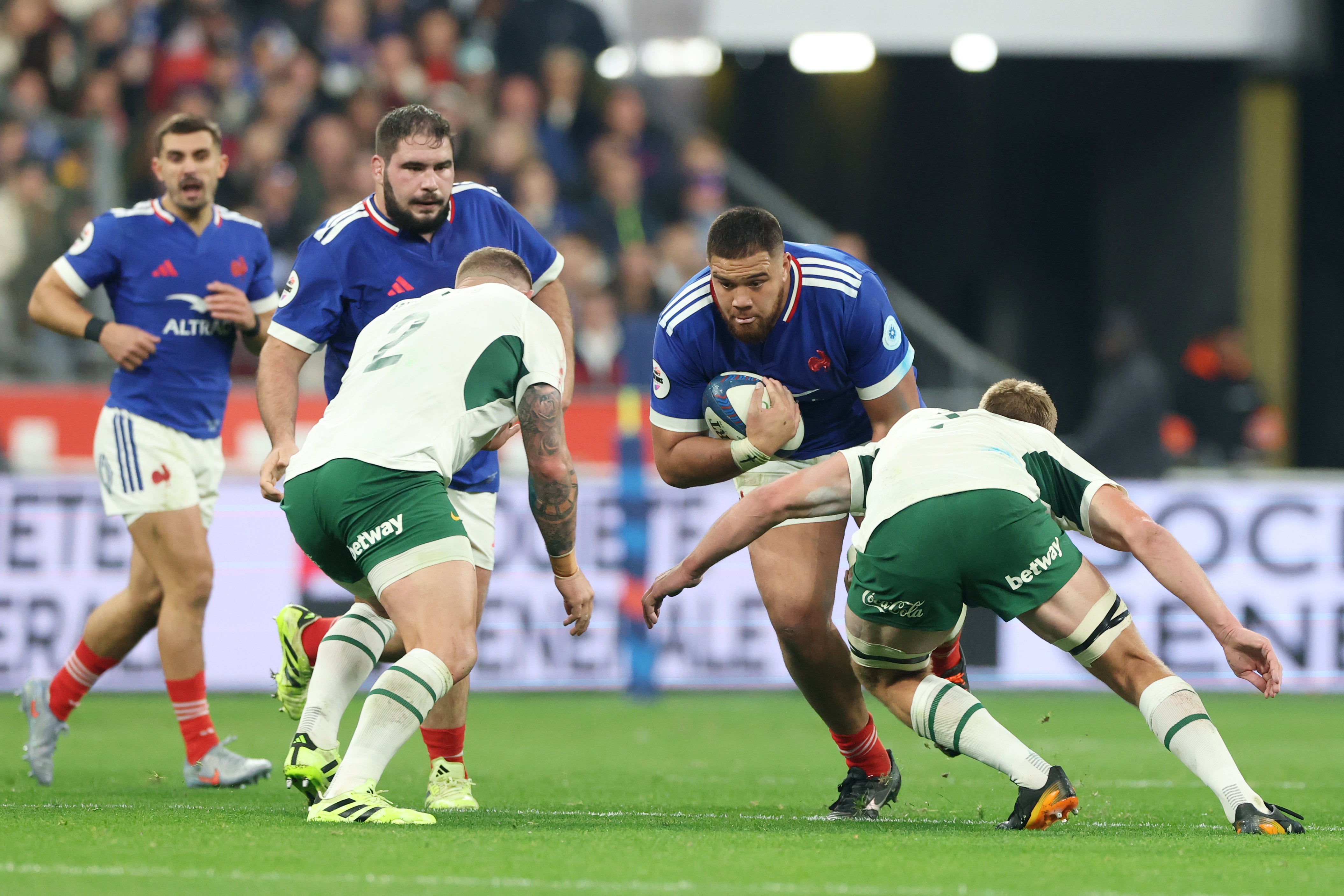
There are just six survivors in the French 23 from the team that started this fixture last November. Perhaps this injury-hit France squad are paying for the arduous calendar with which they have to contend. With clubs in France wielding significant financial and cultural power, the Top 14 now extends to a nearly 10-month season. It is little wonder that there is a high attrition rate as a result. Galthie was unable to select a first-choice side for the first leg of the Nations Championship in July given the proximity to the domestic denouement; in an increasingly conflicted calendar, rest must come at some stage. Dupont, for example, has played fewer than 30 minutes of Test rugby in the southern hemisphere.
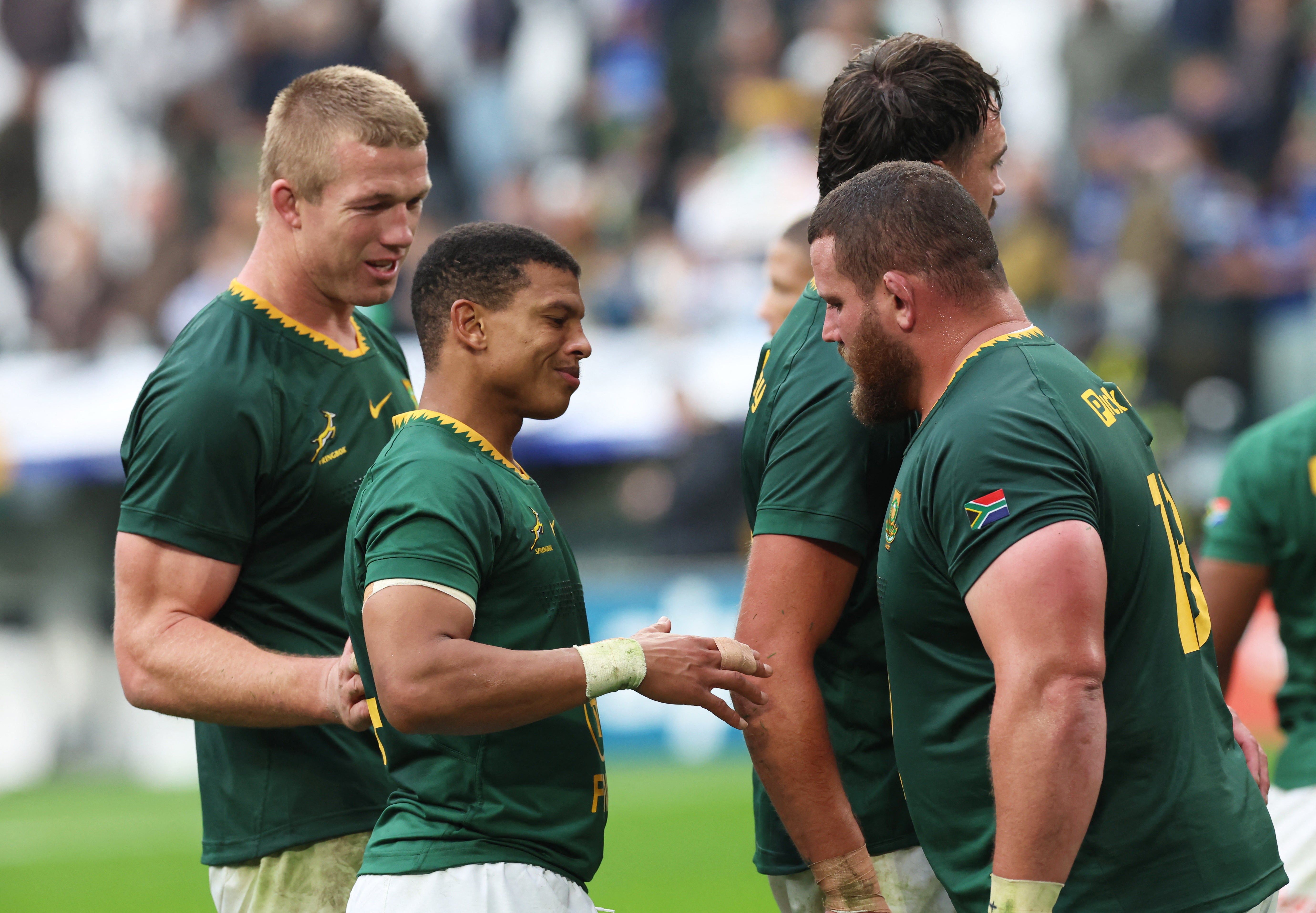
South Africa, of course, do things differently. Much of the spine Erasmus’s squad, until recently, has been Japan-based, where high salaries and a less intense league season prove appealing. Generally, his top stars are fit and firing when the Springboks require them – take Pieter-Steph du Toit, now heading back to South Africa after leaving Toyota Verblitz with a grand total of three appearances across the last two Japan Rugby League One seasons.
Add in those under union control, effectively, at the four United Rugby Championship franchises and Erasmus can exert significant influence over the bulk of his squad. European rugby, and particularly the Investec Champions Cup organisers, may feel that it has not yet seen the best of the South Africans but the truth is that the Springboks remain the collective priority on the quest to add a third successive World Cup in Australia next year.
That is not a luxury that Galthie necessarily has. A home World Cup created a shared emphasis and closer club and country ties, which made a quarter-final exit of agonisingly fine margins to South Africa all the more excruciating. Where Erasmus has in the past rested and rotated from a position of strength, his French counterpart is forced to tinker: Gregory Alldritt’s recall at No 8 comes in part to address a fear of a power imbalance between the two forward packs. “He’s a player who has battled to come back into the French team and the opportunity is there for him,” Galthie said of the La Rochelle man, a high-profile omission for the Six Nations at the start of the year.
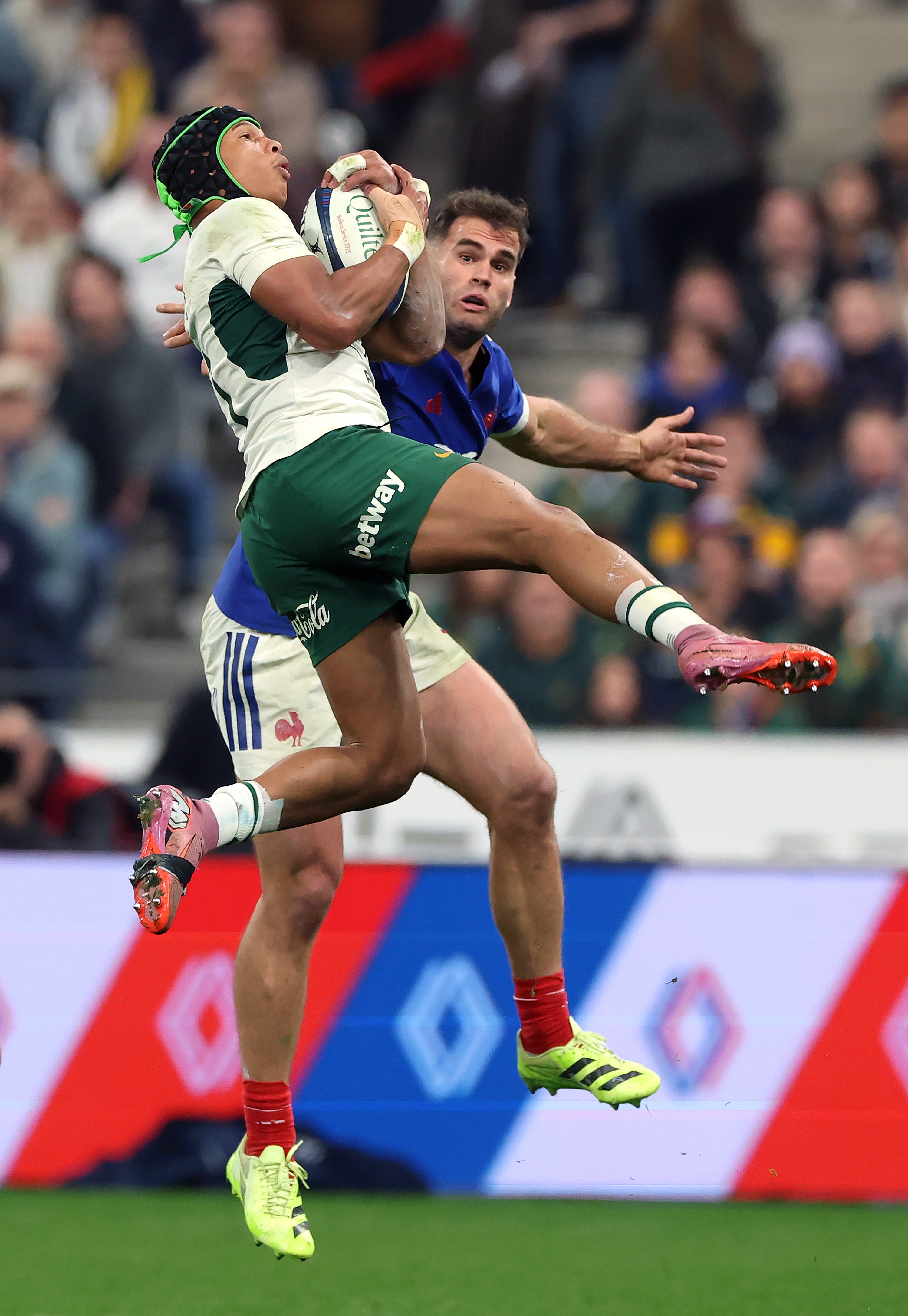
South Africa will expect to squeeze at the scrum, where Jean-Baptiste Gros and Sipili Falatea face a stern examination from Ox Nche and Wilco Louw, who starts in the only change for the Springboks after mauling Italy. Their kicking game set the platform for the dismantling of the Azzurri, with Ethan Hooker and Kurt-Lee Arendse two outstanding chasers. With plenty of moving parts in the French aerial defence after Dupont’s relocation, one can expect the Springboks to put boot to ball early and often.
The feeling is that a French win may be reliant on individual brilliance – as a collective, given the absentees, they fall short of their visitors. Not that South Africa will take anything for granted. “Matches between us and France are always intense, and this week will be no different,” Erasmus said. “Both teams have everything to play for. We always try to get really up for the French team, firstly out of respect. We love playing against a team that is as physical as we are. I’m not sure if they’ll play that way, but I know they won’t shy away from the physical contest.”
Source: www.independent.co.uk