
It starts as a small, painless lump on the skin that is easy to ignore.
But under the seemingly innocuous lump, flesh-eating bacteria are burrowing through fat and muscle.
Warning: Readers are advised that this article includes an image of an open wound.
The skin over the lump then dies, turns black and eventually becomes an open sore that, if untreated, grows.
This is a typical case of Buruli ulcer, a condition that until recently was primarily found in West Africa.
Victoria is now considered the Buruli ulcer centre of the world, with a record 426 confirmed cases last year.
Buruli ulcer is typically acquired in summer and autumn.
It is endemic in the Mornington Peninsula, Bellarine Peninsula, Geelong and some Melbourne suburbs.
It is also found in other parts of Australia: pockets of coastal Queensland, where it is sometimes called Daintree ulcer, and around Darwin.
Most recently, cases have popped up on the New South Wales south coast around Batemans Bay.
Visitors to these popular tourism areas might unknowingly get infected, go home and, months later, develop a Buruli ulcer where local doctors may not be aware of the condition.
So, coming into summer holidays, how can you protect yourself from the disease?
What causes Buruli ulcer?
Buruli ulcer is caused by the microbe Mycobacterium ulcerans.
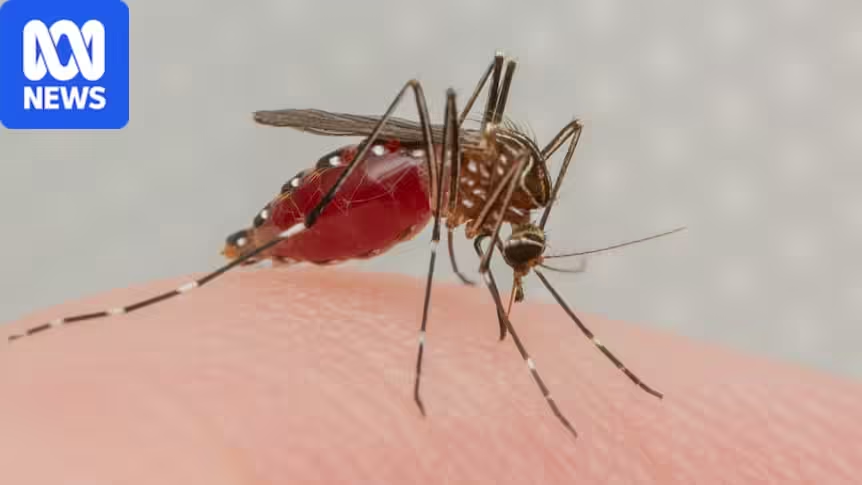
It can be transmitted to humans via mosquitoesso ulcers usually appear in areas near bites, such as on arms and legs.
Loading…
Once in the skin, the bacteria secrete a cocktail of molecules that numb the area, slowly kill surrounding tissues and suppress the immune system.
“These things make it quite an impressive pathogen, and often, it’s been there for a while before people actually know they’ve got it,” Daniel O’Brien, an infectious diseases physician at Barwon Health in Geelong and Royal Melbourne Hospital, says.
The progression of lump to ulcer happens in about 90 per cent of Buruli ulcer cases he sees.
In less than 1 per cent of cases, the bacteria reach bone.
How is Buruli ulcer diagnosed and treated?
Buruli ulcer advances so slowly that the first symptoms usually are not noticed until five or six months after the infection.
It is diagnosed by sending a swab off for PCR testing to see whether the ulcer contains M. ulcerans bacteria.
Treatment starts with a six-to-eight-week course of antibiotics, but the drugs themselves can be problematic. They interact with many other medications and produce side effects so awful that about 20 per cent of patients cannot finish the whole course.
M. ulcerans infections can start off looking like nasty spider bites that do not heal, Dr O’Brien says, but eventually turn into ulcers. (Supplied)
Dr O’Brien is leading a team trialling a new antibiotic that can be taken over just 10 days, which he says is less harsh on the body, yet still effective against M. ulcerans.
For most people, antibiotics will be enough, but if there is too much tissue damage or the wound is not healing properly, surgery is needed.
Even with treatment and good wound care, it can take months — even a year — for an ulcer to fully heal.
Dr O’Brien says outcomes for patients are generally better if the ulcer is diagnosed early.
For that reason, he recommends getting a health practitioner to look at any suspicious lumps sooner rather than later, especially if you live or holidayed in an area known to have the bacterium, and to specifically ask about Buruli ulcer.
How can I protect myself from Buruli ulcer?
While Buruli ulcer prevalence is rising, Dr O’Brien says it is important to remember that the disease is still uncommon in humans.
“If you protect yourself from the environment … you really minimise your risk of acquisition.“
While mosquitoes are a main source of Buruli ulcers, they are not the only one.
Brushtail and ringtail possums are also known to get infected, and can develop nasty ulcers on their paws, face and tail.
A 2025 study found that analysing the poo of possums could help predict regions where Buruli ulcer might crop up next, with human cases usually appearing up to three years after the first positive possum poo test.
That is because possums shed the bacteria in droppings, introducing it to the soil, which can then get into cuts in our skin.
Dr O’Brien’s advice is to:
- cover up as much as possible
- wear mosquito repellent on exposed skin
- cover any wounds while handling soil, and if you injure yourself, wash it immediately with soap and water, then apply antiseptic
- avoid handling sick or injured possums
A recent study found reducing mosquito numbers in Buruli ulcer areas also lowered human case numbers, so it is a good idea to tip out standing water where mosquitoes breed and put out mosquito traps.
It is also important to note that research shows not all possums in Buruli-endemic areas carry the bacteria, and it is illegal to trap, relocate or cull possums without a licence.
And, in good news for ringtails and bushies, an edible possum vaccine in the works could help reduce infections and ulcers in the future.
Hear more about Buruli ulcer on Outbreaksa special series on Science Friction.
Source: www.abc.net.au