Andrew Hastie says Australia is at risk of falling behind in AI race
Shadow Minister Andrew Hastie says there is an artificial intelligence arms race underway and that Australia is at risk of being left behind.
Last week, US President Donald Trump threatened to impose taxes on US artificial intelligence companies who set up their operations overseas.
Today, bipartisan joint select committee handed down its 46 recommendations today, including establishing an independent body to oversee the technology, creating nationally consistent standards and increasing funding to the AI safety institute.
Speaking to Afternoon Briefing, Hastie says he would be in favour of the government taking an equity stake in AI development.
“I think it’s important that we have a level of control over these things, the same way you don’t have private tycoons with their own nuclear arsenal,” Hastie says.
“I think there is a parallel between the nuclear race and the AI race and so I think it’s important that AI ultimately is accountable to the Australian people.”
Hastie says digital duty of care will place ‘huge’ amounts of power with minister
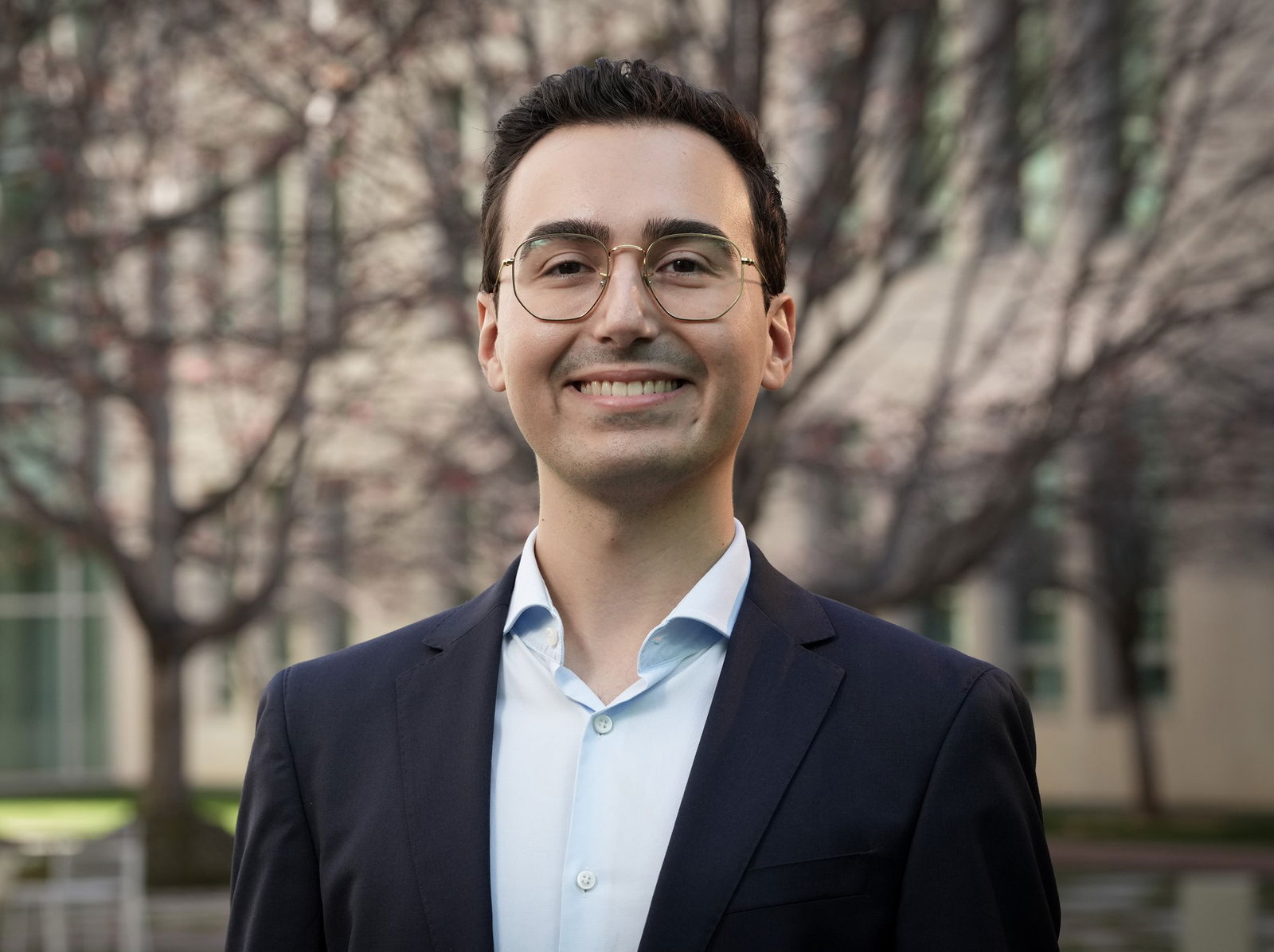
Shadow Industry Minister Andrew Hastie says Labor’s digital duty of care bill vests “huge” amounts of power with the communications minister.
Labor and the Greens reached a deal to pass the legislation through parliament today. Australians would have the right to sue big tech under the amendments secured to pass the bill.
But speaking to Afternoon Briefing, the shadow minister says he’s concerned the bill will place a “massive imposition” on free speech.
“It vests huge amounts of power in the minister for communications and the eSafety commissioner, who basically will regulate very vaguely defined definitions of online harm,” Hastie says.
“We think that’s contrary to free speech. We’d rather have debate and this puts our country and our culture of debate at risk.”
Charlton pushes for development of sovereign artificial intelligence
Assistant Science Minister Andrew Charlton hasn’t said whether the federal government will accept all 46 recommendations of an artificial intelligence committee.
The bipartisan joint select committee handed down its recommendations today, including establishing an independent body to oversee the technology, creating nationally consistent standards and increasing funding to the AI safety institute.
The report also recommends mandating the reporting of major AI incidents in a timely manner.
Charlton has told Afternoon Briefing that the government warmly welcomes the report and will work through it.
Asked if he would support the development on sovereign AI in Australia, Charlton says he “absolutely” does.
“We can’t spend the rest of our lives relying on foreign artificial intelligence. This is already a big vulnerability for Australia,” Charlton says.
“I would suggest to you that if we allow foreign AI to exclusively operate in Australia, that that dependency on foreign tokens on foreign models will put our dependency today on foreign oil in the shade.”
Afternoon Briefing has started! 📺
Join along as we bring you the program here live!
Bipartisan AI report ‘overly optimistic’: Pocock
Independent senator David Pocock says he is dissatisfied with the findings of a parliamentary inquiry into AI which he was a part of, calling it “overly optimistic”.
The bipartisan joint select committee handed down 46 recommendations today, including establishing an independent body to oversee the technology, creating nationally consistent standards and increasing funding to the AI safety institute.
The report also recommends mandating the reporting of major AI incidents in a timely manner.
But Pocock who was on the committee and provided a dissenting report outlining his concerns, says the report does not adequately address the environmental and copyright risks posed by AI.
“I think the committee report is overly optimistic. It relies on evidence from big tech, from those who are really pushing hard for data centre investment, for Anthropic and OpenAI to set up shop here training their models,” he said.
“There’s not a mention of diesel [generators] in this report despite the millions and millions of litres that will be stored and used in data centres across the country. [There’s] very little mention on gas and on electricity prices. It seems like the priority is to ensure that the data centres have competitive access to energy, not to protect Australian households.”
AI inquiry split over recommendations
A parliamentary inquiry into artificial intelligence has recommended the creation of an ongoing parliamentary committee to oversee the AI sector as it develops.
The bipartisan joint standing committee has made 46 recommendations addressing a range of issues including copyright settings, national requirements for AI infrastructure and rules to protect people’s likeness from being copied by AI.
It builds on a interim report released last month.
Labor’s Jo Briskey chaired inquiry and says if AI companies set up on Australian soil it has to be on Australia’s terms.
“This is about us taking control over the most transformative technology of our lifetime,” she says.
“This is what drove our approach as a committee when we made the recommendations we made.”
The inquiry’s deputy chair Jonno Duniam is preparing to finish up his parliamentary career this week.
He says the committee reached a consensus “broadly speaking” on most issues.
“Whether it’s about energy whether it’s about copyright, about safety and safeguards for Australians about procurement and catalysing an Australian sovereign industry,” he says
“It’s not about a blank cheque, its not about doing things that are not in our national interest, quite the opposite.”
Work well underway for next election, PM tells caucus
Labor has already begun preparations for the next federal election, including commissioning research into how to campaign against right-wing parties competing with one another for votes.
Prime Minister Anthony Albanese told Labor’s caucus this morning the government was halfway through its term and work was well underway on its next election campaign.
New research has been undertaken into the changing political landscape and reported to Labor’s campaign committee.
Albanese has encouraged MPs to take some time off over summer and outlined a series of priorities for the government, including improving access to housing for young people, strengthening Medicare and pursuing economic, social and environmental reforms.
Senate vote on digital duty of care bill likely tomorrow morning
It’s looking like the federal government’s digital duty of care bill will be put up for a vote in the Senate sometime tomorrow morning.
Labor and the Greens reached an agreement to pass the legislation today. Under the deal, Australians will have the right to sue social media companies if big tech don’t comply with the laws.
The upper house is currently voting on a procedural motion that would cap the committee stage of the bill (which allows non-government senators to scrutinise the legislation more closely) to 60 minutes today.
That means all amendments will be put to a vote tomorrow morning after the upper house deals with private senator’s bills.
More than 1,000 Papua New Guineans sign up to ADF recruitment drive
Over in Question Time, Defence Minister Richard Marles revealed that more than 1,000 Papua New Guineans have already answered the call to join the Australian Defence Force (ADF) under the landmark Pukpuk Treaty.
Australia’s first new mutual defence pact in over 70 years — named after the Tok Pisin word for crocodile — locks both nations into defending one another against military threats and opens a direct enlistment pipeline for citizens to serve in each other’s ranks.
With PNG Prime Minister James Marape previously setting an ambitious target of up to 10,000 recruits bolstering the joint effort, the recruitment drive is off to a flying start just days after opening its doors.
“Yesterday, I met with my counterpart, Elias Kapavore, the defence minister of our new ally, Papua New Guinea,” Marles told parliament.
“And in the last few days, we have opened recruitment for Papua New Guineans directly in the ADF… already we’ve had more than 1,000 eligible applications.”
Analysis: Why did Penny Wong deliver a foreign policy speech today?
Back to the foreign minister’s speech earlier today. The most obvious question is: why is Penny Wong delivering it? Why now? What’s driving it?
The most obvious answer is that the FM is keenly conscious just how worried Australians are about the rapidly shifting global environment, and the threats posed by artificial intelligence, climate change, wars in the Middle East and Europe and so on.
“I thought it was important at the end of this year to set out the work we have done … and why we have done it,” she told reporters this morning.
“I think Australians are anxious about what’s happening in the world and it’s important to talk about how we are dealing with that.”
There might be another rationale too.
Some commentators have been grumbling that the government, for all its foreign policy successes, hasn’t pulled together a substantive new document articulating exactly what it’s doing and why, pointing out the last foreign policy White Paper was delivered by the Turnbull government way back in 2017.
Wong hasn’t been interested in doing this. She argued in June that the 2017 White Paper was quickly overtaken by events, and that she’d rather officials focus on getting things done instead of pulling together another lengthy policy document.
But the FM might feel like this is a good moment to provide a more formal and substantive statement to parliament laying out the rationale behind the government’s key foreign policy decisions, and how it’s navigating the treacherous shoals of the 2020s.
And that’s the end of today’s QT
Nationals MP gets creative as Albanese again defends Chalmers

A bit of a novel approach from Nationals MP Alison Penfold, who tells the story of “Jim from Logan” who notes interest rates are biting and unemployment is rising.
So who is Jim from Logan? None other than the treasurer himself Jim Chalmers.
“When is the prime minister going to end Labor’s all-out assault on aspirational Australians,” she asks.
Chalmers looks off to the middle distance as the prime minister stands up.
Albanese says he’s been to Logan a number of times. “A fantastic place,” he says.
He then launches into a whole thing about how only Labor cares about aspiration. Albanese says that’s why Chalmers made the “courageous but correct decision” to put through tax reforms.
We move on.
Coalition MP says Bowen has ’embarrassed’ Australia at COP31
Liberal MP Mary Aldred has stepped up to ask the PM when he will sack Treasurer Jim Chalmers and Climate Change Minister Chris Bowen.
The Monash MP has referred to reports in The Australian that both men are “dead men walking”.
She says the climate change minister has “embarrassed” Australia on the world stage on failed COP31 negotiations, and she has accused the treasurer of “breaking” the economy.
Chalmers and Bowen were both seen poking faces at each other during the question. Social Services Minister Tanya Plibersek was seen shaking her head.
Prime Minister Anthony Albanese has again told the house the government believes in the science of climate change.
“What our job is to do, isn’t to follow, it’s to lead. It’s to lead. To lead Australia to where Australia needs to go. To seize the opportunities from acting on climate change, which is not only good environmental policy and good energy policy, it’s good economic policy as well,” Albanese says.
Coalition (again) calls for the PM to sack Chalmers
Shadow Treasurer Tim Wilson asks the PM when he’s going to replace Jim Chalmers.
The opposition have been asking a variation of this question for a little while now, forcing Anthony Albanese to come to Chalmers defence. Something I’m sure both men love!
Chris Bowen, who has also been under pressure as of late due to the failed COP talks, leans over to say something to Chalmers. Sadly, his voice did not carry enough for me to hear, so choose your own adventure friends.
Albanese says the government is being up front with Australians about the challenges ahead.
“Yesterday what the treasurer did wasn’t just acknowledge those pressures, he spoke about doing something about them. The treasurer’s statement set out that path forward with the government playing our part to get inflation down, making sensible savings, making sure at the same time we don’t leave people behind,” he says.
Albanese talks up renewable energy investment as Labor faces heat on COP31
Kooyong MP Monique Ryan has asked the PM whether a government, which still approves fossil fuel projects, lacks the moral authority to advocate for global decarbonisation.
The independent MP is referring to failure at the COP31 UN summit to reach a deal which mentioned fossil fuels.
Climate Change Minister Chris Bowen headed negotiations at the summit as part of an agreement between Australia and Türkiye.
Prime Minister Anthony Albanese has again declared he accepts the science of climate change. But he says net zero doesn’t mean society can stop using one form of energy immediately.
“What I also absolutely support is that if action on climate change … is to maintain that support, is that when people go and flick on a switch to turn on the light, if the light doesn’t go on, then that support will go off,” Albanese says.
Albanese has used the opportunity to talk up Australia’s transition to renewable energy.
“That has happened because of investment by Australian businesses. That has happened because of appropriate pathways to encourage that transition as well.”
The curious case of who misled the House
Of course, just because Anthony Albanese has sat down that doesn’t mean the point of orders are over.
This time it’s Liberal frontbencher Aaron Violi’s turn. He accuses the PM of misleading the chamber by saying the opposition hasn’t asked him about AI. A question was asked in July. He’s told to sit down.
So Manager of Opposition Business Dan Tehan takes up the issue. As does Opposition Leader Angus Taylor, who insists Albanese must clarify his remarks.
There is a lot of back and forth from both sides. Finally, Tony Burke, the leader of the house, walks over with a handwritten note.
Burke notes the question was put not to the PM but to a different minister.
Labor gets a bit of a quick out of that one.
We move on. But I do fear this QT could go on much longer than usual.
Labor MP kicked out as chamber descends into shouts
There must be something in the air today because we’re not off to an orderly start here.
Mid-way through Opposition Leader Angus Taylor’s question, Speaker Milton Dick directs Barton MP Ash Ambihaipahar to leave due to her interjections.
Taylor’s given another go, asking the PM to admit he’s “tanked the housing market” and to end the “all-out assault on aspirational Australians”.
Anthony Albanese waits as Dan Tehan raises a point of order (that’s quickly dismissed) launching into an attack on the Coalition.
“Well that was an important contribution,” Albanese responds. “They’ve begun telling you how to govern. They’re just bad at governing.”
That really just sets off the Coalition. With shouts going back and forth between both sides. Sitting in the chamber, I barely hear the PM. Dick says the level of noise is unacceptable.
Albanese wonders aloud why the Coalition has yet to ask him about artificial intelligence.
We get more point of orders. But Albanese doesn’t really have much else to say, and sits down.
Coalition asks PM if he will sack Chris Bowen over COP31 negotiations
And with those final remarks from Liberal MP Tony Pasin and Speaker Milton Dick on that condolence motion, Question Time is underway.
Shadow Energy Minister Dan Tehan has asked if the prime minister will sack Climate Change Minister Chris Bowen.
Bowen led negotiations at the COP31 UN climate summit, which ended without a deal after debate broke down over the mention of fossil fuels.
The Labor MP sitting behind Bowen, who is back from COP31, reached over to tap the minister on the shoulder at the conclusion of that question.
Prime Minister Anthony Albanese says the government understands climate change is real and that Australia needs to respond.
“Farmers know it’s real, which is why they are acting. Businesses know it’s real, which is why they are acting,” Albanese says.
“We know that action on climate change and involvement with our Pacific neighbours is the entry to credibility in our region.”
QT pauses for condolence motion for former speaker
Before we get to QT proper, the chamber is currently marking the death of John Neil Andrew.
Andrew held the seat of Wakefield for two decades and is a former speaker of the House. He died in October, aged 82.
Prime Minister Anthony Albanese says Andrew was “guided by the belief that no side in politics had a monopoly on wisdom”.
“Throughout it all, he was driven by the desire to keep people talking with respect for each other’s point of view,” he says.
Opposition Leader Angus Taylor says it takes a “special kind of parliamentarian to make an exemplary speaker”.
“Neil is still remembered as one of our very finest speakers, fair and firm, an outstanding depth of knowledge of the standing orders. A man who respected tradition and he won respect across the political aisle,” he says.
Taylor says he’s told that Andrew even watched videos of past QTs so he could look for ways to elevate his own performance.
Milton Dick, the current speaker, also offered his heartfelt condolences.
Andrew’s family is in the chamber watching on.
🚨Question Time is nearly here🚨
Question Time is only a few minutes away in the House of Representatives here at Parliament House.
The federal government and Greens have just reached a deal on passing the digital duty of care through the parliament.
We’ll probably get a few questions from MPs on that in today’s questions without notice.
My colleague Courtney Gould is sitting in the lower house ready to bring you all the hot takes! Let’s goooooooooooo!!!!!
Greens hail agreement with Labor on digital duty of care
Greens leader David Shoebridge has hailed an agreement between his party and Labor on the digital duty of care legislation.
Australians will have the right to sue social media companies when they breach the duty of care under the deal between Labor and the Greens.
Stronger fines of up to 5 per cent of a big tech company’s global revenue will also form part of the amendments to the bill.
“This will be a significant moment for Australia,” Shoebridge says.
“Not only will platforms have to pay penalties that will make them sit up and pay attention, but ordinary Australians will not just have a right, they’ll have a remedy.”
Greens communications spokesperson Sarah Hanson-Young says the amendments will result in big tech companies being slugged billions of dollars if they don’t comply with the duty of care.
“It’s time that we hit them where it hurt and that’s their bottom line,” Hanson-Young says.
“Giving Australians the right to sue and to seek compensation when they are harmed online is important. Americans get the right to do that, so should Australians.”
‘Bring it on’: Wells on potential legal challenge to digital duty of care
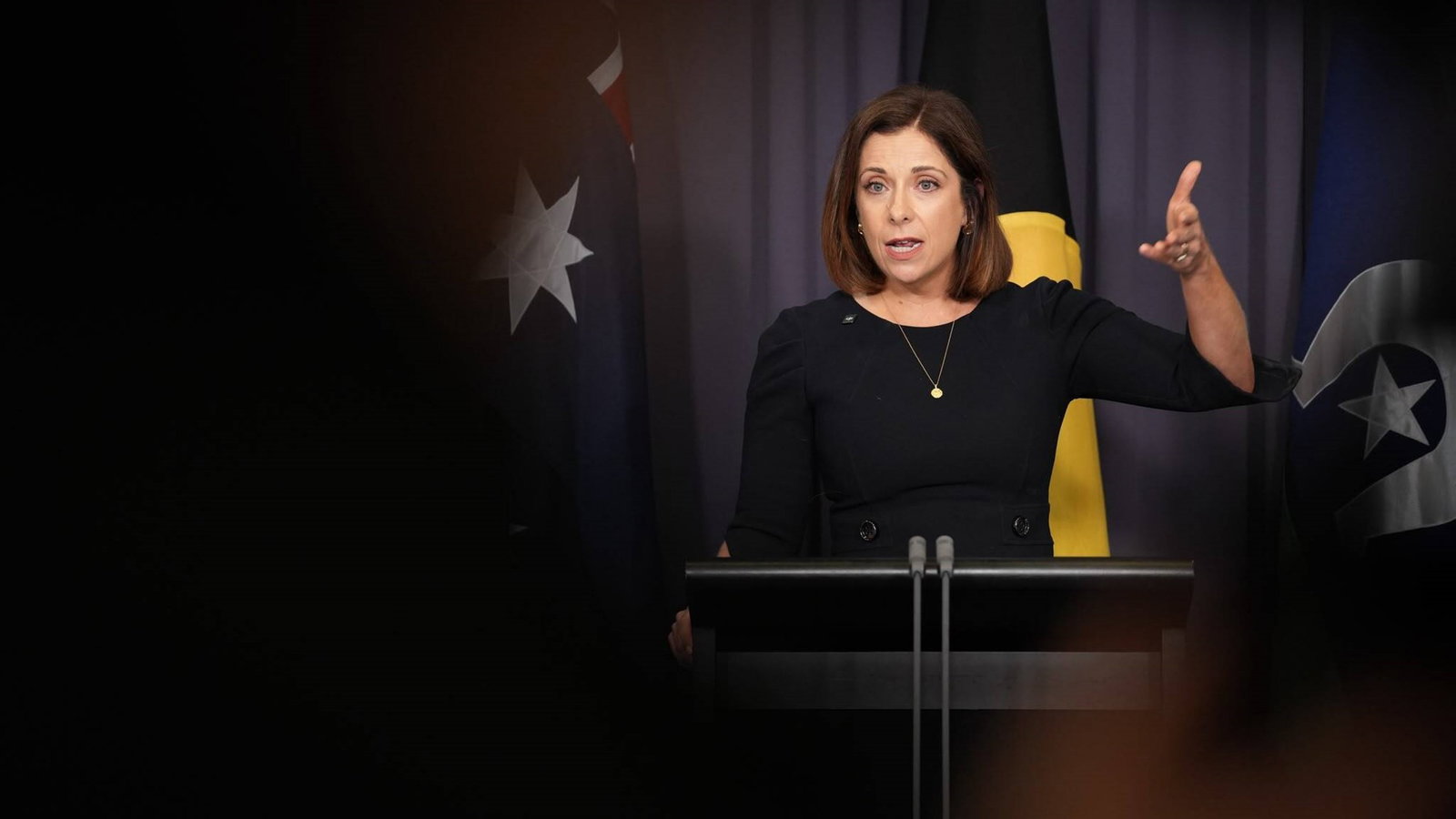
Anika Wells says she’s comfortable where the government has landed on giving Australians the right to directly sue social media giants for harms.
The communications minister says while the right wasn’t included in the original legislation or exposure draft, it was part of a consultation paper released in May.
Wells says she’s worked with the Attorney-General’s department to get to it a point where she’s “comfortable” with it.
So is she concerned the tech giants are going to launch a legal challenge against the digital duty of care?
“I was at the High Court a couple of weeks ago as the second respondent in the case against the social media minimum age. If people want to have another go, bring it on.”
That’s where I’ll leave Wells’s press conference. We’re going to head over to the Greens now!
Fines to compound for tech giants that breach social media ban and digital duty of care
Communications Minister Anika Wells has previously said fines for breaches of the digital duty of care and social media age ban would compound.
Is that still the case now it’s been beefed up to 5 per cent of global revenue?
“Yes,” she responds.
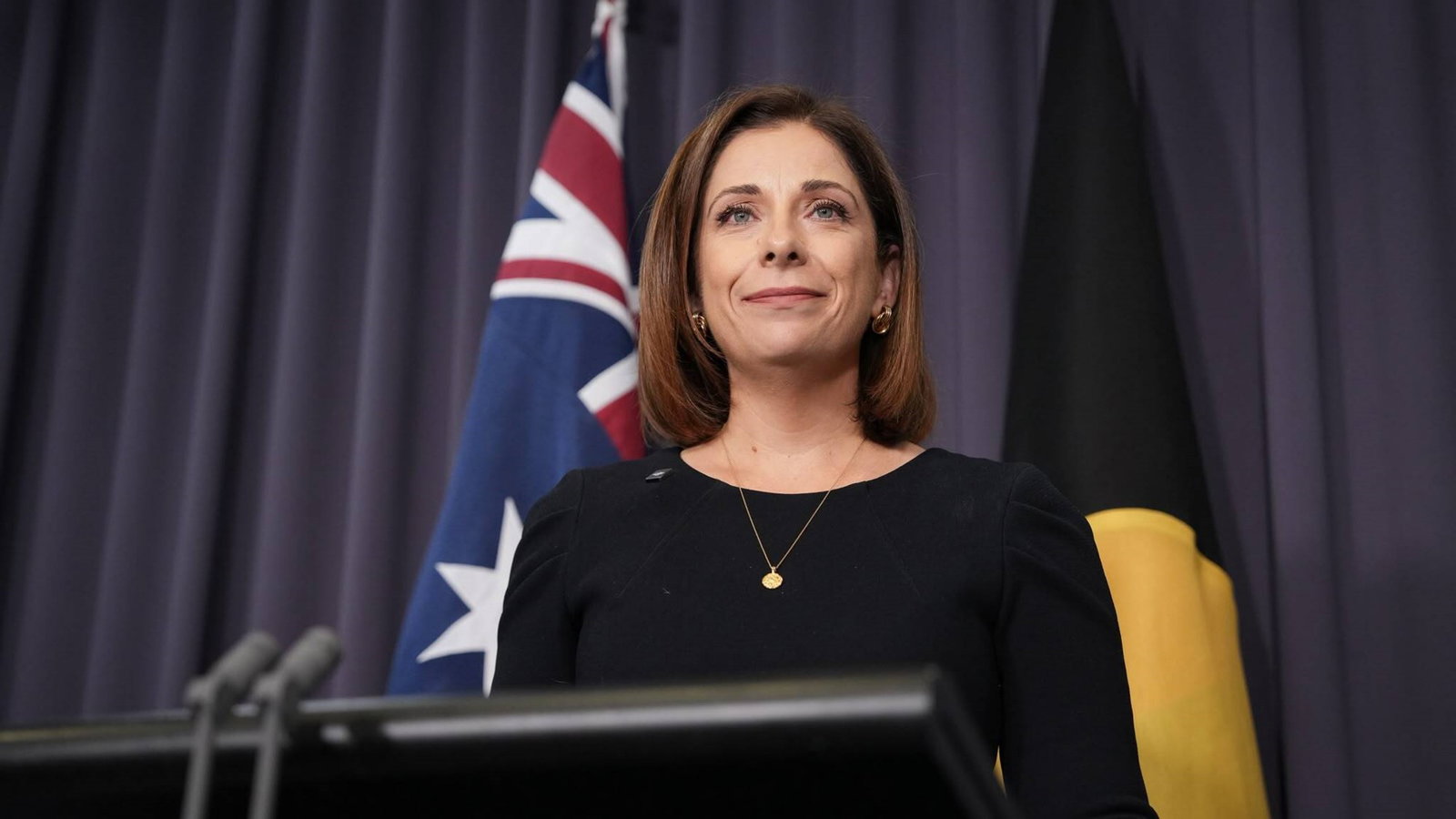
On the requirement for platforms to consider addictive design features, Wells says there will be 12 -month transition period.
“This means that Meta, Snap[chat], TikTok — name your favourite — will have to consider what their addictive design features are as part of their risk assessment,” she says.
“So things like maybe the toxic popularity meters, the endless scroll, that kind of thing.”
‘If you build it, you should be responsible for risks’: Wells
Anika Wells is asked what measures she’s sure will affect the behaviour of tech companies.
The communications minister says that depends on how you measure a change of behaviour. She notes a conversation she had with teachers who told her how attitudes have changed since the social media ban was enacted.
“I do think the cultural change is seeping through,” she says.
“But like … you heard me say at the National Press Club, if you build it you should be responsible for its risks. That occurs in every other industry.
“That has not occurred in this industry. It is a base safety expectation Australians have that they have not had to uphold. So let’s legislate it and then let’s work from there.”
Wells met with US ambassador in bid to ‘iron out differences’ over digital duty of care
Communications Minister Anika Wells met with US ambassador David Brat ahead of confirmation of beefed-up fines for the tech giants.
Wells says the government had long signalled its intent to be tough on the social media platforms.
“The ambassador and I had a really constructive meeting, really friendly meeting,” she says.
“I think we would say there are points of differences and we’re ironing them out.”
Wells is asked if a percentage of global revenue is an appropriate penalty for breaches under the digital duty of care, or if the government did what it needed to do to pass the legislation.
She says the maximum of 5 per cent sits between Canada (3 per cent) and the EU (6 per cent).
“So it’s in between other reasonable figures pegged by like-minded countries. Obviously … this has been a negotiating ask of the Greens.”
Wells says she discussed all this with Brat in their meeting.
Wells confirms a number of amendments to digital duty of care bill
Communications Minister Anika Wells has just stepped. She confirms a deal has been done to pass the digital duty of care.
A number of amendments will be put through the Senate, including:
- A private right to action that will give individual Australians the right to sue digital platforms when they breach their duty of care,
- Strengthen privacy protections,
- Expand eSafety’s Nudify removal powers,
- Include addictive tools as specific risk that will be needed to assessed in risk assessments being provided to eSafety,
- Clarify the definition of hostile attitudes to women and gender equality,
- A rule-making power for an external dispute resolution pathways,
- Stronger fines – up to 5 per cent of global revenue.
Wells says it’s been a two-year journey to get the digital duty of care to a place where it can be passed.
Australia must strengthen capability and expand partnerships, Wong says
Foreign Minister Penny Wong is concluding her speech now. She makes the case for all elements of Australia’s national power to work together.
“We are strengthening our capability. We are expanding our partnerships. We are defending and growing the space in which every country can make sovereign choicesm,” Wong says.
“We are working every single day to make peace more likely than conflict. That is how we contribute to a peaceful, stable and prosperous region. That is how we protect Australia’s security and prosperity.”
With the foreign minister’s speech over, let’s turn our attention back to Labor’s digital duty of care bill.
A closer look at the big increase in fines under digital duty of care deal
Switching our focus back to the digital duty of care.
We already knew the government was open to the idea of allowing individuals to directly sue the tech giants for harms.
So let’s have a bit of a closer look at the increase in fines applied to tech platforms that breach the digital duty of care.
Under Labor’s initial proposal, a fine of up to $109m would apply.
But the Greens secured amendments to significantly beef that up. The maximum fine will now be at 5 per cent of global revenues.
Wong says govt is aiming to improve Australia’s resilience to shocks from abroad
Foreign Minister Penny Wong days the government is deliberately stabilising its relationship with China and cooperating on the clean energy transition.
The foreign minister says the government has clearly stated its views on issues that matter to Australians to China.
“We believe a stable relationship, in which differences can be managed, is better for Australia, better for China and better for our region,” Wong says.
The foreign minister says the government wants to strengthen the international rules that underpin every Australian life.
She says that involves reforming institutions “critical” to Australia’s interests, including the UN Security Council.
Wong says the government is also aiming to improve Australia’s resilience to absorb shocks from abroad.
“That capacity begins at home. A stronger, diverse economy is harder to coerce,” she says.
“Trusted institutions are harder to undermine. Secure infrastructure is harder to disrupt and a cohesive society is harder to divide.”
Penny Wong launches defence of US-Australia alliance
Foreign Minister Penny Wong has launched a defence of the Australia-United States alliance.
The foreign minister says the US has never stood still, and that what it asks of the world has evolved.
She says US President Donald Trump has always been clear he envisages a different role for America in the world.
But Wong says retreating from the alliance with the United States will surrender Australia’s “strategic weight” and leave us more vulnerable.
“There are those that say uncertainty about American policy means Australia should abandon America,” Wong says.
“Such a policy would do is surrender a central source of Australian strategic weight at precisely the moment we need every opportunity for influence available to us.
“What they would do is give us fewer choices and leave us more vulnerable — reducing our capacity to contribute to a regional balance in which our sovereignty can be protected.”
Wong says in response to the US’s change in posture, the government has sought to deepen cooperation with countries such as Japan and India.
Wong says ‘reassurance and deterrence’ must be used to avert conflict
Foreign Minister Penny Wong says Australia’s objective is for a peaceful, stable and prosperous Indo-Pacific region.
The foreign minister says there are several places for potential conflict in Australia’s region: South and East China Seas, Korean Peninsula and across the Taiwan Strait.
She says Australia’s task is to avert crisis and conflict. Wong says that requires “reassurance and deterrence”.
“Australia’s positions are clear and they are consistent. We put diplomacy at the front line and advocate approaches that prevent miscalculation leading to conflict,” Wong says.
“We call for differences to be managed peacefully through dialogue, without the threat or use of force or coercion, and oppose any unilateral change to the status quo across the Taiwan Strait.”
Relationships must be built before a crisis, Wong says
The foreign minister has highlighted the federal government’s successful efforts to reach security agreements with Pacific nations.
Penny Wong refers to the Pukpuk Treaty with PNG, the Ocean of Peace Alliance with Fiji, the Falepili Union with Tuvalu and the Nakamal Agreement with Vanuatu.
She says the government has listened to the Pacific’s concerns around climate change, and increased development aid to the Indo-Pacific.
The foreign minister has also talked up deepening relationships with ASEAN members, including Singapore, Vietnam, Malaysia, the Philippines, Thailand, Brunei and Timor-Leste.
“The lesson of the Strait of Hormuz oil shock is that relationships and trust must be built before a crisis, not in the middle of one,” Wong says.
Australia’s cultural diversity source of ‘capability and Australian influence’: Wong
Penny Wong says Australia’s economic weight and position at the meeting point of the Indian, Pacific and Southern oceans, is one of the country’s “fundamental source of power”.
The foreign minister says that is in addition to Australia’s exports of strategic goods, such as education, resources, food, energy and critical minerals.
“Our neighbours value the opportunity to participate in our economy and in our labour market is a strategic asset for Australia,” Wong says.
She says Australia’s cultural and linguistic diversity is a source of “capability and Australian influence” in the world.
Trade and investment being used as ‘levers of power’, Wong says
Foreign Minister Penny Wong has outlined some further shifts happening in the global environment, beyond force and coercion.
She says great powers have shifted how they define and pursue their interests, and has pointed to the US’s change in posture.
Wong says the “distribution of power” has also changed, with countries like Australia, India, Japan and South Korea bringing diplomatic and military weight.
“By some estimates, the number of mid-sized powers has nearly doubled since the end of the Cold War. In contrast, the combined share of global GDP held by the US and China has largely plateaued since 2015,” Wong says.
She says trade and investment, which has usually been used to lift living standards, are now brig used as “levers of power”.
Wong says artificial intelligence is disrupting and reordering lives faster than previous technologies.
“Technology is already changing how wars are fought, how information is manipulated, and how foreign actors can interfere in our societies,” she says.
And finally, she has pointed out that it is harder for countries to exercise power power together.
She says that’s because international institutions are under financial strain and trust is being eroded across societies.
Great powers now willing to exercise power without constraint, Wong says
Foreign Minister Penny Wong is now outlining some of the changes the world has witness since the federal government came to power in 2022.
Wong says the post World War II international order, while not perfect, established expectations and norms about how countries should behave.
She says great powers are now becoming increasingly willing to exercise power without the constraints of the international order.
The foreign minister says that’s manifesting into six shift, including a more frequent threat or use of force and coercion.
“The clearest example is Russia — a permanent member of the UN Security Council — continuing its illegal and unjustified invasion of Ukraine,” Wong says.
“And China is undertaking the largest military build-up by any country since the Second World War, without the transparency and reassurance the region expects.”
Penny Wong says US, China competing across every domain with ‘less regard’ for guardrails
Foreign Minister Penny Wong has just stepped up to deliver a major foreign policy ministerial statement to the Senate.
The foreign minister has started by saying the world and the region is changing before our eyes with wars in Europe and the Middle East.
Wong says Australians are feeling the effects of those conflicts at the bowser, checkout and mortgage repayments.
Artificial intelligence is reshaping society, she says, and trade settings, shipping lanes, food security and undersea cables are being “weaponised”.
“The great powers — the United States and China — are competing across every domain, with less regard for the guardrails that once kept competition from tipping into conflict,” Wong says.
She says she understands why Australians feel anxious about the turmoil in the world.
Wong backs Albanese’s comments on US, China relationship
The Australian and Singaporean prime ministers have been asked how the partnership between both countries will help Australia deepen engagement in the region.
Prime Minister Anthony Albanese says there is strategic competition between the United States and China.
Albanese says he’s has constructive engagement with US President Donald Trump and Chinese President Xi Jinping.
“Australia and Singapore, I think, can play really important roles working together as like-minded countries to make sure that no country is dominant, that sovereignty is respected around the world,” Albanese says.
Singapore’s PM Lawrence Wong agrees with the Australian prime minister, and says his country wants to engage both superpowers.
“No country in our region wants to be in a position where we are forced to choose sides. We want to engage both America and China,” Wong says.
And that’s where we’ll leave that press conference in the PM’s courtyard.
Albanese, Wong quizzed on assurances received from US about Nvidia
A reporter asks if both leaders are satisfied that Jensen Huang has not inadvertently assisted AI development in China, and what assurances they’ve sought from the US.
Singapore PM Lawrence Wong reiterates that it’s up to the US government to make a judgement on that.
“We’ll leave them to make those investigations and judgement. Nvidia’s board will have to do what it needs to do,” he says.
“There may still be ongoing checks. I’m not sure. But that’s for America to decide, certainly not for Singapore.”
Wong says where Singapore is concerned is about looking at companies that use the nation state’s location to transit and reroute chips through Singapore and other parts of Southeast Asia.
He adds that it’s not just up to one country to decide on global AI governance.
Prime Minister Anthony Albanese says Australia comes at it from a similar perspective.
“One of the things that Australia has said and signed up to a number of statements, that have been released, is that we do need to cooperate as well across national boundaries and to share information, to share experience, to develop best practice,” he says.
Lawrence Wong says investigations into Megaspeed are ongoing
The leader’s are taking questions now, and they’ve been asked about Jensen Huang’s reinstatement as Nvidia chair days after the company’s board ruled out his return.
Huang resigned from the global artificial intelligence giant earlier this month after revelations of extramarital affairs, including with Alice Huang (no relation) who US authorities suspected of spying for China.
Wong has been asked what concerns Singapore raised with the US in 2025 when Singaporean authorities started investigating Alice Huang and Megaspeed (the company she worked for) for sending chips to China.
The Singapore PM says authorities in his country investigated Alice Huang and interviewed her, but released her because they had no further basis for prosecution.
He says the investigations about Megaspeed are ongoing.
“We did ask for information, not all of it was forthcoming. But we did what we did with her and the investigations with Megaspeed are ongoing. Because with Megaspeed, the chips that they brought did not even enter Singapore,” Wong says.
“The chips were routed through Singapore to other countries and obviously we cannot investigate all that’s happening in these countries. So we did require more information from the US side, and we are continuing to have discussions with American authorities.”
Essential supplies MoU will make difference for next global disruption: Wong
Singapore Prime Minister Lawrence Wong has thanked Albanese for hosting him in Canberra on a busy final sitting week at Parliament House.
Wong arrived on an inaugural Singapore Airlines flight into the new Western Sydney International Airport. Singapore’s PM says it was an “important milestone”.
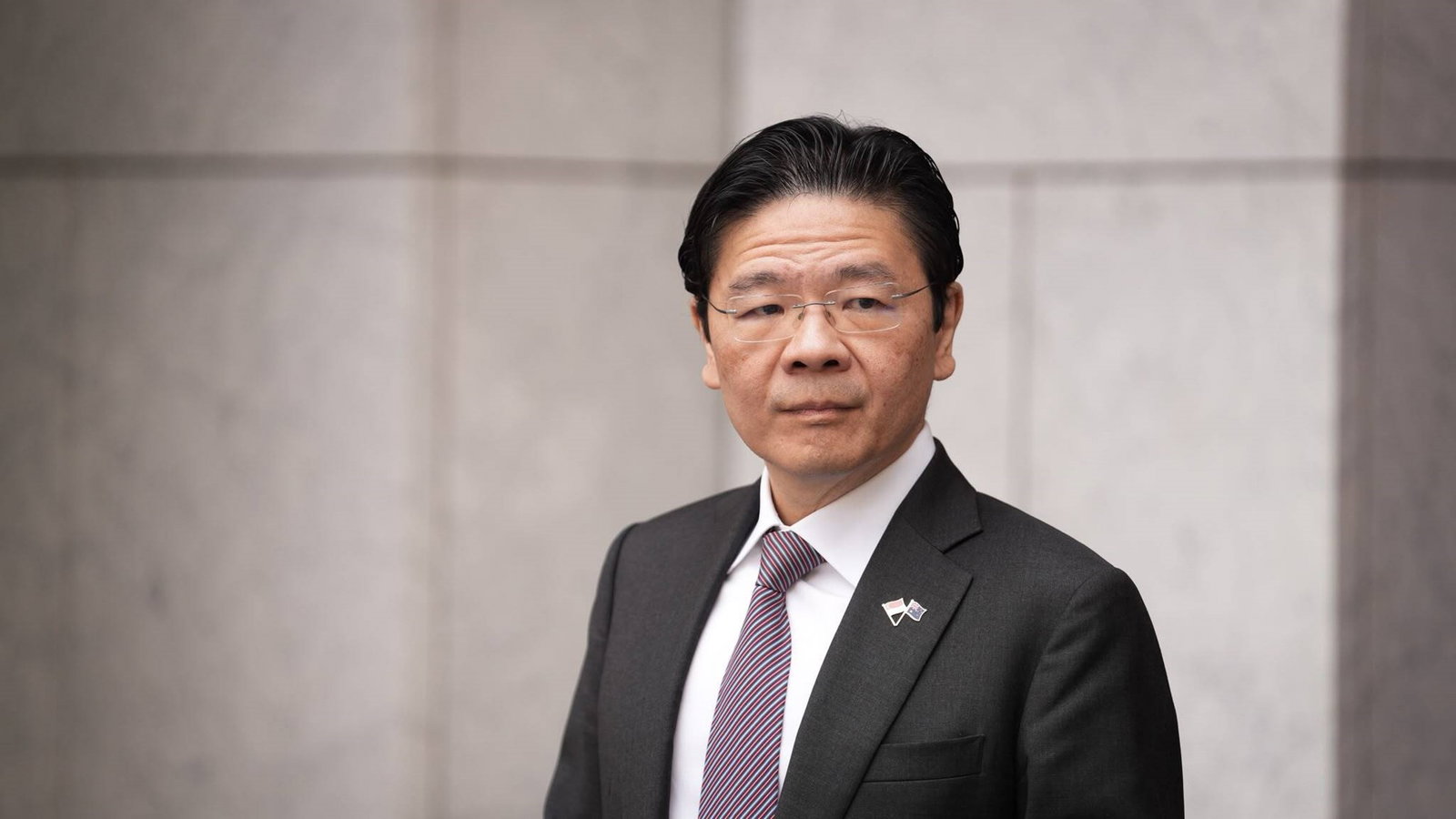
He’s thanked the Australian government for its continued support for Singapore defence force training in Australia.
Singapore’s PM has also touched on the Memorandum of Understanding signed on essential supplies.
“These are practical arrangements that will make a real difference when the next disruption comes,” Wong says.
“They reflect the trust we have built and our shared commitment to keeping trade open and supply chains resilient, even in difficult times.”
Albanese and Wong sign agreement on AI, conclude negotiations on treaty
Prime Minister Anthony Albanese says the two leaders have also signed a joint statement on artificial intelligence which is “trusted, safe and inclusive”.
“It commits us to working together to help shape regional and global approaches to AI while ensuring that this technology remains under human control.”
Albanese says Australia and Singapore have also concluded negotiations on the renewal of a treaty that allows Singapore Defence Force personnel to train in Queensland.
“Today, we have concluded negotiations for the renewal of our treaty. This supports Singapore’s continued training activities in Queensland which, of course, are substantial,” Albanese says.
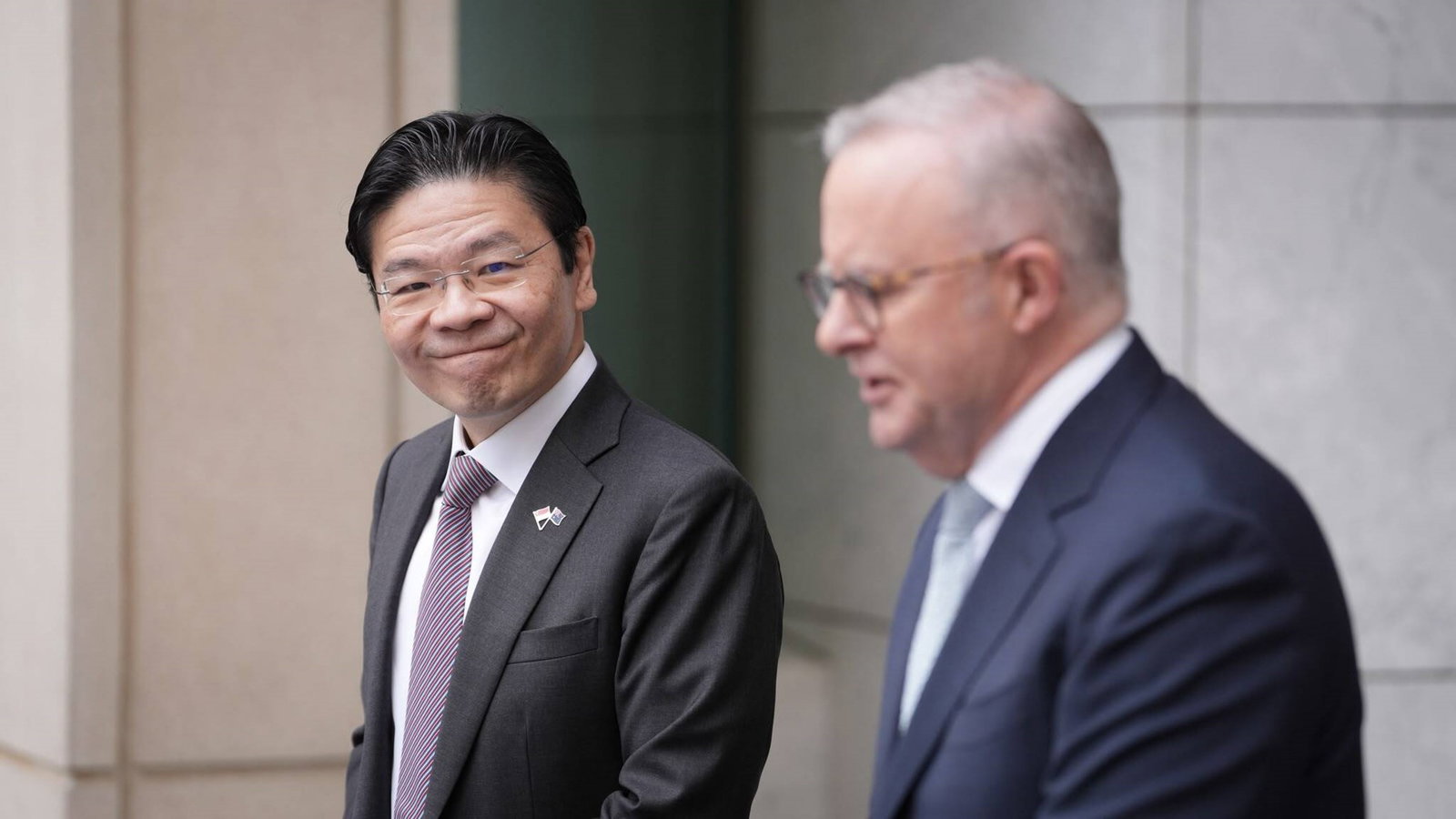
Albanese, Wong announce memorandum of understanding on essential supplies
Prime Minister Anthony Albanese and Singapore’s Prime Minister Lawrence Wong have just stepped up for their press conference.
Albanese says the two leaders have had a number of meetings over the past week, as well as at ASEAN and APEC.
The Australian prime minister says both leaders have agreed on a memorandum of understanding on essential supplies.
“This builds on the agreement that we reached in April this year when I visited Singapore at the time of real global crisis when it came to fuel supplies,” Albanese says.
“In addition, of course, it looks at other goods such as food and pharmaceuticals which will apply.”
The two leaders have also signed a “first of its kind” treaty on transboundary carbon capture and storage.
Albanese says it will enable the safe movement of carbon dioxide from Singapore to Australia.
Albanese and Singapore’s PM to speak shortly
Prime Minister Anthony Albanese and Singapore’s PM Lawrence Wong are about to step up for a press conference here at Parliament House.
They’re gathering for the Australia–Singapore Annual Leaders’ Meeting to talk about the Comprehensive Strategic Partnership 2.0.
We’ll bring you that press conference here live as soon as we get it!
Spend the summer winning over voters, Coalition MPs told
Coalition MPs have been urged to spend the summer engaging with voters and preparing for the next federal election, as the opposition looks to build momentum heading into 2027.
At the final party room meeting of the year, senior Coalition figures encouraged MPs to clear their administrative workloads, spend time in their electorates and continue developing policies over the parliamentary break.
Opposition Leader Angus Taylor and Nationals leader Matt Canavan emphasised the need to convince Australians the Coalition has solutions to the economic pressures facing households.
There was no discussion of recent opinion polls or One Nation during the meeting.
The party room also heard about the Victorian state election this Saturday, with MPs acknowledging the significant challenge facing the Coalition as it attempts to win government.
Coalition MPs agree to find a compromise with government on gas reservation scheme
The Coalition has given its leadership authority to finalise a deal with the Labor on domestic gas reservation as negotiations continue over the details of the proposed scheme.
Nationals senator Susan McDonald updated the Coalition party room this morning on negotiations with the government, stressing the opposition supported reserving gas for domestic use but had concerns about how Labor’s proposal would work.
Coalition MPs backed efforts to find a compromise, with the party room giving the leadership authority to finalise an agreement without bringing it back to MPs for another vote.
The opposition is particularly concerned about unintended consequences for businesses and the broader gas market.
Negotiations are expected to continue over the coming days, although there is no guarantee a deal will be reached.
Deal close on digital duty of care, Greens say
The Greens say they are close to a deal with the government on the digital duty of care bill and are working to finalise the details.
The bill would put the onus on big tech companies to prevent foreseeable harms online.
The government needs the Greens support in order to pass the legislation and are considering their demand to grant individuals the right to sue tech companies if they are harmed.
However, the main sticking points remain over the penalties that big tech platforms would face if they cause harm, with the Greens wanting fines to be tied to the company’s global revenue, as well as a tougher crackdown on addictive design features.
The government has refused to move on the Green’s amendment to age-gate gambling websites as a part of the legislation.
The minor party is hopeful they will strike a deal later today or tomorrow.
Liberal frontbencher demands minister apologise for QT comments
Sarah Henderson says the prime minister must order Social Services Minister Tanya Plibersek to apologise for comments she made during Question Time.
Yesterday, Plibersek took aim at the Coalition while answering a question about the government’s proposed digital duty of care laws. The bill puts the onus on big tech companies to prevent foreseeable harms online.
“While we know that rates of sexual violence are exploding, we’ve got the Liberals, Nationals and One Nation not prepared to vote to support a digital duty of care, particularly for our children,” she told the chamber.
“They’re continuing to say that young people should be exposed to violent pornography, including depictions incest and strangulation.”
But Henderson says Plibersek’s accusation that the Coalition support children being subjected to harms online is “disgraceful”.
“This is a disgraceful episode of lies and deception and misrepresentation by Tanya Plibersek,” the shadow communications minister told News24.
Regions no longer a safe haven for renters

A major new housing report has found rental affordability has plummeted, with advocates warning renters can no longer find relief by moving to regional areas.
The Rental Affordability Index from National Shelter found Canberra is Australia’s most affordable capital city rental market, although the result is partly driven by the territory’s higher average incomes and affordability remains far worse for people on lower wages.
Perth was ranked the least affordable capital.
National Shelter chief executive Jackson Hills says the findings showed there was now “no safe haven” for renters.
“When people used to make that decision to leave the cities and go to the regions, they can’t find affordable properties in the regions anymore,” he says.
“There’s nowhere in the country where someone on Jobseeker or Commonwealth Rent Assistance can find an affordable rental”.
Independent Senator David Pocock says the report highlights the severity of Australia’s housing crisis and its broader social consequences.
“We need a national housing and homelessness plan, and we need investment in social and affordable housing,” he says.
Nationals leader demands government scrap trust tax changes
Nationals leader Matt Canavan says the government should scrap its proposed changes to trust taxes if it’s serious about fixing Australia’s economy.
The government wants pass a 30 per cent minimum tax on discretionary trusts.
But Canavan says the trust tax should never have been proposed, as it was not an election promise.
It follows a ministerial statement from Treasurer Jim Chalmers yesterday, where he foreshadowed savings in the upcoming budget update, through substantial spending cuts, in an effort to contain inflation.
Canavan says the treasurer has “just woken up” to the fact Australians and small businesses are struggling with inflation.
“The government should take a first step. If they’re serious about listening to the Australian people … this government should drop its trust tax that it’s seeking to impose this week,” he says.
“In an economy that is struggling, that is going downhill thanks to this failing Labor government, we should not be imposing big new taxes on an economy that is already slowing down.”
Labor furious after Coalition declares it won’t back Vanuatu security pact
Bipartisanship over the government’s Pacific pacts could be splintering after the Coalition declared it won’t back a sweeping strategic agreement with Vanuatu because it commits Australia to hitting net zero by 2050.
The Nakamal Agreement was widely expected to sail through federal parliament without controversy after being signed by Anthony Albanese and Vanuatu’s Prime Minister Jotham Napat following months of sometimes torturous negotiations.
The government sees the hard won $500 million deal as a key part of the strategic architecture it has built to reinforce Australia’s position and stop China from gaining a military foothold in the region.
A parliamentary committee scrutinising the pact has now recommended parliament ratify the agreement but Coalition parliamentarians have issued a dissenting report, taking aim at a clause which says both countries “recognise the existential threat posed by climate change and commit to transition their economies to net zero by 2050 and meet their respective renewable energy targets.”
The opposition has vowed to ditch net zero if it wins office, and the Coalition committee members say the Nakamal Agreement in its current form unreasonably binds the hands of future Australian governments.
“This is an unacceptable infringement on the principle of popular sovereignty, and is a risk to the Australian economy and people, as governments will be restrained in their ability to change climate and energy policy to rapidly react to changing economic circumstances and technological developments,” they write.
The move doesn’t threaten the Nakamal Agreement in the short term as the government doesn’t require parliamentary support for ratification, and the committee’s recommendations aren’t binding.
But it’s drawn a furious response from the Foreign Minister Penny Wong, who calls the dissenting report a “triumph of ideology over national security” and has accused the Coalition of trying to rip up a critical strategic pact.
“Our region is where we build our security, and the Coalition are not up to the job,” she said.
Nvidia spy scandal poses ‘real world’ reminder of tech tensions, O’Brien says
The shadow foreign affairs minister says the reinstatement of NVIDIA boss Jensen Huang will be of interest to international intelligence agencies.
Huang resigned from the global AI giant earlier this month after it was revealed he’d had an affair with a suspected Chinese spy.
Ted O’Brien says Huang’s return highlights the international circumstances Australia has to deal with.
“Regardless of what the situation was, I think it’s a sombre reminder to all of us that we’re living in difficult times when it comes to high technology, whether that be artificial intelligence, cyber, space, virtual reality; there is a competition between the United States and the People’s Republic of China,” O’Brien told News 24.
“Australia needs to deal with that in the real world and so that’s why these issues are things we’re talking about.
“We need to ensure next-generation technology, the IP, is protected and used for good not bad.”
O’Brien says ultimately NVIDIA’s decision to bring Huang back on board is a matter for the company and US intelligence.
📸 Albanese welcomes Singaporean counterpart to Parliament House
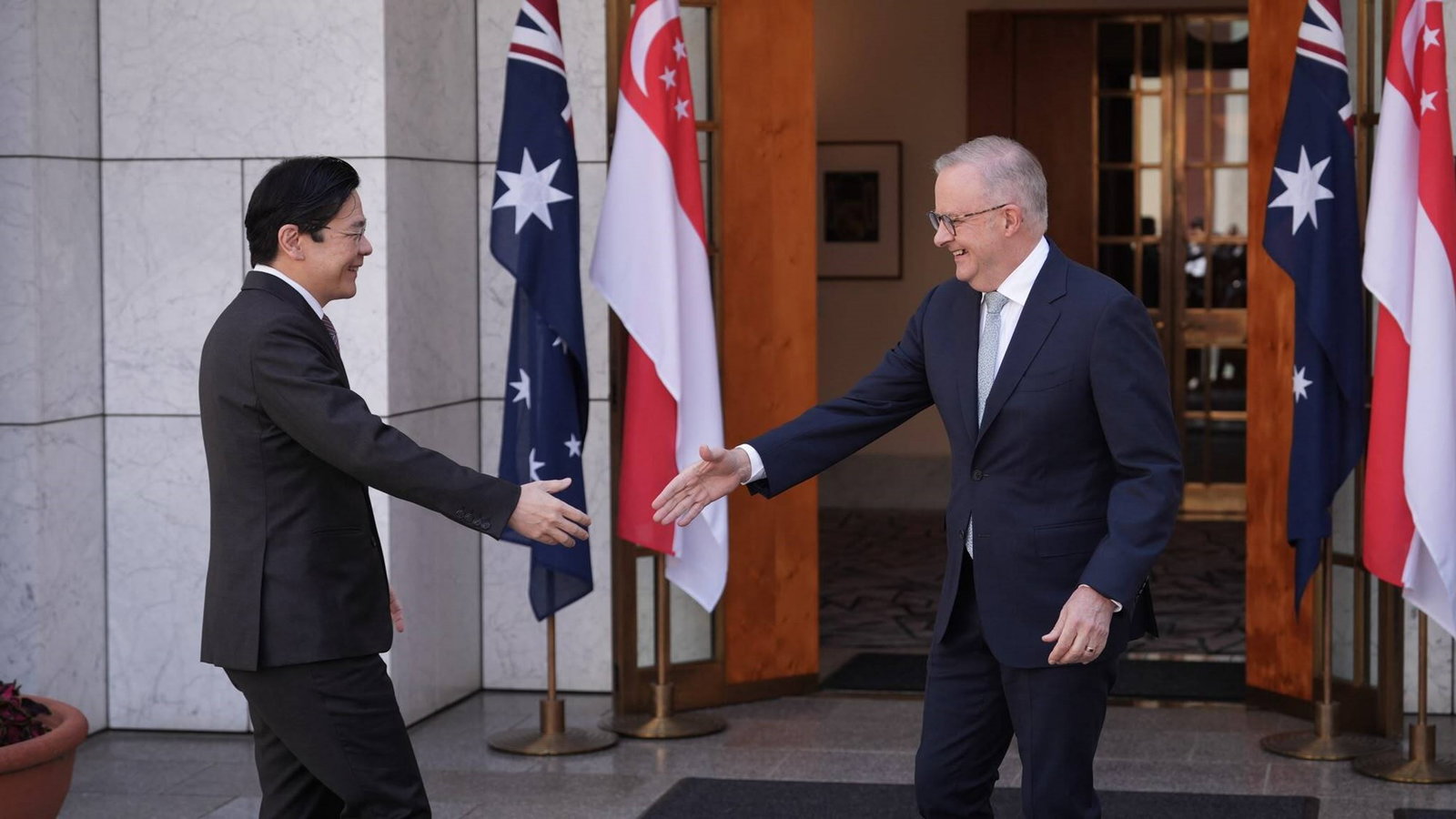
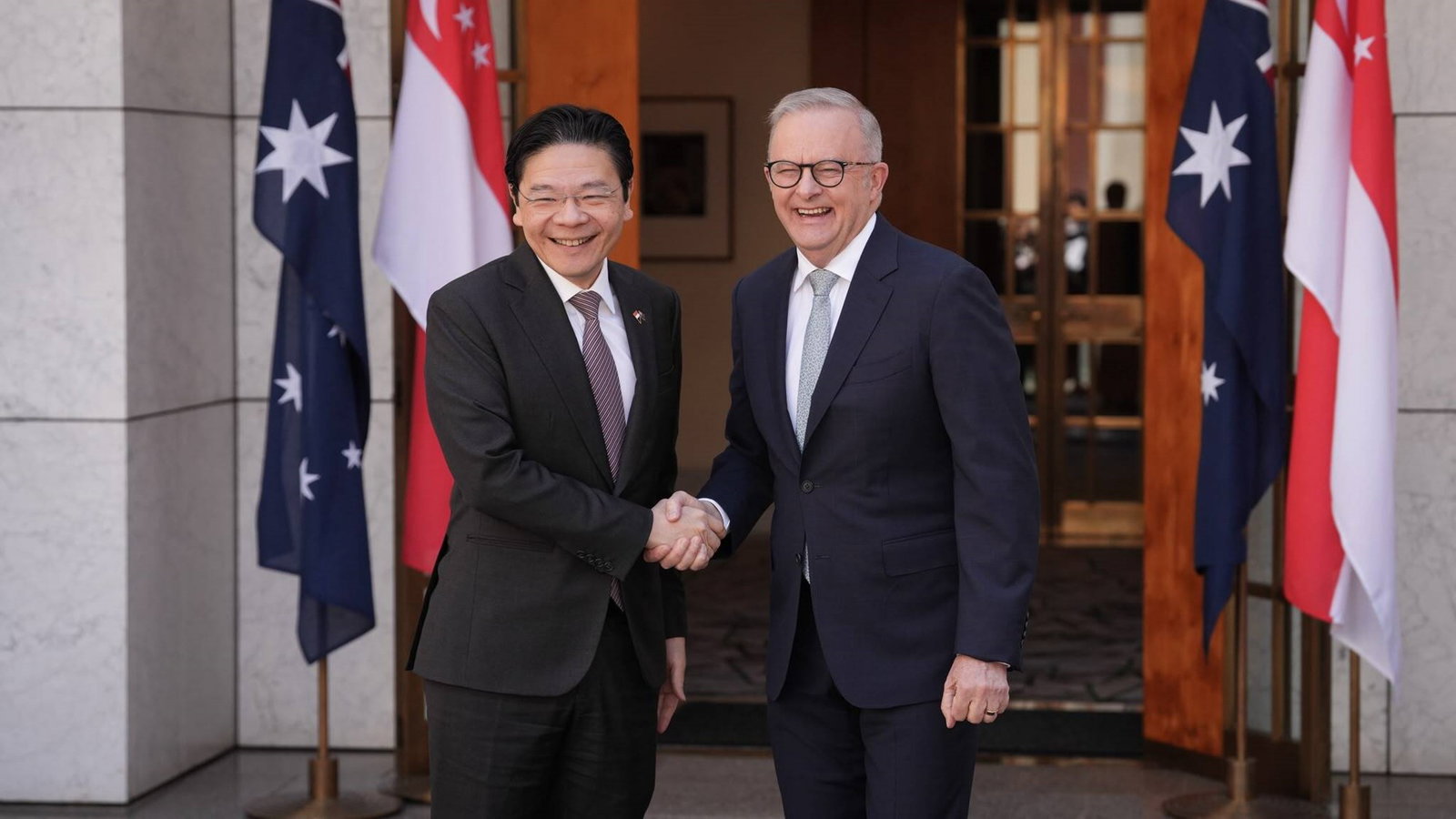
The PM has welcomed Lawrence Wong to Parliament House ahead of talks today.
Wong flew on the first direct flight from Singapore Airlines to the new Western Sydney airport yesterday.
Opposition calls for Chris Bowen to resign after COP31

The opposition is calling on Energy Minster Chris Bowen to resign after negotiations broke down at COP31.
The global climate talks in Türkiye ended with a failure to reach an overarching agreement after countries rejected a draft that did not commit to move away from fossil fuels.
Dan Tehan, the Shadow Minister for Energy and Emissions Reduction, has said Bowen should reflect on the plane ride home and resign.
If not, Tehan said the PM needed to step in and sack Bowen.
Bowen was named as president of negotations in a compromise that meant the summit would be held in Antalya instead of Adelaide, but Tehan said this was unprecedented and “made the whole thing confusing”.
“No-one knew who was in charge,” Tehan said.
“It was Chris Bowen’s giant ego that turned this whole thing to custard.”
Tehan said it was an international embarrassment in front of the Pacific and the rest of the world.
One Nation says Labor’s low polling is ‘untenable’
One Nation MP Barnaby Joyce has said the PM’s job could be at risk after a few bad weeks and declining popularity.
The latest Newspoll yesterday put Angus Taylor as the preferred PM over Anthony Albanese, 42 per cent to 41 per cent. (The margin of error in the poll is 3.3 per cent.)
The poll also put Labor and One Nation at 27 per cent on the primary vote, which is a near-record low for Labor, and also a dip for One Nation.
Joyce suggested the knives could be out.
“You can’t go on with polling in the 20s. That’s untenable. You’re the government. You’re not a party in opposition,” Joyce said.
“They’ve thrown Jim Chalmers under a bus, they’ll throw Chris Bowen under a bus … maybe that’s not such a bad thing.”
“Once they start Stalin-like executing their generals, you know that it’s not good for the battle.”
Extension of homebirth indemnity insurance ‘not simple’
The federal government says it cannot extend an exemption that lets midwives attend private home births without indemnity insurance.
Assistant Health Minister Rebecca White says all nine health ministers, including the Commonwealth, agreed 18 months ago to end the exemption, after an insurance product became available for endorsed midwives.
She says extending it would require changes to laws in every state and territory.
“It’s not as simple as asking the federal government to continue an exemption. This is an amendment that would need to be made to the Health Practitioner Regulation National Law, which then also needs to be amended by each state and territory parliament because it’s enacted through their jurisdiction. So I just wanted to be really clear that is certainly a reasonable question for people to ask, but that is not a pathway,” she said.
Government considering alternatives for homebirth indemnity insurance
The federal government has acknowledged that some women in rural and regional areas may struggle to access private homebirths from January.
An exemption letting midwives attend homebirths without indemnity insurance is ending, as a new insurance product becomes available.
But the product will only be available to endorsed midwives who’ve undertaken extra training.
Assistant Health Minister Rebecca White says the government is looking into alternative insurance for all other midwives.
“For the small number of women who do choose to have a private homebirth, we understand that in rural and regional areas, there may be difficulty in accessing a private endorsed midwife, but we don’t expect it’ll be as difficult in metro and urban areas,” she said.
Greens hopeful deal close on digital duty of care
Greens leader David Shoebridge is hopeful the week will end with the passage of the digital duty of care legislation.
The bill would put the onus on big tech companies to prevent foreseeable harms online. The government, which needs the Greens to pass the legislation, says it’s considering its demand for individuals to be able to sue tech companies if they are harmed.
It’s one of the four pieces of legislation the government wants to pass this week, alongside changes to the capital gains tax discount, trusts and private health insurance rebates for over 65s.
Shoebridge says some negotiations are going better than others.
“There’s a lot of tax bills floating around. That’s complicated discussions. We’ll continue to talk. But our goal at the end of the day is not to give corporate Australia a big Christmas present,” he says.
“The government keeps asking, and we keep telling them the same thing: you exempt all pensioners [from the private health rebate change], and there’s a pathway through.
“I mean, it is a bit frustrating that we’ve said this now for months, and the government seems to think that there’s some alternative solution.”
Greens frustrated no relief in pipeline for struggling Australians
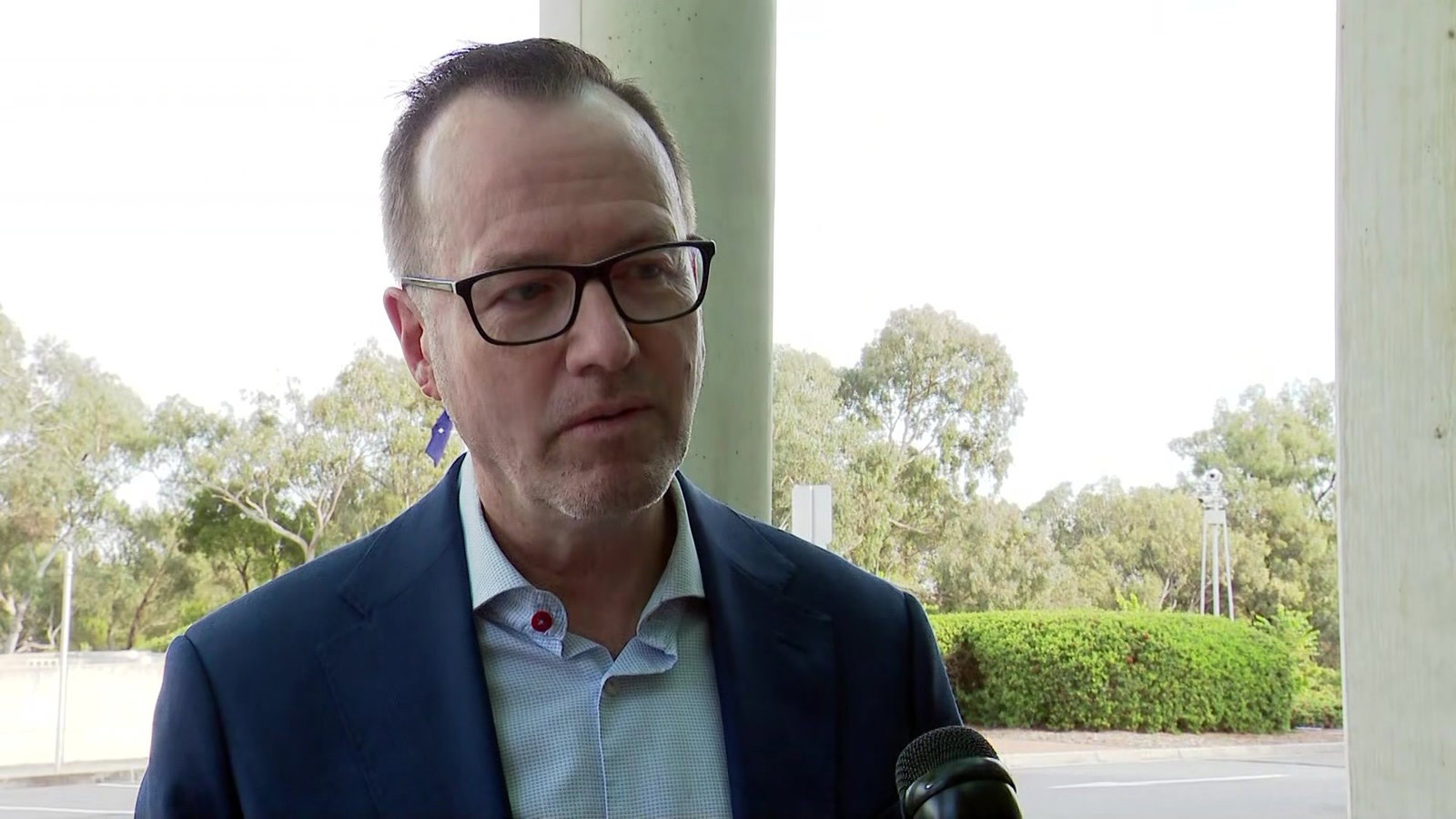
Greens leader David Shoebridge isn’t too pleased there doesn’t seem to be any cost-of-living relief on the way for Australians doing it tough.
He’s accused the government of running an “austerity budget” and repeated his call for Labor to adopt a tax on gas exports.
“We’ve got a treasurer coming out and saying there’s going to be no relief, and in fact looking to have an austerity budget,” he says.
“This is the exact wrong time to have an austerity budget, take services and support away from ordinary Australians.
“We know that there are revenue sources the government can tap into: a tax on export gas, getting resource sector to pay its fair share, stopping $16.3b in fossil fuels subsidies to corporate Australia, and that would provide the headroom so that Australians could get a bit of relief.”
Chalmers trying to ‘soften’ the blow for challenging 2027: Wilson
So what did Shadow Treasurer Tim Wilson make of Jim Chalmers’s economic statement?
Wilson thinks he’s trying to “soften the impact” for what is going to be challenging 2027.
“What he’s trying to do is front run what is clearly going to be further bad news … the economic conditions, sadly, are deteriorating because of the economic model the Albanese government’s pursued,” he says.
Chalmers not focused on ‘columns or the commentary’
A fair amount of newspaper column inches have been taken up assessing Jim Chalmers’s performance as treasurer in recent months.
He insists he’s not focused on the noise, which he says is just a response to him pushing through “difficult reforms” such as an overhaul of the capital gains tax discount and negative gearing.
But Chalmers tells ABC’s Radio National Breakfast he’s always willing to take on feedback.
“I’m not focused on the columns or the commentary or that kind of speculation that you see in parts of our media from time to time,” he says.
“I always take feedback on board … I take responsibility for the difficult reforms that we’re pushing through, and I understand we’re doing that at a time when people are under pressure, and that will be reflected in the polls. And that those polls will be reflected in the columns and in the commentary. But that’s not my focus.”
Chalmers points the finger at Coalition over demand for savings cuts
A proposed reduction in the private health insurance rebate for older Australians is currently stalled before the Senate.
The government wants to wind back the rebate Australians aged 65 and older receive, banking the $3b over four years to be spent elsewhere in the aged care sector.
But it needs the support of the Coalition or the Greens to get the bill through parliament … and so far neither have been willing to play ball.
Treasurer Jim Chalmers says if the Coalition wants to demand the government undertake budget repair then “they need to actually vote for it”.
“They’re calling for budget repair at the same time as they vote against budget repair in the Senate. So we have to call that behaviour out,” he says.
“Right across the board, we need the parliament to play a responsible role in the fight against inflation. This is an opportunity for the Coalition to put their money where their mouth is and not just call for that budget repair but to actually vote for it.”
Market reaction to Nvidia reinstatement shows global market volatility: Chalmers
Treasurer Jim Chalmers is first up in the ABC Radio National Breakfast hot seat this morning, were he was asked to weigh in on the reinstatement of Nvidia boss Jensen Huang.
Huang was reinstated after he stood down over revelations of extra material affairs, including one with suspected Chinese spy.
Chalmers doesn’t really want to weigh into the saga but says the global stock market’s reaction has been “extraordinary”.
“It’s a matter for the company and for its board. But you might see in the quite extraordinary reaction on the stock market just how volatile global markets are right now,” he says.
“I think it’s a bit of a symbol of the of the quite extraordinary volatility unpredictability that we’re seeing play out in markets, in the AI sector, but more broadly as well.”
Wong defends Bowen after COP talks broke down
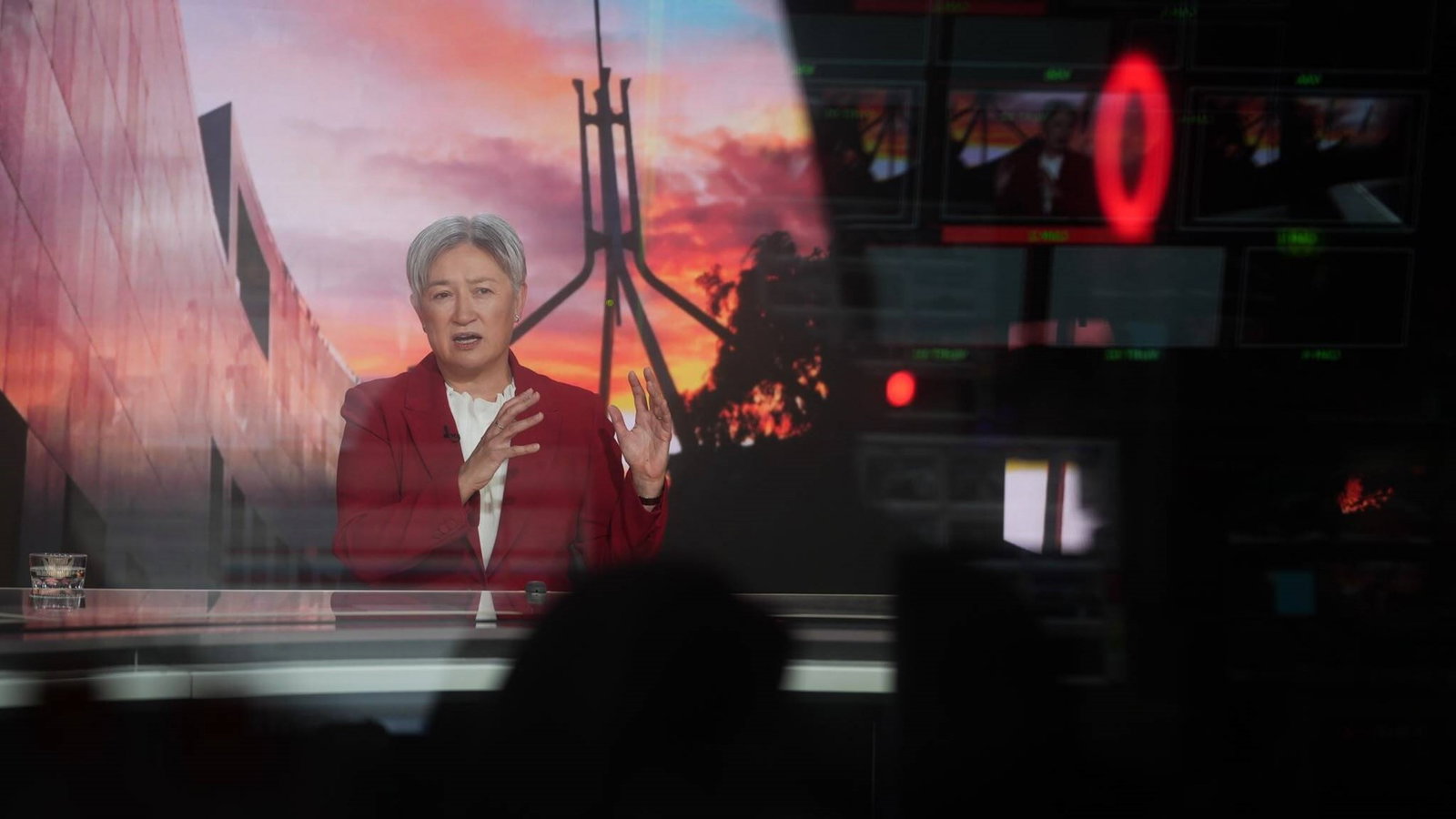
Penny Wong is also defending her frontbench colleague Chris Bowen, after talks at the COP summit broke down.
The climate change and energy minister is on his way back to Australia after leaders were unable to reach a consensus despite the drawn-out negotiations.
Wong was the climate minister the last time COP failed to reach an agreement, back in 2009 at the talks in Copenhagen.
She tells ABC’s News Breakfast that of course everyone wishes a consensus could’ve been reached in Türkiye.
“I know what Chris Bowen has done has been to work extremely closely with the Pacific all the way through this process. And to keep faith with them,” she says.
“He sought to do that the whole way through, and I’m sure did so in Turkiye as well. And the reason we sought to participate here was because we wanted to keep faith with the Pacific on climate.”
AI is already changing how we work and how wars are fought: Wong
Foreign Minister Penny Wong will use a speech to the Senate to warn the rivalry between the US and China is making the world less stable and increasing the risk of conflict.
Wong tells ABC’s News Breakfast that Australians can see the way in which the environment is changing and how technology, such as artificial intelligence, is changing how the “great powers are operating”.
“An important point is that artificial intelligence is already with us. It’s already changing how we work. It’s already changing how wars are fought. It’s already reshaping our economies and our lives,” she says.
“So the question really is, how do you handle that? And as the prime minister said, you have to do it on Australian terms.”
So what will the role of middle powers like Australia be? Wong says it’s important for us to work with nations like the UK, Canada, the EU and Japan to “secure our position”.
Wong reacts to Nvidia’s decision to reinstate Jensen Huang
Nvidia has reinstated Jensen Huang as chief executive overnight, just days after the board ruled out his return to the chip maker following revelations of extra-marital affairs.
Foreign Minister Penny Wong is asked by ABC’s News Breakfast if she’s surprised by that decision.
“It’s certainty made news,” she says.
“But ultimately [it’s] a decision for the board and the company. My focus today is more broadly on … securing Australia’s future in a changing world.”
Could Labor target EV and home battery subsidies in MYEFO?
As the government looks to make savings in the upcoming mid-year budget update, speculation is rife subsidies for home batteries and electric vehicles could be in its sights.
The cost of the schemes have blown out from initial forecasts in recent years. Labor’s Andrew Charlton was asked if the government was considering means testing the subsidies.
“I’m not going to get in front of any announcements that might be might be made, except to say that the treasurer has said that the savings will be substantial,” he tells Seven.
Pressed again, Charlton again didn’t rule it out.
“Every budget is an opportunity to review government expenditure and making sure it is working for taxpayers. I’m not going to announce any specific measures on this show. We’re going to find those out in the next couple of weeks.”
That’s not a no, hey.
Good morning 👋
Hello friends. Welcome to our politics live blog. I’m Courtney Gould from the ABC’s Parliament House team, here to guide you through the day.
Foreign Minister Penny Wong will be out of the blocks early today, ahead of a speech she’s giving to the Senate later today. She’ll use the address to warn of a new global era of coercion and conflict (more on that shortly).
Expect there to be focus on Treasurer Jim Chalmers after he painted a pretty grim picture of the next year in an economic statement yesterday.
Also on my radar, the status of a couple of key bills the government wants passed this week (digital duty of care, gas reservation scheme … just to name two). The party’s will meet this morning, so it’s a bit of a watch this space on if any deals have been reached overnight.
Anyway, enough of me jabbering on. Let’s jump straight into the action.
Loading
Source: www.abc.net.au