Europe is beginning to explore the possibility of delivering conventional military payloads from orbit, with the German arm of defense behemoth MBDA and space transportation company ATMOS Space Cargo teaming up to investigate a concept known as Precision Orbital Deep Strike (PODS). The proposal involves putting military payloads into space before sending them back through the atmosphere when commanded, potentially offering a radically different approach to long-range precision strike.
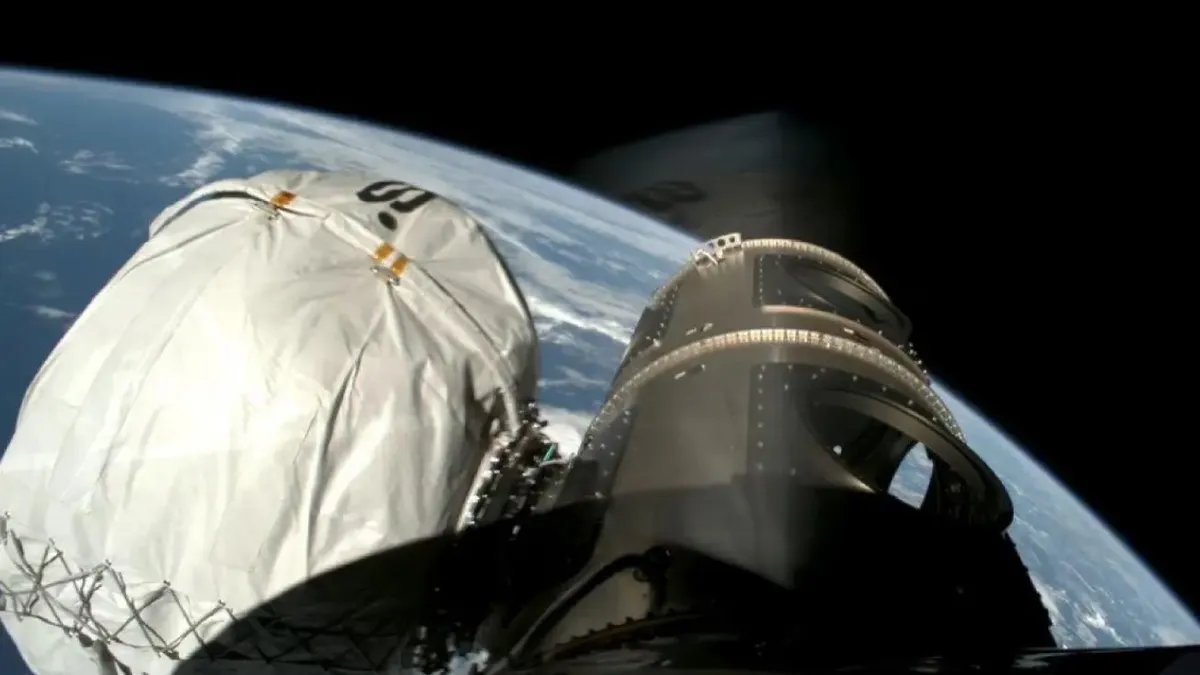
The companies announced their cooperation agreement on November 18, establishing a framework for joint feasibility studies and the design, development, and demonstration of the proposed capability. Initial work will examine system architecture, technical feasibility, payload integration, and potential technology demonstrations.
The concept is undoubtedly hugely ambitious. Getting a payload into orbit and returning it to Earth is a very different problem from developing a reliable weapon capable of striking a designated target with precision and at a predictable time. With that in mind, the agreement represents an initial effort to determine whether such a capability is technically and operationally feasible.
A New Approach To An Old Concept
The idea of using orbital trajectories to deliver weapons against targets on Earth is not new. During the Cold War, the Soviet Union developed and briefly operated a Fractional Orbital Bombardment System (FOBS), designed to place nuclear warheads into partial orbital trajectories before bringing them back toward their targets; China has more recently revisited the idea. Earlier American proposals for orbital kinetic bombardment weapons, often referred to as “Rods from God,” meanwhile explored the possibility of delivering conventional effects from space.

PODS appears to be pursuing a different approach, drawing on modern commercial orbital transportation and atmospheric re-entry technologies to potentially deliver conventional military payloads. Those payloads could consist of kinetic projectiles that simply fall from space, or perhaps some other type of munitions that emerge from a capsule after entering the atmosphere.
The London Times reported earlier this month that ATMOS had already been working on a prototype concept involving a conventional projectile carried by a satellite and protected by a re-entry vehicle. The company had reportedly been exploring military applications since Russia’s full-scale invasion of Ukraine in 2022 and was looking for a major defense-industry partner to help advance the concept. Now, MBDA has been identified as a potential candidate.

According to the German business newspaper Handelsblatt, the concept could eventually involve dozens of capsules operating in low Earth orbit, with military payloads held in space until needed. Low Earth Orbit (LEO) refers to a band of space that measures roughly 100 miles to 1,200 miles above the Earth, and which is highly congested. It is unclear if the plan is to use a recoverable capsule that carries a weapon, releases it during re-entry or before reaching the target, then continues to a separate recovery area, or if this is a one-way payload delivery, with the capsule and its payload expended in the strike. We have approached ATMOS for more details.
Meanwhile, ATMOS CEO Sebastian Klaus reportedly described a system intended to reach targets anywhere on Earth in less than 60 minutes.
Satellites in low Earth orbit travel at approximately 17,500 miles per hour, but this does not mean they can strike any location on Earth within a predictable timeframe. Response times will be affected by orbital inclination, spacecraft positioning, the availability of suitably positioned vehicles, re-entry requirements, and more. Achieving genuinely responsive global coverage could therefore require a substantial constellation and considerable investment in launch and replenishment infrastructure.
Commercial Space Tech Meets Military Need
ATMOS is developing reusable systems for transporting cargo into orbit and returning it to Earth. Its Phoenix program is intended to support applications including scientific research and industrial manufacturing, with atmospheric re-entry technology at the heart of the company’s approach.
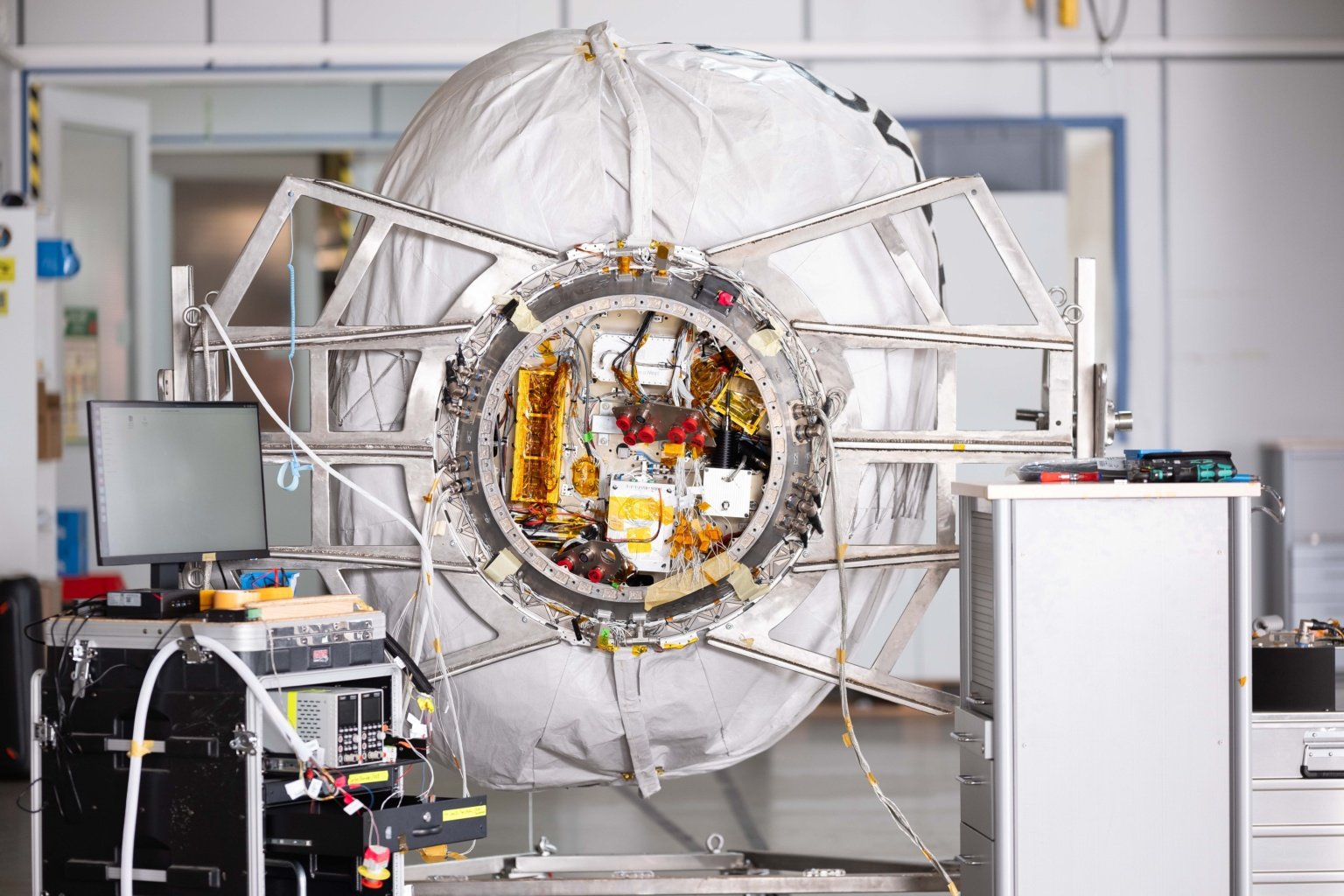
These technologies could provide a starting point for the military applications now being explored with MBDA. However, the companies describe PODS as a dedicated defense initiative, separate from the civilian Phoenix program, billed as a reusable orbital transfer and return vehicle (OTRV) for autonomous cargo operations.
To date, ATMOS has demonstrated that its re-entry technology can survive an orbital flight and atmospheric entry, using its Inflatable Atmospheric Decelerator (IAD), but has not demonstrated a recoverable, independently maneuvering orbital vehicle.
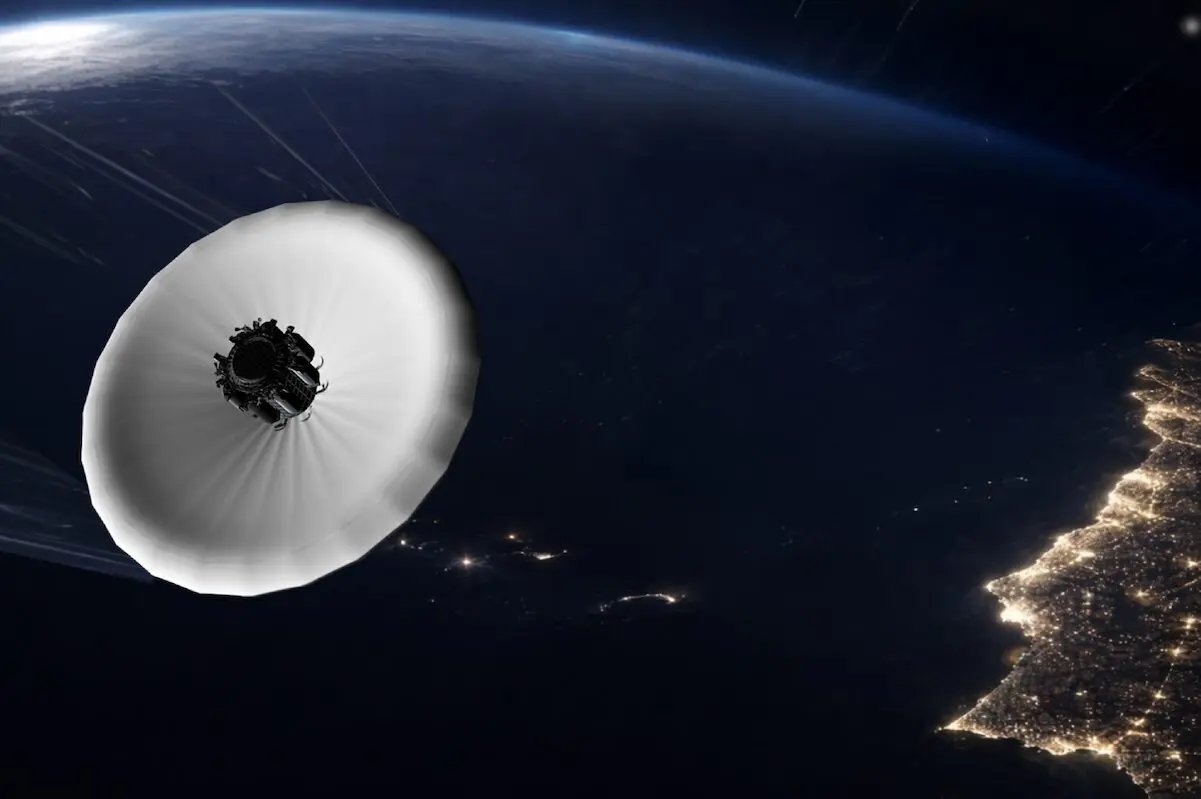
There is also a huge gulf between developing a spacecraft capable of returning cargo from orbit and creating a military delivery system capable of placing a payload accurately at a designated location. Re-entry vehicles must contend with extreme heating, rapidly changing aerodynamic conditions, and enormous stresses. Maintaining predictable flight characteristics throughout that process is already a considerable engineering challenge.
Adding a military payload introduces further complications. The system would need to account for the payload’s specific characteristics, its survivability during re-entry, and the requirements of its intended mission. Neither company has explained what kinds of military payloads are being considered or how the proposed system would achieve its intended accuracy.
It is also unclear whether PODS would involve a dedicated orbital weapons platform, individual re-entry vehicles carried into orbit, or another configuration altogether.
The hope is clearly that the combination of MBDA’s experience in missile development, guidance systems, and military payload integration, combined with ATMOS’s expertise in orbital transportation and re-entry systems, will be a meaningful starting point.
The Economics And Military Utility Remain Unclear
Even if the engineering challenges can be addressed, whether PODS would make military sense remains an open question.
A system intended to provide rapid global strike coverage from orbit could require access to launch vehicles, replacement capacity, and ground infrastructure. Maintaining such a constellation could prove expensive in comparison to the volume of kinetic strike capability they provide. In terms of numbers, German media reports suggest that “dozens” of capsules could do the job. This would be sufficient for its primary mission of striking only extremely high value and/or time sensitive targets and acting as a ‘silver bullet’ weapon system.
There would also be questions about survivability. Satellites in low Earth orbit are relatively easy to track, and their predictable orbital paths could make military platforms vulnerable to the kinds of counterspace capabilities that China and Russia are both actively engaged in. A system designed to provide persistent orbital strike options could therefore become a very attractive target in a major conflict.
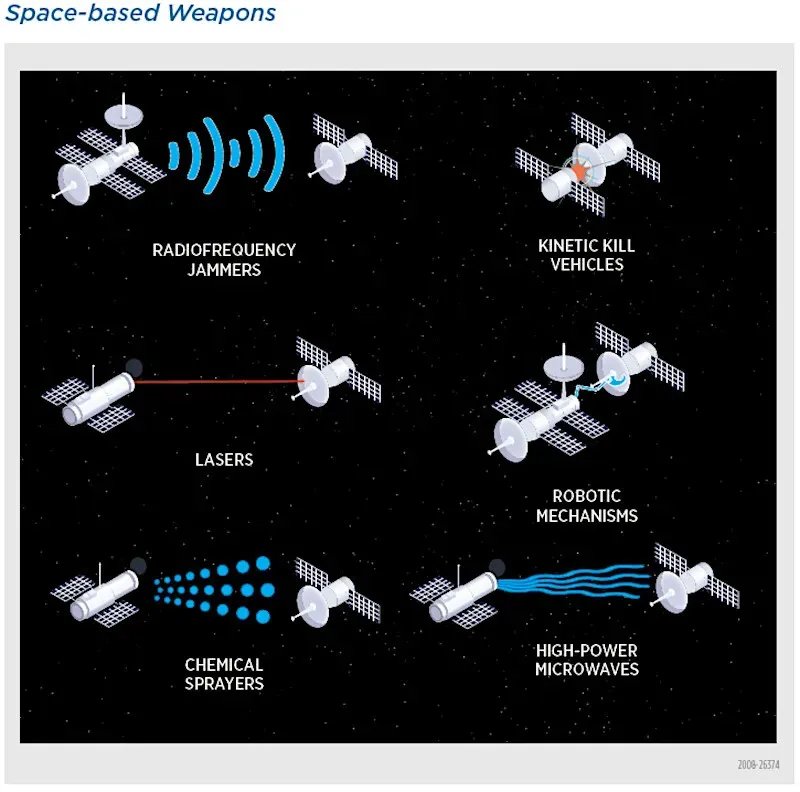
The strategic advantages are clear. As well as reach, PODS would offer extreme unpredictability, a very fast response time and unconventional approach trajectories, as well as blistering speed, making it very hard to defend against. This could be enough to justify the additional expense and complexity. Having the weapon in orbit would provide better survivability than on the ground, at least in most cases.
On the other hand, space-based platforms are not inherently invulnerable, and orbital mechanics impose constraints, too.
The concept would also raise significant legal and strategic questions. The 1967 Outer Space Treaty prohibits placing nuclear weapons and other weapons of mass destruction in orbit, but does not contain an equivalent blanket prohibition on conventional weapons in Earth orbit. Despite that, international law governing the use of force and the conduct of hostilities would remain applicable.

Outer Space Treaty Signed In Washington (1967)
There could also be consequences for strategic stability. Other countries might have difficulty distinguishing between commercial orbital transportation systems and military platforms, particularly if the latter were designed to carry payloads that could be returned to Earth at short notice. Even a conventional weapons system could be perceived as a significant strategic threat, potentially encouraging further counterspace developments.
Having said that, weaponization of space is now becoming much more common, with the ethical barrier to entry accordingly eroded. As well as Chinese and Russian activities, the United States has admitted to having orbital weapons now and the future Golden Dome will include space-based interceptors.
A European Strategic Ambition With A Long Way To Go
The statements accompanying the announcement make clear that the initiative is also intended to support Europe’s ambition to develop sovereign military capabilities. This includes efforts to establish more conventional European long-range strike capabilities, such as subsonic cruise missiles, but also emerging hypersonic capabilities.
“Europe must be able to develop, build, and operate its critical defense capabilities through its own industry — and that starts with infrastructure,” ATMOS CEO Sebastian Klaus said. He described orbital transportation and atmospheric re-entry as a new layer of strategic infrastructure, arguing that control over these technologies will determine what Europe can achieve independently.
MBDA Deutschland Managing Director Thomas Gottschild similarly described the cooperation as part of the company’s wider strategic vision in the space sector, with the aim of providing European armed forces with a sovereign capability.
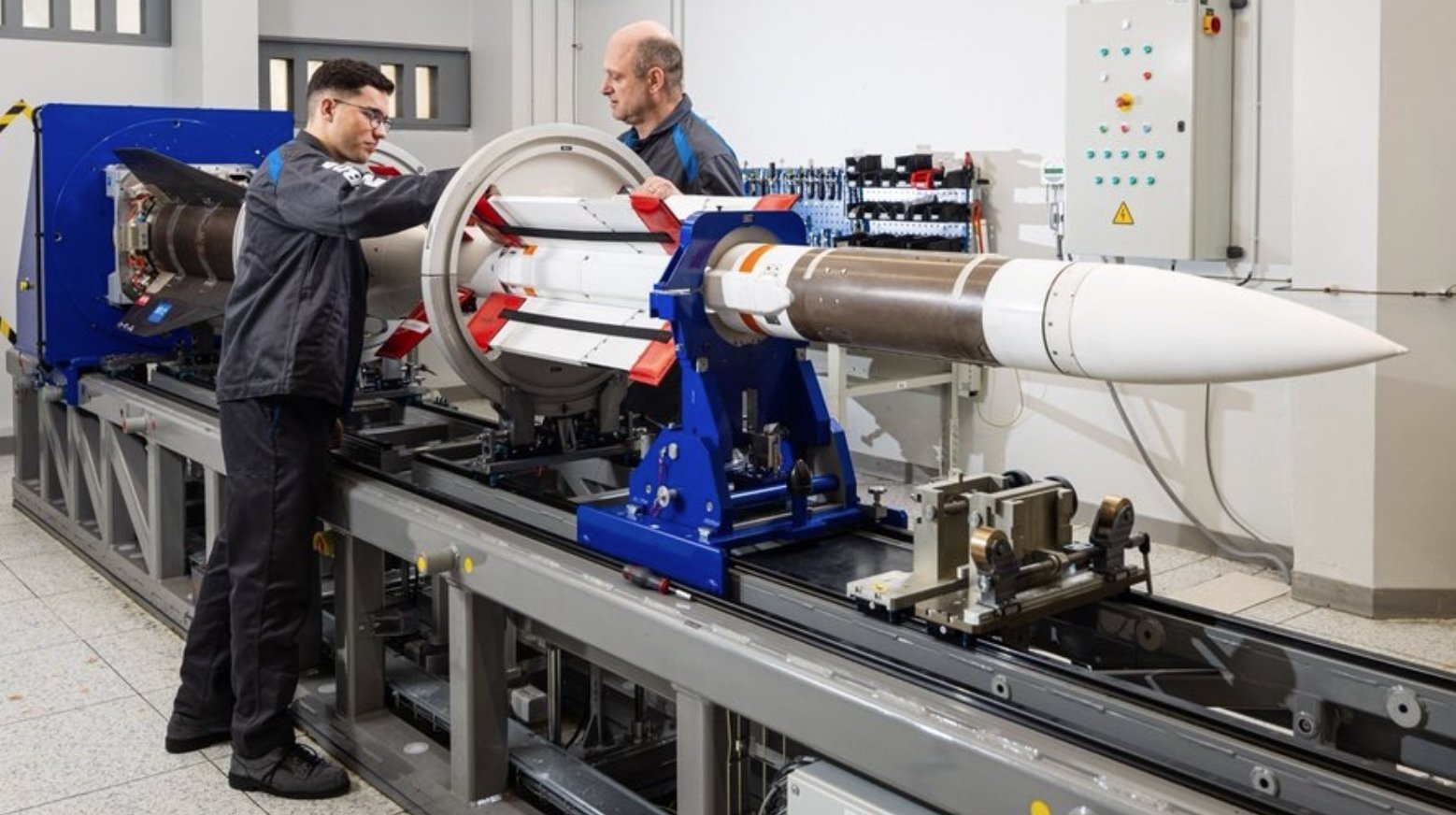
Those ambitions reflect growing European interest in space as an operational domain and in reducing dependence on external suppliers for critical defense technologies, wherever they might be based.
At the same time, neither company has disclosed a development budget or an operational timetable. MBDA says that specific development activities and subsequent projects will require further evaluation and separate agreements.
The partnership is nevertheless noteworthy. It formalizes cooperation between a European space transportation company that has been exploring military applications for several years and one of the continent’s leading missile manufacturers.
Whether that combination can ultimately produce a practical orbital strike capability remains a very open question. The technical hurdles, potential costs, and uncertain military advantages are substantial. A European system fielding weapons capable of routinely striking targets from orbit remains far away in the future, if it’s even feasible. However, Europe is at least starting to explore the boundaries between commercial space transportation and conventional military strike.
Contact the author: [email protected]
Source: www.twz.com