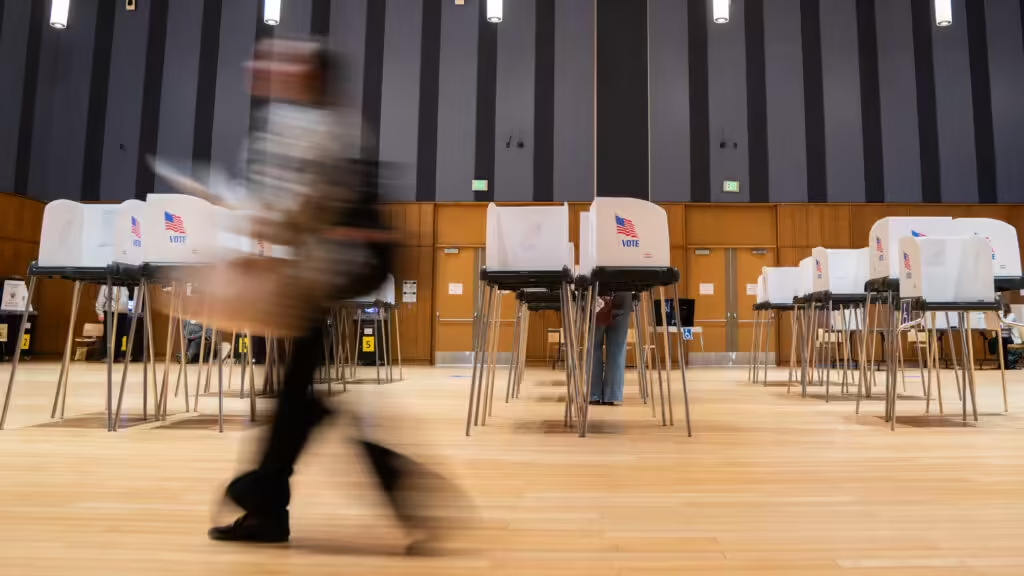

The reminders to vote in Tuesday’s midterms are ubiquitous. Some health scholars have another reminder: that elections, especially divisive ones, can stress the heart.
Studies have found a significantly higher chance of arrhythmias in the weeks just before and after elections, and an increased rate of hospitalizations for heart attacks right after voting day.
“Your political party doesn’t matter to your heart; stress does,” Lindsey Rosman, assistant professor of medicine in the division of cardiology at Northwestern University, told STAT on Thursday. “Your emotional health and your heart health are connected.”
Take the last two presidential elections. Compared with other timeframes, researchers noted distinct changes in early November that aligned with heightened anxiety. Even if transient, higher blood pressure or abnormal heart rhythms can turn serious for people diagnosed with cardiovascular disease, or for those unaware of a condition that might make them more vulnerable.
What research on 2016 and 2020 found
To see how elections may stress the heart, Rosman studied people who already had a heart rhythm disorder, taking advantage of data provided by their implanted cardiac devices. Her team found a 77% higher rate of irregular heartbeats during the six weeks around the 2016 election, compared with a control period.
The arrhythmia pattern was similar across age, sex, race, and other health conditions; Democrats and Republicans had similar risk. The retrospective observational study was carried out in North Carolina, when Rosman was at the University of North Carolina. Because it was a swing state in 2016, residents saw an especially heavy volume of political ads and campaign events.
After the 2020 presidential election, Matthew Mefford, a cardiovascular disease epidemiologist and research scientist at Kaiser Permanente Southern California, asked whether hospitalizations for acute cardiovascular disease went up immediately after Election Day, akin to admissions after natural disasters. The answer was yes, with the rate of heart attacks significantly higher compared with the same five-day period two weeks before. The retrospective cohort study looked at people with and without a history of heart disease.
“Stress comes in many forms, including both positive and negative, and the stress impact associated with elections is just one situation that can result in adverse heart outcomes,” Mefford told STAT on Thursday. “Being aware of how stress, generally, can impact your body is important especially for those with pre-existing heart disease.”
While stress responses in the body follow the same mechanisms, they’re not the same in all cases. “Not everyone responds to stress in the same way or to the same magnitude that triggers a heart event,” he said.
Other caveats: The two studies can’t establish cause and effect, just an association between health events and exposure to political campaigns.
How does stress play out in the body?
Ten years after Rosman’s study, today’s exposure may be magnified beyond political ads, thanks to the saturation of social media. Whatever the source, the deluge of news can cause acute stress and anger, triggering a fight-or-flight response. Adrenaline rises, the sympathetic nervous system ramps up, and the calming influence of the vagus nerve drops.
These changes can alter the heart’s electrical activity, making abnormal rhythms more likely in someone already prone to them, Rosman said. Inflammation and stress hormones like cortisol may also play a role, as can stress-related behaviors, such as sleeping poorly, skipping medications, eating more foods high in fat or salt, or drinking more alcohol or caffeine.
Her findings apply most directly to people at higher cardiac risk, she said, but she pointed out that nearly half of U.S. adults have some type of cardiovascular disease, including high blood pressure.
“People with existing heart disease are more vulnerable to arrhythmias triggered by emotion, but these events can also happen in people without known heart disease,” she said, citing reports of more heart attacks and cardiac events after 9/11, earthquakes, and World Cup matches. “Chronic stress is also an established risk factor for heart disease over time.”
Next up for Rosman is using wearables to study acute stress events. She hopes a larger, nationwide follow-up study looking at the 2020 and 2024 elections will offer some answers before the next U.S. presidential election.
What’s a voter to do?
In general, acute stress raises heart rates and blood pressure readings in the short term. But for people with uncontrolled hypertension or coronary disease, spiking stress adds strain.
Rosman suggests setting limits on news and social media, especially before bedtime. Focus on sleep and physical activity. Take your medications. Both Rosman and Mefford recommend meditation or yoga, taking a walk, hiking in nature, or engaging in exercise.
“Listen to your body,” Mefford said.
STAT’s coverage of chronic health issues is supported by a grant from Bloomberg Philanthropies. Our financial supporters are not involved in any decisions about our journalism.
Source: www.statnews.com