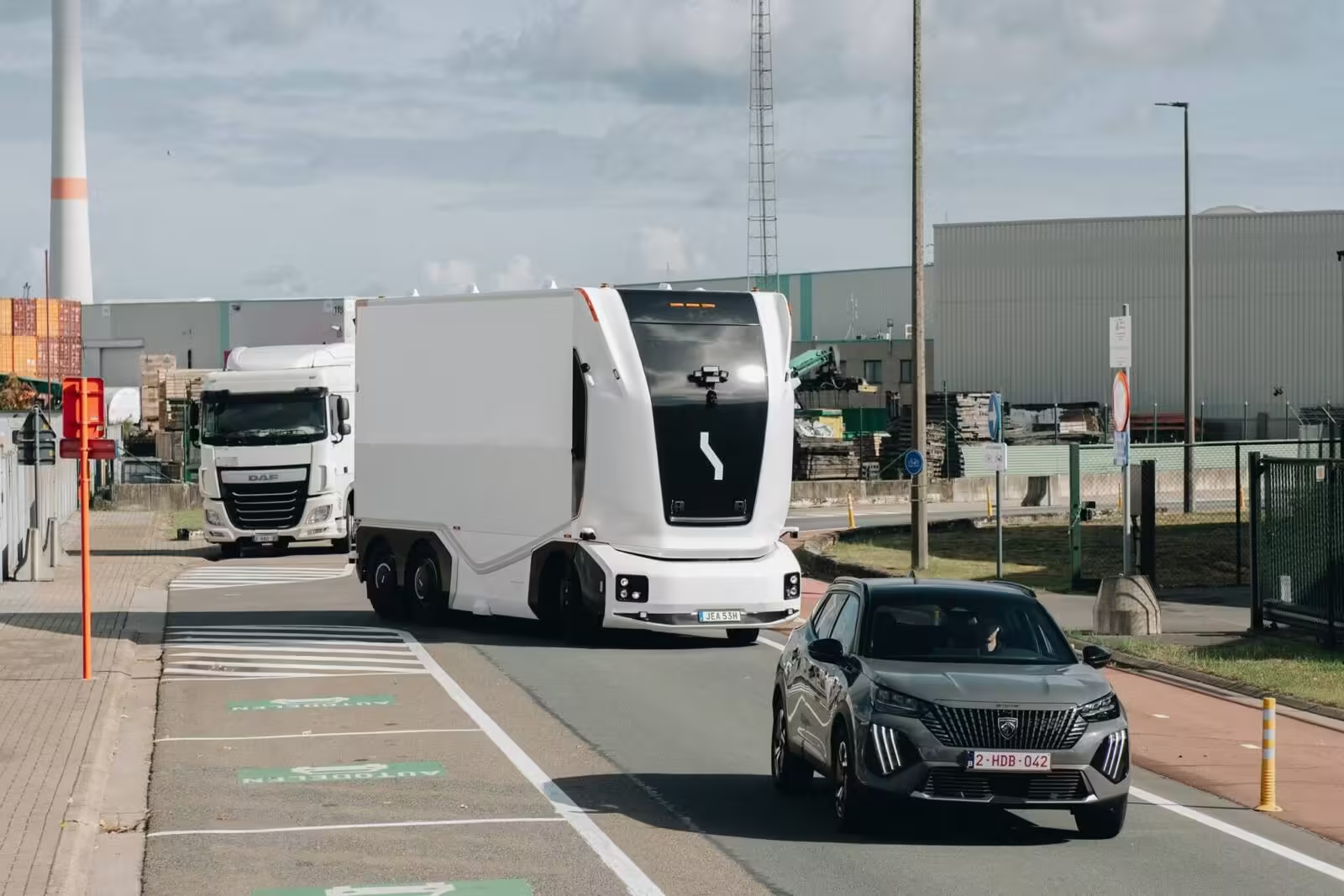

Einride expects to exit 2027 at about US$250m in annualised revenue, deploying most of its 500 Tesla Semis next year
Einride’s contracted annual recurring revenue has grown 76% since June to US$167m, as the Swedish autonomous and electric trucking firm built its customer base and expanded driverless operations in Europe and the US. Third-quarter revenue rose 27% on the previous quarter to SEK185.9m (US$18.3m) on a constant currency basis.
The company has added eight customers since June, taking its total above 40, and its contracted operations without a safety driver have grown from about 5,400 hours to around 8,500. In September it launched what it believes is the first cab-less SAE Level 4 truck in daily operation on a German public road, running for Lidl under a first-of-its-kind permit from the Federal Motor Transport Authority (KBA), and it now also runs cab-less trucks for Lorenz Snacks in Germany and EASE Logistics in Ohio.
Einride is developing its next-generation autonomous driver on NVIDIA’s Hyperion platform and is targeting highway autonomy from the first half of 2028. It plans to deploy most of the 500 Tesla Semis it announced in August during 2027, and expects to exit next year at around US$250m in annualised run-rate revenue, more than 65% of which is already covered by signed contracts.
Adjusted EBITDA was negative SEK206.9m (US$20.3m) in the quarter, and the company widened its second-half loss outlook to US$39–41m. “With a growing base of contracted business and a clear roadmap for fleet expansion, we are focused on executing against our commitments, improving efficiency and building towards a profitable, scalable freight model,” said Roozbeh Charli, Chief Executive of Einride.
Reaching cash flow breakeven in 2028 means growing the fleet from about 270 trucks today to between 1,500 and 2,000, while cash fell by nearly a third in the quarter to US$53m. That is why asset-backed financing for the vehicles, rather than Einride’s own capital, has become central to the plan.
Why this matters:
- Germany opens a driverless freight pathway. A KBA permit for a cab-less truck with no onboard operator suggests Germany’s Level 4 framework can support commercial driverless freight on defined public routes, giving Europe a regulatory model beyond US state-by-state approvals.
- Fixed routes lead autonomous freight. With 10 autonomous trucks against more than 260 electric units, and highway autonomy not targeted until 2028, near-term driverless operations remain concentrated on short, repetitive plant and depot shuttles where operating domains are easier to validate.
- Service models shift fleet capital burden. Funding vehicles through asset-backed financing and selling freight capacity as a service could ease the upfront cost barrier for shippers adopting electric trucks, though cash breakeven still depends on reaching 1,500 to 2,000 vehicles in operation.
Source: www.automotiveworld.com