
India stands at a unique point where its science is rapidly advancing toward indigenous gene therapies, with promising treatments getting approval. However, a recently proposed regulation regarding animal experimentation looks backward.
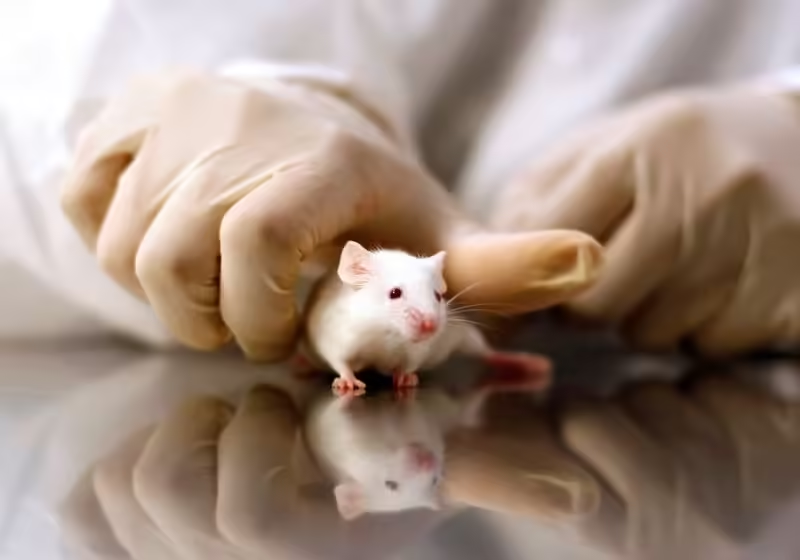
As per a recent notification, the Ministry of Fisheries, Animal Husbandry and Dairying has proposed changes to the draft Prevention of Cruelty to Animals (Control and Supervision of Experiment, Breeding and Trading of Laboratory Animals) Rules, 2026. The rules lay down the regulatory framework for breeding, trading, care, and use of animals in scientific research, testing, and education. While the rules aim to establish measures to protect animals used in these sectors, several provisions that are now incorporated instead risk compromising ethical standards while undermining scientific credibility and reliability.
Several stakeholders have also highlighted that these draft rules risk pushing back the research progress India has made in the last few years.
A Genuine Frontier Moment
India is building a growing market in advanced therapies. In October 2023, the Central Drugs Standard Control Organization (CDSCO) approved NexCAR19India’s first chimeric antigen receptor (CAR) T cell therapy at a fraction of global prices. A second CAR T cell therapy followed in January 2025, and a first-in-human gene therapy for severe hemophilia A brought all five participants to an annualized bleeding rate of zero. In addition, India’s first indigenous CRISPR-based therapy for sickle cell disease is being readied for clinical trials. An induced pluripotent stem cell (iPSC)-derived retinal therapy has entered human trials, and mRNA vaccines developed during COVID-19 show that platform technologies can be built at home.
Many national initiatives, including the ones by the Department of Biotechnology to advance biomanufacturing, entrepreneurshipand mapping India’s genetic diversity have also enabled this change. The impact of the field on public health in India can be enormous. An estimated 70–96 million Indians live with rare diseases and nearly 95 percent of all rare diseases have no approved therapy. In India, while approximately 450 rare diseases have been documented, approved therapeutics exist for only about 12–15 rare conditions.
The World is Writing NAMs Into Regulation
Advanced therapies are poorly served by conventional animal testing because their action is often human-specific. Technologies that edit or engineer genetic sequences, such as CRISPR and CAR, target and recognize human sequences. The delivery vehicles for the genetic material, including viruses and lipid nanoparticles, can also provoke very different immune responses in rodents and people. The US Food and Drug Administration (FDA) also acknowledged this in 2013, where it recommended in vitro studies partly to establish whether an animal species was relevant in such contexts. This is where new approach methodologies (NAMs), including patient-derived iPSCs, organoidsorgan-on-chip systems, and in silico models come in. For rare disorders, they can model disease mechanisms and test gene-editing strategies for patients—where a rare disease can include hundreds of genetic variants.
In April 2025, the FDA published a roadmap to reduce animal testingstarting with monoclonal antibodies. It has also issued a streamlined antibody guidance, a NAMs validation framework, and submission standards for NAMs data. Its program to qualify novel drug development tools, called Innovative Science and Technology Approaches for New Drugs, is now permanent, and the National Institutes of Health has announced that it is going to prioritize human-based research technologies. There have also been similar regulatory moves worldwide.
This shift has been visible in India as well. The National Guidelines for Gene Therapy Product Development and Clinical Trials released in 2019 established a framework for gene therapy products. Subsequently, the 2023 amendment to the New Drugs and Clinical Trials Rules listed cell-based assays, organ chips, microphysiological systems, and computational modeling among accepted nonclinical methods.
A Draft That Looks the Other Way
While India’s new draft aims to establish measures to protect animals used for scientific or educational purposes, several gaps remain.
One of the striking points has been that the draft does not mention NAMs. If approved, requirements in the previous version of the rules to use the lowest phylogenetic species and fewest animals is diluted to “wherever possible” without describing “what is possible” or requirement of any proof.
Earlier, all experiments conducted on animals with a higher phylogenetic status than rodents and rabbits, including dogs and non-human primates, required the mandatory approval from the Committee for Control and Supervision of Experiments on Animals (CCSEA), the statutory body created to oversee animal experimentation. The new rules now classify experiments as “mild,” “moderate,” or “severe” based on the animals’ pain they are likely to suffer, with only the “severe” categories requiring CCSEA approval.
Stakeholders have raised concerns that this classification of pain can be subjective, with cases such as exposure to noxious stimuli, withdrawal of food for 24–48 hours, induction of tumors classified into “mild” or “moderate” category. The mild and moderate experiments on dogs, non-human primates, pigs, and other larger species can now be cleared by institutional committees, where five out of the total nine members belong to the establishment applying for approval, indicating a clear conflict of interest. In addition, the exemptions could now allow animals to be sourced from the wild, open markets, or stray populations.
These clauses not only raise ethical concerns but also question the scientific reliability of data emerging from such animal studies. Reliable preclinical data depend on standardized animals with defined genetics, known health status, controlled age, diet, and housing. Wild, market-bought, or stray animals bring unknown genetics, undiagnosed infections, chronic stress, and unrecorded histories, all of which can alter immune responses, drug metabolism, and overall physiology. The resulting variability can lead to researchers needing more animals for experimentation, contradicting the principle of ‘reduction.’ It can also lead to results that are harder to reproduce and less predictive of human outcomes.
Animal models often mimic human-specific therapies only partially, and this added noise can further weaken the results’ translatability to humans.1 This can further increase the attrition rates during clinical trials due to poor efficacy or unpredicted toxicity.
With global regulators raising the bar for conducting animal experiments, the current draft sends a mixed signal by lowering the cost of and friction to animal experimentation.
While the recent initiatives in India, such as the New Drugs and Clinical Trials (Amendment) Rules (2023) and other policies are inviting human-relevant innovation, these draft rules could make animal studies easier, cheaper, and more routine. This can also lead to unintended consequences of increased investment in animal facilities, with models such as organoids, organ-chips, and iPSC biobanks reflecting India’s genetic diversity losing out.
The bigger risk lies in the trajectory the global regulations are taking where validated NAMs data can become expected, then preferred, in submissions for biologics and advanced therapies. If India has not built qualified NAMs platforms, its developers will have to buy them. That could include licensed organ-chips, imported iPSC lines and reagents, studies by foreign contract research organizations, and royalties on proprietary models. All of these risk pushing India’s position to large-scale manufacturing while allowing others to lead and own the innovation.
Models validated on donor cells from other populations may also fail to capture the genetic variations representing Indian patients. This means that ceding NAMs capabilities to foreign sources may also lead to losing the opportunity to develop advanced therapies that target Indian populations.
Calibration, Not Abolition of Animal Experiments
Toxicologists caution that NAMs cannot yet reproduce whole-organism physiology and that NAMs should be coordinated with well-designed, human-relevant animal studies.1 However, calibration is key. India’s rules should demand stronger justification for animal use, prioritize replacement where validated methods exist, and make NAMs a routine part of ethical review.
The final rules should have a “NAMs-first” clause and stronger justification for not using validated non-animal methods. They should retain central CCSEA review for non-rodent species and restore the contract-testing bar. Finally, the government should create a national NAMs validation consortium linking CCSEA, CDSCO, and other government and public funding bodies. It should be anchored by an Indian iPSC biobank and aligned with OECD and FDA frameworks so that Indian data are accepted abroad.
India is on the cusp of developing technologies that can significantly advance the biomedical research field. Scientists from the country have made CAR T cell therapies at a fraction of the global price. The next generation of human-relevant therapies could be on a similar trajectory—but only if the country’s rules point forward, not in the reverse.
Source: www.the-scientist.com