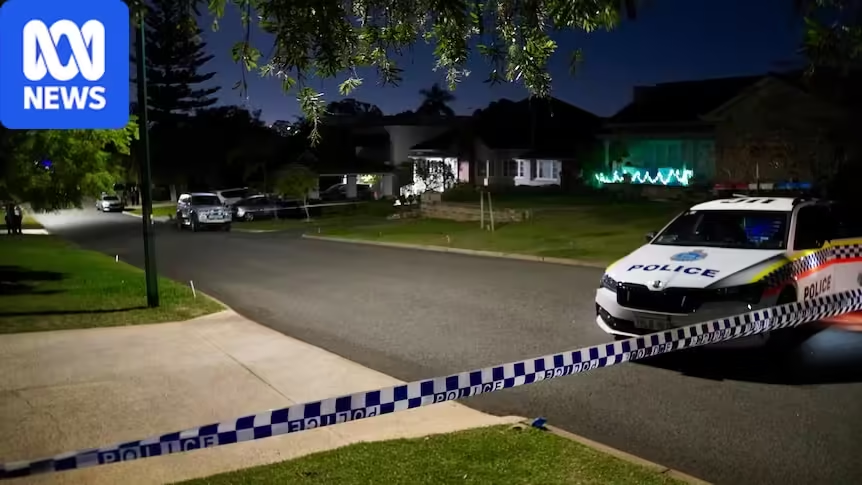

It was a crime that shocked Perth: a family and domestic violence murder in the heart of Perth’s affluent western suburbs.
In what Mark Bombara’s daughter, Ariel, would later describe as “planned choices … made to murder, underpinned by a lifetime of power, privilege, control and entitlement”, Bombara forced his way into the home of his wife’s best friend, Jennifer Petelczyc, in May 2024.
Bombara was looking for his estranged wife, Rowena; instead he found medical receptionist Jennifer, 59, and her 18-year-old daughter, Gretl.
Loading…
“When he realised my mum wasn’t in your home, rather than walking back out of that house he decided time was up, and murdering your whole family would be the next best punishment,” Ariel Bombara would tell an inquest into their deaths this week in an devastating disavowal of her father’s actions.
Held over five days, the inquest laid bare a cascading series of police errors and missed opportunities to save the lives of the Petelczyc women before they were murdered in cold blood.
The gunman killed Jennifer and Gretl Petelczyc in 2024 in a horrific shooting. (Supplied)
The startling revelations include a two-decades-long failure to review gun licences, four separate pleas to police for help that went unheeded, and multiple Triple Zero (000) calls — made as the murders were unfolding — left on hold.
Triple Zero delays
As the women pleaded for their lives, Gretl twice tried to call emergency services, but both times she waited on the line for more than one minute to be put through to police.
The calls disconnected before she could talk to an officer.
Yet, counter to police policy, no-one called her back.
Ariel Bombara got through to police as she and her mother, Rowena, listened to the murders in real time while on the phone with Jennifer Petelczyc.
Ariel was forced to wait two minutes and 18 seconds for her call to be connected.
When she finally got through and explained the situation, the job was designated a priority two by the call taker.
The two women were killed in their Floreat home. (ABC News: David Weber)
It took five minutes to be upgraded to a priority one.
The first police arrived 11 minutes after the call, just in time to hear the last of five gunshots, with which Mark Bombara took his own life.
Detective Senior Sergeant Matt Edmunds told the court he did not think there was time for officers to intervene and save the women.
Matt Edmunds did not think there was enough time to save the victims when officers arrived. (ABC News: Julian Robins)
Acting State Coroner Sarah Linton agreed, but said if Gretl had spoken to an officer on the phone, she would have at least been reassured help was on the way in her final moments.
The separation
About two months before the murders, police escorted the gunman’s estranged wife into the family home to collect her belongings.
Rowena had left her husband just weeks beforehand, moving out of the home with daughter Ariel.
She and other family members warned the attending officers about Mark Bombara’s fragile mental health, with son Isaac telling police there may be firearms in the gun safe or “other locations”.
Despite this warning, police officers did not seize the weapons of a suspected domestic violence perpetrator, search the home for unsecured guns or inspect the safe.
If they had, they would have discovered more than 1,000 rounds of illegal ammunition.
The ‘nice guy’
Constable Shaun King entered the house first and accepted a cup of tea from Mark Bombara, whose behaviour was the “opposite” of what he was expecting.
“I hate to say it, but he seemed like a nice guy,” Constable King said, admitting he had been impressed by Bombara’s opulent home with its “million dollar view”.
The court heard Mark Bombara manipulated police in the weeks before the shooting. (Supplied)
This had impacted the inexperienced officer’s ability to assess Bombara’s character, he admitted.
Superintendent Andrew Wilson reviewed body-worn camera footage and said Bombara “groomed” the attending officers into a false sense of security.
“I believe [his behaviour] was manipulative … calculated … in an effort to place seeds of doubt in the attending officers’ minds,” Superintendent Andrew Wilson said.
Pleas for police help
The day before, Rowena and Ariel had attended Mirrabooka Police Station to make a formal complaint of domestic violence, asking for a police order — issued when police think a person is likely to commit an act of family violence.
Ariel Bombara made several appeals to police about her father. (ABC News: Lucy Murray)
They feared for their lives, they told police, recounting a long history of abusive behaviour and noting Mark Bombara had access to firearms.
They were told the grounds to make a police order were not met.
They tried again. Ariel phoned both the Perth police station and the Family Violence Division, warning her father was increasingly unstable and had access to 13 guns.
Still no police orders were made.
An internal report found officers should have issued a 72-hour police order giving police the power to seize his firearms.
Eight officers were found to have not performed their duty and were subject to internal disciplinary action.
Failure to check weapons
The inquest also revealed Mark Bombara should never have been able to hold a licence for the two Glock handguns he took to the Petelczyc home.
Bombara held a collector’s licence on sentimental grounds, despite that no longer being a valid reason to hold guns.
The inquest heard the gunman should not have had the weapons he took to the Floreat home. (ABC News: Julian Robins)
But since no-one was checking the online licence renewal system for about 20 years, his licence was re-issued illegally, six times, from 2005 onwards.
Gun storage issues
Less than 12 months before the murders, police wrote to Bombara with questions about his weapon storage locations.
He said he would get back to them but never did, despite two follow-up letters.
A computer system upgrade then wiped all records relating to gun storage non-compliance orders.
Police yesterday conceded mistakes had been made.
“WA Police accepts there were important lessons to be learnt from this tragedy,” Commissioner Col Blanch said in a statement at the conclusion of the inquest.
“WA Police has been open about the shortcomings identified in the police response leading up to this tragedy.”
Col Blanch acknowledged police failures. (ABC News: Jake Sturmer)
This included “failures in the assessment and management of risk”, which had led to 18 recommendations to improve responses to family and domestic violence — of which 14 have been completed, according to the commissioner.
Acting State Coroner Sarah Linton is expected to hand down her recommendations next year.
Source: www.abc.net.au