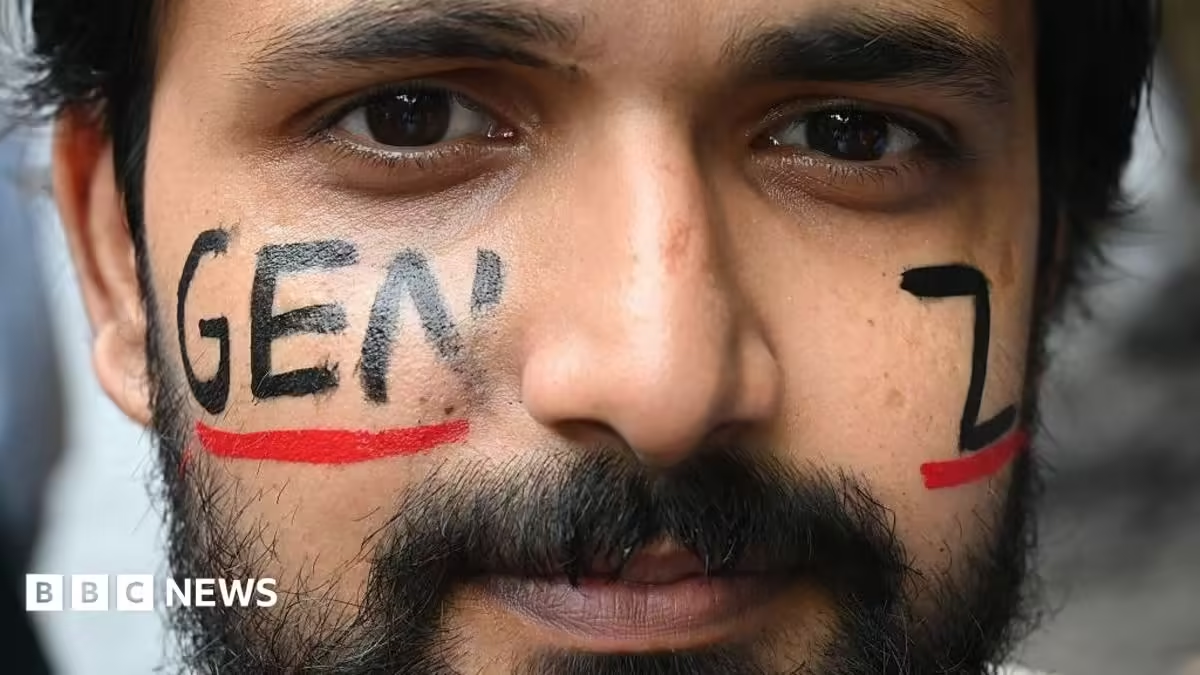

“Those who are organising the protests have repeatedly emphasised that this is non-violent,” she argued. “Rights have been whittled down in the name of law and order.”
The BJP has rejected suggestions it is suppressing peaceful dissent.
Islam told the BBC that demonstrations “cannot override the rights of other citizens just because a handful of people want to protest and be responsible for violence”.
Even dissenting online carries risk. Sakhi’s viral social media posts have attracted targeted abuse and transphobic attacks. The BBC has seen posts threatening them with violence and rape.
Sometimes, it can deter Sakhi from protesting or even make them change the way they dress.
“Making people laugh can turn into being called anti-national,” Sakhi said. “They want me to feel damaged,” they added.
They claim some of their content was removed after getting millions of views.
Under India’s information technology laws, the government can order platforms to block content on national security grounds. Notices on X and Instagram have shown accounts being withheld in India.
CJP leaders have likened the crackdown to the 1975 Emergency, when then prime minister Indira Gandhi suspended civil liberties and jailed political opponents.
Yet dissent has not been stamped out.
Opposition parties have, in part, filled the void. Tens of thousands gathered in Delhi on 1 November for a rally organised by INDIA blocan alliance of opposition parties led by Congress, and permitted by the authorities.
CJP leaders, meanwhile, insist the movement is bigger than their organisation.
When Das walked out Delhi’s Tihar prison on 21 October, photographs showed him smiling.
“I would just say wait and watch,” Das told us. “Time is on our side. We are a very young generation.”
Source: www.bbc.co.uk