
GM completed around 80% of the 2027 Chevrolet Silverado 1500’s passive safety engineering virtually, running 92,000 simulations
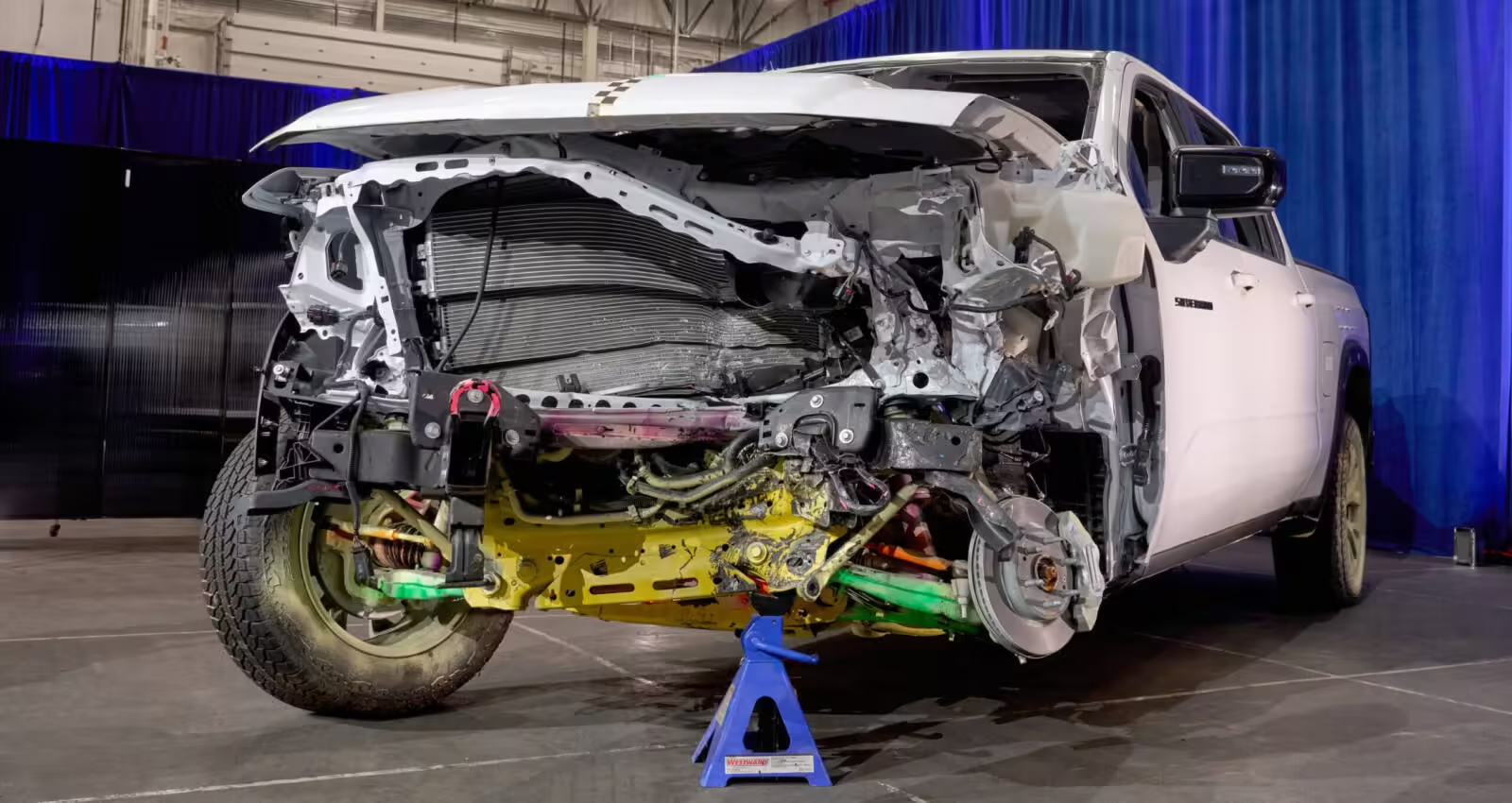
General Motors ran around 92,000 virtual crash tests during development of the 2027 Chevrolet Silverado 1500, completing roughly 80% of the pickup’s passive safety engineering in simulation. The work generated almost 2 petabytes of data, and GM is now using AI to help process it as it pursues a goal of halving vehicle development times.
Engineers from GM’s Global Safety Product Integration team used virtual variation analysis to study how small changes, such as material thickness or the way components are joined, affect crash performance. For a single 40% frontal overlap test at 40mph (64km/h), the team modelled hundreds of variations in how the vehicle structure and restraint systems would respond.
“GM is using math-based virtual engineering to run thousands of simulated crashes before physical properties exist,” said Regina Carto, Vice President, Global Product Safety, Systems and Certification at GM. “Engineers can evaluate a much broader range of conditions—including different crash modes, occupant sizes, and seating positions. They can examine design details, identify issues earlier and iterate in weeks rather than months.”
Physical tests remain part of the process, with the Silverado put through multiple real-world crashes to confirm simulation results and refine GM’s models. AI is already helping engineers analyse data and debug models, and GM expects it to take on more repetitive tasks in future.
The safety work is only part of the story. With the industry’s development cycle at four to five years, moving most crash engineering into simulation is one of GM’s clearest levers for compressing programmes, since every physical test consumes a vehicle that cannot be reused.
Source: GM
Source: www.automotiveworld.com