
The United States and its allies want Ukraine to win the war against Russia. The West stands with and supports Ukraine as it resists Russian aggression, defends its sovereignty and people, and seeks a negotiated path to lasting peace. This remains the priority. But supporting Ukraine through this fight carries another responsibility: learning as much as possible from it. Those lessons extend well beyond Ukraine, with implications for global security, particularly in the Indo-Pacific and the defense of the U.S. homeland.
This imperative is evident when the war is observed firsthand. This paper is sourced from two years of travel to Ukraine, involving more than 30 trips, as leader of the U.S. military’s Security Assistance Group-Ukraine (SAG-U) and NATO’s Security Assistance and Training for Ukraine (NSATU)—two complementary commands supporting Ukraine. These responsibilities provided a unique vantage point from which to observe the war and engage directly with Ukrainian military and civilian leaders, commanders and staffs, frontline units, defense industry leaders, and innovators.
Those experiences underline how quickly warfare is changing and fundamentally shape this paper’s arguments. Ukrainian commanders and soldiers are adapting to battlefield conditions in real time. Visiting command posts, one sees firsthand how unmanned systems, electronic warfare, artillery, intelligence, fires, and data are being integrated into combat operations. At Ukrainian defense industry facilities, engineers and companies are rapidly modifying systems in response to battlefield feedback. They describe their role as being to “innovate for the military and innovate with the military.” Ukrainian innovators are solving problems that did not exist—or were not fully understood—when this war began and are thinking about the future.
Both sides are learning, and both are adapting. Ukraine’s battlefield experience offers extraordinary insight into the changing character of warfare, but Russia is not a passive participant in this process. It is adapting its tactics, doctrine, force structure, training, and employment of capabilities in response to the same battlefield. While this paper focuses primarily on the operational insights emerging from a Ukrainian perspective, understanding how Russia is learning and adapting is equally important. This raises a question that the United States and its allies need to ask honestly: Are they learning enough from this war—and are they learning quickly enough to stay ahead of their adversaries?
When Russia launched its full-scale invasion of Ukraine in February 2022, nobody—except perhaps the Ukrainians themselves—could have imagined the war would persist into its fifth year. Ukraine continues to generally hold across a roughly 1,200-kilometer front while inflicting tremendous losses on Russian forces and demonstrating an increasingly sophisticated ability to strike across the depth of the battlefield.
Ukraine is not simply surviving—it is adapting. Both the capabilities employed and the leadership approach have required adaptation. Ukrainians are also humble enough to admit that they have not figured everything out. They have learned a lot, but in other areas they continue to have weaknesses—such as professional military education and building an empowered noncommissioned officer (NCO) corps.
At the tactical edge, Ukrainian forces have developed increasingly effective combinations of intelligence, unmanned systems, electronic warfare, fires, and data to find and strike Russian forces. Small unmanned systems have transformed how units conduct reconnaissance, attack, emplace mines, resupply, and evacuate casualties, among other tasks. Unmanned systems across air, land, and sea are having tangible effects and preserving lives. Electronic warfare has become integral to operations. Traditional capabilities such as artillery and mines are still important, particularly in weather conditions that constrain unmanned systems. They disrupt the enemy’s ability to mass, and drones increasingly provide the precision and persistence needed to exploit those effects.
In terms of operational depth, Ukraine has demonstrated an ability to disrupt Russian logistics, command and control, ammunition storage, airfields, and other military infrastructure. Ukrainian-developed long-range unmanned systems (precision mass) are reaching deep into Russia, striking petroleum storage and refining facilities, strategic logistics, elements of the Russian defense industrial base, and the country’s shadow fleet. Ukraine is also developing and employing increasingly sophisticated indigenous long-range strike capabilities, including emerging cruise and ballistic missile systems and nascent AI systems. Collectively, these capabilities are applying military and economic pressure on Russia and increasing the costs of continuing the war. Out of desperation, Russia is responding with increasingly complex long-range attacks of ballistic and cruise missiles and long-range one-way attack drones. Due to shortages in Patriots and the increased sophistication and speed of long-range one-way attack drones, Ukraine is again in a rapid innovation cycle, with the aim of developing its own interceptors to mitigate Russian advantages.
Beyond what Ukraine is achieving militarily, these accomplishments are significant because of how rapidly the Ukrainian military is learning and adapting while under attack. This war may be the most consequential environment for observing the evolution of modern warfare: Ukraine is not a laboratory for the West—it is a sovereign nation fighting for its survival and forced to solve the hardest problems of contemporary warfare every day, with a sense of urgency that cannot be replicated in peacetime. That presents the United States and its allies with an extraordinary opportunity, and the uncomfortable question is whether they are taking full advantage of it.
Are the United States and its allies learning enough? More importantly, are they learning fast enough? And are they learning faster than Russia, China, Iran, and North Korea? If the answer is no, the future cost could be enormous—in both blood and treasure.
The United States and its allies have an opportunity to pay down some of that future cost now by learning from Ukraine, adapting capabilities and institutions, and building enduring mechanisms that allow U.S. and Ukrainian soldiers, innovators, and defense companies to learn from one another. Allied forces must not be “too proud to learn.” This is a race to learn and adapt. Senior U.S. leaders must own it, lead it, and drive change.
This paper is organized in two parts. The first examines how the character of war is changing, including the race to learn and adapt, the emergence of an unmanned contact layer, Ukraine’s Unmanned Systems Forces, the central role of electronic warfare, and the implications for maneuver and the fundamentals of war. It also considers what these developments mean for how Western militaries organize, equip, train, and fight. The second turns to the broader question of how the United States and its Western allies should learn from Ukraine and translate those lessons into action: using the war as a filter for capabilities, building stronger defense innovation ecosystems, testing with Ukraine, treating battlefield data as a strategic resource, and institutionalizing relationships with Ukrainian forces and industry. The conclusion brings these operational insights and broader recommendations together, focusing on how the West can turn this opportunity into lasting changes in its preparation for future conflict.
How War Is Changing
The Race to Learn and Adapt
The United States and its allies have watched this war closely. They have done so through intelligence organizations, military attachés, liaison officers, analysts, lessons-learned teams, exercises, classified reporting, and much more. But watching a war is not the same as learning from it.
Learning requires a deliberate process that connects observation to action. The cycle is simple: Observe → learn → adapt → fight (experiment/train/combat) → repeat. A military force observes what is happening on the battlefield; determines what works and why; adapts capabilities, tactics, organizations, doctrine, and training; and then puts those adaptations back into experimentation, training, and combat—the ultimate test. The results are captured, and then the cycle begins again. The advantage goes to the side that can move through this cycle faster than its adversary. Learning velocity is a form of combat power.
Ukraine is doing this under extraordinary pressure. Drones are modified, software is updated, tactics are tested, electronic warfare techniques change, new countermeasures appear, and the battlefield changes again. Ukrainian operators, engineers, commanders, and industry are continuously adapting to this cycle of action and reaction.
But this is more than just tactical adaptation. The real objective is organizational learning—the ability to translate battlefield observations rapidly into changes in doctrine, organizational design, training, requirements, acquisition, capability development, and operations. Collecting lessons is only the first step; the critical question is whether those lessons are used to help produce institutional change.
The West has often struggled to move at the speed of the battlefield. Procurement processes, requirements, budgeting cycles, institutional authorities, and risk management systems were designed for a different era. The result can be dangerous gaps among what combat requires, how forces intend to fight, and what institutions can deliver.
This raises a series of important questions: How do the United States and its allies know that learning is taking place? Is there a meaningful assessment or “scorecard” that shows how the war has changed a military’s approach? Which capabilities, requirements, training programs, doctrine, and organizations have actually changed? And how quickly did those changes occur after the battlefield revealed the need?
The institutional challenge therefore is less about creating more lessons-learned organizations than ensuring that someone has the authority, resources, incentives, and responsibility to move lessons rapidly through the entire cycle and drive action. If nobody owns the cycle from observation through adaptation, the cycle slows down.
This is also why innovation cannot be separated from military operations. The tactician increasingly becomes a technician in contact—employing capabilities but also adapting employment as the enemy changes. Innovation is becoming a form of maneuver.
And there is a larger strategic concern. Russia is learning, as are China, Iran, North Korea, and others. They are studying Ukrainian tactics, including the employment of unmanned systems in both offense and defense, the value and vulnerabilities of low Earth orbit (LEO) networks, Western equipment performance, electronic warfare (EW), and the enormous body of combat data being generated by this war.
The opportunity before the United States and its allies is therefore not simply to collect lessons from Ukraine, but to build an institutional advantage in learning velocity—to observe, understand, adapt, and implement change faster than those who may become challengers in the next war.
The Unmanned Contact Layer Is Changing the Battlefield
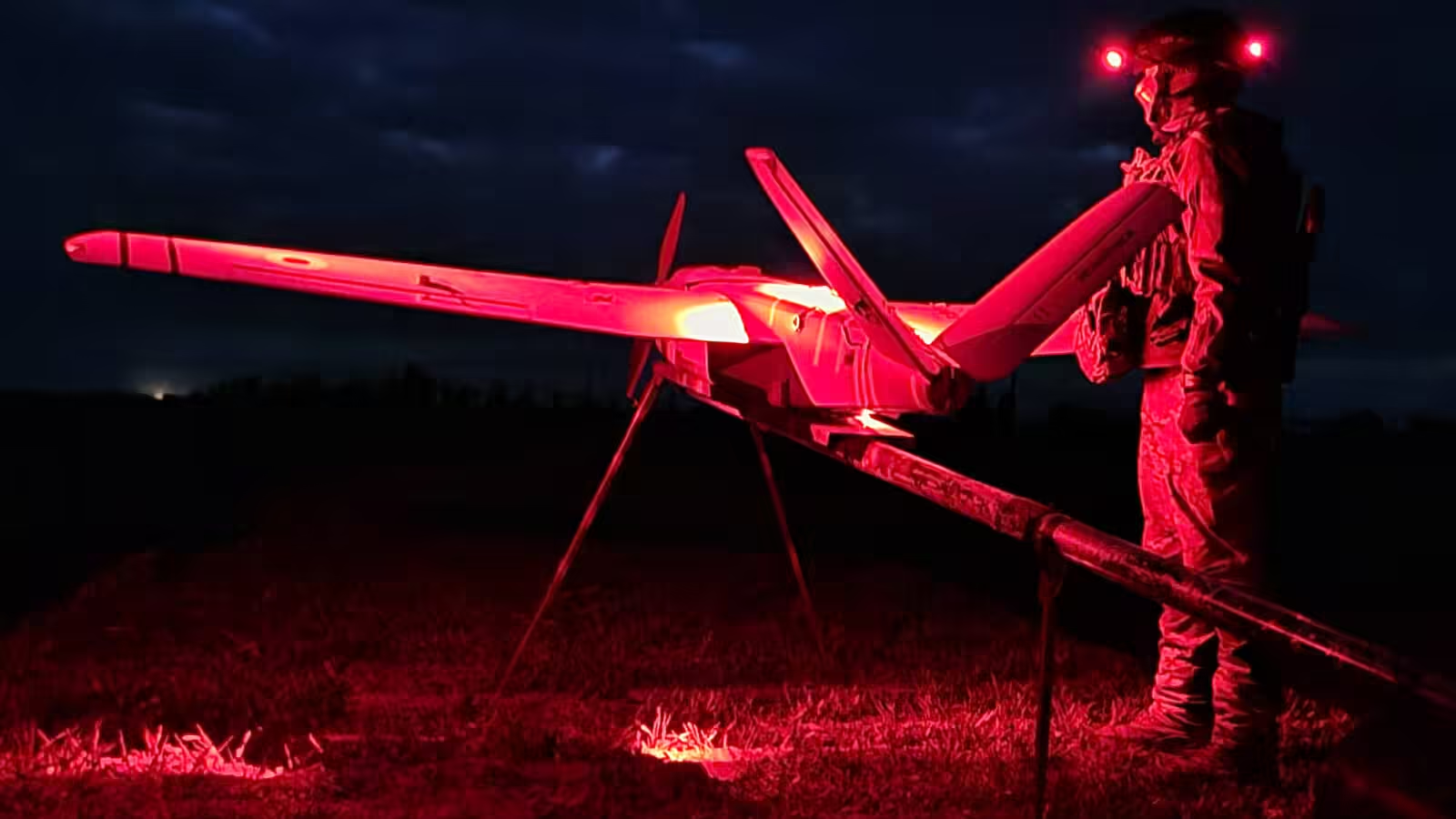
One of the clearest lessons from Ukraine is the emergence of an unmanned contact layer across the battlefield that enables a highly lethal, tactical reconnaissance-strike complex. Specifically, the proliferation of drones is creating an “air-ground littoral”—a new layer of warfare in which the distinction between the air and ground domains is increasingly blurred. Low-cost drones can operate from and immediately above the ground: sensing, striking, relaying data, and coordinating effects, creating a persistent zone of contest that extends from the surface into low-altitude airspace.
A minimally manned or unmanned contact layer starts with a robust and redundant network involving cellular systems, encrypted wireless, and LEO satellites, all linked to the cloud. It involves remote sensing, both active and passive, including acoustic sensors. It also includes remote electronic warfare layered in depth for protection. Small unmanned systems in the air and on the ground are linked via the Ukrainian DELTA command and control system—a flat, fast, and accurate system with numerous applications, available to over 200,000 users. It enables drone teams to rapidly share intelligence, conduct targeting, and synchronize operations, as well as to find, fix, finish, exploit, analyze, and disseminate (F3EAD) in near real time. DELTA is really the “secret sauce” that makes unmanned systems so effective. Unmanned systems are also employed to mine, conduct resupply, and evacuate casualties for the relatively small number of forces present in this incredibly lethal layer of the battlefield—again, all tracked on layers in DELTA.
Small unmanned systems have made the battlefield increasingly observable, although deception and camouflage still work. Drones have also given relatively small units capabilities—in intelligence, surveillance, and reconnaissance (ISR) and precision strike—that previously required much larger formations or specialized platforms.
A drone may identify a target; another system may disrupt its communications; artillery may strike it; and another unmanned system may conduct a battle-damage assessment. The result is a system of systems that is changing the character of combat. In terms of the unmanned systems, there is virtually nonstop innovation with respect to range and speed, payload, frequencies, optics, nascent AI, and employment via fiber-optic wire to render jamming ineffective. This innovation is less about the systems and more about how they are employed—tactically and technically—and how continuous refinements are made to the DELTA mission command system to enable the effectiveness of unmanned systems. The future of drone warfare will increasingly be about autonomy, and the combat data Ukraine has is the best to inform this development.
Despite pronouncements, drones are not replacing tanks, artillery, or aircraft entirely. Drones may force militaries to reconsider the numbers of tanks, artilleries, and aircraft they possess and how these assets are organized, but the real insight is how these things are integrated and teamed with unmanned systems. For example, tanks in the future could employ drones for reconnaissance and strike and have onboard electronic warfare and active protective armor.
These points raise fundamental questions for the U.S. military: What does tactical proficiency mean when every formation operates in an environment saturated with unmanned systems? How should leaders and formations train to employ drones while simultaneously defending against them? How much organic unmanned capability should every formation possess? How should unmanned systems be organized? How can the U.S. military execute F3EAD as fast as Ukraine? How does the United States leverage these capabilities with legacy systems? And, ultimately, how can AI and autonomous systems be used in formations?
Ukraine’s Separate Unmanned Systems Forces
One of Ukraine’s most consequential organizational innovations has been the creation of the separate Unmanned Systems Forces (USF). The USF is commanded by Major Robert “Magyar” Brovdi, who was a grain trader and art dealer before joining the military. He commands approximately 12 drone units, which are predominantly staffed by civilians with a knack for technology and sciences. They apply a businesslike mathematical approach to warfare, with the ability to monitor every engagement and assess the operational effectiveness of drone crews, drones, ammunition, and battlefield effects in almost real time, managing an incredible stream of data.
This decision to establish the USF reflects an important recognition: Unmanned warfare has evolved beyond simply adding drones to existing formations. This kind of warfare has developed its own specialized requirements for personnel, training, tactics, acquisition, software, data, logistics, maintenance, and organizational leadership.
Ukraine recognized this relatively early and created an organization specifically designed to develop and employ unmanned systems at scale. The move reflects Ukraine’s recognition that an entirely different ecosystem has emerged around unmanned warfare.
Ukrainian unmanned units have demonstrated the ability to integrate reconnaissance, strike, electronic warfare, data, and command and control into rapidly evolving tactical systems. Their organizations are designed to learn continuously, incorporate battlefield feedback, and modify how they fight as the enemy adapts.
This structure has also helped create stronger connections between military operators and Ukraine’s rapidly expanding defense technology sector. Ideas can move from the battlefield to engineers and companies and then get modified, tested, and returned to operators with remarkable speed. This organizational agility may be as important as any individual drone.
Ukraine’s experience also suggests that unmanned capability should not simply be concentrated in a separate organization; it still needs to be layered throughout the force. For example, artillery exists within combined-arms formations as well as within specialized artillery units that are organized to provide massed fires, reinforcement, and employment at greater depth. Infantry, armor, artillery, air defense, reconnaissance, and other formations will need organic unmanned capabilities tailored to their missions, both offensive and defensive.
At the same time, there will be a requirement for specialized units dedicated entirely to the employment of unmanned systems. These units can concentrate expertise, develop advanced tactics and techniques, conduct specialized reconnaissance and strike missions, operate at greater depth, reinforce subordinate formations, and rapidly incorporate lessons from combat.
The effectiveness of all these formations depends on establishing a common military specialty for the personnel who operate them. They should share the same foundational training, doctrine, standards, and organizational principles, regardless of where they are assigned. This is a central reason for establishing a dedicated unmanned systems branch across the services: to create a common professional foundation while enabling employment across the full range of military formations and missions.
Equally important is standardizing how these forces are employed during combat operations, particularly the command and support relationships between conventional ground force commanders and dedicated Unmanned Systems Forces. Units organic to conventional formations should remain under the command of their respective ground force commanders. Dedicated unmanned units, however, must be able to reinforce ground formations in the close fight when required while retaining the ability to conduct independent missions at operational or strategic depth. Establishing clear command relationships, authorities, and responsibilities in peacetime will reduce friction, preserve operational flexibility, and enable more effective employment in combat.
The United States and NATO should study this closely—not necessarily to replicate Ukraine’s structure, but to understand whether their own existing organizations are optimized for a form of warfare that is changing this quickly. The new U.S. Autonomous Warfare Command (AUTOWARCOM) is a step in the right direction and has much to learn from Ukraine’s Unmanned Systems Forces, and a standing liaison cell should be created for that purpose.
AUTOWARCOM should also help create a sustained demand signal for the U.S. defense industrial base. It should work with the services, combatant commands, acquisition organizations, and industry to develop a joint vision and operational concept for fighting with and against unmanned and autonomous systems and translate it into force structure, validated requirements, and procurement priorities. This includes defining which capabilities should be organic to conventional formations, which require specialized units, and the mix of attritable, expendable, and more sophisticated systems needed across the force. Industry must understand not only what capabilities are needed, but how they will be employed, in what quantities, and on what timeline. Without that clarity and credible pathways from experimentation to procurement, companies have little incentive to invest in the facilities, workforce, suppliers, and production capacity required to deliver at scale. AUTOWARCOM should help connect operational needs to experimentation, acquisition, and the industrial capacity to meet them.
There are a few questions the United States must answer: Does the U.S. military have the right personnel to man these formations, or should it recruit differently? Are enough specialists being trained? Can operators rapidly influence the design and modification of systems? Can industry move fast enough to produce and adapt in real time? How much organic unmanned capability do formations need, and how do they retain access to specialized units that can concentrate expertise and effects?
Russia appears to have reached a similar conclusion. It is rapidly expanding and institutionalizing its own unmanned force, reportedly doubling in size to over 160,000 personnel in 2026. It is adding drone companies in maneuver battalions, drone battalions in brigades, drone regiments in divisions, and separate drone-only units. Russia’s premier element, “Rubicon,” is closely tracked by Ukraine, as its presence on the battlefield indicates a main line of effort for Russia. This Russian drone force will be larger than most European armies. The size is concerning, but it is also worrisome how quickly Russia is studying and incorporating Ukrainian organizational, technical, and tactical innovations. It is not clear whether the United States and its allies are moving with the same speed and urgency.
Electronic Warfare Is Not a Niche Capability
Electronic warfare is no longer a specialized supporting function. It is central to modern combat—so important that new Ukrainian soldiers receive over 30 hours of dedicated training on the electromagnetic spectrum and how to operate jamming and direction-finding equipment.
Both Russia and Ukraine are continuously maneuvering in the electromagnetic spectrum. GPS can be jammed or spoofed, communications can be disrupted, drones can be denied, and sensors can be deceived. At the same time, Ukraine must manage its own electronic warfare systems carefully to avoid interfering with friendly systems and compromising its own drones. Ultimately, the goal is to understand and affect your enemy in the electromagnetic spectrum while minimizing your own signature.
This robust electronic warfare environment has implications for everything from precision-guided munitions to navigation, communications, unmanned systems, and command and control. GPS-aided munitions can be highly effective, but their performance can be degraded in a heavily contested electromagnetic environment. Older technologies, such as laser-guided munitions, can regain relevance because of their resistance to jamming.
Militaries should look to use war as a filter to assess the effectiveness of existing capabilities. Combatants should constantly ask which capabilities remain effective when the enemy is actively trying to defeat the assumptions upon which those capabilities depend. And, perhaps most importantly, Western militaries need more electronic warfare expertise and capability across all echelons and formations.
Lastly, a major implication of increasingly sophisticated electronic warfare and air defense is the accelerating need for greater autonomy in unmanned systems. To remain effective in contested environments, these systems must be capable of adapting in real time to electronic interference, identifying and sharing information on enemy jamming and air defense systems, and coordinating actions across unmanned formations. Equally important is the ability to pass this information to subsequent waves, enabling each successive attack to exploit what previous engagements have revealed and continuously improve operational effectiveness.
Learning to Maneuver Again
The increasingly transparent battlefield has strengthened defensive forces. Persistent observation makes movement more difficult, and electronic warfare can disrupt communications and navigation. Small unmanned systems can identify concentrations and movement, and then fires can rapidly exploit those observations. This creates a difficult question: How do militaries restore the ability to maneuver?
The answer is not as simple as adding more technology to existing concepts of maneuver. Instead, maneuver may come to mean something quite different. Much of the intellectual work behind multidomain operations provides a foundation: Protect the force and set conditions across multiple domains to create opportunities to maneuver.
The targeting process remains valid, but it must be quicker, and that means carrying it out will be different. The goal is to create temporary windows in the enemy’s sensing and targeting architecture through combinations of unmanned systems, electronic warfare, fires, deception, data, and speed.
Those windows may be brief and may lead more toward small, tactical offensive actions than large, sweeping maneuvers. The force that creates these windows must be prepared to exploit them before the enemy adapts and then protect itself while consolidating gains. Maneuver will increasingly be about creating and exploiting temporary advantages in time, information, electromagnetic effects, and physical position. The United States and its allies should not just be learning how to survive the transparent battlefield, but how to maneuver through it.
Are There New Fundamentals of War?
How is the United States responding to the changing character of war? The enduring fundamentals of war have not disappeared. Leadership, training, discipline, and logistics still matter, as do firepower, protection, terrain, combined arms, and the human dimension in each of these pursuits. But the requirements underlying those fundamentals are changing.
What does combined arms mean when every formation integrates unmanned systems? What does tactical proficiency mean when commanders and staffs must process enormous volumes of data? Should the ability to modify software or rapidly alter a system at the tactical edge become a routine military skill? How should units train to both use and defeat drones, employ electronic warfare, and continuously adapt? Are those not now “basics”?
These are not merely technological questions. They are questions about people, organizations, education, training, leadership, and culture.
The same is true of sustainment. A force can possess exquisite systems and still fail if it cannot repair them, replace them, protect their supply chains, maintain communications, replenish ammunition, and rapidly modify equipment in the field. Ukraine is demonstrating that sustainment in modern war increasingly includes software, batteries, antennas, spare parts, data, electronic components, and the industrial capacity to adapt and replace systems quickly. The definition of logistics is changing because the character of the force is changing.
How the United States and Its Allies Should Learn from Ukraine
The War as a Filter: Capability, Cost, and Combat Effectiveness
Many of the innovations described above point to a broader lesson: The war in Ukraine is a filter for determining what actually works in modern combat—and what does not. It is testing not only individual technologies, but also their cost, survivability, adaptability, integration, and ability to produce meaningful effects against an adaptive enemy.
Ukraine is demonstrating new approaches to the cost exchange of modern warfare. Indigenously developed, relatively inexpensive consumable and attritable capabilities can impose enormous costs on an adversary. This is particularly important in an environment where exquisite systems are increasingly vulnerable to large numbers of cheaper systems.
Modern warfare will require the right balance between exquisite and inexpensive capabilities—some reusable, some attritable, and some expendable. The objective is not to replace sophisticated systems with cheap ones. It is to combine systems intelligently and ensure the right capability is paired with the right target at the right cost. Ukraine and Russia are both demonstrating the importance of this balance.
This is particularly evident in air and missile defense. An adversary can increasingly employ ballistic and cruise missiles, long-range attack drones, and tactical unmanned systems in combination, from multiple axes and domains. Defending against such attacks exclusively with expensive interceptors is unlikely to be sustainable.
Layered defenses will be essential, integrating electronic warfare, deception, passive sensing, lower-cost interceptors, guns, and other affordable measures with more sophisticated systems. These capabilities must be connected through resilient networks and continuously improved using data from real-world engagements.
This is particularly important in the Indo-Pacific, where China could launch complex, multidomain attacks from multiple directions, including cyber operations, to overwhelm or confuse defensive networks. Ukraine demonstrates the need for an integrated, resilient approach that can detect, discriminate, disrupt, deceive, and defeat incoming threats while preserving high-end interceptors for the most demanding engagements. The lesson for the United States and its allies is clear: Future air and missile defenses must be designed for the threats an adversary is likely to employ, not the threats one hopes to face.
The same principle applies to artillery. As discussed earlier, artillery remains critical in Ukraine, particularly when weather limits unmanned systems, and its use can shape the maneuver of Russian forces and make them disaggregate, making smaller formations more vulnerable to drones. Likewise, cluster munitions and air-delivered mines are essential to disrupting enemy attacks. But the battlefield has changed. Artillery positioned roughly 10–15 kilometers behind the front must be survivable, mobile, and capable of reaching beyond the immediate contact area. Extended-range munitions and greater mobility therefore are increasingly important.
Counterfire radars present another example. Active emissions can reveal their location in the electromagnetic spectrum. Can passive sensors—acoustic and visual—initially orient more exquisite capabilities? The success of modern systems requires technical capability but also the ability to remain effective when employed against an enemy actively attempting to detect, jam, deceive, suppress, or destroy them.
For every major capability, a cluster of questions should be asked: If this capability were employed in Ukraine today, how would it perform? Would it work? How would the enemy attempt to defeat it? What would it cost to employ it at scale? Is there a better or cheaper way to achieve the same effect?
Militaries should be asking how systems perform when exposed to the conditions of modern combat—amid persistent surveillance, electronic warfare, GPS disruption, contested communications, rapidly changing tactics, severe weather, logistical constraints, and an adaptive enemy actively trying to defeat it. The purpose is not to discard every capability that encounters difficulty in combat. War is more complicated than a simple pass-or-fail test. The purpose is to understand why a capability succeeds or fails, what adaptations could make it more effective, and whether the underlying concept remains sound.
This should influence how the United States develops requirements, conducts testing, structures acquisition programs, trains forces, and allocates resources. The war in Ukraine should be a forcing function for asking harder questions before the United States commits to the next generation of capabilities. Are the United States and its allies buying for the next war—or optimizing for the last one?
The Ecosystem Is the Advantage
Ukraine’s advantage is not simply its ability to produce innovative defense technology for the military; it is the ability to innovate with the military. Ukrainian companies and military operators are closely connected, allowing operational problems identified at the front to move rapidly to engineers, prototypes to move back to units, and battlefield feedback to drive the next iteration of technologies. The result is an innovation cycle measured in weeks rather than years. This is fundamentally different from an industry developing a product independently and then waiting for a lengthy acquisition process to determine whether it meets an operational need.
Brave1 has become a critical enabler of this ecosystem. Established as a Ukrainian government defense technology initiative, Brave1 has evolved from a grant program for defense startups into a broader defense innovation cluster that connects government, military users, industry, science, investors, and innovators. It helps identify operational priorities with the military, supports developers through grants and technical expertise, facilitates product codification, connects companies with military users and partners, and helps move technologies toward field testing and adoption. Its Test in Ukraine initiative provides another important link in the cycle by enabling foreign technologies to be evaluated with Ukrainian users and receive structured feedback from real-world conditions.
The importance of Brave1 is therefore not simply the amount of money it provides or the number of companies in its ecosystem. It is the connective tissue among the problem, the soldier, the engineer, the prototype, the test, and the next iteration. Ukraine has created mechanisms that allow operational demand to influence technological development and allow battlefield experience to rapidly influence what comes next. This is an important reason Ukrainian innovation can move at the speed of war.
The United States and its allies should study this model carefully. Brave1 is not a model to copy wholesale, but it should prompt Western allies to ask whether their defense ecosystems connect—quickly and effectively enough—the warfighters who identify problems, the companies that develop solutions, the organizations that acquire them, and the units that test them. The objective should be an ecosystem in which the military does not simply buy innovation from industry but innovates with it.
Test in Ukraine—with Ukraine
Ukraine is a sovereign nation fighting under some of the most demanding combat conditions imaginable. Its experience provides an extraordinary opportunity to test and improve capabilities: a battle lab. But this must be approached carefully and respectfully, only when such activity supports Ukrainian operational needs, is conducted with Ukrainian consent, and protects Ukrainian security and interests.
Brave1’s Test in Ukraine concept, in which partner nations send capabilities to Ukraine, Ukraine fields them with frontline units, and those units report back to developers, offers a model worth expanding. The United States and the U.S. defense industry should do more to participate in this type of activity and “pressure test” capabilities. Testing in Ukraine should not simply mean sending a system into combat and waiting for a report. It should establish a rapid feedback loop to raise important questions: What worked? What failed? Under what conditions and why? What did the enemy do to defeat it? How should the system be modified? How quickly can that modification be tested again?
This is how the learning cycle becomes operational: Observe → learn → adapt → fight (training/experimentation/combat) → repeat. Training and experimentation accelerate the cycle. Combat is the ultimate test.
One key point is that capabilities must be brought only when they are ready, or credibility will be lost. In principle, this is similar to a baton race, where a racer must already be jogging before the baton is handed off. If a technology is not already informed by the battlefield in Ukraine, it is starting off on the wrong foot. Industry has sometimes delivered capability to Ukraine that is several life cycles behind, which is embarrassing. U.S. and other Western industry must bring their “A game.” If a capability can survive and perform effectively in Ukraine, it deserves serious consideration for future high-end conflict.
Data Is the Currency of War
Modern battlefields generate an extraordinary amount of data: UAS video and imagery, sensor feeds, electronic warfare signatures, fires and targeting data, air and missile defense engagements, long-range strike effects, equipment performance and failures, ammunition expenditure, weather and terrain conditions, logistics, and operator observations. Every engagement generates information about what worked, what failed, under what conditions, and how the enemy adapted. Quite frankly, data is the currency of war, and Ukraine is fighting with “live data.”
But collecting data is not the advantage. The advantage comes from turning data into knowledge, decisions, and effects faster than the enemy. Ukraine has demonstrated the value of connecting observations from the battlefield to commanders, operators, engineers, and industry—and then rapidly incorporating those insights into new tactics, modified systems, and improved capabilities.
Quality data is also the critical ingredient for effective AI and, ultimately, autonomous capabilities. AI can process enormous volumes of information, identify patterns, reduce cognitive overload, and accelerate analysis. It should be viewed as an accelerator for commanders and staffs—but not a substitute for military judgment.
Ukraine arguably possesses the world’s most valuable contemporary combat data. The United States and its allies should work with Ukraine to establish trusted mechanisms that allow relevant battlefield information to be responsibly shared, protected, analyzed, and translated into better capabilities, tactics, training, doctrine, and AI-enabled systems. Ukraine has already taken steps in this direction through initiatives such as Avengers AI and the Brave1 Dataroom, which enable governments to reach agreements for access to selected Ukrainian battlefield information while Ukraine retains ownership. Partner nations can then use these insights to improve software, accelerate innovation, and—most importantly—help Ukraine become even more effective on the battlefield.
This raises a difficult question: How should the United States and its allies protect Ukrainian sovereignty, operational security, intellectual property, and sensitive information while still enabling this data to inform broader learning? There will be give and take on multiple sides, but these issues must be addressed to ensure that the West is learning more than its adversaries. Russia is generating its own extensive combat data. China, Iran, North Korea, and others are studying the war and learning from it as well. The United States cannot allow its adversaries to learn more from this war than it does.
Relationships Are a Strategic Asset
Technology alone will not create the learning advantage; relationships will. Over the past several years, Ukrainian and American soldiers, commanders, engineers, acquisition professionals, and defense companies have developed relationships that would have been difficult to imagine before the war. Those relationships are strategic assets. They provide access to experience, expertise, ideas, and data. But many of these relationships remain episodic rather than institutionalized.
The United States should build enduring mechanisms that preserve and deepen these relationships, including Ukrainian cadets at West Point, more Ukrainian officers and NCOs at professional military education, exchange officers in U.S. units, and stronger institutional relationships between military operators, engineers, acquisition professionals, and defense companies.
Ukraine’s military is one of the world’s largest friendly forces with extensive contemporary combat experience against a capable peer adversary. The United States should want to learn from that experience while recognizing that Ukraine can also learn from U.S. strengths in planning, targeting, mission command, and the philosophy of building trust and empowering smaller allies. Washington should not wait until the war ends to begin learning systematically from Ukraine; it should be building that architecture now.
That should include stronger defense industrial partnerships, joint development, coproduction, testing, experimentation, data-sharing arrangements with appropriate safeguards, and institutionalized exchanges between operators and engineers. Particularly important are tactical, horizontal connections between Ukrainian and U.S. forces—imagine the U.S. Marine Corps, for instance, talking directly to Ukrainian forces. The same should occur with Army Airborne forces and others to accelerate learning.
Rather than simply extracting lessons from Ukraine, the objective should be to create a mutual learning ecosystem in which Ukrainian and U.S. innovators make each other better.
The Opportunity Awaits
The United States and its allies have an extraordinary opportunity to support Ukraine while learning from the most consequential contemporary combat experience. The West should not wait for the war to end. In fact, Ukraine is buying Western forces time to prepare. Thus, the United States and its allies should dominate the competition for lessons, innovation, industry relationships, and access to battlefield data—the currency of this war. The West should institutionalize a learning process that drives change. Otherwise, the United States and its allies could pay a cost in blood and treasure in the next conflict that could have been prevented.
The United States has made efforts to learn from the war in Ukraine. The Pentagon and the armed services have established lessons-learned and assessment processes, incorporated Ukrainian battlefield observations into training and exercises, adapted doctrine and force-development efforts, and created mechanisms—including SAG-U—to capture operational insights. U.S. training centers have also increasingly incorporated lessons from Ukraine. These are important efforts and deserve credit. The challenge is that much of this learning remains episodic and unevenly institutionalized.
The next step is to connect these efforts into a deliberate, enduring system that moves continuously from battlefield observation to institutional learning, adaptation, and action. The recent announcement of the establishment of AUTOWARCOM and Project Meridian is welcomed. To be most effective, the United States should leverage what Ukraine has already learned and establish a more deliberate, mutually beneficial partnership that informs U.S. thinking while assisting Ukraine in its fight to defend its sovereignty. AUTOWARCOM should help translate Ukraine’s lessons into operational concepts, force structure, training, and acquisition priorities—and align those priorities with industry’s ability to invest and produce at scale.
That requires institutionalizing the relationship now. Washington should accelerate the U.S.-Ukraine defense industrial partnership, sign a “drone deal” with Ukraine, and move rapidly toward joint development, production, testing, experimentation, and procurement. Washington should also expand the Test in Ukraine concept in partnership with Ukraine, creating incentives for U.S. industry to validate capabilities against one of the world’s most demanding combat environments. The United States should establish trusted mechanisms for reciprocal access to relevant battlefield data—including from UAS video and electronic warfare, fires, air and missile defense, and multidomain, multi-axis long-range attacks—to improve AI, autonomous systems, targeting, training, and future capabilities while protecting Ukrainian security and sovereignty.
The Ukrainian experience should be made a forcing function for the U.S. military. Lessons should deliberately drive changes in doctrine, force structure, training, requirements, and acquisition rather than simply becoming lessons-learned reports. The United States should examine whether its organizations are structured for the emerging battlefield, experiment with Ukrainian approaches where appropriate, and use the war as a filter against current and future capabilities, all while asking the question: If this capability were employed in Ukraine today, how would it perform—and how would the enemy attempt to defeat it?
Finally, the United States should institutionalize the relationships that make this learning possible. More senior civilian and military leaders, acquisition professionals, and industry executives should routinely engage with Ukrainian commanders, operators, innovators, and industry. Washington should expand Ukrainian participation in U.S. professional military education—including at West Point, the Command and General Staff College, and senior service war colleges—and explore deeper operational exchanges. These relationships should create a durable mutual learning ecosystem, not an episodic lessons-learned effort.
The United States and its allies must also pay close attention to how Russia is learning and adapting. Russia is changing its tactics, doctrine, organizations, training, and employment of capabilities based on its experience in Ukraine. It is also studying Western systems, vulnerabilities, and operational approaches. Understanding these adaptations is essential—not only to help Ukraine counter them today, but to ensure that U.S. and allied forces are prepared to confront a more capable and adaptive adversary tomorrow. The challenge is to learn from Ukraine but also to understand how both sides are changing the character of warfare.
The measure of success is simple: Are the United States and its allies moving through the learning cycle faster than their adversaries?
Ukraine is giving the West something extraordinarily valuable: contemporary combat experience and, in effect, time to learn before the next war arrives. The United States should not waste this. The U.S. military can pay the cost of learning now—through experimentation, adaptation, relationships, and investment—or pay it later in blood and treasure.
The first battle of the next war should not be where the United States and its allies discover the lessons Ukraine is providing today. Ukraine is demonstrating in real time what military history has repeatedly taught us: The side that learns and adapts faster gains the advantage. As Sir Michael Howard observed, “the advantage goes to the side which can most quickly adjust itself to the new and unfamiliar environment and learn from its mistakes.” The race to learn and adapt is already underway—the United States should lead it.
Lieutenant General (Ret.) Curtis Buzzard, U.S. Army, is a senior adviser (non-resident) for the Defense and Security Department at the Center for Strategic and International Studies in Washington, D.C. He previously served as commanding general of the Security Assistance Group-Ukraine and NATO Security Assistance and Training for Ukraine.
This report is made possible by general support to CSIS. No direct sponsorship contributed to this report.
Source: www.csis.org