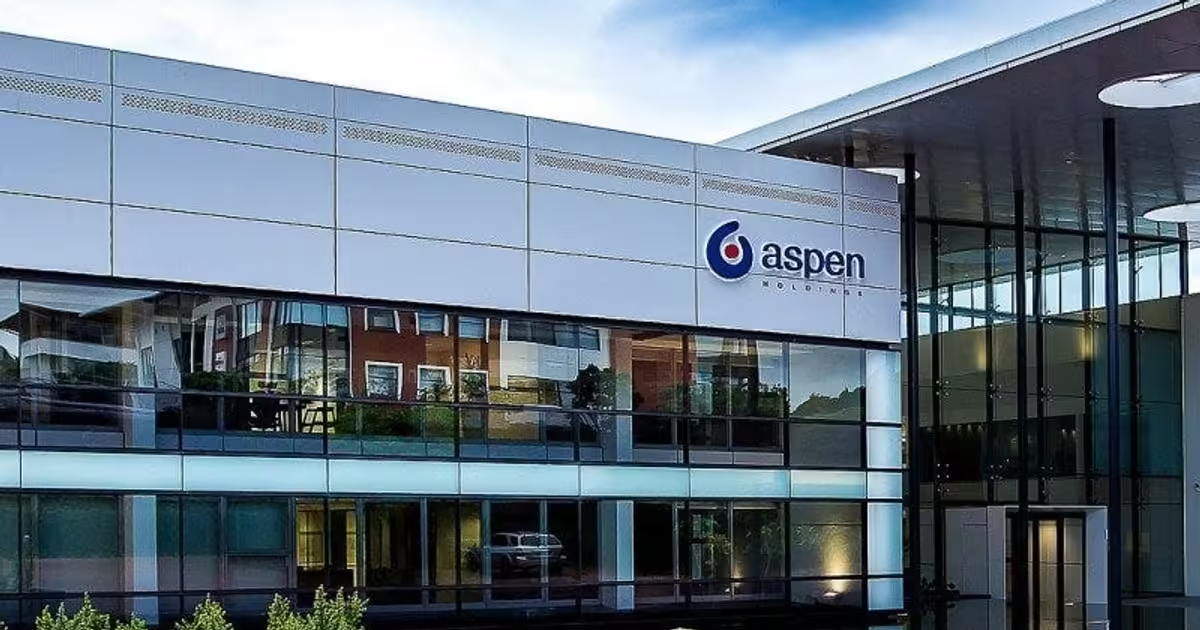

Aspen Pharmacare expects to begin selling the medicine in both countries over the coming months, alongside a planned launch in Canada, where it received approval in July.
The expansion places the South African company in three major markets following the expiry of patent protection for semaglutide in several countries.
Semaglutide is the active ingredient used in Novo Nordisk’s Ozempic, which treats type 2 diabetes, and Wegovy, which is approved for weight management in several markets.
Aspen targets Brazil and South Africa after Canada
Aspen announced on Wednesday that regulators in Brazil and South Africa had approved its generic injectable semaglutide.
“Commercialisation is expected to commence in Canada, Brazil and South Africa over the next few months,” the company said in a regulatory announcement.
Aspen did not provide specific launch dates or disclose the price it intends to charge in any of the three countries.
The company also did not release sales forecasts for the product.
Aspen’s generic semaglutide has been approved for use alongside diet and exercise to improve blood-sugar control in adults living with type 2 diabetes.
The approval should not be presented as permission to market the product specifically for weight loss.
Although semaglutide can reduce appetite and is used in some branded weight-management treatments, regulatory approval depends on the product, dosage and indication submitted in each country.
In South Africa, Novo Nordisk’s Ozempic is registered for type 2 diabetes and reducing certain cardiovascular risks among eligible adults. It is not registered in the country as a weight-loss medicine, according to the South African Health Products Regulatory Authority.
Aspen has not announced the commercial name under which its generic product will be sold in Brazil and South Africa.
A $182 million home market dominated by Mounjaro
Aspen’s domestic approval gives it access to a South African market where demand for glucagon-like peptide-1, or GLP-1, medicines has grown rapidly.
South African sales of GLP-1 treatments have reached nearly R3 billion, approximately $182 million, according to Aspen figures cited by Reuters.
However, the amount represents the value of the country’s wider GLP-1 market. It is not Aspen’s expected revenue and does not refer exclusively to semaglutide.
Eli Lilly’s Mounjaro accounts for more than half of the South African market.
This creates an unusual commercial position for Aspen. The company is preparing to sell its own generic semaglutide while serving as Eli Lilly’s distributor for Mounjaro in South Africa and other sub-Saharan African countries.
Mounjaro contains tirzepatide rather than semaglutide, but both medicines belong to a rapidly expanding class of treatments used to manage diabetes and, under certain approvals, obesity.
The treatments may compete for some patients, but they use different active ingredients and prescribing decisions will depend on price, availability, medical suitability and approved indications.
Patent expiry opens market to generic competition
Semaglutide was developed by Danish pharmaceutical company Novo Nordisk, whose Ozempic and Wegovy products turned GLP-1 medicines into one of the pharmaceutical industry’s fastest-growing categories.
The expiry of relevant patent protections in some jurisdictions has allowed generic manufacturers to seek approval for alternative versions.
Aspen’s approvals do not permit it to use the Ozempic or Wegovy names. Those remain Novo Nordisk trademarks.
The South African company is sourcing the active pharmaceutical ingredient required to produce its medicine from external suppliers. India’s Dr Reddy’s Laboratories is among the companies supplying it for the Canadian market.
Aspen said in September that the timing of its Canadian launch depended partly on the availability of that ingredient.
The company has not disclosed whether Dr Reddy’s will also provide the active ingredient for Brazil and South Africa.
Aspen has previously said it was pursuing approvals for the medicine in approximately 20 emerging markets. The Brazil and South Africa decisions therefore represent part of a wider expansion strategy rather than the conclusion of the rollout.
For patients and health systems, the arrival of generic competition could eventually expand supply and put pressure on prices. However, Aspen has not announced its price, meaning it is too early to state that its product will be cheaper than existing treatments.
The immediate development is regulatory: an African pharmaceutical manufacturer now has approval to enter the semaglutide markets of Canada, Brazil and South Africa as the global competition surrounding blockbuster diabetes medicines intensifies.
Source: africa.businessinsider.com