by Brooklyn Cohen, Cronkite News November 17, 2026 PHOENIX – The days of basketball and football coaches wearing suits on the sidelines, a trend that continued throughout the years as professional sports grew and changed, has been relegated to the history books. Figures like Pat Riley, who prowled the sidelines while coaching the Lakers and
by Brooklyn Cohen, Cronkite News November 17, 2026
PHOENIX – The days of basketball and football coaches wearing suits on the sidelines, a trend that continued throughout the years as professional sports grew and changed, has been relegated to the history books.
Figures like Pat Riley, who prowled the sidelines while coaching the Lakers and Knicks in sharp Italian suits and slicked back hair, will remain an element of a time long since past.
They have traded suits and ties for casual athletic gear. Armani gave way to Jumpman and Hugo Boss was replaced by adidas. Soon, the only place fans will be able to find NBA or NFL coaches in suits will be when they’re watching classic games on YouTube.
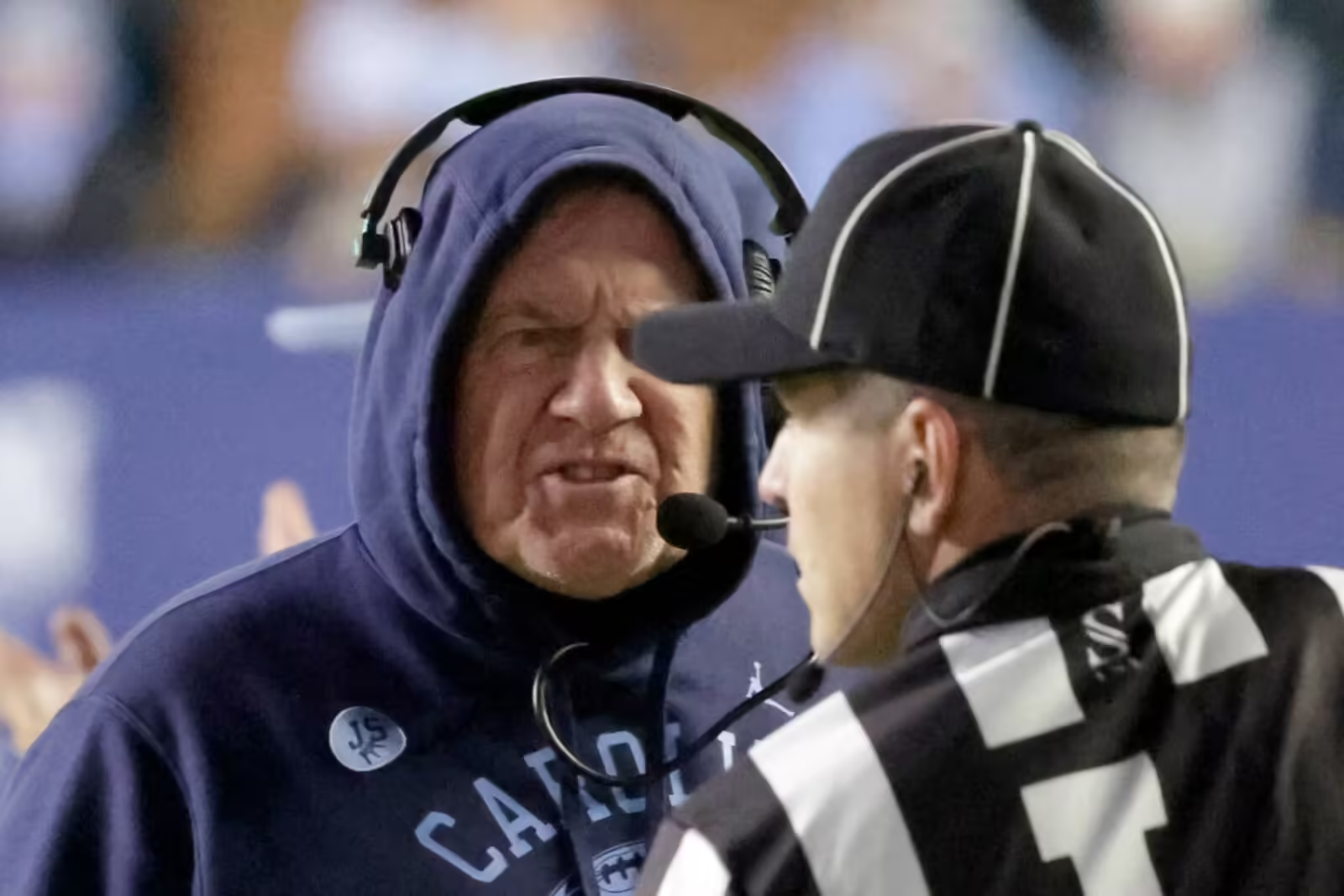
Ever since former New England Patriots coach Bill Belichick made headlines in November 2003 for cutting off the sleeves of his hoodie and coaching a game against the Texans in his newly modified attire (a move that did not become a permanent part of his coaching wardrobe until 2005), a brighter spotlight has shown on the clothing choices of coaches and athletes in professional sports.
And those choices have changed dramatically.
Coaches have exchanged their classic suits for athletic apparel branded with team or sponsorship logos. The majority of what is worn on the field or court by coaches and staff is available to buy in team stores, perpetuating a cycle that exists largely to make money for the teams and organizations.
Melissa Moylan Biernat, an independent trend forecaster and faculty associate at ASU FIDM in Los Angeles, said that “from a commercial perspective, it’s also a major branding and merchandising opportunity… it creates a direct connection between what fans see their favorite athletes (and coaches) wearing and what they can purchase themselves. With new styles introduced every season, it also gives fans a reason to keep coming back for something new.”
As for the athletes, most in professional sports have foregone their suits and ties for game day walk-ins, opting for more comfortable attire. Additionally, travel attire has largely switched to comfortable athletic gear. While there is still an emphasis on fashion and style for some, many choose to maintain a more casual appearance.
For both the NBA and the NFL, league-wide decisions were made regarding what coaches could wear on the sidelines, while the attire for players on game days has continued to change with the trends over the years.
In late 2000, the NFL signed a 10-year, $250-million licensing contract with Reebok to be the exclusive provider of on- and off-field gear for teams. The deal went into effect in 2002, and the move meant that coaches could no longer wear non-licensed apparel, like suits, on the sidelines. While some coaches were still allowed to wear suits in certain circumstances, the contract with Reebok effectively ended the era of suits on the sidelines for football.
When Nike took over in 2012 with a new contract of its own, the trend continued. Now, the overall relaxation of attire for all involved suggests that the time of suits for coaches has been left long in the past.
Additionally, these new deals largely removed the opportunity for coaches to express themselves on the sidelines, as the league instead opted for uniformity across the board.
Some coaches thrived in the suit-era, putting their own spin on the typical look. One coach whose attire became famous was legendary Chicago Bears coach Mike Ditka, who became known for wearing his blue Bears emblazoned sweater vest that he layered over a dress shirt and tie.
Another was Tom Landry, who spent 29 years as the coach of the Dallas Cowboys. He was known for being sharply dressed in a suit and tie, paired with his signature fedora.
Even with the new rules and trends, coaches are still able to make some decisions about how they look nowadays, such as choosing to wear hats or sunglasses depending on the weather.
One such coach is Mike McDaniel, who has continued bringing some style and personal touches to his attire on the sidelines since he began. When he was the coach of the Miami Dolphins, McDaniel gained notice for how he styled himself. While sticking to the dress code requirements for NFL coaches, he would choose standout shoes, such as Off-White Nike Air Force 1s, and paired his outfits with classy watches or designer sunglasses, often sporting Lululemon pants as well.
However, McDaniel is far from the norm in the NFL, as most coaches stick to the basic style of dress. This often entails a team branded shirt or sweatshirt, team issued joggers and athletic shoes, which are typically Nike.
The NBA had a different path to relaxed coaching attire.
In 2005, NBA Commissioner David Stern adopted a new business casual dress code for the league. While this code provided overarching guidelines for all team personnel, it included provisions for coaches, requiring them to wear suits or sports coats with ties while on the sideline. Injured players were also required to dress up, and although athletic trainers were exempt, their attire, and the attire of players, was still monitored by the league.
This dress code emphasized the professionalism element that comes with attire, and showed the NBA’s commitment to a high standard of dress for their coaches and players.
This dress code stayed in place until 2020, when the COVID-19 pandemic forced the NBA to hold the end of the regular season as well as the postseason in a bubble in Orlando, Florida. Inside the Disney World bubble, the league relaxed its traditional standards to allow for more casual, team-branded apparel.
After the pandemic ended and the NBA returned to a more normal way of operating, the league allowed coaches to continue with their relaxed dress on the sidelines, a decision that most coaches have continued following in the years since.
Understandably, some of the trends surrounding attire for players, as well as coaches to some degree, center around the climate.
For example, hockey players can often be seen wearing coats and beanies on game days, because they play in cold arenas in mostly cold-weather cities. Conversely, baseball players tend to lean more toward casual apparel. Diamondbacks pitcher Brandyn Garcia explained that the team dress code varies for home games versus away games.
“You’ll see a lot of guys in shorts and T-shirts, and all that. That’s just because of the weather,” Garcia said. “But when we go on the road, I know the dress code is a collared shirt, so when we’re on the road, you’ll see a lot of guys in collared shirts, but not when we’re at home.”
Conversely, some teams require their players to wear team apparel on the road, both for travel days and for game days, offering a more relaxed appearance, while expecting more upscale attire at home.
However, there is still a growing relaxation across professional sports for coaches and athletes that hints at a bigger societal trend that was sped along by the COVID-19 pandemic.
Moylan Biernat said that the pandemic hastened a move towards what she called “casual sensibility,” with people opting to dress for personal expression and comfort, rather than the typical workplace dress standards of the past.
“The lines between workwear, sportswear and everyday fashion have become blurred, and pro sports reflect that evolution,” Moylan Biernat said via email. “Fashion is very much a part of how professional sports stay at the forefront of culture.”
That idea about staying at the front of culture is something that sports teams and athletes continue to struggle with, as more and more people are now looking towards athletics as a vehicle to shape and drive change in the United States.
Style has been pushed to the forefront recently as fans pay attention to the athletes off the field, as well as on the field. This trend has grown to the point that there are even social media accounts dedicated to what players are wearing on game days.
One such account is @leaguefits on Instagram, a profile with more than a million followers that spotlights the fashion and off-court style of NBA and WNBA players. Another account is @nflstyle on Instagram, a page with more than 104,000 followers that offers fans a place to see what their favorite football players are wearing. Additionally, @blitzfits on Instagram highlights the best looks from NFL players on the field and off, looking at the best gameday outfits, jerseys, and cleats.
Other accounts are dedicated to athletes of all sports. @protrending on Instagram is another example, as the account gives its more than 100,000 followers a taste of the fashion that athletes from all different leagues bring to the table.
“People today are genuinely interested in what athletes and coaches wear, both on and off the field,” Moylan Biernat said. “While this isn’t necessarily new, social media has amplified our fascination with celebrities and public figures.”
Moylan Biernat said that fans are paying more attention to what the athletes are wearing in different settings, such as gameday arrivals, travel days and team events. She added that “
As for coaches, the trend has almost shifted in the opposite direction. In the NBA and NFL, the on-field attire for coaches has almost entirely shifted to team-issued apparel. Currently, there are no coaches in either league that regularly wear suits on the sidelines, which is indicative of the overwhelming off-field trends.
However, in sports such as baseball and hockey and their corresponding leagues, there is still a commitment to traditional attire, at least for coaches.
Baseball coaches at higher levels, typically college and up, wear the same uniforms as the players, sticking with the long-standing tradition that dates back to the 19th century, when coaches were player-managers, and coached while playing.
Hockey coaches similarly tend to stick to tradition, which, for them, means wearing suits and ties behind the bench. This shows up in most high-level leagues and organizations, with most professional coaches sticking with this. While the NHL does not mandate that coaches keep that high level of dress, the commitment to tradition is clear.
Hockey players tend to dress more upscale for home games as well, although that does not necessarily mean suits and ties. Many show up in styled business casual attire, sometimes pairing tailored pants with a long coat or sweater, rather than a full dress shirt and jacket. Additionally, the trend of team apparel for road games appears to be solidly established, and teams often stick to it.
For the NHL, the departure from suits and ties for players is a very recent one, kick-started by a new collective bargaining agreement that was ratified in July 2025 and went into effect on Sept. 16, 2026. In this CBA, the NHL relaxed the rules on player attire, only requiring that “players … dress in a manner that is consistent with contemporary fashion norms.”
That was a departure from previous CBAs, which mandated players wear “…jackets, ties and dress pants to all Club games and while traveling to and from such games unless otherwise specified by the Head Coach or General Manager.”
These provisions were originally agreed upon by the NHL and NHL Players Association in 1995, and confirmed again in 2005, 2005, 2013 and 2020.
Some former NHL players have chimed in on the new trend, offering mixed opinions.
Jason Demers, a 13-year NHL veteran and former Coyote, emphasized that players still need to take pride in their attire, and aim to impress with their clothing.
“You’re wearing something that you wear to the bar, or you wear to a dinner, you’re not going to dinner at a restaurant or a bar, you’re going to the rink,” Demers said. “I think it should be a suit. I’m more on that side of the fence, unless you’re wearing something that’s on the runway.”
Demers also noted that NHL players often have a reputation of being “the nice guys from Canada,” and that a lot of that comes from the tradition of classy dress on game days.
Tyson Nash, another former NHL and Coyotes player, echoed that sentiment.
“Have some imagination, show your character, whatever that is, whatever you’re trying to do, but show me something,” Nash said. “Otherwise, there was nothing better than putting on a nice suit and tie. It was like going to work.”
Former Coyotes player and television analyst Tyson Nash was known for taking risks with his suits, including this holiday special. (Screenshot via Arizona Coyotes Instagram account)
Nash, who spent seven years in the league including two with the Phoenix Coyotes, before transitioning to the broadcasting side, was sometimes known for his outlandish attire. While always sticking to the traditional suits and ties, he was able to switch things up with bright colors.
One example that sticks out is from Nash’s broadcasting days, when he sported a red plaid suit jacket, maintaining his high standard of dress but injecting some fun into it.
Across all professional sports, it seems teams, players and coaches are mostly embracing the opportunities to be more creative with their attire, as well as more casual at times, when the weather or situation dictate it.
However, despite the clear move towards relaxed attire across the majority of professional athletics, not everyone is welcoming the change with open arms.
“I think it’s obvious that suits look better,” former Suns coach Mike D’Antoni said. “It’s like an airline pilot. He’s got his uniform on.”
D’Antoni, who spent more than 20 years coaching in the NBA, did acknowledge the travel element for road games, with teams often heading straight to the airport after games.
“(I’ve) been in a situation where you got to pack three suits for a five-day road trip game, and then you’re spending an hour ironing your shirt before the game,” D’Antoni said. “So you know, it’s a pain in the butt to travel the other way… I understand why coaches said, ‘I’ll pack two T-shirts and some sweatpants, and I’m good to go.’”
As it stands, the leagues themselves are moving forward with this new era of fashion and style. The NFL made headlines when it appointed its first-ever fashion editor, Kyle Smith, in 2024. According to Moylan Biernat, he had, “…a background in celebrity styling and previous experience at NFL Network,” and “…recognized the potential to bring the worlds of fashion and sports together in a more intentional way.”
In motorsports, Mercedes-AMG Petronas Formula One Team hired its first styling and partnerships manager in 2025, “recognizing the opportunity to build fashion collaborations and connect with audiences beyond racing,” Moylan Biernat said.
Although Formula One is centered mainly around the European crowd, and bases many of its teams and nearly half its races in Europe, there is a growing fanbase in the United States, evidenced by the three Grands Prix races in the U.S.: Miami, Austin and Las Vegas.
Mercedes’ move to hiring a stylings manager proves how style and fashion have changed in recent years, extending beyond just the United States.
While the attire that coaches wear is standardized across the board, athletes have more freedom to express themselves.
Just as in any profession, the athletes have to balance their personal style with the image that they want to promote. Although the leagues may give them more freedom in the way they dress, the players still must be mindful of the league they represent and the fanbase to which they cater.
As the way that coaches and players dress changes and moves with the time, one thing is for certain: Professional teams and athletes will continue to be a focal point for society and help set fashion trends moving forward.
by Brooklyn Cohen, Cronkite News
November 17, 2026
PHOENIX – The days of basketball and football coaches wearing suits on the sidelines, a trend that continued throughout the years as professional sports grew and changed, has been relegated to the history books.
Figures like Pat Riley, who prowled the sidelines while coaching the Lakers and Knicks in sharp Italian suits and slicked back hair, will remain an element of a time long since past.
They have traded suits and ties for casual athletic gear. Armani gave way to Jumpman and Hugo Boss was replaced by adidas. Soon, the only place fans will be able to find NBA or NFL coaches in suits will be when they’re watching classic games on YouTube.
Ever since former New England Patriots coach Bill Belichick made headlines in November 2003 for cutting off the sleeves of his hoodie and coaching a game against the Texans in his newly modified attire (a move that did not become a permanent part of his coaching wardrobe until 2005), a brighter spotlight has shown on the clothing choices of coaches and athletes in professional sports.
And those choices have changed dramatically.
Coaches have exchanged their classic suits for athletic apparel branded with team or sponsorship logos. The majority of what is worn on the field or court by coaches and staff is available to buy in team stores, perpetuating a cycle that exists largely to make money for the teams and organizations.
Melissa Moylan Biernat, an independent trend forecaster and faculty associate at ASU FIDM in Los Angeles, said that “from a commercial perspective, it's also a major branding and merchandising opportunity… it creates a direct connection between what fans see their favorite athletes (and coaches) wearing and what they can purchase themselves. With new styles introduced every season, it also gives fans a reason to keep coming back for something new.”
As for the athletes, most in professional sports have foregone their suits and ties for game day walk-ins, opting for more comfortable attire. Additionally, travel attire has largely switched to comfortable athletic gear. While there is still an emphasis on fashion and style for some, many choose to maintain a more casual appearance.
For both the NBA and the NFL, league-wide decisions were made regarding what coaches could wear on the sidelines, while the attire for players on game days has continued to change with the trends over the years.
In late 2000, the NFL signed a 10-year, $250-million licensing contract with Reebok to be the exclusive provider of on- and off-field gear for teams. The deal went into effect in 2002, and the move meant that coaches could no longer wear non-licensed apparel, like suits, on the sidelines. While some coaches were still allowed to wear suits in certain circumstances, the contract with Reebok effectively ended the era of suits on the sidelines for football.
When Nike took over in 2012 with a new contract of its own, the trend continued. Now, the overall relaxation of attire for all involved suggests that the time of suits for coaches has been left long in the past.
Additionally, these new deals largely removed the opportunity for coaches to express themselves on the sidelines, as the league instead opted for uniformity across the board.
Some coaches thrived in the suit-era, putting their own spin on the typical look. One coach whose attire became famous was legendary Chicago Bears coach Mike Ditka, who became known for wearing his blue Bears emblazoned sweater vest that he layered over a dress shirt and tie.
Another was Tom Landry, who spent 29 years as the coach of the Dallas Cowboys. He was known for being sharply dressed in a suit and tie, paired with his signature fedora.
Even with the new rules and trends, coaches are still able to make some decisions about how they look nowadays, such as choosing to wear hats or sunglasses depending on the weather.
One such coach is Mike McDaniel, who has continued bringing some style and personal touches to his attire on the sidelines since he began. When he was the coach of the Miami Dolphins, McDaniel gained notice for how he styled himself. While sticking to the dress code requirements for NFL coaches, he would choose standout shoes, such as Off-White Nike Air Force 1s, and paired his outfits with classy watches or designer sunglasses, often sporting Lululemon pants as well.
However, McDaniel is far from the norm in the NFL, as most coaches stick to the basic style of dress. This often entails a team branded shirt or sweatshirt, team issued joggers and athletic shoes, which are typically Nike.
The NBA had a different path to relaxed coaching attire.
In 2005, NBA Commissioner David Stern adopted a new business casual dress code for the league. While this code provided overarching guidelines for all team personnel, it included provisions for coaches, requiring them to wear suits or sports coats with ties while on the sideline. Injured players were also required to dress up, and although athletic trainers were exempt, their attire, and the attire of players, was still monitored by the league.
This dress code emphasized the professionalism element that comes with attire, and showed the NBA’s commitment to a high standard of dress for their coaches and players.
This dress code stayed in place until 2020, when the COVID-19 pandemic forced the NBA to hold the end of the regular season as well as the postseason in a bubble in Orlando, Florida. Inside the Disney World bubble, the league relaxed its traditional standards to allow for more casual, team-branded apparel.
After the pandemic ended and the NBA returned to a more normal way of operating, the league allowed coaches to continue with their relaxed dress on the sidelines, a decision that most coaches have continued following in the years since.
Understandably, some of the trends surrounding attire for players, as well as coaches to some degree, center around the climate.
For example, hockey players can often be seen wearing coats and beanies on game days, because they play in cold arenas in mostly cold-weather cities. Conversely, baseball players tend to lean more toward casual apparel. Diamondbacks pitcher Brandyn Garcia explained that the team dress code varies for home games versus away games.
“You’ll see a lot of guys in shorts and T-shirts, and all that. That’s just because of the weather,” Garcia said. “But when we go on the road, I know the dress code is a collared shirt, so when we’re on the road, you’ll see a lot of guys in collared shirts, but not when we’re at home.”
Conversely, some teams require their players to wear team apparel on the road, both for travel days and for game days, offering a more relaxed appearance, while expecting more upscale attire at home.
However, there is still a growing relaxation across professional sports for coaches and athletes that hints at a bigger societal trend that was sped along by the COVID-19 pandemic.
Moylan Biernat said that the pandemic hastened a move towards what she called “casual sensibility,” with people opting to dress for personal expression and comfort, rather than the typical workplace dress standards of the past.
“The lines between workwear, sportswear and everyday fashion have become blurred, and pro sports reflect that evolution,” Moylan Biernat said via email. “Fashion is very much a part of how professional sports stay at the forefront of culture.”
That idea about staying at the front of culture is something that sports teams and athletes continue to struggle with, as more and more people are now looking towards athletics as a vehicle to shape and drive change in the United States.
Style has been pushed to the forefront recently as fans pay attention to the athletes off the field, as well as on the field. This trend has grown to the point that there are even social media accounts dedicated to what players are wearing on game days.
One such account is @leaguefits on Instagram, a profile with more than a million followers that spotlights the fashion and off-court style of NBA and WNBA players. Another account is @nflstyle on Instagram, a page with more than 104,000 followers that offers fans a place to see what their favorite football players are wearing. Additionally, @blitzfits on Instagram highlights the best looks from NFL players on the field and off, looking at the best gameday outfits, jerseys, and cleats.
Other accounts are dedicated to athletes of all sports. @protrending on Instagram is another example, as the account gives its more than 100,000 followers a taste of the fashion that athletes from all different leagues bring to the table.
“People today are genuinely interested in what athletes and coaches wear, both on and off the field,” Moylan Biernat said. “While this isn't necessarily new, social media has amplified our fascination with celebrities and public figures.”
Moylan Biernat said that fans are paying more attention to what the athletes are wearing in different settings, such as gameday arrivals, travel days and team events. She added that “
As for coaches, the trend has almost shifted in the opposite direction. In the NBA and NFL, the on-field attire for coaches has almost entirely shifted to team-issued apparel. Currently, there are no coaches in either league that regularly wear suits on the sidelines, which is indicative of the overwhelming off-field trends.
However, in sports such as baseball and hockey and their corresponding leagues, there is still a commitment to traditional attire, at least for coaches.
Baseball coaches at higher levels, typically college and up, wear the same uniforms as the players, sticking with the long-standing tradition that dates back to the 19th century, when coaches were player-managers, and coached while playing.
Hockey coaches similarly tend to stick to tradition, which, for them, means wearing suits and ties behind the bench. This shows up in most high-level leagues and organizations, with most professional coaches sticking with this. While the NHL does not mandate that coaches keep that high level of dress, the commitment to tradition is clear.
Hockey players tend to dress more upscale for home games as well, although that does not necessarily mean suits and ties. Many show up in styled business casual attire, sometimes pairing tailored pants with a long coat or sweater, rather than a full dress shirt and jacket. Additionally, the trend of team apparel for road games appears to be solidly established, and teams often stick to it.
For the NHL, the departure from suits and ties for players is a very recent one, kick-started by a new collective bargaining agreement that was ratified in July 2025 and went into effect on Sept. 16, 2026. In this CBA, the NHL relaxed the rules on player attire, only requiring that “players … dress in a manner that is consistent with contemporary fashion norms.”
That was a departure from previous CBAs, which mandated players wear “...jackets, ties and dress pants to all Club games and while traveling to and from such games unless otherwise specified by the Head Coach or General Manager.”
These provisions were originally agreed upon by the NHL and NHL Players Association in 1995, and confirmed again in 2005, 2005, 2013 and 2020.
Some former NHL players have chimed in on the new trend, offering mixed opinions.
Jason Demers, a 13-year NHL veteran and former Coyote, emphasized that players still need to take pride in their attire, and aim to impress with their clothing.
“You're wearing something that you wear to the bar, or you wear to a dinner, you're not going to dinner at a restaurant or a bar, you're going to the rink,” Demers said. “I think it should be a suit. I'm more on that side of the fence, unless you're wearing something that's on the runway.”
Demers also noted that NHL players often have a reputation of being “the nice guys from Canada,” and that a lot of that comes from the tradition of classy dress on game days.
Tyson Nash, another former NHL and Coyotes player, echoed that sentiment.
“Have some imagination, show your character, whatever that is, whatever you're trying to do, but show me something,” Nash said. “Otherwise, there was nothing better than putting on a nice suit and tie. It was like going to work.”
Nash, who spent seven years in the league including two with the Phoenix Coyotes, before transitioning to the broadcasting side, was sometimes known for his outlandish attire. While always sticking to the traditional suits and ties, he was able to switch things up with bright colors.
One example that sticks out is from Nash’s broadcasting days, when he sported a red plaid suit jacket, maintaining his high standard of dress but injecting some fun into it.
Across all professional sports, it seems teams, players and coaches are mostly embracing the opportunities to be more creative with their attire, as well as more casual at times, when the weather or situation dictate it.
However, despite the clear move towards relaxed attire across the majority of professional athletics, not everyone is welcoming the change with open arms.
“I think it's obvious that suits look better,” former Suns coach Mike D’Antoni said. “It's like an airline pilot. He's got his uniform on.”
D’Antoni, who spent more than 20 years coaching in the NBA, did acknowledge the travel element for road games, with teams often heading straight to the airport after games.
“(I’ve) been in a situation where you got to pack three suits for a five-day road trip game, and then you're spending an hour ironing your shirt before the game,” D’Antoni said. “So you know, it's a pain in the butt to travel the other way… I understand why coaches said, ‘I'll pack two T-shirts and some sweatpants, and I'm good to go.’”
As it stands, the leagues themselves are moving forward with this new era of fashion and style. The NFL made headlines when it appointed its first-ever fashion editor, Kyle Smith, in 2024. According to Moylan Biernat, he had, “...a background in celebrity styling and previous experience at NFL Network,” and “...recognized the potential to bring the worlds of fashion and sports together in a more intentional way.”
In motorsports, Mercedes-AMG Petronas Formula One Team hired its first styling and partnerships manager in 2025, “recognizing the opportunity to build fashion collaborations and connect with audiences beyond racing,” Moylan Biernat said.
Although Formula One is centered mainly around the European crowd, and bases many of its teams and nearly half its races in Europe, there is a growing fanbase in the United States, evidenced by the three Grands Prix races in the U.S.: Miami, Austin and Las Vegas.
Mercedes’ move to hiring a stylings manager proves how style and fashion have changed in recent years, extending beyond just the United States.
While the attire that coaches wear is standardized across the board, athletes have more freedom to express themselves.
Just as in any profession, the athletes have to balance their personal style with the image that they want to promote. Although the leagues may give them more freedom in the way they dress, the players still must be mindful of the league they represent and the fanbase to which they cater.
As the way that coaches and players dress changes and moves with the time, one thing is for certain: Professional teams and athletes will continue to be a focal point for society and help set fashion trends moving forward.
This article first appeared on Cronkite News and is republished here under a Creative Commons Attribution-NoDerivatives 4.0 International License.
Toolq Media Is a Global News Platform Covering the Latest Developments and Breaking Stories from Around The World, Including World News, Business, Finance, Technology, Health, Politics, Science, Entertainment, Sports, and More.