
When an email arrived at St John the Baptist Primary School in Belfast on October 19 saying that a bomb had been planted in the building, principal Chris Donnelly was skeptical.
Donnelly said the message was deleted within minutes and he could not recall its exact contents, but remembered that it was vaguely worded and had been sent to numerous other schools.
“It did not read as something that was a serious threat,” he told Reuters. Still, he kept pupils indoors and organized a room-by-room search. Northern Ireland police later said about 300 schools had received the same message and that it was being treated as a hoax.
Donnelly said he did not take chances.
“Even though it looks like a hoax, your initial response has to be extremely serious,” he said.
Over 8,000 bomb hoaxes target institutions across Europe
The incident at St John was one of more than 8,000 bomb hoaxes sent to institutions and businesses across Europe over the past month, according to a Reuters tally of disclosures by European officials, media reports, and data from cybersecurity firms such as Proofpoint and Mimecast.
While the hoaxes have been widely reported, the scale of the campaign and details of how it was carried out are reported here for the first time.
Most targets were schools in the United Kingdom, Ireland and Italy. But media organizations, airlines, airports, charities and private individuals were also caught up in the campaign.
The hoaxes have forced dozens of flight diversions and cancellations, interrupted television broadcasts and sent thousands of school pupils home.
The October 19 threats also hit schools in Scotland, where Mimecast said at least 33 schools were targeted. Proofpoint said that another wave of threats issued that day was sent to around 25 Bulgarian institutions, mainly healthcare groups along with a handful of anti-corruption and whistleblowing organizations.
Eight of the threatening messages reviewed by Reuters – written in English, Bulgarian or Italian – show similarities. The ones sent to schools in Northern Ireland, Scotland and the Bulgarian institutions on October 19 carried the subject line “Death is near.”
The messages were sent from at least four email accounts that Proofpoint and Mimecast said had been hijacked. In Taiwan, an account belonging to a former graduate student appeared to have been compromised to send some of the messages, according to the student’s alma mater, Da-Yeh University.
Bomb hoax campaign resurfaces after two-week lull
The October 19 emails did not attract much attention beyond Britain, and the hoaxers appear to have kept a low profile in the two weeks that followed.
Then they came roaring back.
On November 2, a Wizz Air flight from London to Sofia was diverted to Budapest after the airline received a bomb threat. The next day, seven more flights and a cruise ship off the coast of Greece were targeted. On November 5, another batch of threats disrupted flights across Europe. Between November 2 and 6, more than 50 flights at some 15 airlines received hoax bomb threats, according to flight tracking specialists AirNav Radar.
Unlike the initial round of emails, which referred to “Shariah law,” the November emails were sent in the name of an obscure Russian anti-feminist group called “Male State,” whose founder said he had nothing to do with them.
Like the October messages, they were mass-distributed and carried generic warnings about bombs and bloodshed.
“Today your sky will be red,” one said.
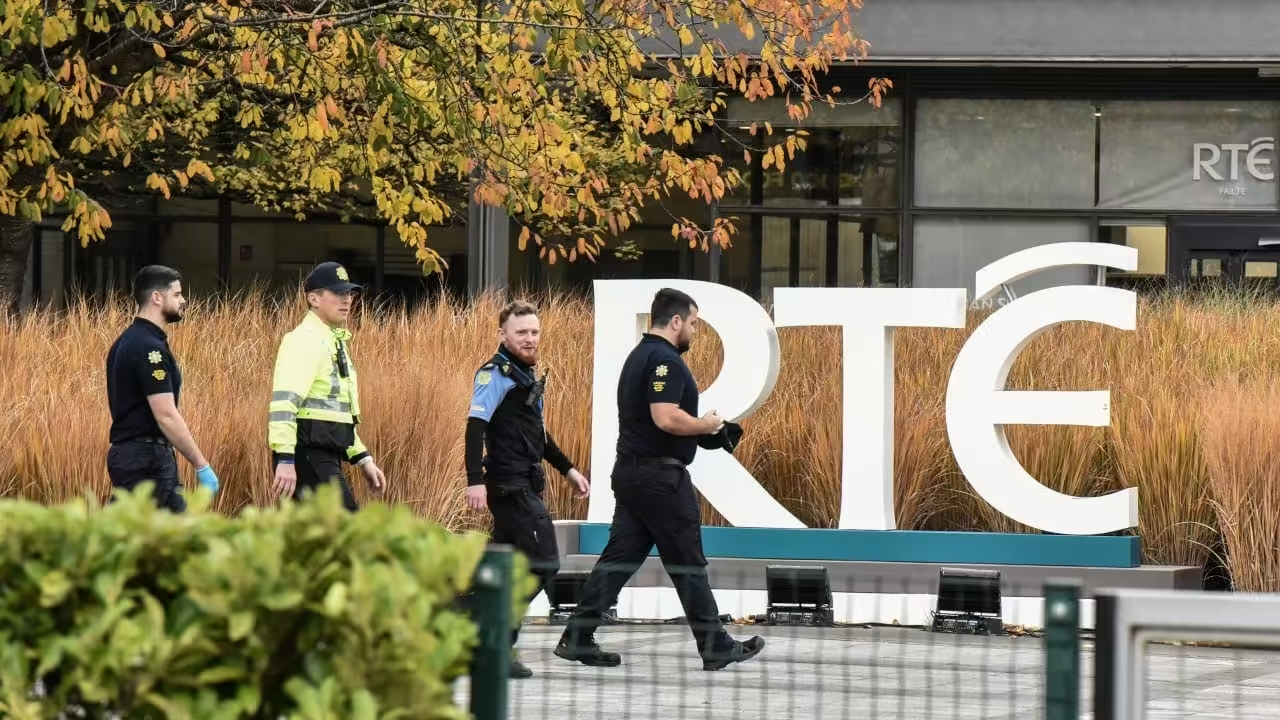
On November 6, newsrooms were targeted, including France’s TF1, Bulgaria’s Nova and Irish state broadcaster RTE – some of whose programs briefly went off air while staff evacuated its headquarters. Overall, cybersecurity firm Proofpoint said at least 12 media organizations were targeted around that time.
An even bigger wave came on November 11.
About 6,300 Italian schools received bomb threats purportedly from “Misoginistan” – an apparent reference to “Male State” – prompting evacuations nationwide. Police said around 1,000 schools in Scotland and 300 in Northern Ireland were also targeted on that day. Irish media reported that about 300 schools there received threats as well.
Many of the UK schools that received November 11 threats had received the earlier round of threats, including St John in Belfast.
Donnelly, the principal, said that things were calmer the second time around.
“We made the call, after checking the grounds, to let the children go out to play at break and lunchtime,” he said.
Officials investigate possible links between bomb hoax campaigns
Reuters could not independently establish that every hoax email came from the same group. But several officials and experts suspect most, if not all, were connected.
Alongside similarities in the wording and distribution methods, Mimecast noted that the November campaign targeted almost all the same schools in Scotland as the October wave, suggesting use of the same hit list.
In an email, Police Scotland said it “can’t rule out a link at this time but extensive inquiries are ongoing.”
European officials have said they suspect a foreign hand.
“We see a possibility of foreign interference, very clearly,” French interior minister Laurent Nuñez told France’s LCI on Friday, naming Russia or “other countries, potentially.”
He said Europol was trying to determine the source of the threats.
Europol did not return a message seeking comment. The Russian embassy in Paris did not respond to an email seeking comment.
Bomb threats have been used in the past by suspected Russian mercenary hackers sometimes called the DaVinci Group, according to Ukrainian officials. Last year, French cybersecurity company Intrinsec said that the group’s hackers had issued bogus bomb threats to a series of unidentified Western government entities in 2024.
Attempts to reach the DaVinci Group were unsuccessful.
Donnelly, the school principal, said Belfast had seen worse, in reference to the decades of sectarian conflict when the city was regularly shaken by actual explosions.
But even implausible threats could not be ignored, he said.
“People will always have in their mind, ‘What if? What if this wasn’t just a reckless, irresponsible hoax threat?’”
Source: www.jpost.com