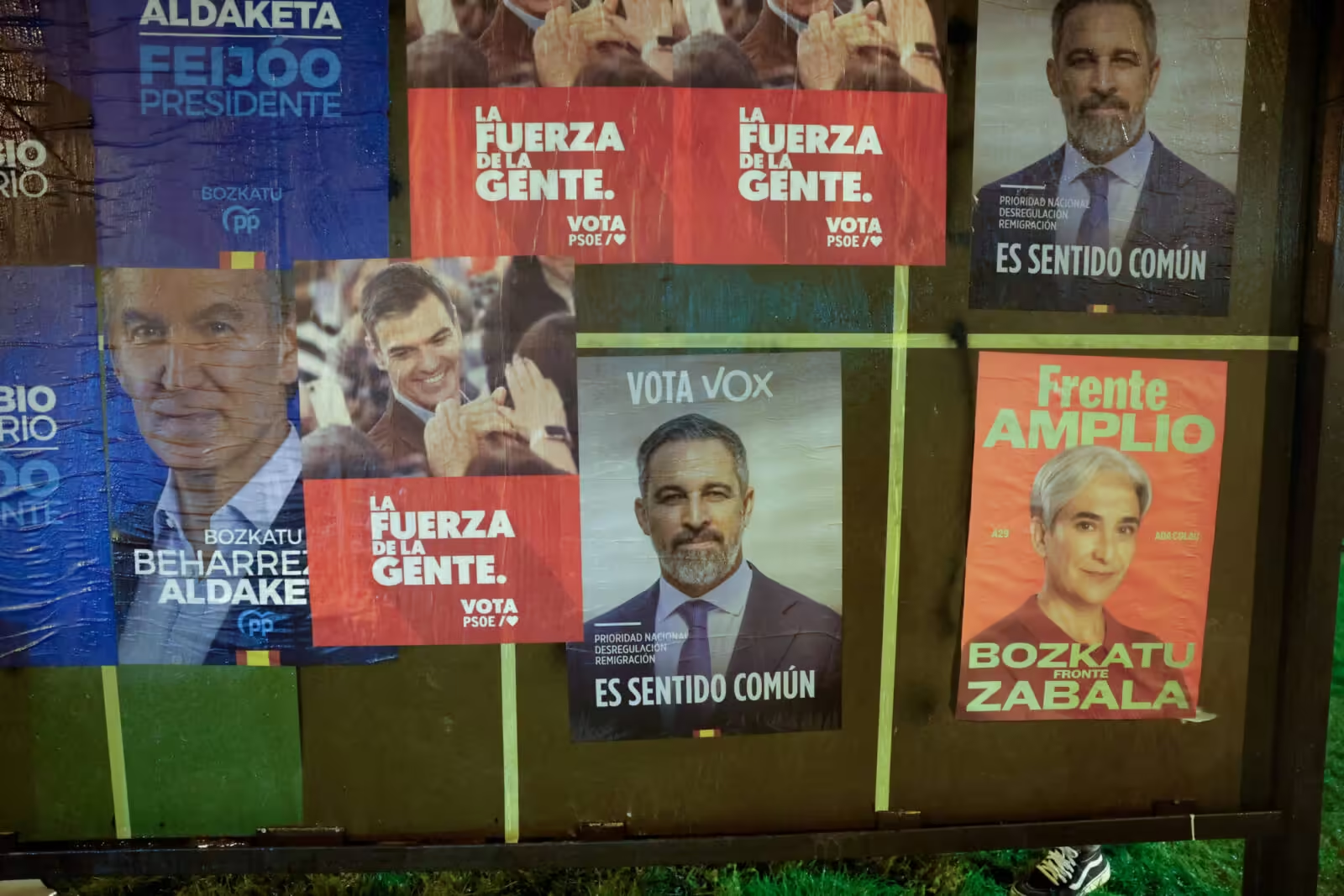

MADRID—Spain’s November 29 vote opens a decisive European electoral cycle, with France, Poland, and Italy set to hold elections in 2027. In Spain, polls suggest that Prime Minister Pedro Sánchez, who called the snap elections in October, and his Spanish Socialist Workers’ Party are unlikely to emerge as the victors. Instead, the center-right Partido Popular and the nationalist party Vox appear poised to win a parliamentary majority, which could see Vox candidates secure several ministries if the two form a coalition. The election comes amid deep institutional distrust, corruption scandals, and mounting frustration over policy failures in housing and public infrastructure. Most recently, the October 28 rail collision in Urda (Toledo), which killed sixty-nine people, has brought railway safety to the forefront of the campaign.
Spain’s election is important. It could, for example, redefine the country’s relationships with Washington and Latin America, while also reshaping Madrid’s approach to military spending, China, and migration policy. With support approaching 20 percent, Vox is the fastest-growing party in Spain, and its rising popularity offers lessons for other European leaders on how not to contain nationalist parties. Sánchez’s record suggests that fueling polarization and prioritizing political survival, while failing on accountability and public services, can strengthen the very parties a government seeks to keep from power.
Why strong growth hasn’t slowed the nationalist right
After eight years in office, Sánchez should be able to count Spain’s economic performance as a political asset: the country’s gross domestic product grew by 2.8 percent in 2025, above the Organisation for Economic Co-operation and Development (OECD) and eurozone averages of 1.8 percent and 1.4 percent, respectively. Yet, 56 percent of Spaniards rate the economy as bad or very bad in recent polls. Furthermore, according to Comisiones Obreras, one of Spain’s largest trade unions, housing prices have risen by 108 percent since 2013, compared with a 30 percent increase in wages. This underscores an uncomfortable reality for Sánchez: strong economic growth has not translated into improved affordability or public confidence.
The October 28 rail collision has placed infrastructure safety and political accountability at the center of the campaign. Spain operates Europe’s largest high-speed rail network, which has suffered two major disasters in nine months. The government must explain why repeated warnings and promises of reform have not delivered the safety improvements demanded by trade unions and experts.
Still, failures on housing and infrastructure policies alone are insufficient to explain Vox’s rise. When announcing the election, Sánchez presented voters with a choice between joining a far-right wave and keeping Spain a “bastion of openness and social justice.” This could help mobilize the left, but it also places Vox at the center of political debate, deepening political polarization and potentially strengthening the party. Some polls suggest that Vox could become the most popular party among young voters. Meanwhile, corruption scandals surrounding Sánchez’s party and his decision to prioritize political survival over parliamentary accountability undermine his credibility as a defender of democratic institutions, fueling the institutional distrust on which populist parties thrive.
From fighting corruption to resisting accountability
Oddly enough, accountability was central to Sánchez’s political rise. He came to power in 2018 promising to restore government accountability after corruption brought down his predecessor, Mariano Rajoy. Eight years later, former transport minister and Spanish Socialist Workers’ Party organization secretary José Luis Ábalos has been convicted of accepting bribes linked to pandemic contracts. His successor as organization secretary, Santos Cerdán, remains under investigation after almost five months in pretrial detention. Others in Sánchez’s inner circle who have faced legal proceedings include Álvaro García Ortiz, the former prosecutor general who was convicted of leaking confidential information, as well as Sánchez’s wife and brother, although their cases are not yet final.
These cases do not establish Sánchez’s criminal responsibility. But political accountability also concerns his judgment, appointments, and response to wrongdoing within his own circle. Sánchez has portrayed critical media outlets as part of a “smear machine” spreading disinformation and accused judges of “doing politics.” With several cases having resulted in convictions, dismissing judicial investigations and critical journalists as politically motivated risks reinforcing Vox’s anti-establishment narratives.
Parliamentary paralysis has further eroded Spain’s governance structures. Spain continues to operate under the 2023 state budget, now the longest lasting of the country’s democratic era. Lacking a stable parliamentary majority, Sánchez has increasingly relied on decree-laws, turning exceptional legislative procedures into a routine means of governing. Vox has exploited this fact, with its leader, Santiago Abascal, calling the administration an “illegitimate and mafia government.” That claim confuses governing capacity with democratic legitimacy, but it gains traction when political survival appears to take priority over policy delivery.
With nationalist parties gaining ground across Europe, Sánchez’s record offers a warning about the limits of mobilizing voters against them. Strong economic growth cannot compensate for failures in housing, public services, and political accountability. Nor can leaders credibly present themselves as defenders of democratic institutions while discrediting independent scrutiny or treating parliamentary support as secondary to remaining in office. The lesson for Europe is that containing nationalist parties requires governments to address the discontent behind their appeal and demonstrate accountability through their own conduct. A strategy centered on portraying nationalist parties as a threat can ultimately make them more attractive to voters seeking political change.
The European costs of Sánchez’s political survival strategy
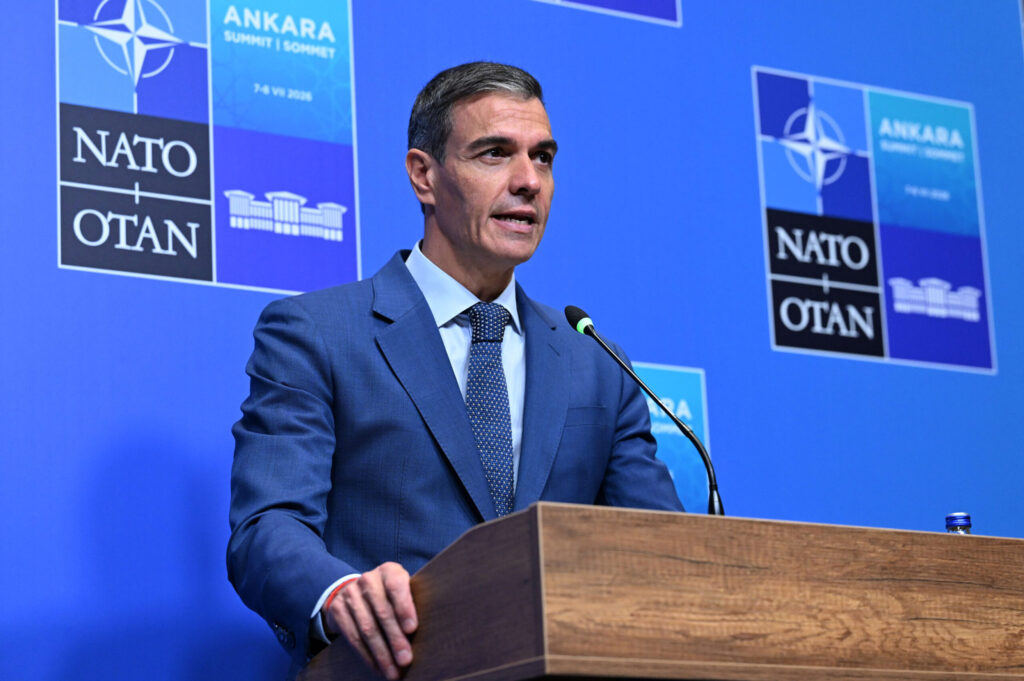
For the past eight years, Sánchez’s pursuit of political survival has also shaped his foreign policy. His vocal opposition to US President Donald Trump’s policies may appeal to some domestic voters, but his ambition to form an “anti-Trump alliance” never produced a coordinated European alternative. Meanwhile, his resistance to higher NATO spending weakened Spain’s influence and credibility, particularly among its European allies.
The Ceuta crisis further strained Sánchez’s relations with European partners. Twenty-two European leaders signed a letter demanding a tougher response and questioning Spain’s border management, while images of mass crossings reinforced Vox’s portrayal of migration as an “invasion.” Although the government defended its response, a unified command was not established until more than three weeks later. Even Sánchez’s former foreign minister, Arancha González Laya, described the episode as a “hybrid attack” and said Spain had responded too late. Failures of coordination at home had become a source of friction abroad.
Domestic bargaining also entered EU enlargement policy. Sánchez’s government warned that accepting new member states must be preceded by recognition of Catalan, Basque, and Galician as official EU languages, a commitment tied to his parliamentary agreement with the the Junts, a Catalan separatist party. Although Spain maintained its support for enlargement, EU partners dismissed the move as an “empty threat” and warned against introducing “domestic political issues” into EU accession talks. Whether confronting Trump, responding to the Ceuta crisis, or negotiating EU enlargement, Sánchez has repeatedly struggled to reconcile domestic political priorities with common European positions.
From NATO to Latin America: The foreign policy choices facing Spain’s next government
A change of government could rebuild Spain’s influence among its European allies and improve relations with Washington, but Vox’s affinity with Trump could complicate efforts to uphold common European positions when EU and US interests diverge. On defense, the Partido Popular has expressed its commitment to meeting NATO’s 5 percent spending target in a departure from Sánchez’s position. Translating that commitment into stronger military capabilities would require sustained funding and procurement planning, difficult to balance against demands for social welfare and public infrastructure. For European allies and Washington, the practical significance would lie in Spain’s military readiness and contribution to collective defense, beyond any change in diplomatic tone.
China would present a more difficult dilemma. Chinese investment in Spain has more than quadrupled, from approximately €149 million in 2024 to €643 million in 2025. Although full-year figures for 2026 are not yet available and investment flows in the first half of the year were lower, the economic incentives extend across party lines, leaving any incoming government with the major challenge of balancing investment opportunities with allied security concerns. A recent example is Chinese state-owned automaker SAIC’s planned factory in Ferrol, which is expected to create around a thousand direct jobs and has the backing of Galicia’s conservative regional government. Yet its proximity to strategic naval installations has raised espionage concerns alongside questions about technological dependence.
Huawei’s role in sensitive infrastructure has already brought these tensions into Spain’s relations with China. Sánchez’s government reportedly has sought protections for existing Huawei contracts under proposed EU restrictions, while in July 2025 US congressional intelligence committee chairs requested a review of intelligence sharing with Spain over Huawei’s involvement in its wiretap systems. Any incoming government would face the same challenge: securing the benefits of Chinese investment without compromising European security or allied confidence.
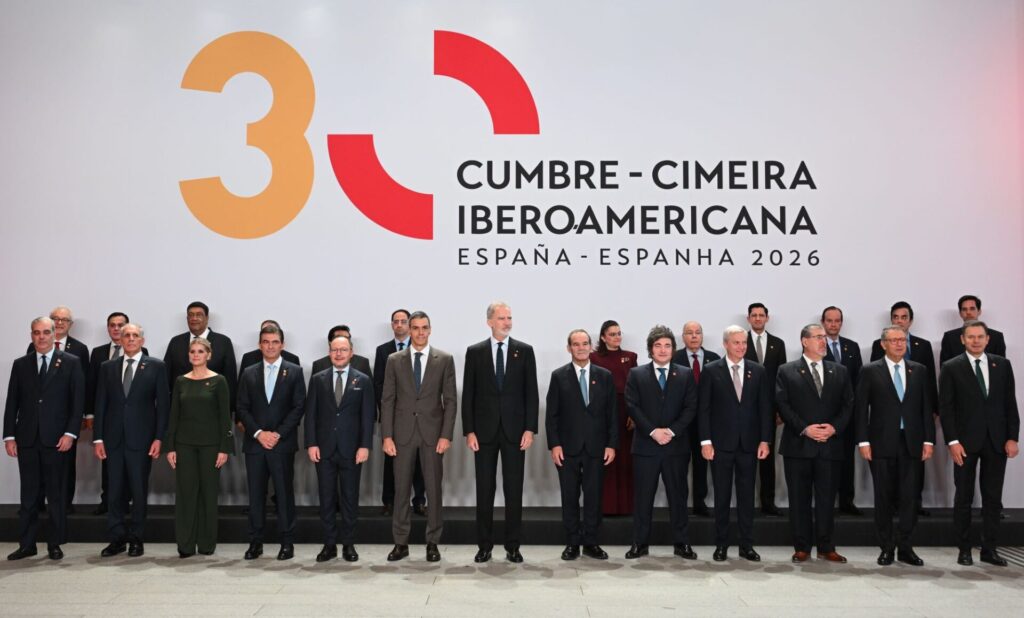
A change in government could also reshape Spain’s approach to Latin America, where its cultural, business, and diplomatic ties position it as a bridge to Europe. For instance, Sánchez’s government declined to recognize Venezuela’s Edmundo González as president-elect following the disputed 2024 election despite calls to do so by Spain’s Congress and the European Parliament. With González and other prominent Venezuelan opposition figures residing in Spain, a new Spanish government might help build a stronger EU position and press Washington to support credible elections and political freedoms.
Sánchez’s disputes with right-wing leaders in the region have created diplomatic friction, yet Trump’s unpredictability creates an opportunity for Spain, since even Latin American governments aligned with Washington have reasons to diversify their partnerships. For Europe, stronger relations could expand trade and investment and strengthen its influence in a region where China has increased its presence. Vox’s ties to leaders including Argentinian President Javier Milei could help rebuild diplomatic ties, but replacing Sánchez’s partisan preferences with another set of ideological loyalties would likely limit Spain’s reach. Instead, Spain could push Latin America higher on the EU agenda and strengthen its support for existing initiatives such as the EU’s Global Gateway investment agenda, which requires long-term cooperation across the political spectrum.
Source: www.atlanticcouncil.org