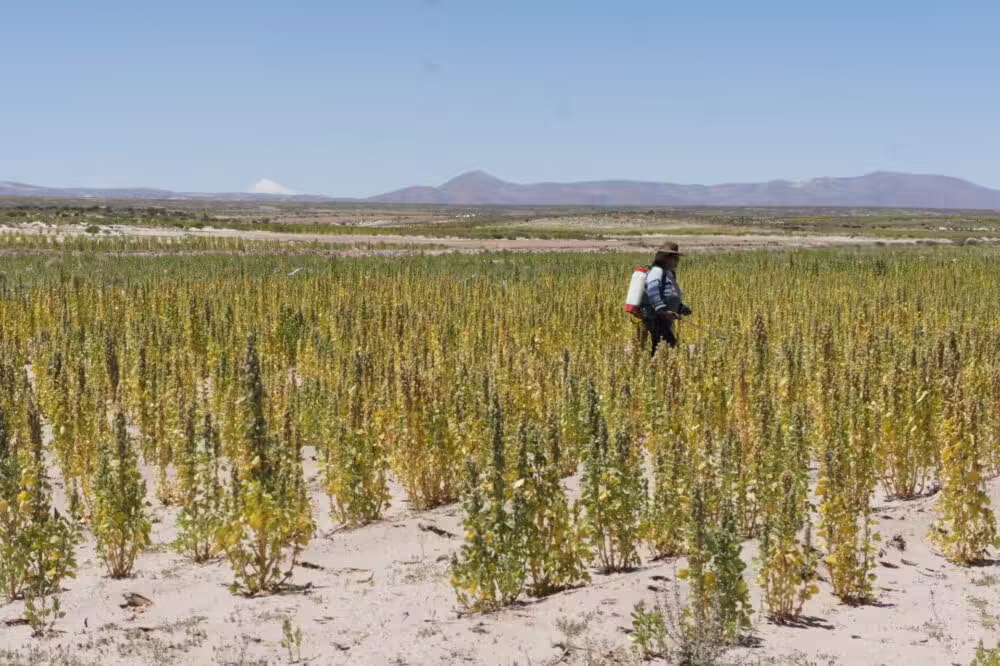

African nations and health advocates clashed with agrochemical manufacturers at the opening of the UN Global Framework on Chemicals conference in Geneva on Monday over whether pesticide phase-outs will be strictly measured or left to voluntary pledges. Meanwhile, medical networks urged negotiators to place human health – and toxic-free healthcare supply chains – at the centre of global chemical management.
Toxic agricultural chemicals cause over 400 million acute poisonings every year, sickening nearly half the world’s farmers and agricultural workers. Yet as the first international conference of the United Nations Global Framework on Chemicals opened in Geneva on Monday, governments arrived with no agreed system to track whether the world is actually phasing them out.
The week-long summit brings together delegates from over 150 governments alongside chemical manufacturers, health agencies, trade unions, and civil society groups from 16 to 20 November. Meeting at the Geneva International Conference Centre, negotiators are tasked with turning 28 voluntary targets adopted in Bonn, Germany, in 2023 into concrete, measurable actions across global industrial and agricultural supply chains.
The pesticide tracking gap triggered an immediate clash between African delegations demanding concrete tracking metrics and chemical manufacturers lobbying to rely on voluntary industry standards. The dispute centres on Target A7, an international commitment to phase out highly hazardous pesticides in agriculture by 2035 where risks are unmanaged and safer alternatives exist.
Because the framework is a voluntary, non-binding instrument, agreed indicators represent the only formal accountability mechanism governments have to verify whether targets are met. While technical working groups approved consensus metrics for foundational capacities – such as establishing national poison centres – negotiators arrived in Switzerland without agreement on a single metric to track pesticide phase-outs.
African Group pushes strict pesticide metrics
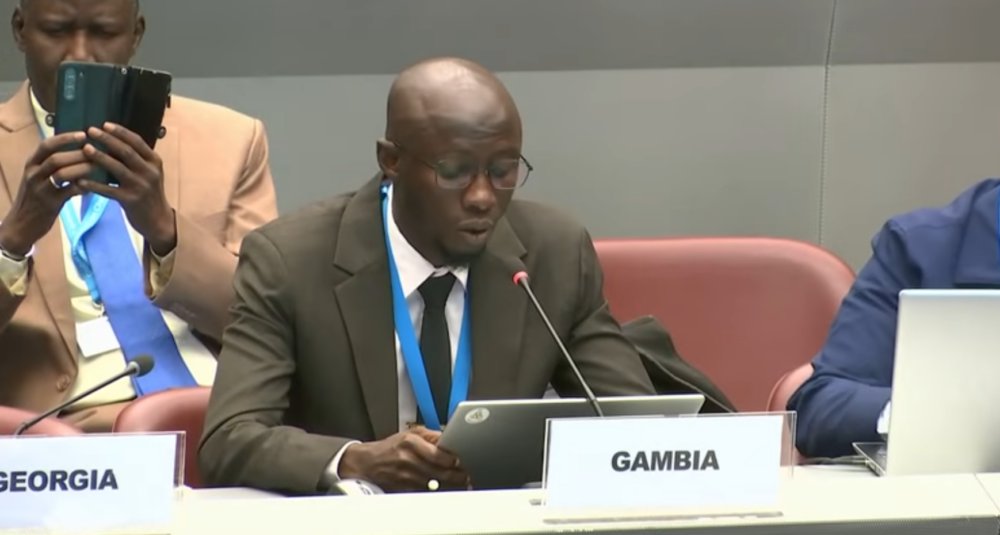
Faced with an unmeasured target, The Gambia introduced a formal proposal on behalf of the 54 African Group nations. The submission demands concrete phase-out benchmarks to evaluate real-world hazard reduction.
“For the African region, implementation must translate into real actions on issues that place our people and environment at risk,” said the delegate from The Gambia. The African proposal requires governments to document legal bans, track import prohibitions, and verify domestic pesticide phase-outs.
The European Union and host nation Switzerland broadly supported establishing robust monitoring mechanisms. They emphasized that clear indicators are essential to guide international technical assistance and financial allocations.
However, European and Swiss delegates urged a pragmatic, phased approach to prevent procedural gridlock. They argued that disputed agricultural indicators should be referred to intersessional working groups rather than delaying the immediate adoption of mature metrics.
Exporters warn of disguised trade barriers
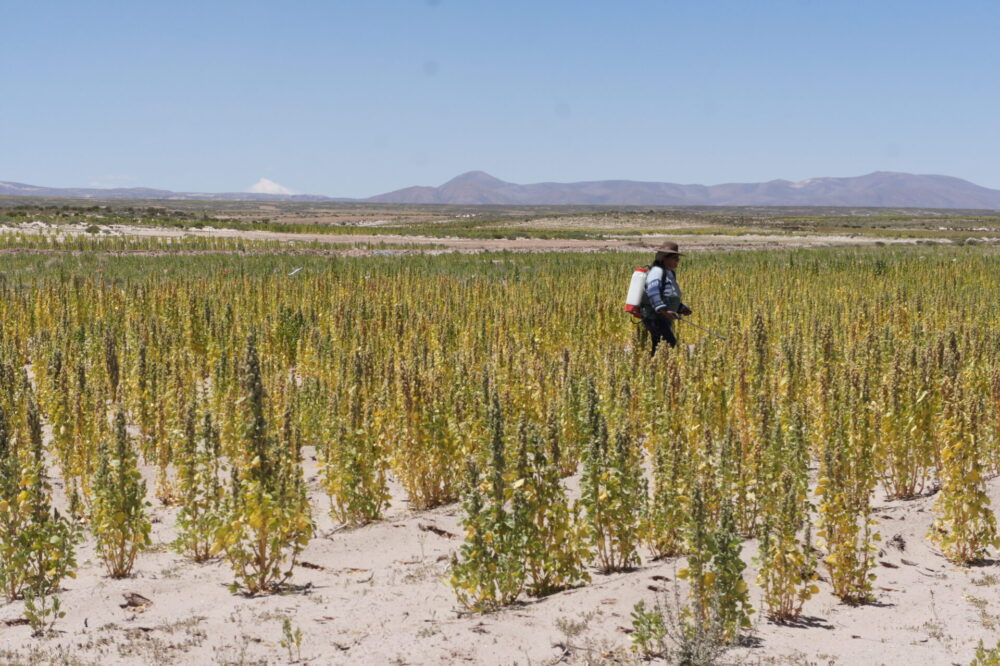
Major agricultural exporting countries and chemical manufacturing states moved quickly on Monday to reject mandatory global tracking metrics for hazardous pesticides. Representing an agricultural economy feeding 600 million people, Argentina cautioned that rigid international rules must not evolve into disguised trade barriers.
Delegations including Chile and Brazil stressed that hazard assessments cannot replace local risk evaluations. Meanwhile, Saudi Arabia fought to shield confidential business data and proprietary chemical formulations.
Developing nations including Algeria and Iran cautioned that enforcing complex supply-chain tracking would create disproportionate administrative burdens. Delegations such as Syria warned that poorer countries lack specialised laboratories to independently verify imported active ingredients entering their borders.
Without financial assistance and technology transfer, delegates stressed that small customs authorities cannot enforce international chemical prohibitions. They insisted that global reporting mandates must match national implementation capacities.
Industry defends voluntary pledges
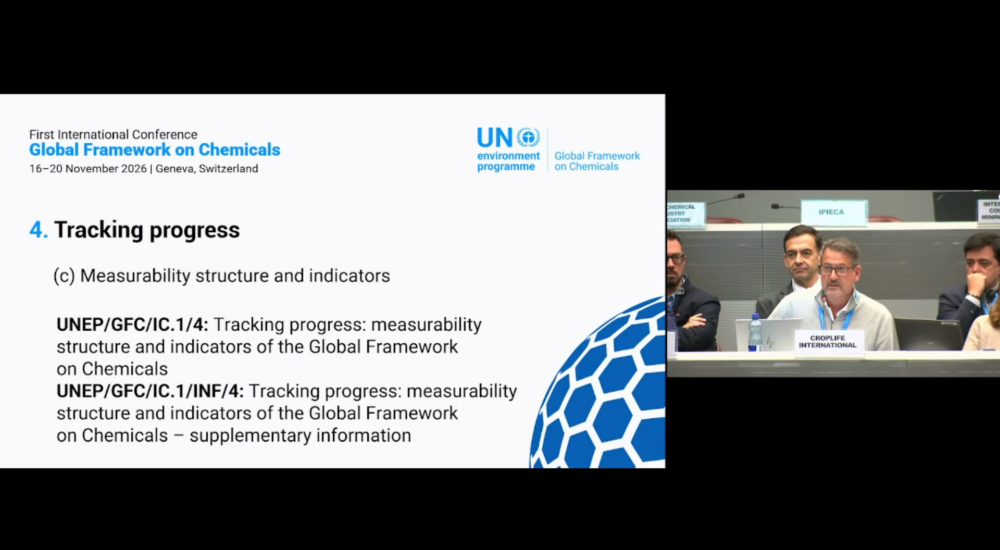
Standing in direct opposition to the African proposal, CropLife International, representing agrochemical giants including Bayer, Syngenta, and BASF, submitted counter-proposals anchored in voluntary corporate stewardship. The trade association argued that rigid global tracking metrics would stifle agricultural innovation and restrict essential pest-management tools used by smallholder farmers.
“[Indicators must remain] practical and implementable, and not unnecessarily burdensome, while building on existing regulatory and policy frameworks,” said CropLife International on Monday afternoon. Industry representatives insisted that global tracking should draw strictly from established voluntary mechanisms overseen by the Food and Agriculture Organization and World Health Organization (WHO).
Manufacturers maintained that responsible use training and voluntary recycling and disposal programmes deliver faster safety improvements than international reporting requirements. They urged delegates to focus on strengthening national pesticide registration capacities rather than imposing top-down tracking metrics across global supply chains.
Severe gaps in frontline poison surveillance
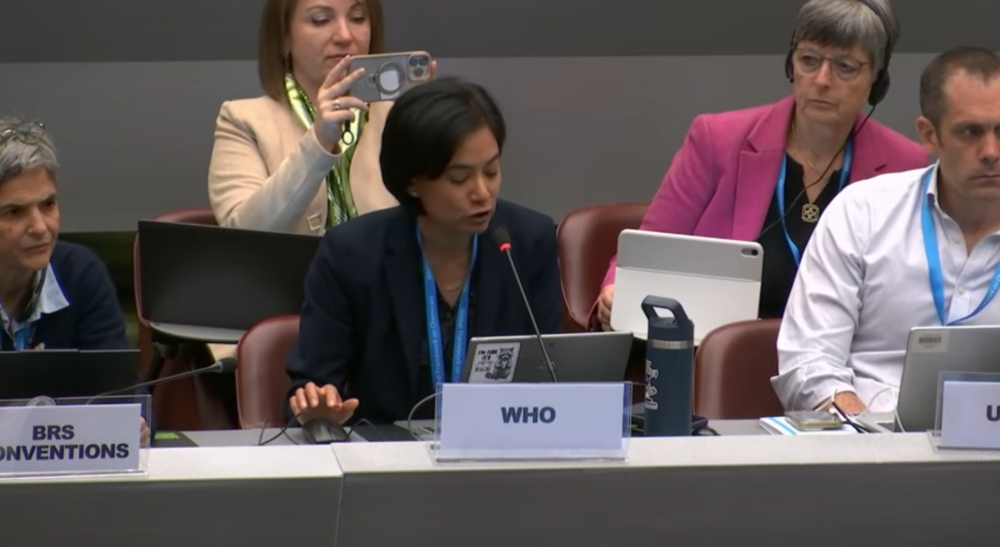
The debate over agricultural metrics unfolds against a backdrop of severely fractured clinical surveillance systems across low- and middle-income nations. More than half of all countries worldwide still lack a functioning poison control centre, the WHO reported on Monday.
“Major challenges remain, including fragmented data, weak institutional linkages, and the absence of poison centres in more than half of countries,” the agency warned. That infrastructure deficit leaves rural hospitals and frontline doctors poorly equipped to diagnose or treat acute toxic exposures in agricultural communities.
Without specialised clinical toxicology networks, millions of pesticide-induced acute poisonings and chronic chemical-related illnesses go unrecorded in official health registries every single year.
Civil society advocates demanded formal mechanisms to integrate community-generated evidence, ensuring that rural pesticide poisonings are reflected in official United Nations monitoring. They argued that waiting for underfunded national bureaucracies to compile hospital registries ignores the severe health burdens borne by agricultural labourers.
On the plenary floor, the International Pollutants Elimination Network (IPEN) called for “strengthening the recognition of community-generated evidence by recommending mechanisms for inclusion in official GFC monitoring and reporting.” Civil society advocates argued this is vital to expose true poisoning rates where state health infrastructure cannot reach.
Putting health at the centre of chemical management
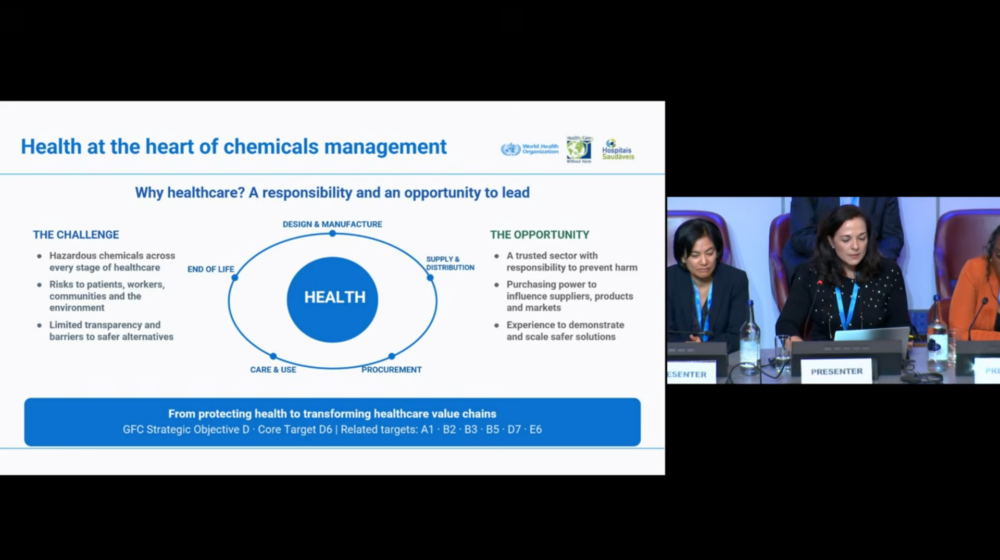
Public health advocates insisted that protecting human well-being must stand at the absolute centre of international chemical management. Addressing delegates in Geneva, Alessandra Azevedo of Projeto Hospitais Saudáveis declared that people and the planet must anchor every sectoral implementation strategy.
Representing the healthcare industry programme co-convened with the WHO, Azevedo warned that toxic substances permeate modern clinical supply chains. She argued that major hospitals must leverage their immense institutional purchasing power to eliminate hazardous phthalates, toxic plastics, and harmful medical disinfectants.
“Indicators must not merely count activities, but focus on the prevention of harm and reduced chemical use,” Azevedo told Health Policy Watch. She stressed that established clinical standards applied across 80 countries could serve as ready-made metrics to track toxic chemical reductions in healthcare.
Civil society health groups reinforced this call, reminding delegates that delayed regulatory decisions translate directly into preventable disease and occupational fatalities. Meanwhile, the International Trade Union Confederation reminded delegates that toxic exposures kill over one million workers annually, demanding guaranteed rights to know.
Washington and chemical manufacturers challenge regulations
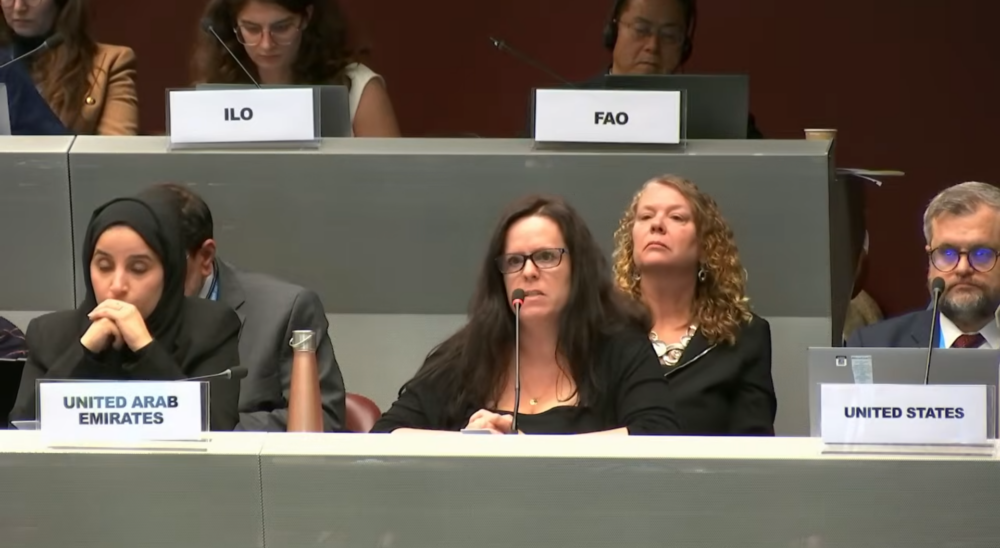
Tensions widened on Monday afternoon from farm chemicals to broad national legislation, as delegates debated United Nations guidelines designed to help developing nations rapidly ban hazardous industrial substances. The United States criticised draft United Nations guidance intended to help resource-constrained governments rapidly adopt prohibitions already enacted by advanced regulatory agencies.
“We do not agree with the proposed approaches on the use of generic risk assessments that do not incorporate country-specific exposure information,” the United States representative told delegates.
Washington also strongly warned against “over-reliance on designations of chemicals of concern made by other jurisdictions, nor the implementation of arbitrary bans based on foreign regulatory decisions.”
Industry groups such as the International Council of Chemical Associations along with Saudi Arabia immediately endorsed the American position, urging negotiators to overhaul the United Nations guidance document. Chemical manufacturers argued that regulatory models should prioritise voluntary capacity building and commercial confidentiality rather than facilitating top-down chemical prohibitions.
Meanwhile, public health advocates warned that forcing poor countries to duplicate complex risk evaluations effectively prevents them from restricting hazardous imported substances. They argued that developing nations lack the toxicological laboratories required to conduct domestic assessments, leaving populations exposed to dangerous foreign chemicals.
Late-night negotiations to break metric deadlock

To resolve the impasse, the plenary formally established the Contact Group on Tracking Progress, co-chaired by Antigua and Barbuda and Czechia. The working group has been tasked with drafting compromise text that bridges CropLife’s voluntary stewardship proposals with the African Group’s phase-out metrics.
Delegates must also determine whether unresolved targets will be deferred to an intersessional working group ahead of the second international conference in 2029. With evening negotiating sessions now underway, the conference faces a tightly compressed timeline to deliver an agreed, credible global monitoring architecture.
A stocktaking plenary on Wednesday morning will evaluate whether contact groups have achieved consensus on pesticide metrics, confidentiality rules, and national reporting duties. Negotiators must decide whether to adopt concrete tracking indicators or settle for voluntary corporate pledges before final resolutions are gavelled on Friday.
See related story:
Toxic Chemicals Abundant in Cosmetics, Hair Products, with Little Regulation
Image Credits: Michael Hermann/Wikimedia, Felix Sassmannshausen/HPW, Felix Sassmannshausen.
Combat the infodemic in health information and support health policy reporting from the global South. Our growing network of journalists in Africa, Asia, Geneva and New York connect the dots between regional realities and the big global debates, with evidence-based, open access news and analysis. To make a personal or organisational contribution click the donate button below.

Source: healthpolicy-watch.news