
(AP Photo/Vadim Ghirda)
Bottom Line Up Front
- After European governments expelled hundreds of Russian intelligence officers working under diplomatic cover in 2022 during the onset of the war in Ukraine, Russian intelligence services turned to remote recruitment of criminals, migrants, and economically vulnerable people, a pay-for-play form of “terrorism-as-a-service.”
- The first stage of recruitment typically begins in online spaces such as Telegram job-search channels or through criminal intermediaries, with more than 20 million job ads containing concealed sabotage offers in Telegram chats in 2026 alone.
- Payments for services are tiered and often channeled through crypto brokers, informal exchange desks, Bitcoin, or Tether USD, a cryptocurrency pegged to the U.S. dollar.
- Unlike terrorist financing or sanctions evasion, sabotage financing has not yet been addressed through specific alerts, guidance, or national risk assessments by European countries, meaning banks may lack clear guidance identifying payments that could be linked to sabotage.
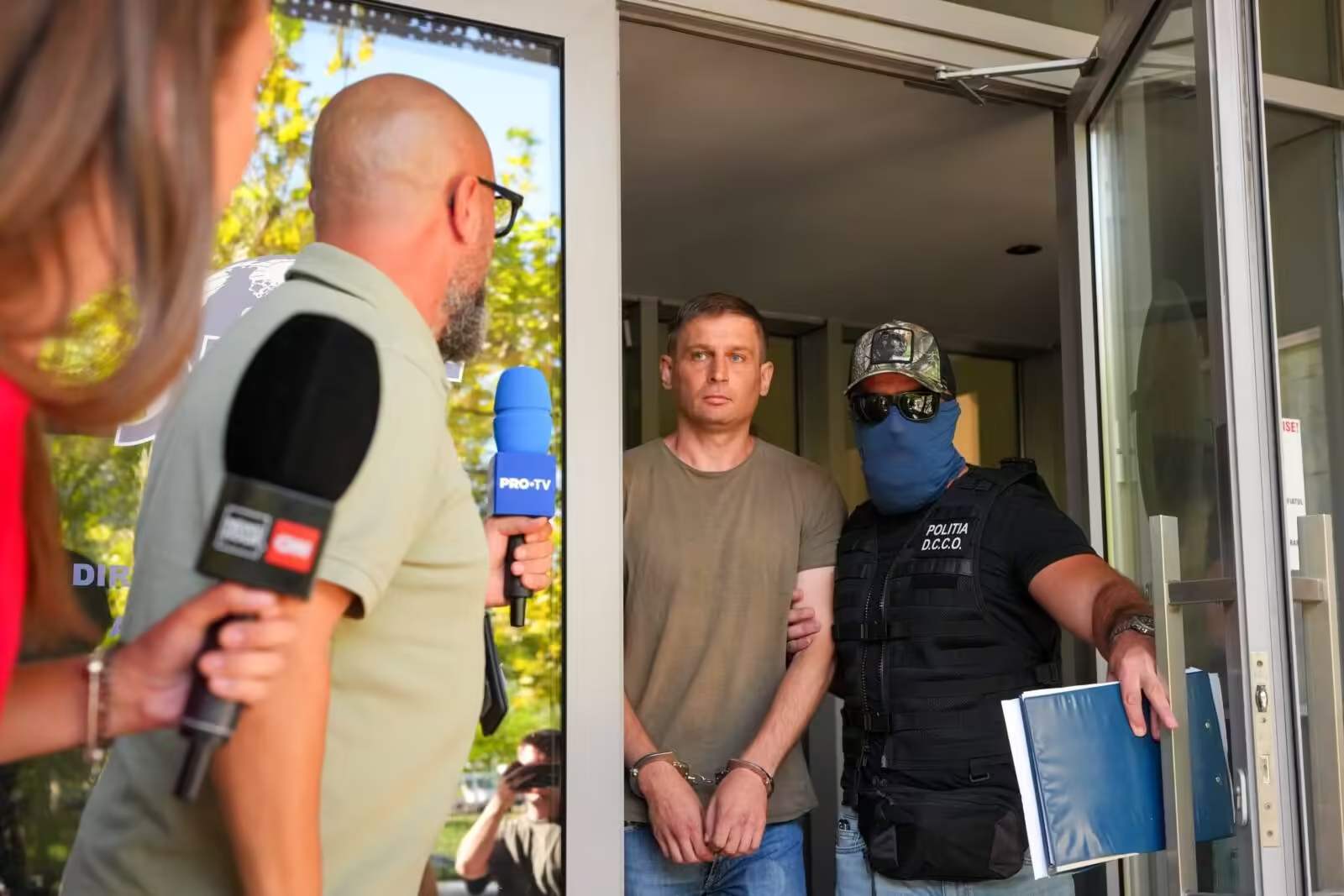
Poland’s Internal Security Agency (ABW) recently announced the arrest of two Ukrainian men, aged 24 and 25, with prosecutors alleging that the pair reconnoitered critical infrastructure and military sites across Poland on behalf of Russian intelligence. They are also accused of setting fire to vehicles after fitting them with Ukrainian military license plates, which prosecutors say was designed to inflame anti-Ukrainian sentiment in Poland, at a time when tensions are high. The case is the latest in a long series of similar instances across the country. In July, prosecutors charged an 18-year-old Ukrainian with 47 offenses, including desecrating memorials to Polish victims of wartime massacres and preparing a drone attack, after he was allegedly recruited online and paid with cryptocurrency. Warsaw has attributed the May 2024 fire that destroyed the Marywilska 44 shopping center to Russian intelligence services, and in January Polish prosecutors charged four Ukrainian nationals and one Russian national over explosive parcels that ignited at courier depots in Britain, Germany, and Poland.
This rise in the use of so-called “disposable agents” recruited and utilized by Russian intelligence services to commit petty crimes is not just prevalent in Poland, but across the European continent. After European governments expelled hundreds of Russian intelligence officers working under diplomatic cover in 2022 during the onset of the war in Ukraine, Russian intelligence services, such as the GRU and FSB, turned to remote recruitment of criminals, migrants, and economically vulnerable people. A report by The Soufan Center found that these tactics escalated year over year from 2022 to 2025. Similarly, the trend has seemingly grown in 2026 with no sign that it will end soon. Indeed, the opposite appears to be true, with other nation-states, including Iran, mimicking Russia’s use of disposable agents to sow chaos in Europe and elsewhere.
Research by Bart Schuurman, a professor at Leiden University, has shown that disposable agents are typically male and from Eastern European countries such as Ukraine, Russia, Moldova, and Bulgaria, as well as the Baltic states. The first stage of recruitment typically begins in online spaces such as Telegram job-search channels or through criminal intermediaries. Over time, Russian intelligence services have perfected and scaled up their recruitment tactics. Independent news outlet Vot Tak found more than 20 million job ads containing concealed sabotage offers in Telegram chats in 2026 alone. The recruitment networks themselves are hierarchical. The GRU and FSB, Russia’s respective military and federal intelligence services, frequently rely on handlers based in Western Europe to recruit and relay instructions. However, even communication between handlers and their operatives may be facilitated by additional intermediaries. Many operatives never meet their handlers in person, know their real identities, or even realize that they are acting on behalf of Russian intelligence services. According to research by the International Centre for Counter-Terrorism (ICCT – The Hague), instructions can pass through at least five intermediaries before reaching a young operative who was unaware of the broader operation.
For example, in October 2025, five men were sentenced for their involvement in setting fire to a warehouse in East London containing supplies destined for Ukraine in March 2024. The attack caused approximately £1 million in damage. According to British counterterrorism police, 21-year-old Dylan Earl had established contact with the Wagner Group, a Russian private military organization, through Telegram in 2023. Earl then recruited Jake Reeves, who helped recruit three additional men. Investigators also found that the group had conducted surveillance of two other businesses in London to prepare for additional operations. The plot was disrupted following Earl’s arrest in April 2024. These tactics have also extended to the United States. In September, the U.S. Department of Justice unsealed charges against five individuals allegedly involved in a Russian intelligence-linked criminal network led in part by a former Russian intelligence officer and his son, an active FSB officer. The network allegedly used Cuban and Venezuelan nationals as intermediaries to recruit individuals based in the United States to surveil and ultimately assassinate a Russian dissident. According to prosecutors, one recruit was offered between $1,000 and $1,500 to conduct surveillance and an additional $40,000 to carry out the assassination.
The tiered nature of these payments is in line with operations across Europe. The Royal United Services Institute’s (RUSI) Centre for Finance and Security found that for small acts of vandalism, disposable agents receive relatively small sums, while serious violent crimes can result in payments of tens of thousands of dollars. Country of origin can also affect payment rates. RUSI found that Ukrainian recruits are often offered roughly a tenth of what disposable agents in Western Europe are offered. Most recruits are paid in Bitcoin or Tether USD, a cryptocurrency pegged to the U.S. dollar. Others receive cash through crypto brokers and informal exchange desks, or transfers to ordinary bank accounts.
While banks and financial institutions use anti-money laundering (AML) screening measures to identify suspicious financial activity, such activity frequently goes undetected. These institutionalized measures include monitoring transactions, flagging unusual payment patterns, checking customers against sanctions lists, and looking for links to known criminal or terrorist activity. However, unlike terrorist financing or sanctions evasion, sabotage financing has not yet been addressed by European countries through specific alerts, guidance, or national risk assessments. This means that although banks have general systems in place to detect suspicious transactions, they may lack clear guidance on what warning signs to look for when identifying payments that could be linked to sabotage.
Source: thesoufancenter.org