
Key takeaways:
- Limited funding and growing demand constrain the program’s reach.
- Dietitian-designed menus aim to address clients’ health needs.
- Meal deliveries offer a check-in and someone to talk to.
By Will Atwater
As a boy attending preschool at First Presbyterian Church in Wilson, Michael Stanford would see his grandmother arrive to pick up food for Meals on Wheels deliveries.
“I would always make her take me with her to deliver meals,” he said.
He still remembers the welcome he received from the recipients.
“I always loved going up to the doors and delivering to the clients, because they loved having a kid come and they would always pinch your cheeks.”
Stanford credits his grandmother with instilling in him early on that commitment to community service. Now he’s executive director of the Wilson County Meals on Wheels program, which began in the church’s kitchen.
Founded in the early 1980s, the program provides about 600 meals a week to qualifying Wilson County residents age 60 and older, Stanford said.
“I love it except for the waitlist — that’s the only thing that really is just a booger.”
Between 250 and 300 people are waiting for service, Stanford said. He attributes the backlog to limited funding for senior nutrition programs and growing demand as the population ages.
Though the program cannot reach everyone who needs it, a contract with Wilson Medical Center keeps meals moving. Hospital staff plan menus to meet program guidelines, staff prepare the food and transport it to meal sites.
Public funding for senior meal programs includes funding from the federal Older Americans Act. North Carolina combines federal and state funding with local contributions through its Home and Community Care Block Grant, which supports services for older adults.
Statewide, North Carolina’s Division of Aging reported about 22,000 home-delivered meal recipients age 60 and older in fiscal year 2024-25, with nearly $22 million in reported spending from federal, state and local sources.
That support can be crucial, especially for seniors on fixed income, as grocery prices rise, Gov. Josh Stein pointed this out during a Nov. 9 visit celebrating the Forsyth County Meals on Wheels program’s 8 millionth meal.
Nationally, one in three Meals on Wheels providers has a waiting list for home-delivered meals, with an average wait of more than four months, according to Meals on Wheels America. Wilson County’s backlog reflects a broader challenge.
Food as medicine
Wilson Medical Center is committed to sustaining and expanding the Meals on Wheels program, even though it isn’t a profit center, CEO Jason Kimbrell said.
“We do believe that food is medicine,” he said, describing the staff’s work as “not a job to them” but “a mission.”
“We prepare and deliver scratch-made meals for 100 to 130 people on Monday through Friday,” Kimbrell said.
The program also serves meals at congregate sites in Wilson, Elm City, Lucama and Stantonsburg, where older residents can gather on weekdays for food and fellowship. Those sites also have home-delivery routes serving people nearby, according to the program’s website.
Alan Winstead, a member of the Meals on Wheels North Carolina board of directors, said programs without their own kitchens often contract with hospitals, schools or other organizations equipped to prepare meals.
The meals follow a four-week menu cycle developed by a dietitian, Kimbrell said. The hospital provides a dedicated chef to prepare the program’s meals, along with staff and equipment to maintain food safety during delivery.
“We’re not just throwing all mashed potatoes and gravy in and sending them out the door,” he said.
Client feedback also helps shape the menu. After clients asked for chicken salad more often, the program adjusted the menu, Kimbrell said.
Kimbrell said the dietitian-designed meals are intended to address clients’ health needs. As an example, people with congestive heart failure need to avoid fluid retention, which can lead to shortness of breath. So low-sodium recipes are part of the plan. Although the hospital hasn’t conducted a structured study to measure the program’s health effects, he believes the meals benefit clients.
Research on a separate Meals on Wheels program suggests that meal delivery after a hospital stay may support recovery. A recent Duke University study examined 368 adults aged 60 and older who were at risk of food insecurity or malnutrition and were referred for two weeks of home-delivered meals after leaving the hospital. Within 14 days of discharge, 4.6 percent of those who received meals had been readmitted, compared with 12.8 percent of those referred who did not receive meals.
Meal recipients also had lower readmission rates at 21 days. However, the study, published in the Journal of Hospital Medicine, was observational and could not establish that the meals alone caused the difference.
More than a meal
Stanford said the program also provides a vital source of human connection for older adults across the county.
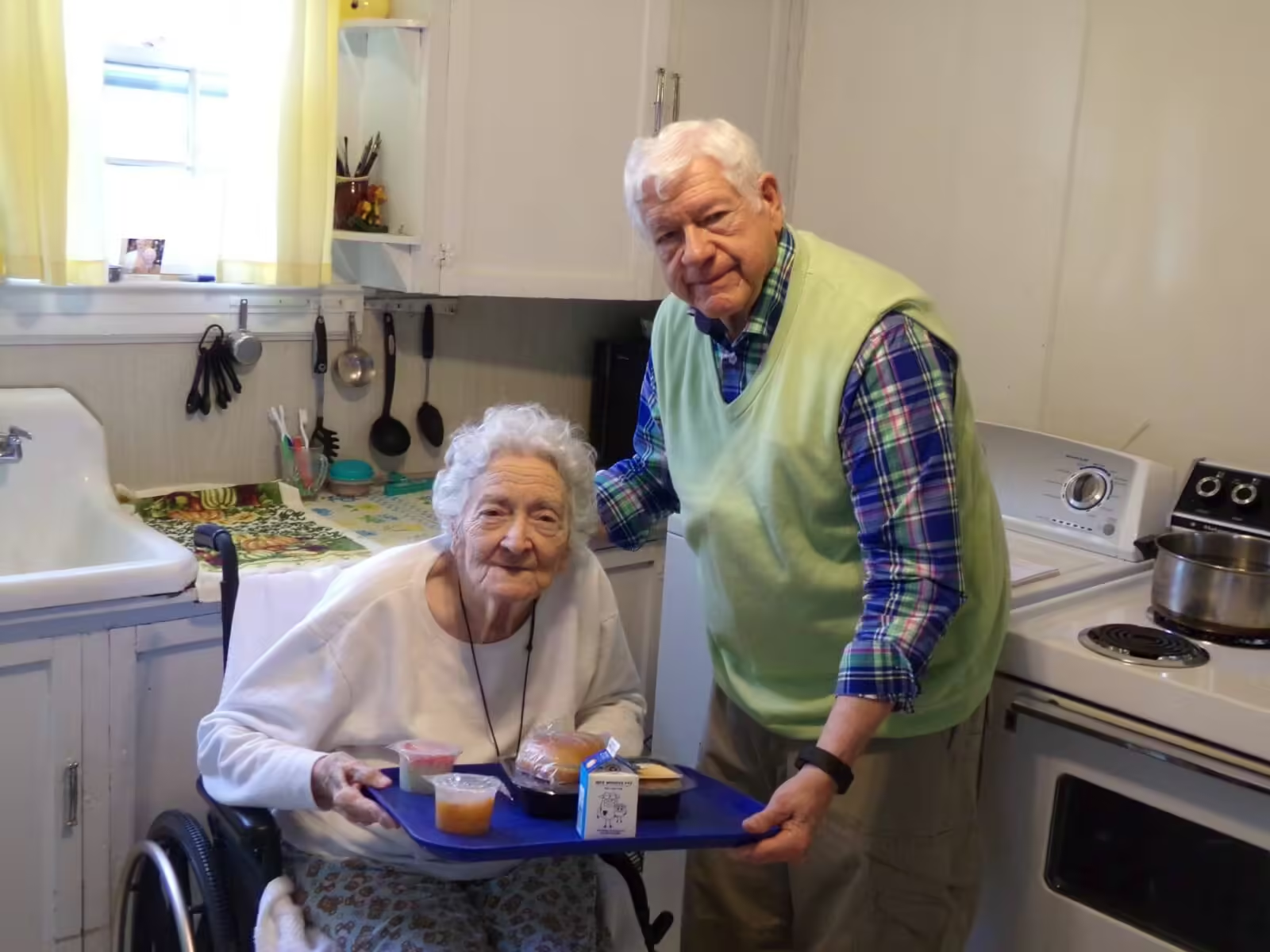
“It’s more than just nutrition. It’s a daily check-in. It’s a conversation with a friend,” he said. For some clients, the volunteer delivering a meal may be the only person they interact with that day, Stanford said. The visits offer an opportunity to check on residents’ well-being as well as deliver food.
Whether meals arrive at the door or are shared around a table, the program offers something beyond the food: someone to talk to.
“You get to know the volunteers; the volunteers get to know the clients, and really do develop relationships, which is … one of the most important parts of the program: … that human connection,” Stanford said.
To support Meals on Wheels, you can donate to the Meals on Wheels North Carolina General Fund or contact the program in your county about how to give.
This article first appeared on North Carolina Health News and is republished here under a Creative Commons Attribution-NoDerivatives 4.0 International License. 
Source: www.northcarolinahealthnews.org