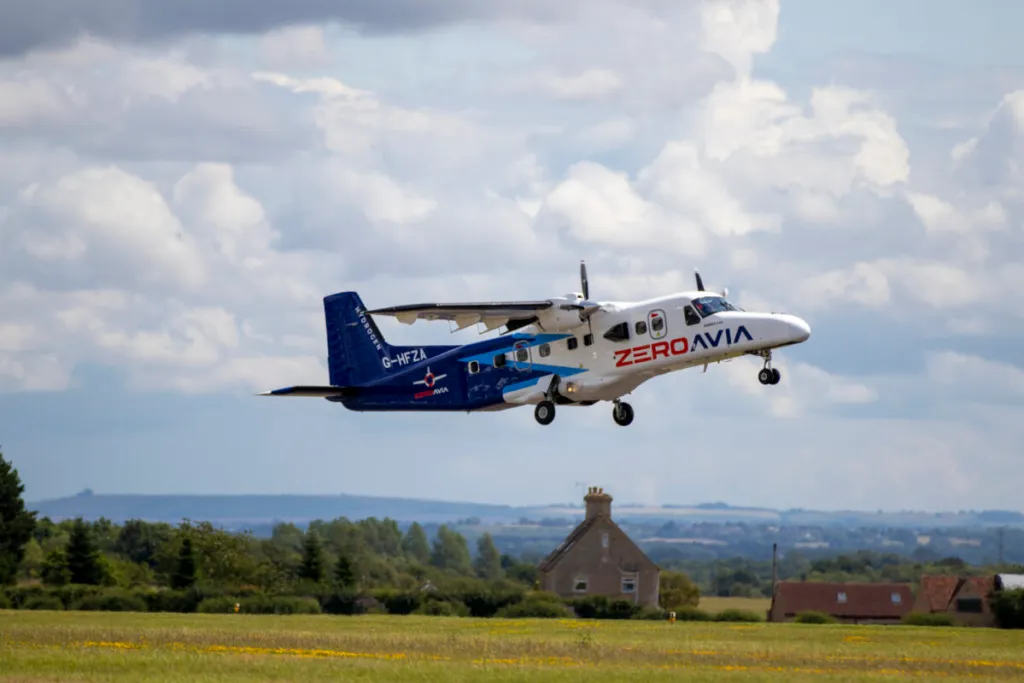

Photo Credit: Hydrogen fueled prototype by ZeroAvia. ZeroAvia
Cranfield Aerospace Solutions, which set out to fly one of the first hydrogen-powered passenger aircraft, has abandoned that goal, new accounts show.
“The directors have, over the past year taken some deliberate steps to improve the company’s long term outlook,” the company said in its accounts, filed last week with the UK’s company register, Companies House. “This has resulted in pivoting the strategy away from Project Fresson and the zero emission passenger flight objective.”
Under Fresson, Cranfield had been converting a nine-seat Britten-Norman Islander, a plane used on short island routes, to run on hydrogen fuel cells. It is now developing hydrogen-powered drones, “targeting wider markets and segments than those solely associated with zero emission passenger flight,” the directors wrote.
The company is also going back to its roots. It “took early steps to restart the aerospace design consultancy services that had been the foundation of the business prior to Fresson,” the accounts say. Its motorsport simulator business “signed an exclusive contract with a premier venue entertainment provider,” which meant setting up a new factory.
Trade publications reported last year that Cranfield had paused work on the Islander. The accounts, for the year to Sept. 29, 2025, are the company’s first formal confirmation that it has moved away from passenger flight altogether, and the first look at the finances behind the decision.
Consistent Losses
Cranfield lost £4.5 million ($6.1 million) in the year, up from £4.3 million. Revenue rose to £6.9 million ($9.3 million) from £1.9 million, mostly from the simulators, and the company still made a loss on its sales before overheads. Average staff fell to 64 from 82.
It ended the year with £414,000 ($554,000) in the bank and £13.4 million ($18 million) of convertible loan notes, on which it pays 12% interest. The repayment dates have been pushed beyond September 2026, “with no fixed date.” The directors say the company can keep going because of “expected grant money” and further loans from existing shareholders.
The balance sheet still values the development work on “a hydrogen fuelled prototype aircraft” at £16.3 million ($21.9 million), with no write-down, though the company said its drones build on that work. A write-down of that size would far exceed its £937,000 in net assets.
The accounts were due on June 29 and were filed more than four months late. Last year’s accounts were out by June.
Hydrogen in Retreat
Cranfield is the latest hydrogen and electric aircraft developer to retreat.
In June, Maeve Aerospace went bankruptleaving backers Delta, SkyWest and Japan Airlines without the hybrid-electric regional jet they had supported. ZeroAvia also cut about half its staff this year. “Billions are needed, years before there is any possibility of generating revenue,” aviation decarbonization analyst Adrian Norris told Skift after Maeve’s collapse. “Sadly, Maeve won’t be the last to fail.”
Cranfield did not respond to a request for comment.
Source: skift.com