
A shield or not a shield, that is the question. Really? Low Earth Orbit, today’s critical defence frontier is rapidly crowding with rival hardware. Yet national self-interest chokes a unified strategy just as the window for action is closing.
Space warfare is already here, and commercial satellites have become legitimate military targets. That is the finding of Challenges to security in space: Congestion, competition, and cooperation 2026, a report by the US Defense Intelligence Agency. It describes space as a contested military domain.
The report names four principal non-allied actors: China, Russia, Iran, and North Korea. They are developing systems to deny an adversary access to space-based services. “Space almost certainly will remain an increasingly competitive and crowded environment as space capabilities improve and other countries seize opportunities in space,” the agency says.
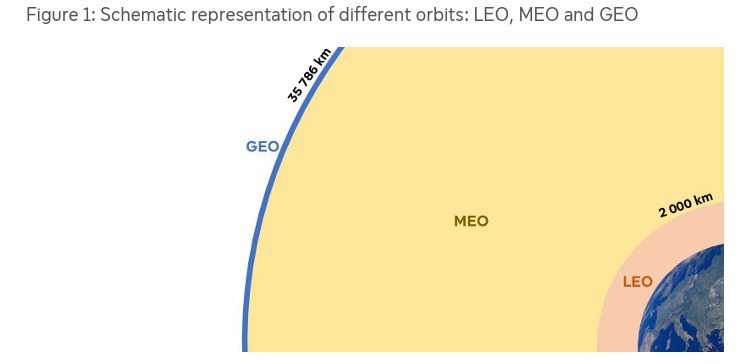
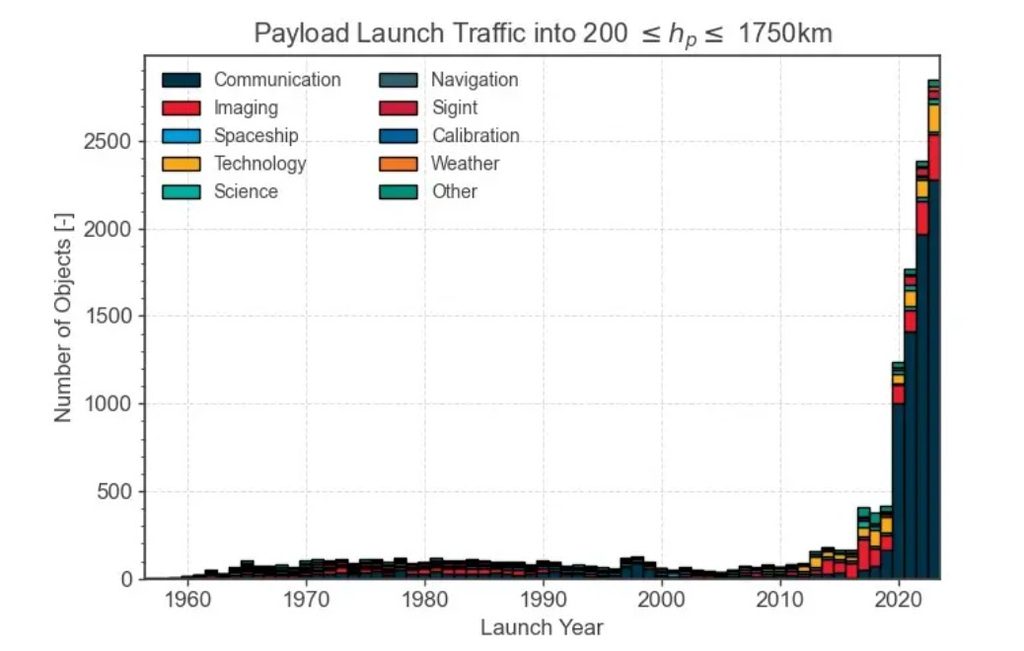
The report counts about 15,058 satellites in low-Earth orbit (LEO) as of this past June. “Russia is currently capable of targeting satellites in LEO with both terrestrial and orbital systems and is interested in developing systems for targeting more distant orbits,” it said.
You might be interested
Europe, meanwhile, has approved a €24bn space-defence project, yet its capitals are bickering over who is in charge. The Council of the European Union formally approved SPACE, the European Space Defence Shield, in late September. It is one of the first five European Defence Projects of Common Interest (EDPCIs), governed under the European Defence Industry Programme (EDIP).
Whose shield is it?
The declared aim is to eliminate the dangerous fragmentation of European military space architectures by compelling member states to pool financial and technological resources. Nations now operate disparate, non-communicating reconnaissance and communications satellites. The result is staggering redundancy and massive gaps in orbital tracking.
More than 20 member states are engaged in the framework, which remains open to Norway as well. But unlike standard centralised EU space programmes such as Galileo, the Space Shield faces fierce pushback from Europe’s top military powers.
The conflicts of the future will no longer be limited to the Earth’s surface or the deep sea. They will also be fought openly in orbit.
— Boris Pistorius, Germany’s defence minister
Germany and France, joined by Belgium, Spain, the Netherlands, Sweden, and Austria, circulated a non-paper to all member states on 21 September 2026. The seven capitals told the European Commission that space defence and the procurement of military satellites remain the exclusive prerogative of sovereign member states.
“The responsibility for matters of security and defence, including the procurement, operation and defence of space systems used for security and defence purposes, lies exclusively with the member states,” the non-paper said. What it means in practice is advocating for precisely the fragmentation the project tries to limit.
A semantic trap
The dissenters want more than a change of lead — they want a change of name. They have demanded that the Commission drop the word ‘shield’. They argue that Space Defence Shield is misleading, because it implies an independent, supranational EU-level operational capability.
Industrial analysts warn that this semantic battle could stall procurement. It could dilute a cohesive defence programme into a fragmented European space security initiative. Such an initiative would merely pool national assets without unified command.
Under this pressure, France has been designated the nation officially responsible for space matters within the EDPCI framework. Its defence procurement agency, the DGA (Direction générale de l’armement), is to define the structural priorities for development across participating states by 2034.
The debate is fierce. Agence Europe and La Lettre both stress that member states demand complete interoperability with NATO formats. A separate EU data layer for space awareness risks redundant data structures. These could isolate non-EU NATO allies, the US and UK, and delay tracking during a high-intensity conflict.
A nervous system
SPACE is designed to act as a unified orbital nervous system. A federated framework would combine early-warning tracking, secure satcom, and missile-defence coordination. It aims to guarantee autonomous European situational awareness and safeguard critical orbital paths.
It must also provide a continuous, resilient data feed that can survive adversarial jamming or anti-satellite kinetic operations. The programme is to build a multi-layered architecture covering space-domain awareness, resilient positioning, navigation, and timing (known summarily as PNT), early-warning sensors, and secure satcom.
Sovereign access to space is not a luxury, it is a strategic necessity for Europe.
— Daniel Metzler, Isar Aerospace
The DGA is crafting a technical roadmap to integrate disparate national assets into a single European sensor framework. A constellation design phase runs from late 2026 to 2027, in coordination with EU industry partners. It must outline sensor specifications and constellation geometry.
Backup clocks et al.
The roadmap mandates integrating France’s GRAVES space surveillance radar and Germany’s GESTRA system into a unified tracking network. A secure data pipeline must correlate ground-based radar data with in-orbit sensor telemetry. Ground radar arrays and LEO satellite networks would feed a DGA sovereign space-data router, then an interoperable command-and-control network.
Satellites in the awareness layer need advanced manoeuvrability payloads. They require high-precision optical and infrared sensors able to make autonomous close-proximity flybys. These would identify, photograph, and assess uncooperative or potentially hostile orbital bodies.
To counter electronic warfare and navigation spoofing, the architecture requires a secondary, highly encrypted PNT overlay. It must work independently of the primary Galileo network. The DGA’s underlying challenge is the sheer volume and velocity of sensor data that must be securely fused.
The philosophy is active, dynamic protection rather than passive observation. General Philippe Adam, Commander of the French Space Command, set it out in a defence white paper. “Space has become an area of confrontation, and our strategy must adapt from simple observation to active defence. We need the capabilities to detect, characterise, and attribute any threat in orbit immediately,” he wrote.
The contractors
Official prime contracts are still being structured while the DGA and member states finalise the roadmap. Industry intelligence points to the likely contractors. Thales Alenia Space (France and Italy) and Airbus Defence and Space (Germany and France) are highly favoured to split the prime contracts for the early-warning sensor layer and secure satcom arrays.
Both are tailoring existing military portfolios, such as France’s Syracuse and Germany’s COMSATBw (the dedicated military communications satellites used by the German Bundeswehr), part of the broader SATCOMBw satellite communications program, to the interoperability guidelines demanded by the project.
Russia is currently capable of targeting satellites in LEO with both terrestrial and orbital systems and is interested in developing systems for targeting more distant orbits.
— US Defense Intelligence Agency
OHB SE of Germany—known for agile satellite constellations—is heavily positioned to bid for the LEO space-domain awareness (SDA) and tracking layers. It has historically championed low-cost, rapidly deployable small-satellite architectures. That makes it a prime candidate for the high-density constellation design.
Saab of Sweden and Indra of Spain are focusing on terrestrial command-and-control (C2) networks and navigation warfare (NAVWAR) components. They would build heavily encrypted ground-station infrastructure and resilient anti-jamming PNT receivers. These would funnel space telemetry securely into land, air, and sea combat networks.
Three micro-launchers
The project explicitly incorporates a rapid-launch mandate. Arianespace handles heavy sovereign payloads, but the Commission and participating militaries are looking closely at commercial micro-launcher start-ups in Germany and France. The goal is to replace disabled LEO tracking satellites within 48 to 72 hours, with contracts for 2029 technology demonstrators at stake.
Isar Aerospace of Germany is developing the Spectrum launch vehicle. It focuses on highly automated manufacturing pipelines and 3D-printed engine components. It positions itself as the high-cadence choice for constellation replenishment, using the Andøya Spaceport in Norway to reach sun-synchronous orbits.
Rocket Factory Augsburg (RFA) of Germany is developing the RFA ONE, which uses a staged-combustion engine for efficiency and payload capability. Its strategy relies on mobile launch platforms and multi-spaceport access, such as SaxaVord in the UK and CSG in Kourou.
MaiaSpace of France, a subsidiary of ArianeGroup, is developing the reusable Maia mini-launcher. Backed heavily by the French space ecosystem, it is leveraging institutional support to become a core option for sovereign, French-vetted military small-satellite deployments from Kourou.
Sovereign access
Industry leaders call micro-launchers vital national infrastructure. Daniel Metzler, CEO of Isar Aerospace, said: “Sovereign access to space is not a luxury, it is a strategic necessity for Europe. The current geostrategic environment shows that we cannot rely on external capabilities to secure our orbital infrastructure.”
Andrew Parsonson, in an analytical piece for European Spaceflight, made a similar point. “The development of a responsive launch capability is crucial for European defence, ensuring that if a satellite is compromised, a replacement can be in orbit within days rather than months,” he wrote.
Pierre Lionnet, Research and Managing Director of Eurospace, sketches the industrial backdrop in a July essay. European institutional demand is captive but modest: about $4bn to $5bn in spacecraft and much less than $1bn in launch in recent years. Accessible commercial spacecraft demand has almost halved in a decade, to $2.5bn a year from about $4bn.
Accessible commercial launch demand is about $2bn and growing, spurred by Oneweb and Amazon Leo. Europe captured about 35 per cent of accessible demand on average. Launch was the exception, because European launchers were unavailable to the commercial market in 2024 and 2025.
Money and muscle
National return rules drive up to 84 per cent of European space budgets, against 65 per cent five years ago. Mr Lionnet says this fragments the supply chain and raises production costs. European institutional satellites cost about 30 per cent more per kg than American ones in 2024 and 2025.
Budgets are rising nonetheless. European government space spending peaked at almost €13bn in 2025, 34 per cent more than in 2016 in current terms. Mr Lionnet expects growth to continue in 2026. The expected IRIS² procurement, totalling €10bn, should drive higher commitments.
The responsibility for matters of security and defence, including the procurement, operation and defence of space systems (…), lies exclusively with the member states.
— Letter of ‘seven capitals’ to the European Commission
The European Space Agency (ESA) also set a record. “The largest contributions in the history of the European Space Agency, €22.3bn, have been approved at its Council meeting at Ministerial level in Bremen,” the announcement read. That compares with €14.5bn in 2019 and €16.9bn in 2022. Mr Lionnet cautions that such totals combine new and previously committed funds.
Germany sets the pace. “The conflicts of the future will no longer be limited to the Earth’s surface or the deep sea. They will also be fought openly in orbit,” said Boris Pistorius, German defence minister, in September 2025. By the end of that year, Germany had finalised a €1.7bn order for the SPOCK-1 constellation with a consortium of Rheinmetall and ICEYE. In January 2026 came the Satcom BW-4 order, informally dubbed the German Starlink.
France, Spain, and Bromo
Most European orders for military-grade observation satellites went to ICEYE, the Finnish radar-imaging start-up. Poland, Germany, Finland, the Netherlands, Sweden, and Portugal were the buyers. ICEYE signed hundreds of millions of euros’ worth of new orders covering dozens of satellites, and plans local production, particularly in Germany.
France raised its share in Eutelsat from 13 to 30 per cent with a €1.35bn investment in June 2025. Eutelsat owns the Oneweb constellation, which may now refocus on military services, starting with the CENTAURE contract for the French army. Airbus has repatriated Oneweb satellite production to Toulouse from Florida.
A crowded space
Hisdesat, Spain’s military satellite operator, launched Spainsat NG II in October 2025. The programme, worth €2bn all included, was to provide secure communications. A high-energy particle hit the satellite, and it was declared lost a few months later. It was insured, and Spain ordered an exact replacement.
Another project called Bromo would merge the satellite activities of Airbus, Leonardo, and Thales. They signed a memorandum of understanding in October 2025 and plan a new company by 2027. Airbus would own 35 per cent, and Leonardo and Thales 32.5 per cent each. The three represent about 37 per cent of Europe’s space industrial workforce.
Launchers and start-ups
Bromo followed profit warnings at the partners’ space businesses. The sector’s players tend to lose money, or break even at best. Mr Lionnet fears that a supranational giant may appeal less to national authorities than local players such as OHB and Rheinmetall.
European launchers recovered somewhat in 2025, with seven successful launches: three Vega and four Ariane 6. Europe had lacked independent access to space for most of 2023 and 2024. Isar and RFA did not complete maiden launches in 2025. Orbex, the British contender in ESA’s European Launcher Challenge, folded at the end of the year.
Space has become an area of confrontation, and our strategy must adapt from simple observation to active defence.
— Philippe Adam, Commander of the French Space Command
Capital is flowing to start-ups. Endurosat, ICEYE, Aerospacelab, and Sateliot raised more than €400m between them in 2025. By mid-2026 European start-ups had attracted more capital than in all of 2025, including €450m more for ICEYE. Meanwhile, The geostationary market is shrinking; legacy players are moving to smaller satellites or merging.
The crowded sky
The American report quantifies the crowding. Beyond LEO, it counts 572 satellites in geosynchronous Earth orbit, 271 in medium Earth orbit, and 22 in highly elliptical orbit. China’s annual launches rose from 22 in 2016 to 93 in 2025, and it deployed 384 satellites in 2025, against 40 in 2016.
China’s intelligence, surveillance and reconnaissance fleet exceeded 510 systems as of July 2026. It is also building large LEO constellations such as Xingwang (Guowang) and Qianfan. “China and Russia will continue to pursue new and improved counterspace capabilities to exploit a perceived US-and-allied reliance on space-based assets,” the report reads chillingly.
“Meanwhile, orbital congestion continues to pose a threat to safe operations within LEO,” the US agency says, as a sort of an aside. It warns of collisions, battery explosions, and counterspace testing. Mr Lionnet adds that overpopulation in LEO may also reveal the limits of growth earlier than expected.
It is against this backdrop that European political heavyweights are at each other’s throats about whether it is good to call the continent’s space program a shield.
Source: euperspectives.eu