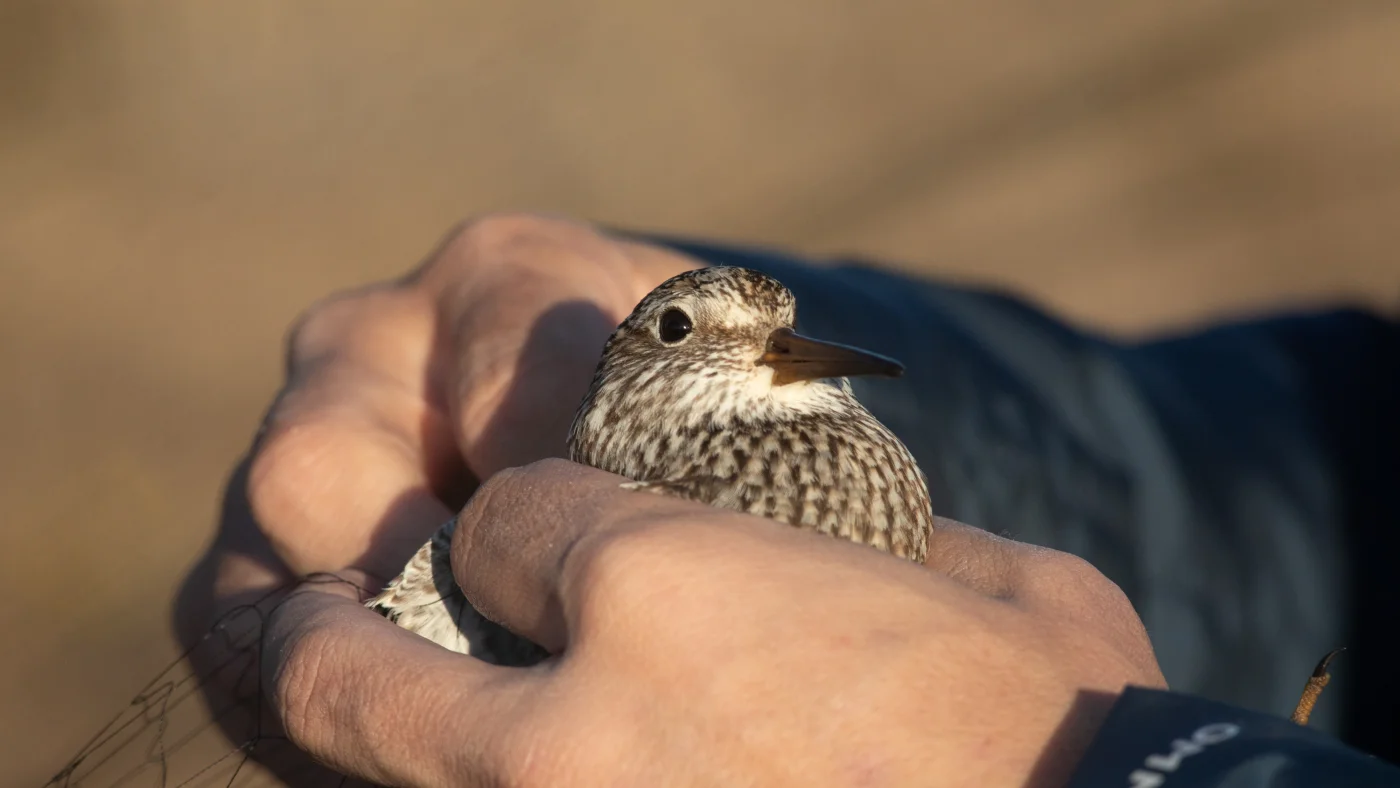

Pectoral sandpipers are among more than 12 million shorebirds that migrate to Alaska every year to breed. For years, scientists have been trying to understand how these unassuming birds make such monumental journeys.
Ryan Kellman/NPR
hide caption
Ryan Kellman/NPR
Pectoral sandpipers are ultra-marathoners. They fly more than 17,000 miles a year, crossing entire continents on their migration from Alaska to Argentina and back again. They don’t soar or coast on the wind – they flap the entire way. And these elite athletes are only the size of a robin, weighing around three ounces.
The sandpipers are among more than 12 million shorebirds that migrate to Alaska every year to breed, spending the short summer season in open lands near water. For years, scientists have been trying to understand how these unassuming birds accomplish such monumental journeys from places like New Zealand, Asia, South America.
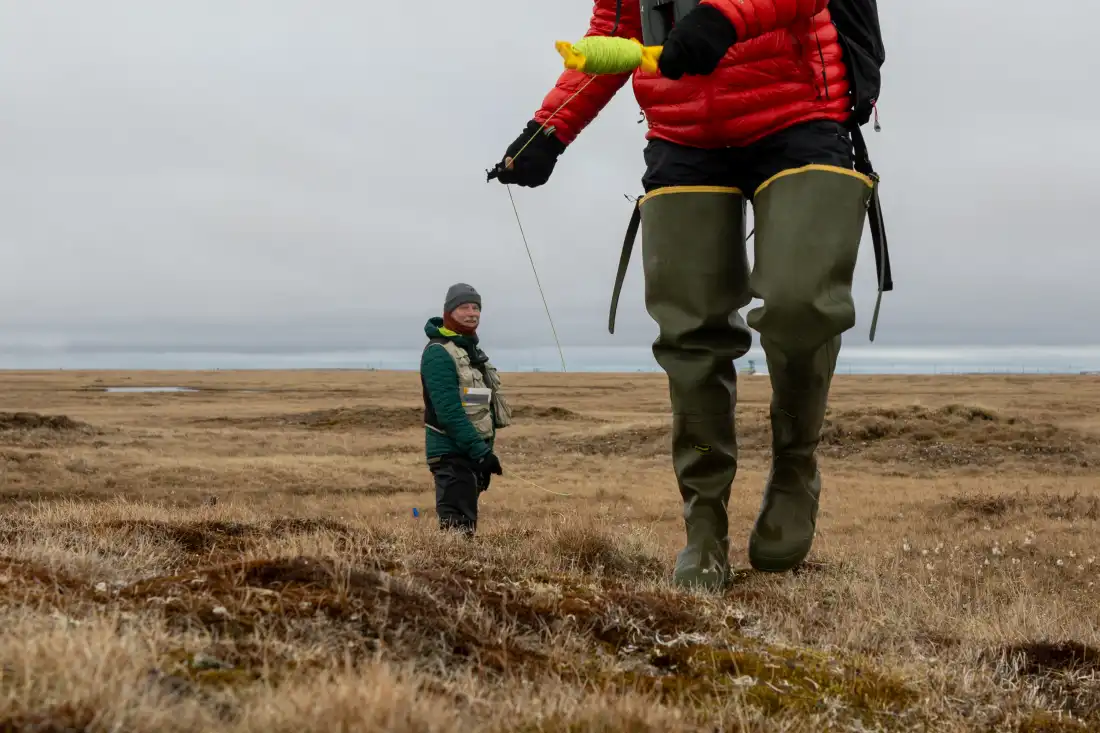
Rick Lanctot studies shorebirds with the U.S. Fish and Wildlife Service. He marvels at the adaptations that allow the birds to make such long migrations. “All of the organs that they don’t need during a nonstop migration get really tiny, like their digestive system shrinks,” Lanctot says.
Ryan Kellman/NPR
hide caption
Ryan Kellman/NPR
“Shorebirds are not these little brown birds on the beach, but they’re miraculous migrants that travel these huge distances by these crazy adaptations,” says Rick Lanctot, a wildlife biologist with the U.S. Fish and Wildlife Service.
For 24 years, Lanctot and other researchers have tracked the return of shorebirds to northern Alaska. The data shows a concerning trend. Overall, almost half of the 41 shorebird species that breed in Alaska are declining. Some have lost more than half of their population over the last 30 years.
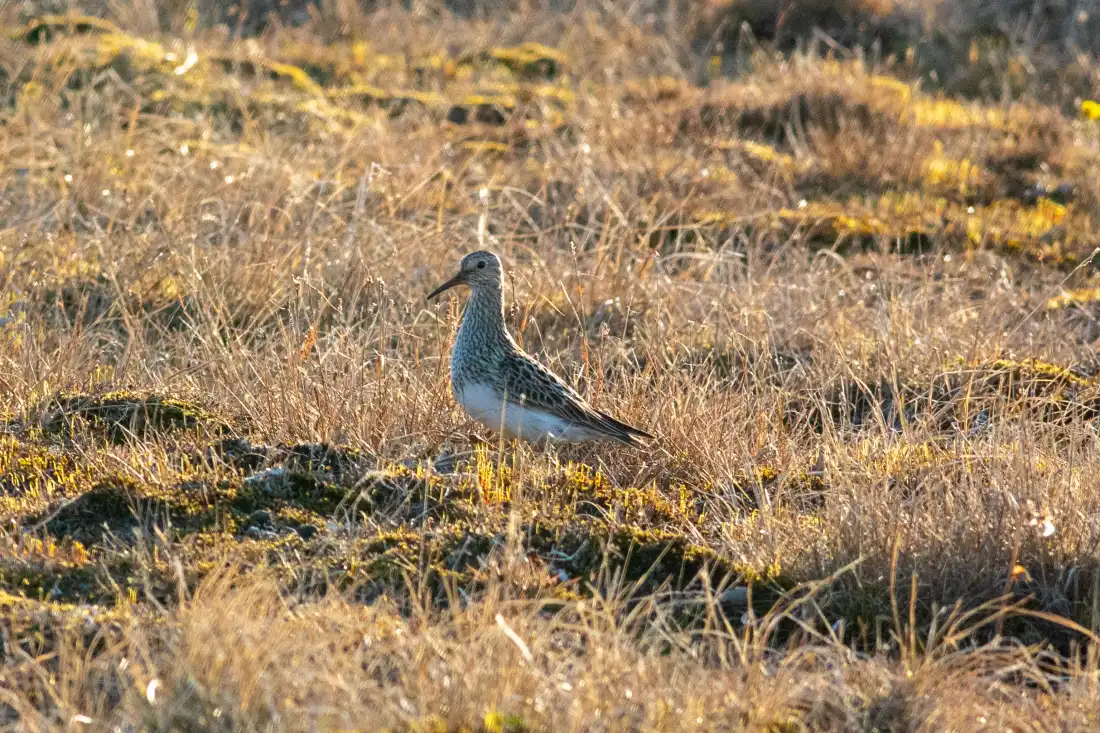
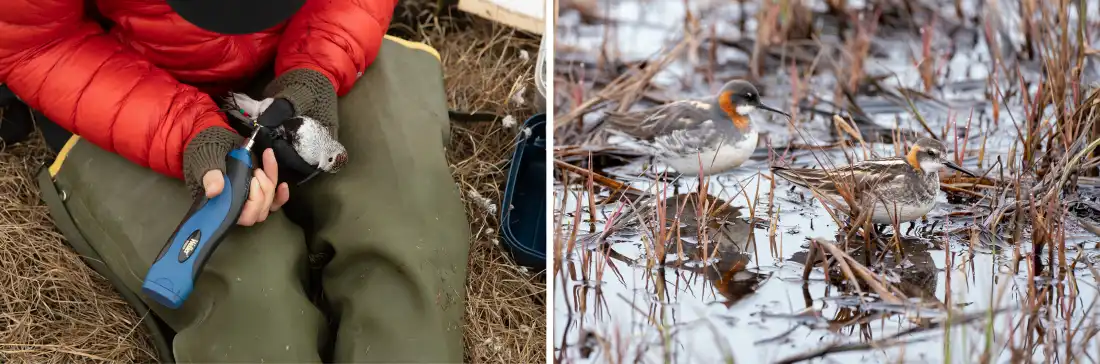
Clockwise from top: A pectoral sandpiper, two red-necked phalarope, and a dunlin being tagged by a researcher are all examples of the 41 species of shorebirds that breed in Alaska. Nearly half of those species are declining.
Ryan Kellman/NPR
hide caption
Ryan Kellman/NPR
Migration, like any kind of travel, requires careful timing. Birds orchestrate their journeys to take advantage of the seasons, arriving when food is ample and the weather is ideal. But for many species, their itineraries are going increasingly awry. Habitats they count on, such as wetlands and grasslands, are disappearing. In a hotter climate, spring is arriving earlier, which affects when their food is available. It’s like making a pit stop on a road trip and finding all the restaurants are closed.

The question is whether long-distance migrators, which already push the limits of survival, can adapt to a rapidly warming world.
“Shorebirds truly are sentinels about what is happening to the planet, because they’re touching down in so many of the places across that planet,” says Nathan Senner, who studies shorebirds at the University of Massachusetts Amherst. “If we can’t listen to what they’re telling us about the unpredictability of what we’re currently doing to the planet, then we’re not going to be able to respond to a lot of changes.”
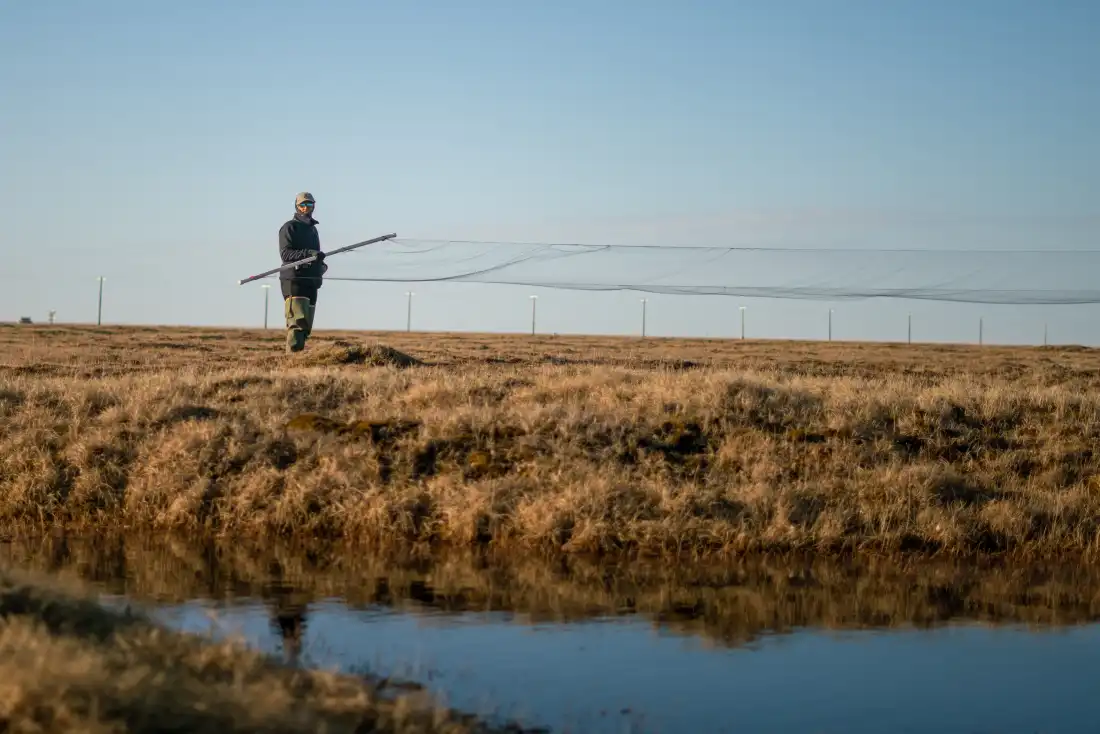
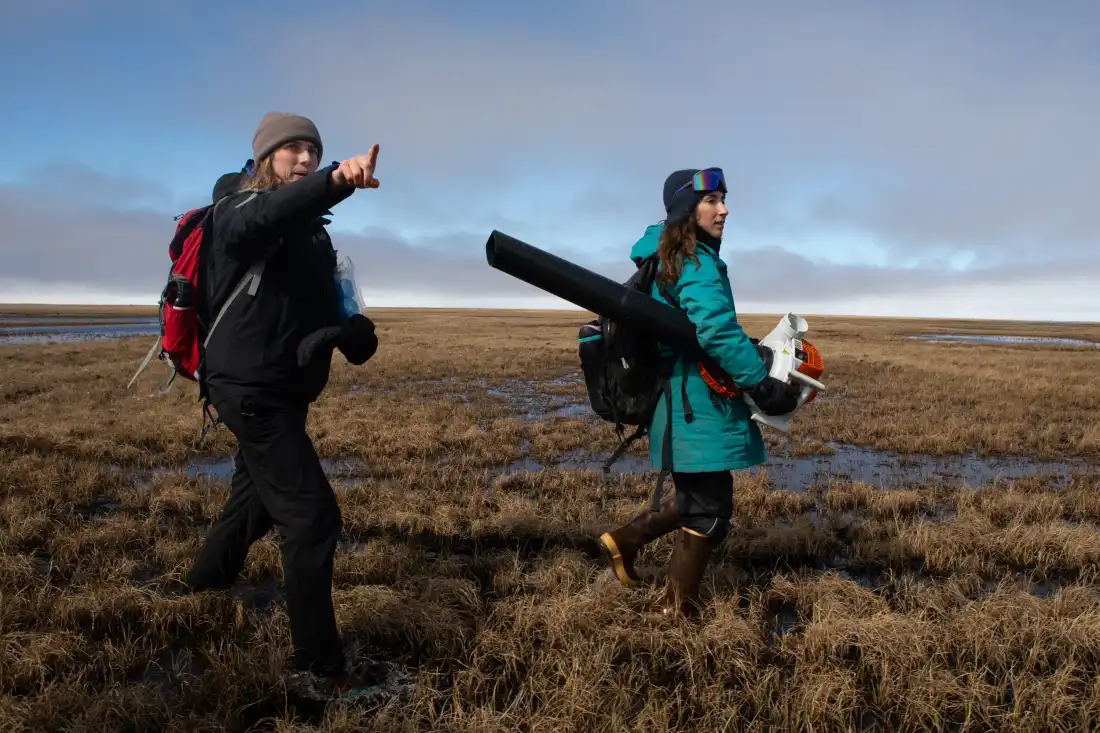
Morgan Ziegenhorn walks across open tundra searching for pectoral sandpipers as part of a team that attaches tiny GPS transmitters to the birds to better understand their migratory patterns.
Ryan Kellman/NPR
hide caption
Ryan Kellman/NPR
Tiny trackers
Lanctot gently holds a brown and white pectoral sandpiper in his hands as field technician Braden Meyer attaches what looks like a tiny backpack. This tracking tag will log the bird’s locations as it flies thousands of miles.
Nearby, male pectoral sandpipers call out, searching for females and attempting to ward off other males. Some have already found places to nest, spread out among the low-lying plants of the Arctic tundra. The sun is still well above the horizon at midnight, since summer days last for 24 hours in Utqiaġvik, the northernmost city in the U.S., formerly known as Barrow.
The female Lanctot holds recently arrived from Argentina, after a pit stop in the Central U.S. to eat. Flying here used all her energy reserves.
“When we catch birds when they first show up, they’re really skinny,” Lanctot says. “You can feel the keel or the breastbone really prominently. They have hardly any fat on them.”
His team secures the backpack tracking tag with stretchy loops around the bird’s legs. It will collect her GPS position every 15 minutes, storing the data until the bird flies by any cell tower on her journey, where it’s uploaded. Lanctot’s team also uses tiny tags that attach to a bird’s leg like an anklet, which weigh about as much as a grain of rice and were originally designed for butterflies.
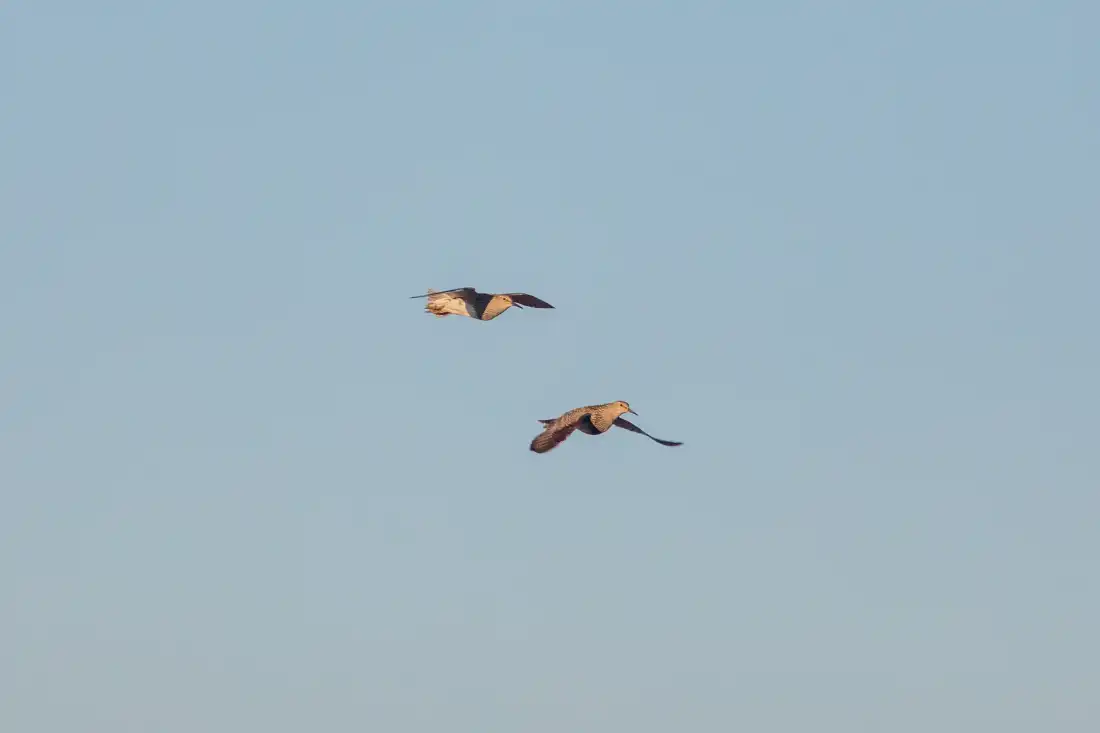
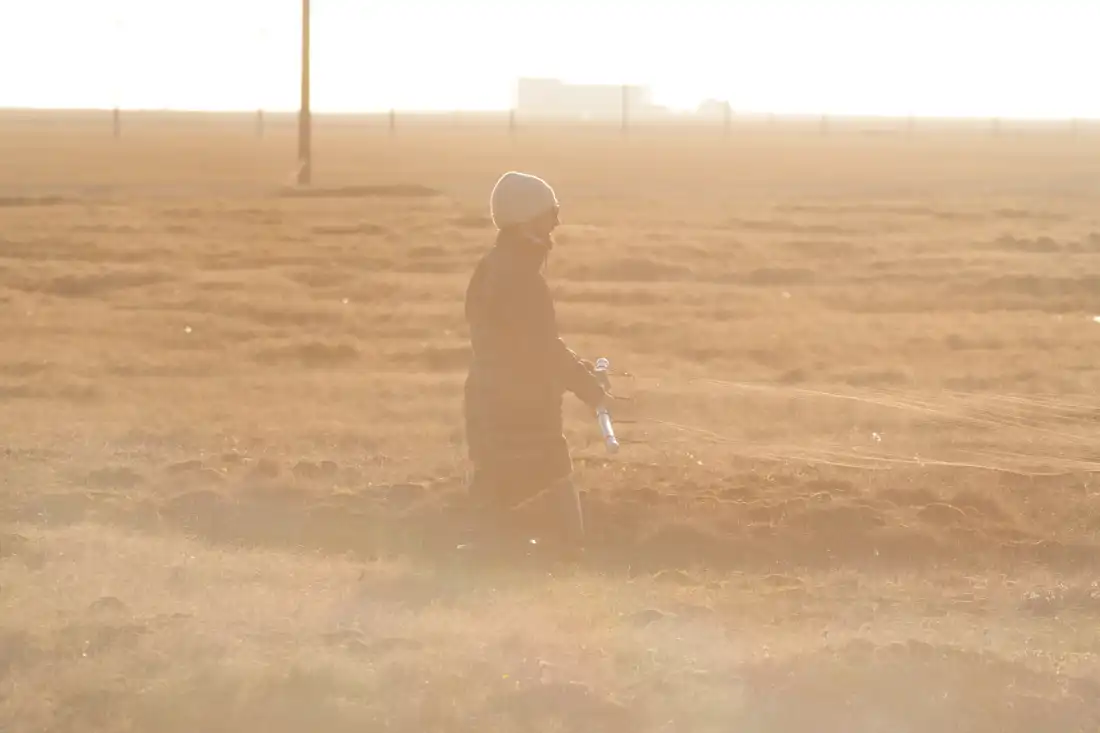
From top: Two pectoral sandpipers circle the sky above the tundra, where researchers like Fernando Faria are studying the species along with other shorebirds.
Ryan Kellman/NPR
hide caption
Ryan Kellman/NPR
Tracking technology has revealed that shorebirds undertake far more arduous journeys than once thought. While scientists have studied the migrations of larger animals for decades, tracking tags have only become light and compact enough for small birds in the last 15 years. Since then, new migratory records have been broken.
One bird, a bar-tailed godwit, flew more than 8,000 miles for 11 days straight without stopping from Alaska to Australia. Researchers are still figuring out how these birds navigate an entire ocean. They also seem to take advantage of weather patterns, waiting for the optimal winds.
“That’s why I still haven’t retired, frankly,” Lanctot says. “Because there’s always a new tag or something coming out that lets you learn things you couldn’t learn otherwise.”
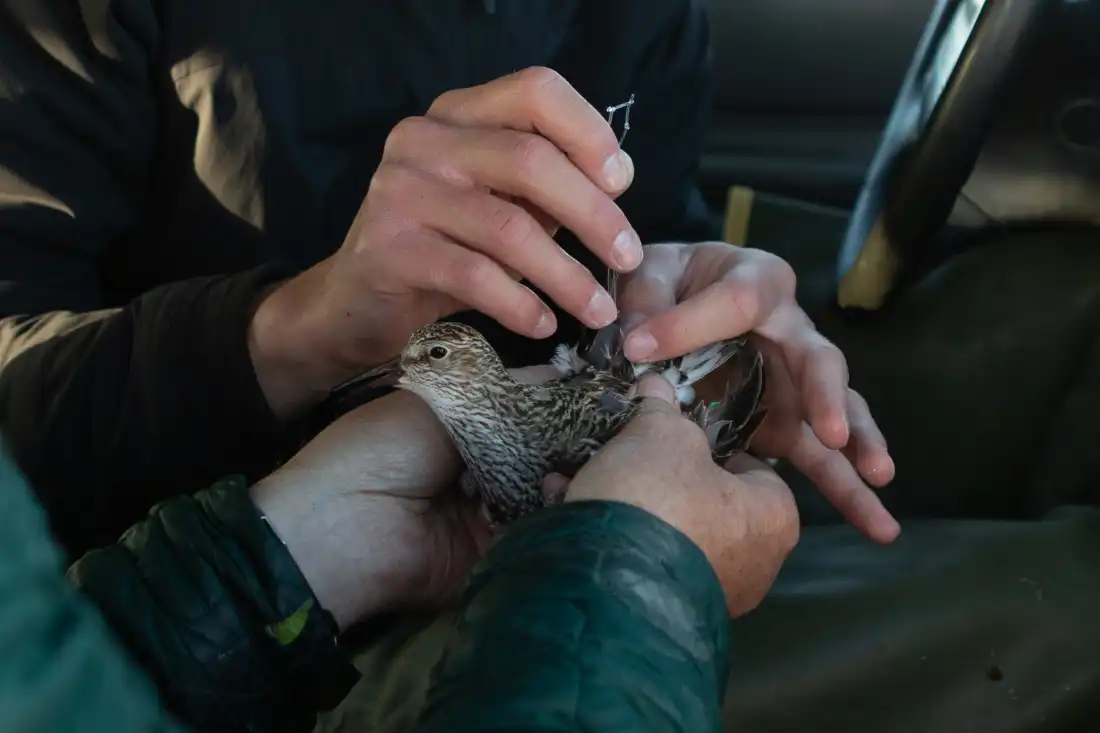
Rick Lanctot and Braden Meyer secure a backpack tracking tag to a pectoral sandpiper. It will collect the bird’s GPS position every 15 minutes, uploading the data as the bird passes cell towers along its migration route.
Ryan Kellman/NPR
hide caption
Ryan Kellman/NPR
Disappearing shorebirds
To fly thousands of miles, shorebirds must drastically reshape their body. Some double their body weight to store enough fat to fuel them on the journey. Some internal organs, like the digestive system, even shrink before takeoff, since they’re not needed during a nonstop flight.
It’s why the roughly six weeks pectoral sandpipers spend in the Arctic are crucial. The birds must eat enough to build their fat reserves for the next migration, while laying eggs and raising chicks. Those chicks only have about a month after hatching to eat and grow large enough to join that migration.
The numbers of shorebirds, like pectoral sandpipers, migrating to the Arctic have been declining over the last few decades. It’s noticeable around Utqiaġvik, including within the community that’s lived with them for centuries.

Robin Mongoyak grew up in Utqiaġvik and is now a wildlife guide. He says the seasonal patterns the Inupiat people have known for centuries are changing.
Ryan Kellman/NPR
hide caption
Ryan Kellman/NPR
“Birds have always been very special to the Inupiat people,” Robin Mongoyak says, walking on the coastline where the Chukchi Sea meets the Beaufort Sea. “They give us something to always look forward to after a long, cold winter. The Inupiat people have always thought of it as a quvianaq time – a very wonderful time when the birds start flocking in.”

Mongoyak is a wildlife guide who grew up in Utqiaġvik. He says each bird species has a different cultural meaning, telling a story of the world around them. That environment is shifting rapidly. Mongoyak remembers when sea ice lasted multiple years. Now, he says that’s becoming rare and the ice is breaking up earlier in the spring. Temperatures in the Arctic have risen four times faster than the rest of the globe.
“The climate is getting warmer,” Mongoyak says. “I don’t see as many birds as I used to like seeing. It’s really changed a lot in the last 35 years, at least.”
Amanda Koltz and Julia Berliner of the University of Texas at Austin walk across the permafrost to study insects, the primary diet of shorebirds. They sample the insects to measure crucial nutrients like calcium, which birds need to produce eggs.
Ryan Kellman/NPR
hide caption
Ryan Kellman/NPR
Birds out of sync
To understand the decline in Arctic birds, researchers are studying how warmer temperatures affect their food – insects.
“Whenever there’s a sunny day, there’s going to be clouds of non-biting midges,” says Julia Berliner, a graduate student at the University of Texas at Austin, looking across the tundra. She holds up a bug vacuum, a modified leaf vacuum from the hardware store, that sucks insects into a net to collect a sample.
These small flying insects only emerge briefly during the short Arctic summer. Normally, the ground is frozen solid, but as the weather warms up, the top few inches of permafrost thaws, and flies and spiders emerge for their short life cycles.
“Insects and spiders are really tied to the weather,” says Amanda Koltz, an assistant professor of integrative biology at the University of Texas at Austin. “So it could be that one week, there aren’t any prey flying around, and then next week, there might be tons of flies flying around. And so that really changes the menu from week to week.”
Shorebirds time their trip to this buffet of bugs, ideally hatching their chicks when the insect population peaks. But when spring arrives earlier with warming temperatures, the insects also emerge earlier. That puts the shorebirds out of sync with insects, which means the birds could miss their peak food supply, what’s known as mismatch.
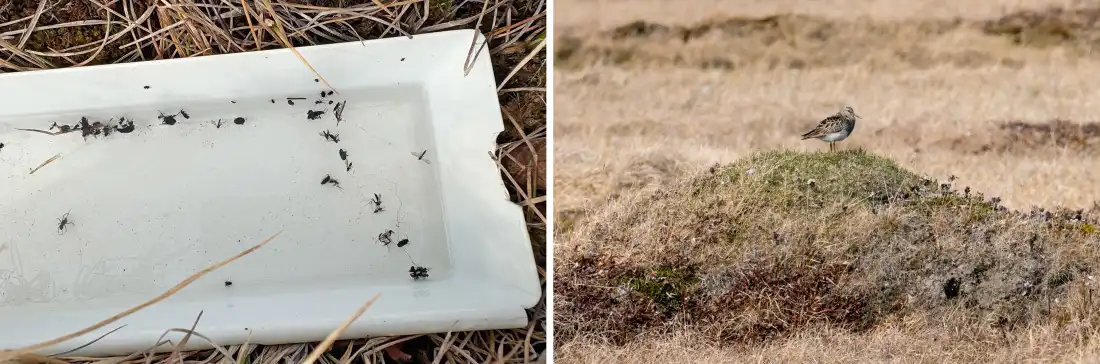
If insect populations shift their timing, it could also shift the nutritional menu, another way climate change could impact Arctic bird populations.
Amanda Koltz; Ryan Kellman/NPR
hide caption
Amanda Koltz; Ryan Kellman/NPR
Missing the peak food supply seems to have the biggest impact on shorebird chicks. Research shows that when chicks hatch late, fewer of them survive. Koltz says because different insects emerge at different times, what the birds can eat also matters.

“We need to know how much food they have available, but also what’s the quality of that food?” she says. “If they eat a spider and beetle, the spider and the beetle have different nutrients in them, just the same as if you ate a pepper or a banana versus a potato chip.”
Koltz and Berliner are sampling insects to measure crucial nutrients like calcium, which birds need to produce eggs. If insect populations shift their timing, it could also shift the nutritional menu, another way climate change could impact Arctic bird populations.

Julia Berliner collects insect samples in shorebird nesting grounds.
Ryan Kellman/NPR
hide caption
Ryan Kellman/NPR
Shifting migrations
Researchers are trying to figure out whether migratory birds have the ability to adapt to a warming Arctic. When spring arrives early, some shorebirds can speed up their nesting and lay eggs slightly earlier than normal, but not enough to keep up with the changes.
Birds that migrate long distances can also shift the timing of their migrations by a few days, but scientists are still studying how birds make those decisions, whether they use environmental cues or learned behaviors. Some cues may not help them adapt. They may be relying on signs in environments thousands of miles away from the Arctic, or in some cases, on signals that don’t change, like when days get longer in the spring.
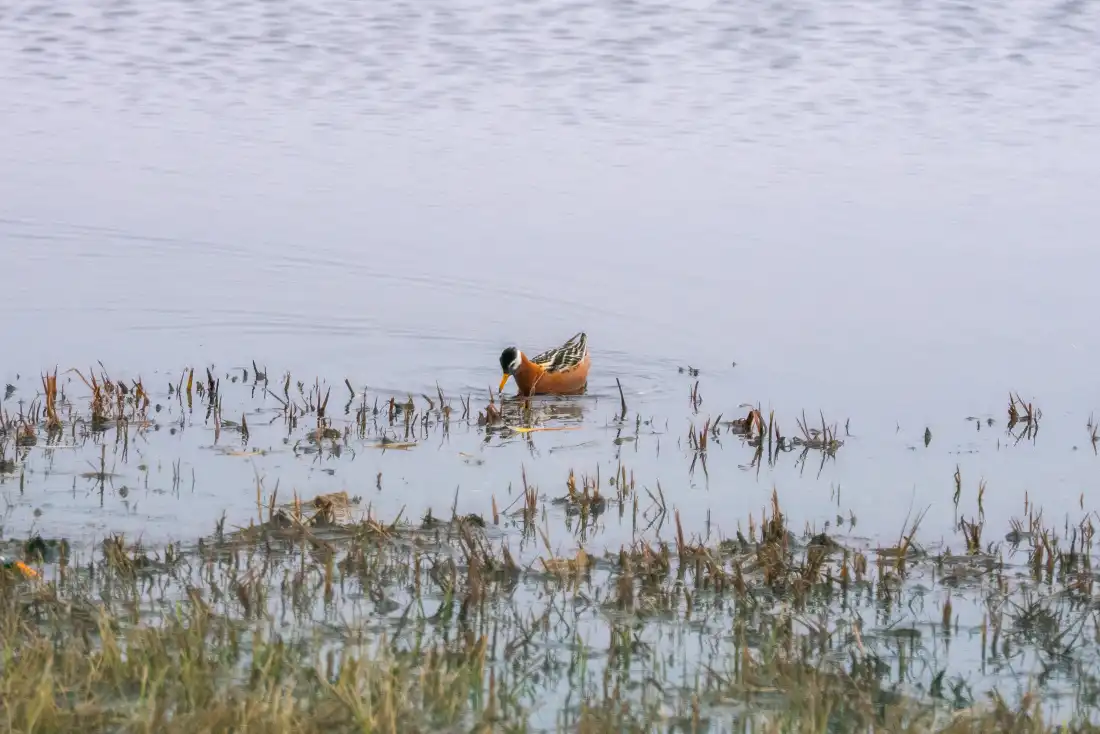
Red phalaropes are strong swimmers, often seen spinning in circles in shallow water. This helps them feed by creating a small whirlpool, which brings plankton and small crustaceans to the surface.
Ryan Kellman/NPR
hide caption
Ryan Kellman/NPR
Habitat loss, largely from development, is also driving the decline of many shorebirds, particularly the wetlands and grasslands they use as rest stops along their journey. Drought is also affecting these places and is only intensifying with climate change.

Many migratory birds in the U.S. use agricultural fields and ponds instead, which may be useful habitat for only short periods of time. In a handful of places, conservation efforts are underway to boost that habitat, such as paying farmers in California to keep their rice fields flooded for longer periods so birds can use them while migrating.
“Shorebirds are actually frequently quite well-adapted to finding where patches of habitat are, but our current environmental state is that we’ve really messed with the predictability of a lot of landscapes,” Senner says. “That’s what starts to make it really difficult for some of these species.”
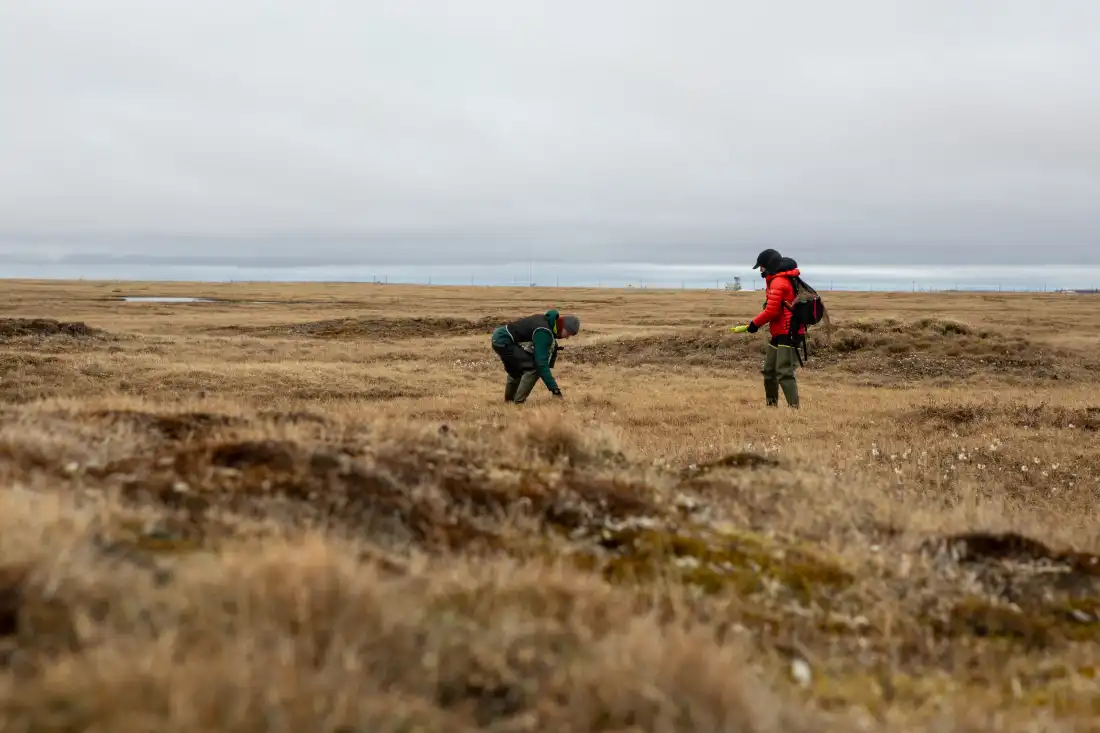
Rick Lanctot and Tara Rodkey search for the nests of dunlin, hidden in the low grasses of the summer tundra.
Ryan Kellman/NPR
hide caption
Ryan Kellman/NPR
Senner says if shorebirds keep declining, extinction is a possibility for many species. Now, the race is on to understand how much these birds can adapt to a changing world.
“We need to figure out: what are those tactics and then can we manage environments to maximize the likelihood that those tactics will be successful?” Senner says. “Because no one species can be ready for all of the types of changes that could possibly come their way.”
Reporting for this story was supported by a Braided River Overlooked and Untold Alaska Journalism Grant.
Source: www.npr.org