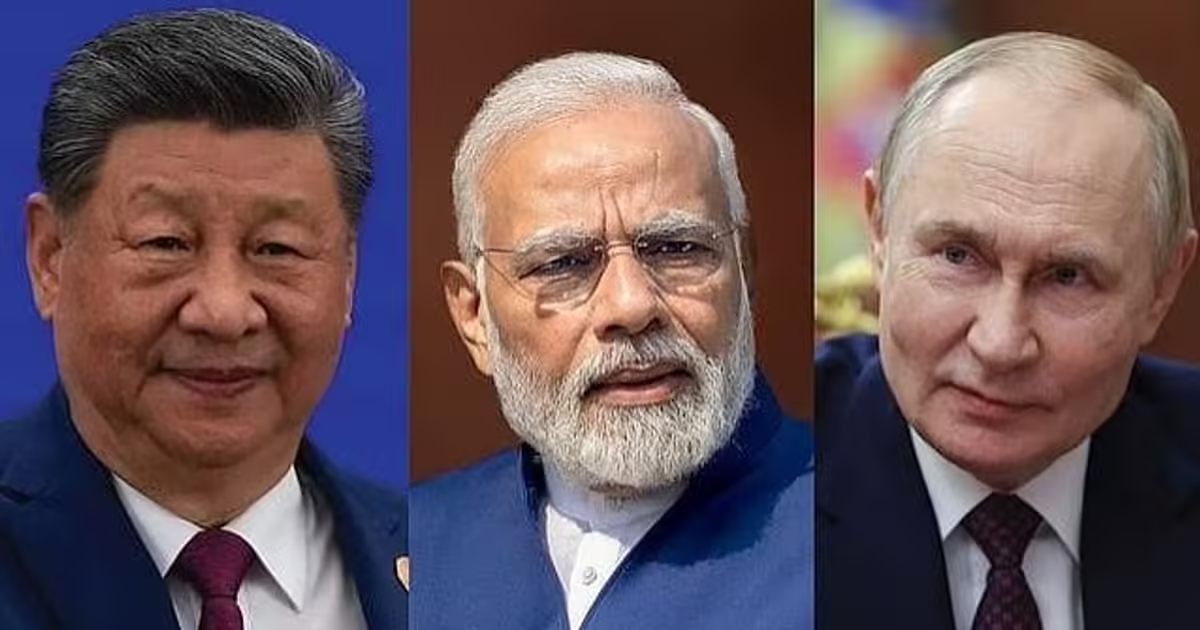

Russia, China, and India see record oil trade despite U.S. sanctions
A major factor driving this surge is unprecedented purchasing by major Asian economies that have resisted Western efforts to restrict Moscow’s primary revenue source.
In October 2026, China remained the world’s largest importer of Russian fossil fuels by purchasing EUR 10.7 billion, while India ranked second with imports totaling EUR 6.4 billion.
According to a report by the Centre for Research on Energy and Clean Air (CREA), “China remained the world’s largest importer of Russian fossil fuels, and both China (EUR 10.7 bn) and India (EUR 6.4 bn) made their highest monthly purchases in data going back to January 2022. The EU remained the third-largest importer, ahead of Turkiye.”
At the same time, Western sanctions have struggled to constrain market prices, as the average price of Russian Urals crude climbed to $101.70 per barrel, more than double the official Western price cap of $44.10 per barrel.
As CREA noted in its monthly assessment, “The oil price cap policy has failed to impose a durable constraint on Russian crude export earnings, working only intermittently and selectively“.
According U.S. Treasury price cap policy is a sanction meant to “ban a broad range of services—including maritime insurance and trade finance—related to the maritime transport of crude oil of Russian Federation origin (“Russian oil”) unless purchasers buy the oil at or below $60/barrel.”
“Importers who purchase Russian oil at or below the price cap will maintain access to an array of Coalition-country services vital to the oil trade.“
African nations Sierra Leone and Cameroon expand roles in the Russia’s shadow fleet
To maintain these massive export volumes without relying on Western insurance and shipping services, Moscow has increasingly turned to an extensive network of non-Western oil tankers.
In October 2026, sanctioned shadow tankers carried 60% of Russia’s seaborne oil, helping bypass Western restrictions.
While Russian-flagged vessels handled the largest portion of shadow fleet deliveries, two African flag states emerged as key maritime transit hubs.
Specifically, vessels registered in Sierra Leone carried 20% of the oil delivered by shadow tankers, while Cameroon-flagged ships carried 12%, doubling Sierra Leone’s share from the previous year.
CREA highlighted the broader expansion of maritime trade and shadow transport when it reported that “Russia’s fossil fuel export revenues hit the highest monthly level since December 2022 as seaborne crude earnings and LNG loadings break records“.
Source: africa.businessinsider.com