Moneywise and Yahoo Finance LLC may earn commission or revenue through links in the content below.
A billionaire who went big on Nvidia (NASDAQ:NVDA) this year just closed his wallet.
“No further investment without Jensen,” billionaire Leo KoGuan told Bloomberg (1) in a text message, a day after Jensen Huang resigned as Nvidia’s CEO. KoGuan, best known as one of the largest individual shareholders in Tesla (NASDAQ:TSLA) and worth about $13.2 billion by Bloomberg’s estimate, said he has put about $1.3 billion into the chipmaker, though Bloomberg couldn’t independently verify that figure. His pledge covers new purchases; he didn’t say he’d sell the shares he already owns.
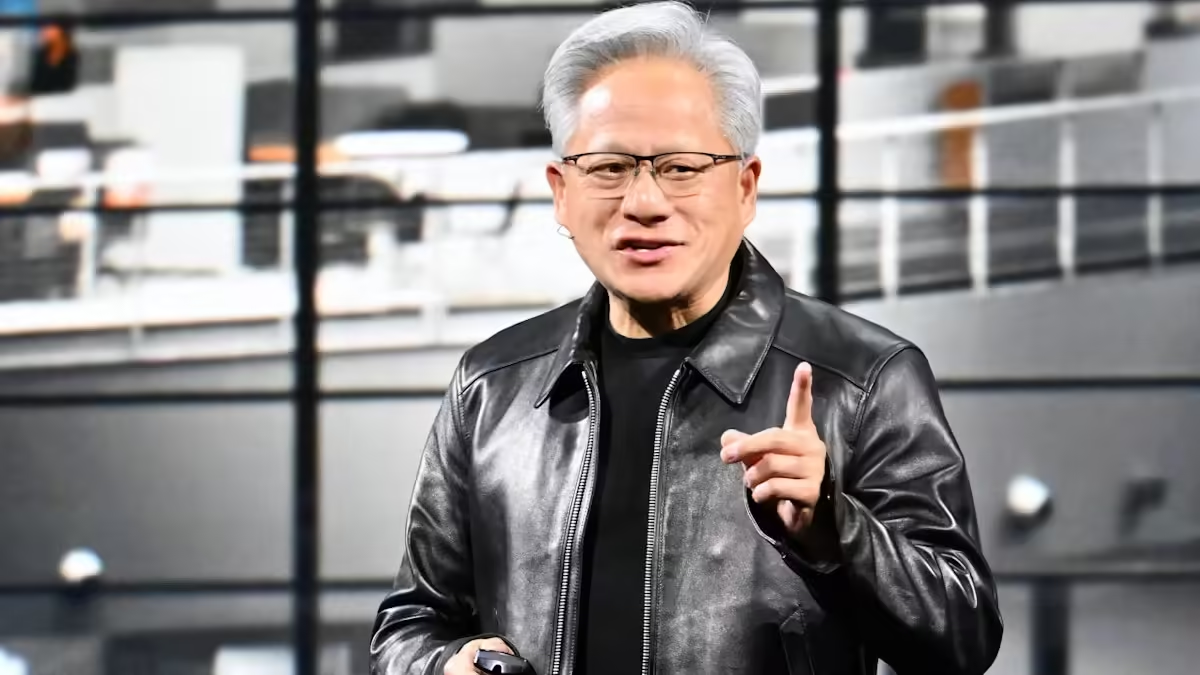
Huang, who co-founded Nvidia in 1993, resigned as president, CEO and board member effective immediately, Nvidia announced Nov. 12. The board accepted his resignation Nov. 11, according to a regulatory filing. CFO Colette Kress is serving as interim CEO, and the board said Nov. 13 it was still choosing a search firm to find a permanent replacement. Huang himself has been involved in that search and has personally contacted at least one potential candidate, The Washington Post reported (2), citing people familiar with the matter. His exit followed reports of extramarital relationships, including one with a former Megaspeed executive who U.S. intelligence officials reportedly suspect (3) was recruited by China’s top spy agency. Beijing has denied she is a spy.
Top Picks
KoGuan is far from the only big name in Huang’s corner. Tesla and SpaceX CEO Elon Musk has signed on to a petition to bring Huang back, joining 100,000+ names and KoGuan himself (4). Two heavyweight fund managers, whose names also appear on the petition, have asked the board to pump the brakes in a formal letter.
Here’s why the money crowd is so rattled — and why the risk for shareholders may not end with who runs the company.
‘The supreme creator’: The big money in Huang’s corner
KoGuan hasn’t been subtle. On X (5), he called Huang “the supreme creator” and said he hopes to invest in any new company Huang starts or buys.
That’s a change of pace for an investor who was loading up earlier this year. In March, KoGuan said he’d doubled his Nvidia stake (6) to 2 million shares.
Two of Wall Street’s best-known tech investors are taking a more measured line. On Nov. 13, Altimeter Capital CEO Brad Gerstner and Atreides Management’s Gavin Baker sent a joint letter (7) to Nvidia’s board.
Their ask was narrower than the petition’s: “a slow, measured, and deliberate process regarding the future leadership of Nvidia that leaves all options on the table, including the potential return of Jensen Huang.”
“There are more questions about recent events than answers,” they wrote, adding that the board “should avoid a rush to replace Jensen that undermines and thwarts the best interests of shareholders.”
They also conceded the final call isn’t theirs. If the board decides Huang’s return isn’t in shareholders’ best interest, “that is the Board’s prerogative,” the letter says.
The support started before Huang resigned. On Nov. 8, Pershing Square CEO Bill Ackman wrote on X (8) that Huang “is an incredible human” and that “we should all support him and his family.” He added that he wasn’t suggesting Huang get “a free pass.” Binance co-founder Changpeng Zhao called it a mistake (9) for Nvidia to let Huang go.
What the stock has done
Shareholders have had a rough few weeks. Nvidia has fallen more than 30% from its record high on Oct. 6, erasing more than $1.7 trillion in market value, according to CNN (10). Part of that slide came before the scandal broke, during a broader selloff in AI stocks after the midterm elections. Shares slipped again on Friday, capping the stock’s sixth straight weekly decline and its longest losing streak since 2012 (11).
On the day Huang resigned, shares fell more than 10% intraday before closing down 4.3%. Bernstein and KeyBanc have since downgraded the stock. On Thursday, it traded at about 12 times expected earnings, its lowest valuation since 2012, according to Reuters (12).
Musk has pointed to a business risk, too. In a post on X on Saturday, he warned that Nvidia would lose “critical” deals (13) without Huang, saying that while Huang drove the supply chain “brilliantly,” many of those deals were “a handshake with Jensen, not a written contract.” Musk isn’t a neutral observer, though. His rocket and AI company, SpaceX (NASDAQ:SPCX), is a major Nvidia customer, and Nvidia owns a stake in SpaceX worth billions.
Not everyone is heading for the exits. Retail investors poured about $1.6 billion (14) into Nvidia shares over three days this week, Business Today reported, citing market data. Some insiders cashed out well before the turmoil, though. Nvidia director Mark Stevens, the company’s largest individual shareholder after Huang, sold about $946 million of stock in late August and September, according to SEC filings. He still holds about 27.5 million shares.
Investors won’t have to wait long for more clarity. Nvidia reports third-quarter results on Nov. 17 (15), with Kress’s commentary posted ahead of the call.
Skip the 60-minute Nvidia call: Get our expert analysis emailed to you, free
Why Huang’s exit may not end the scrutiny
Even if Huang returns, Washington’s questions are aimed at the company, too.
Treasury Secretary Scott Bessent told CNBC on Nov. 13 (16) that coverage had focused on Huang’s “personal foibles.” “The real story here should be: Did Nvidia know their client, and was there a robust effort at Nvidia to make sure that there was no leakage and that they were selling to what were obviously pass-through shell companies?” he said.
“I think it’s important that anyone at the company there be held accountable for that,” Bessent added (17). He also said Treasury, the Pentagon, the State Department and the U.S. Trade Representative’s office had favored blacklisting Megaspeed for months, “but Commerce has the pen.”
The company at the center of it is Megaspeed, which the U.S. government suspects (18) of steering advanced Nvidia chips to China in violation of export restrictions. The New York Times reported (19) that Megaspeed secured more than $4 billion of Nvidia chips, and Nvidia told The Wall Street Journal it banned all sales to Megaspeed in June 2025. Nvidia hasn’t been charged with any wrongdoing.
Congress wants answers from Nvidia’s side, too. House chairs have asked Nvidia general counsel Tim Teter to appear (20) on Dec. 2, a day after Huang’s requested interview.
Get a second opinion on your mix
You don’t have to be a billionaire to have skin in this game. Nvidia makes up about 6% of the S&P 500, so if you own an index fund or a 401(k), its swings are likely moving your balance. With earnings due Nov. 17, the stock could stay volatile, and selling into headline-driven drops can lock in losses. A calmer move is to check how much of your portfolio sits in Nvidia and other megacap tech names, and trim back if one has grown too big.
If you’re not sure how concentrated you are, it may be worth getting a second set of eyes. Advisor matches you with financial advisors for a no-cost consultation, where you can review your asset allocation and risk tolerance. It’s typically geared to portfolios of $200,000 or more.
Own something that doesn’t trade on tech headlines
When one boardroom shake-up can knock hundreds of billions of dollars off a company’s value in days, it can help to own something that isn’t tied to any single company.
And if all this uncertainty has you looking for assets that don’t move in lockstep with tech stocks, some investors turn to gold, which has historically been seen as a hedge during periods of uncertainty. One way to invest in gold while gaining tax advantages is to open a gold IRA with American Hartford Gold.
Gold IRAs allow investors to hold eligible physical gold within a retirement account, combining the tax advantages of an IRA with gold’s potential diversification benefits. You can often roll over eligible existing 401(k) or IRA funds into a gold IRA without immediate taxes or early-withdrawal penalties, provided the transaction follows IRS rules. Just remember: Gold can fall too, so it’s best used as one part of a well-diversified portfolio.
What To Read Next
Article Sources
We rely only on vetted sources and credible third-party reporting. For details, see our ethics and guidelines.
Bloomberg (1); The Washington Post (2); NPR (3); X (4), (7), (8), (17); Business Today India (5), (14); Seeking Alpha (6); Yahoo Finance (9); CNN (10); The Standard Hong Kong (11); AsiaOne (12); The Star Malaysia (13); NVIDIA Investor Relations (15); CNBC (16), (20); CBS News (18); The New York Times (19)
This article provides information only and should not be construed as advice. It is provided without warranty of any kind.