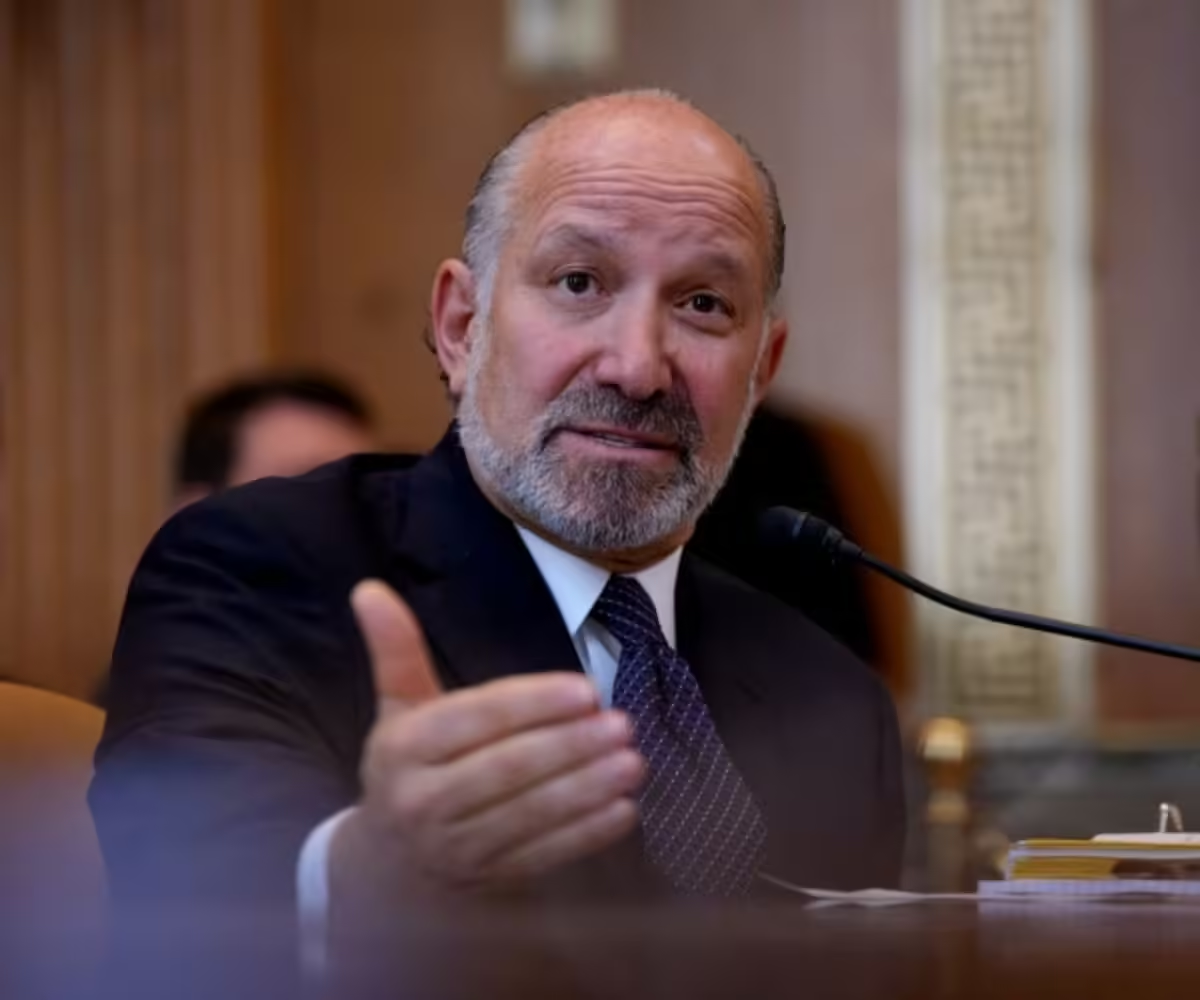

Secretary of Commerce Howard Lutnick speaks during a Senate Appropriations Committee hearing in the Dirksen Senate Office Building on Capitol Hill on June 4, 2025. (Andrew Harnik/Getty Images)
Commerce Secretary Howard Lutnick pushed to loosen restrictions on advanced artificial intelligence chips while his former Wall Street firm helped arrange financing for Asian data centers that could benefit from his department’s decisions, according to a New York Times investigation published Sunday.
The report raises new conflict-of-interest questions involving Lutnick, whose sons now lead Cantor Fitzgerald, the investment firm he led for more than three decades before joining President Donald Trump’s administration.
The Times reported that Cantor has worked with companies developing data centers in Southeast Asia, including facilities designed to provide computing power to Chinese customers despite U.S. restrictions on direct exports of advanced Nvidia chips to China.
One project, a Malaysian data center known as A201, is expected to open next year with hundreds of millions of dollars in sophisticated Nvidia servers. Its computing power is intended for a Chinese technology giant.
Cantor has served as a financing or placement agent for companies including Gorilla Technology Group and Bitdeer Technologies Group, whose Asian data center operations could be affected by tighter American export controls.
Meanwhile, Lutnick has reportedly resisted efforts by other senior administration officials to strengthen restrictions on Nvidia chip shipments to Asia, raising questions about potential conflicts between his regulatory responsibilities and his family’s business interests.
The Times said it found no evidence that Cantor’s business dealings influenced Lutnick’s policy decisions.
The Commerce Department has maintained that Lutnick fully divested his financial interests in Cantor and has had no discussions with the firm concerning Nvidia. Cantor declined to comment.
The controversy extends beyond potential family financial interests.
Axios reported Wednesday that Lutnick repeatedly delayed efforts to restrict companies suspected of diverting Nvidia chips to China, even after Trump authorized tougher enforcement.
Treasury Secretary Scott Bessent publicly criticized Commerce’s failure to blacklist Singapore-based Megaspeed, a company suspected of helping sensitive U.S. technology reach Chinese customers.
Separate Times reporting found that Commerce approved Nvidia export licenses involving Chinese companies with links to sanctioned entities or military contractors.
The department defended its enforcement record and denied directing officials to avoid investigating particular companies.
The allegations add to previous scrutiny of Cantor’s business dealings under Lutnick’s sons, Brandon and Kyle.
In March, Bloomberg reported that cryptocurrency company Tether provided a loan of an undisclosed amount to a trust benefiting Lutnick’s four children around the time they acquired his ownership stake in Cantor.
Sens. Elizabeth Warren, D-Mass., and Ron Wyden, D-Ore., subsequently demanded information about the arrangement, questioning whether Tether could exert influence over Lutnick through his family’s financial obligations.
The lawmakers noted that the loan was reportedly secured by assets including more than half of Cantor’s equity. Their inquiry raised concerns about potential improper influence but did not establish bribery or other wrongdoing.
Cantor also attracted attention last year over its tariff-related trading activities.
WIRED reported in July 2025 that the firm offered to purchase businesses’ potential tariff-refund claims for 20% to 30% of their value, allowing investors to profit if courts overturned Trump’s tariffs.
The arrangement drew scrutiny because Lutnick was simultaneously one of the administration’s most outspoken tariff advocates.
The latest disclosures come as lawmakers intensify scrutiny of Commerce’s handling of chip exports amid the controversy involving former Nvidia CEO Jensen Huang.
Warren and other Democrats have demanded stronger enforcement, while Republican lawmakers have also questioned whether U.S. technology is reaching Chinese interests.
The White House has expressed confidence in Lutnick, even as his department faces mounting questions over its decisions.
© 2026 Newsmax. All rights reserved.
Source: www.yahoo.com