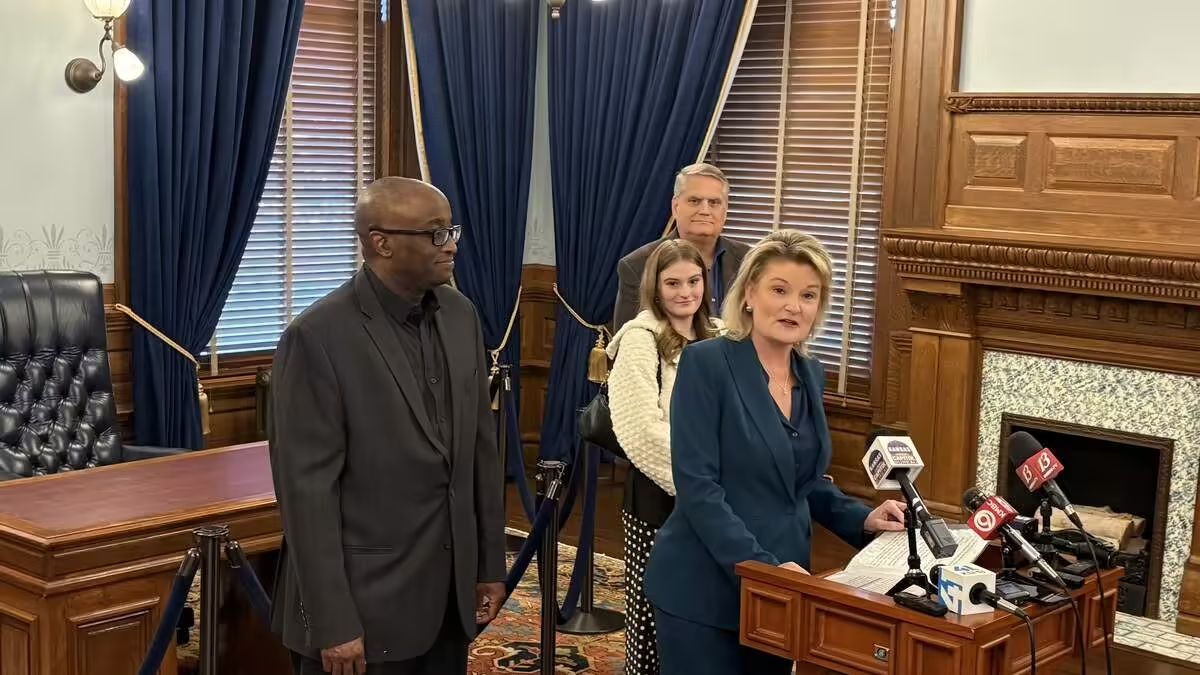

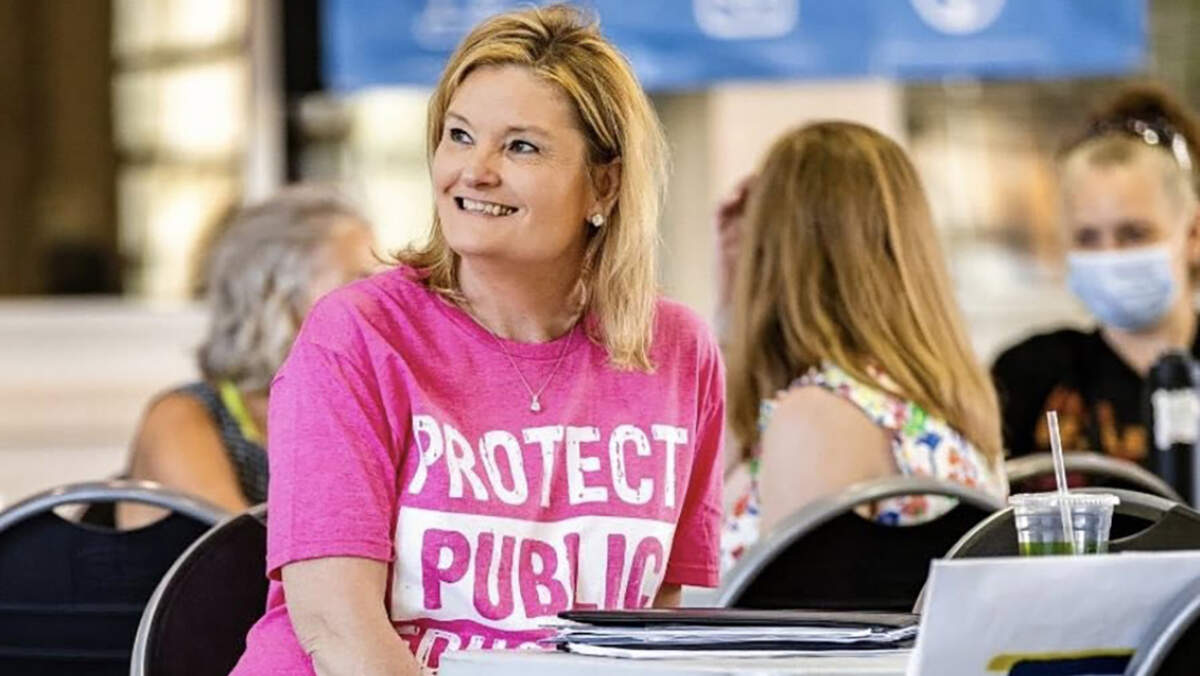
Fighting to increase public education funding got Democratic Kansas Governor-elect Cindy Holscher into politics 10 years ago.
She and her daughter participated in a 60-mile walk from Johnson County to Topeka with Game On for Kansas Schools to bring attention to the state’s ongoing school funding crisis. Later that year, she was elected to the Kansas House, where she voted to approve a new school funding formula during her first year in office.
Now, as she prepares to assume control of the executive branch of state government, Holscher says walking the walk on school funding will be a top priority for her administration.
An outline of a new school funding formula will be among the first items that lands on her desk in January.
Cindy Holscher on education funding
At a news conference in Topeka on Friday, Holscher said she envisions signing legislation that fully funds not only general education, but also special education.
“Special education hasn’t been fully funded since 2011. That hurts all of our communities and all of our schools,” Holscher said. “So, I’m going to look to make sure that we’re moving in the right direction in that regard.”
Political fighting over education funding in Kansas has largely been subdued in recent years, after a wave of school district lawsuits and Kansas Supreme Court rulings mandating funding increases.
In 2024, after five years of maintaining jurisdiction over school funding, the high court released control over its landmark 2019 Gannon decision, determining that lawmakers had finally demonstrated their commitment to funding public schools at a constitutional level.
But the fight over what constitutes adequate funding is expected to reappear in the spring as the current funding formula is set to expire in July, requiring a new funding outline for years to come.
Meanwhile, an additional fight over the state’s special education funding is brewing, possibly compounding the complications of how much the Legislature will allocate for Kansas school children.
Alexandra Middlewood, a Wichita State political science professor, said lawmakers will need to make decisions that won’t come with cheap price tags.
“It’s probably going to be a larger issue, just because we are so far out from the big policies that they were able to pass (in 2017),” Middlewood said of the upcoming Legislative session. “Costs are continuing to rise. Education needs increases in funding.”
Kansas education funding decision
A committee of lawmakers started work on the new funding plan in 2025. The joint task force has four more meetings scheduled between now and the end of the year to hammer out a school funding outline that will be presented to the governor.
The plan will have to be approved by the full House and Senate during the 2027 session, and Holscher will have the ability to veto any formula that she deems to be insufficient.
“The task force has taken an extensive dive into how other states base their funding formulas — what they include, what they don’t include, and how those are similar and different to Kansas,” said Rep. Susan Estes, a Wichita Republican who serves as vice chair of the task force.
Lawmakers have scrutinized the existing weightings Kansas uses to determine funding and experimented with how changes to the model affect the bottom line and individual districts, Estes said.
“We’re going to look next week at beginning to put together different combinations of models and looking at the impact of those,” she said. “And then in December, we’ll make a final recommendation.”
Sen. Pat Pettey, a Kansas City, Kansas, Democrat who also serves on the task force, said she previously harbored concerns that Republicans would force through an education funding plan that diverts money away from public schools in favor of private school voucher programs.
“Let’s just put it this way,” Pettey said. “As a Democrat and as a strong supporter of public education, I feel much more confident with the election of Gov. Holscher and the changes in the number of representatives in the Kansas House that we will move forward with something that protects funding for public education.”
Democratic gains in midterms
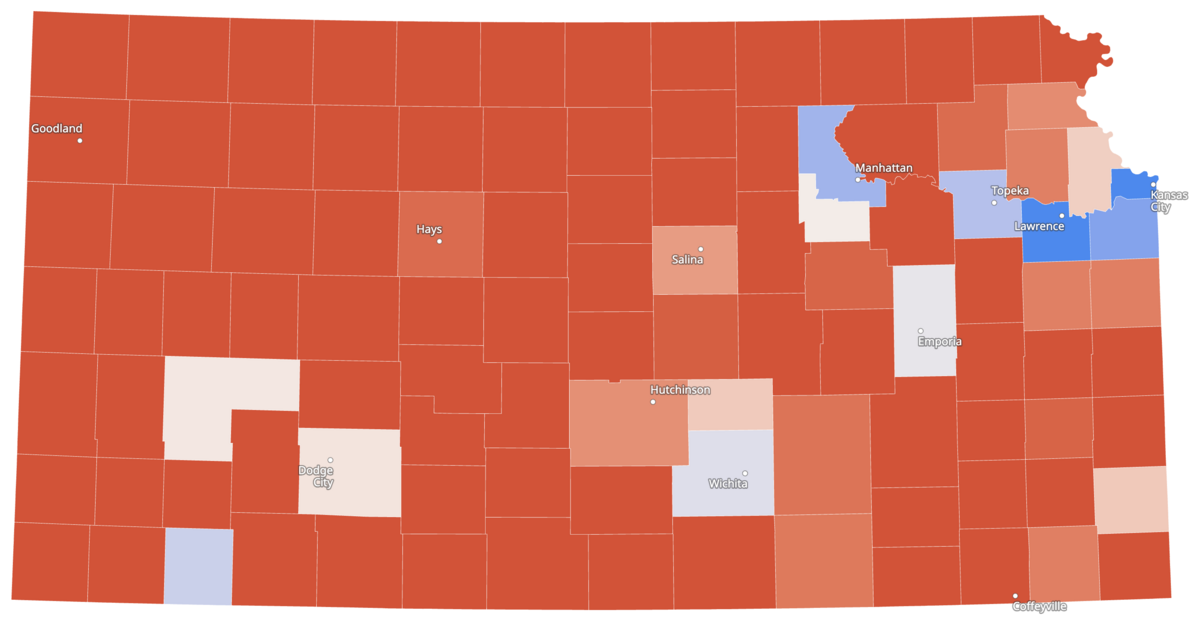
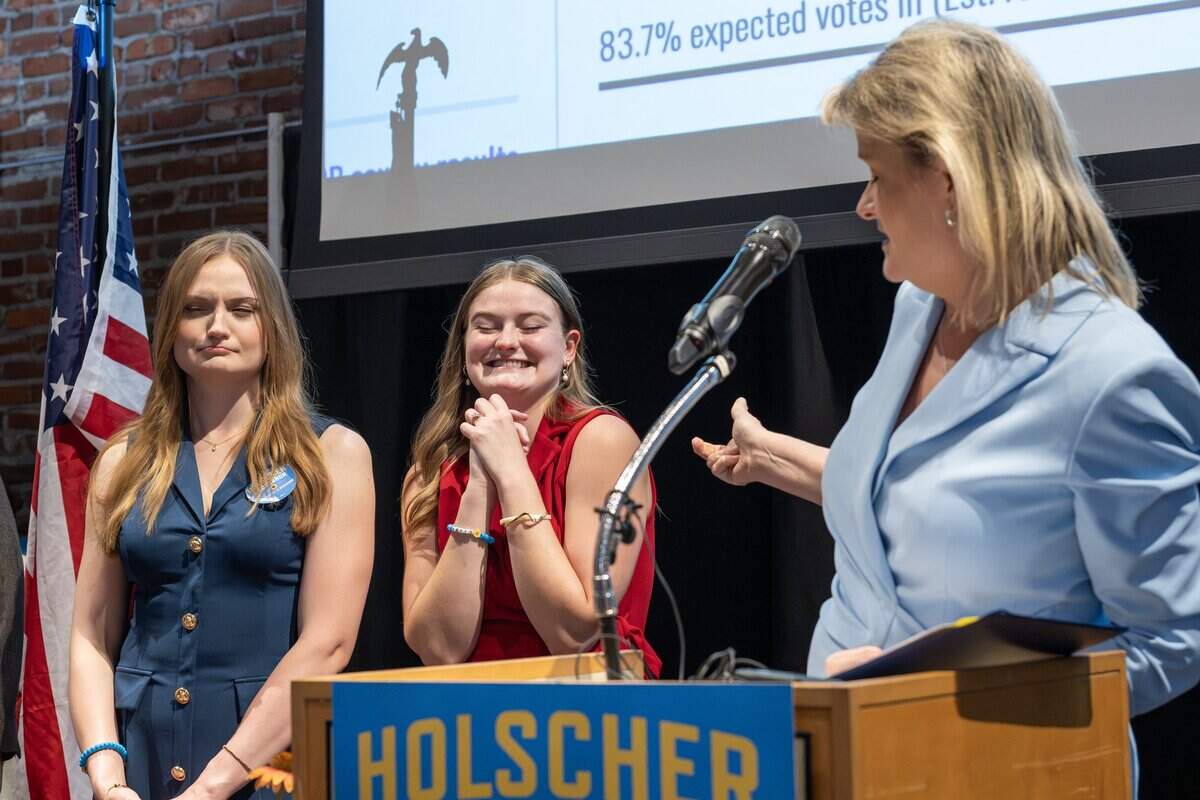
The electoral gains Democrats made at the polls this month mean Holscher will wield a powerful veto pen. Democrats are in line to flip 20 seats, smashing the GOP supermajority that had held since 2010.
Starting in 2027, House Republicans won’t be able to override Holscher’s vetoes without a significant number of Democrats defecting.
Middlewood said that gives Holscher and Democratic lawmakers more power to negotiate for terms they find favorable — a luxury that outgoing Gov. Laura Kelly has never had in eight years.
“(Holscher) actually has more of a chance of trying to push through some of those policies than Laura Kelly really ever had during her governorship,” Middlewood said.
Special education funding
One facet of education funding has proven to be especially polarizing in recent years, even as the broader fight over education has cooled.
School districts and Democrats in the Legislature have repeatedly made the case that Kansas is failing to fund special education adequately, resulting in costs being disproportionately borne by local districts.
Four Johnson County school districts — including Olathe Public Schools, where Holscher’s children were students — are suing over the state’s allotments to special education.
Blue Valley, De Soto, Olathe and Shawnee Mission recently formed the Kansas Public School Funding Coalition to initiate the legal battle over the state’s funding of special education. The school districts say they’ve reached a financial tipping point because Kansas underfunded special education for years.
In the 2024-25 school year, the four districts spent more than $119 million combined to cover the state’s shortfall — causing districts to make tough calls like cutting staff, salaries and programs, and leading to larger class sizes, the districts say.
Federal law requires states to provide special education for students with disabilities from age 3 to 21. Kansas receives a portion of its special education funding from federal sources.
But state law says the Legislature is required to fund 92% of excess costs for special ed, meaning how much more it costs school districts to educate students with disabilities than their peers.
Legislative research shows Kansas has not provided its mandated funding in 15 years, and has recently provided between 74% and 80% of the excess costs to school districts. The Kansas Association of School Boards says school districts are facing a $440 million special education shortfall this school year.
Kelly had repeatedly called for increases in special education. Lawmakers have incrementally bumped up the funding by about $120 million in recent years, according to legislative research.
Still, Holscher said it’s not enough. In an interview at a campaign stop last month, she said the state’s unwillingness to reach its mandated cost-sharing level has put undue pressure on school districts, resulting in costs being passed on to taxpayers.
“We’ve been adequately funding general ed but special ed, we haven’t fully funded since 2011,” Holscher said. “We’re federally mandated (to provide special ed services for all students). That obligation gets shuffled over to the local level. That makes property taxes go up.”

The Kansas City Star
Matthew Kelly is The Kansas City Star’s Kansas State Government reporter. He previously covered local government for The Wichita Eagle. Kelly holds a political science degree from Wichita State University.
Source: www.kansascity.com