
The tale Maldon Salt tells of its history and craft is hard to resist: for more than 140 years this quintessential British brand has harvested salt on the Essex shoreline, which has been “alive with salt making for almost a thousand years”.
Its website features bucolic images of that coastline and black-and-white photographs of artisan salt-makers harvesting the signature white pyramid-shaped crystals, which “release saltiness with sweet precision”.
Thanks to the rise of the celebrity chef and a raft of endorsements, the brand’s star, too, has risen. The salt has been championed by the likes of Delia Smith and Jamie Oliver, among many other leading chefs, and is raved about by a raft of food influencers online.
Now a mainstay of middle-class households and the Waitrose food aisle, its global repute has propelled it to annual revenues of about £40m.
But an investigation by The Observer has found there is another side to the Maldon Salt story of “harvesting the water’s salty ebb”.
While its label and marketing materials tell consumers the product is “100% sea salt flakes” from Essex, our reporting has established that imported rock salt, mined in Germany, is used in the manufacture of Maldon Salt.
The company has been allowed by regulators to use imported rock salt to filter and enrich the seawater. But the imported salt dissolves in the seawater and it has been alleged the practice – known as the “salt-on-salt” method – allows the firm to increase volumes at its main production site near the village of Goldhanger in Essex.
C. E. Osborne (left) shovelling salt from an evaporation pan into a storage bunker at the Maldon Crystal Salt Company works, Maldon, Essex, 1948.
Maldon Salt says its labelling and marketing material describing its product as “100% sea salt flakes” is correct. It considers rock salt was once suspended in prehistoric seas and there is no distinction from sea salt. It is simply ancient sea salt.
One of the core missions of the Food Standards Agency (FSA) is that “food is what it says it is”. It has concluded that Maldon Salt complies with all relevant food regulations. There is no legal definition of sea salt and food officials now face questions over whether food labelling rules for the artisan product are adequate.
Our investigation has found:
•
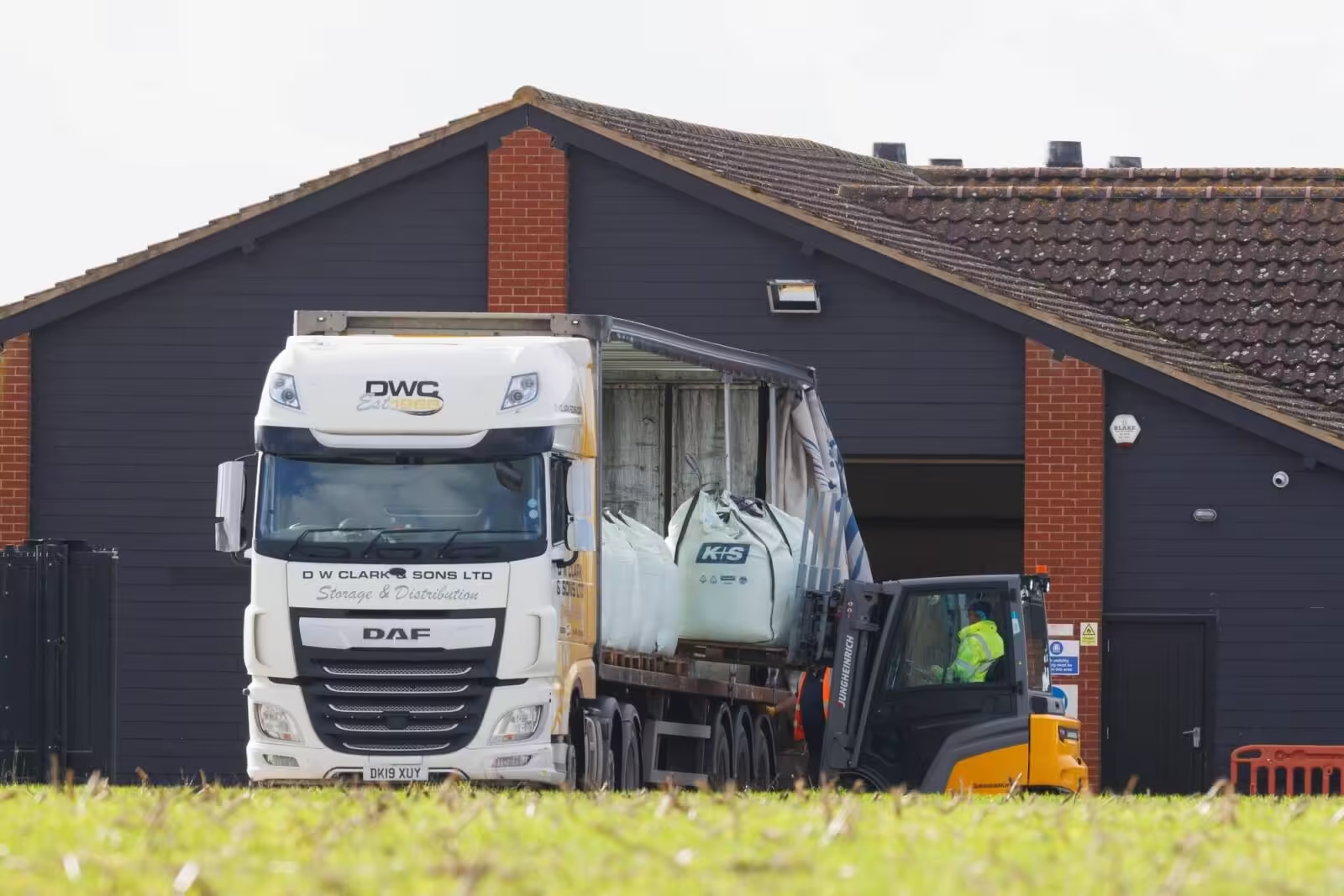
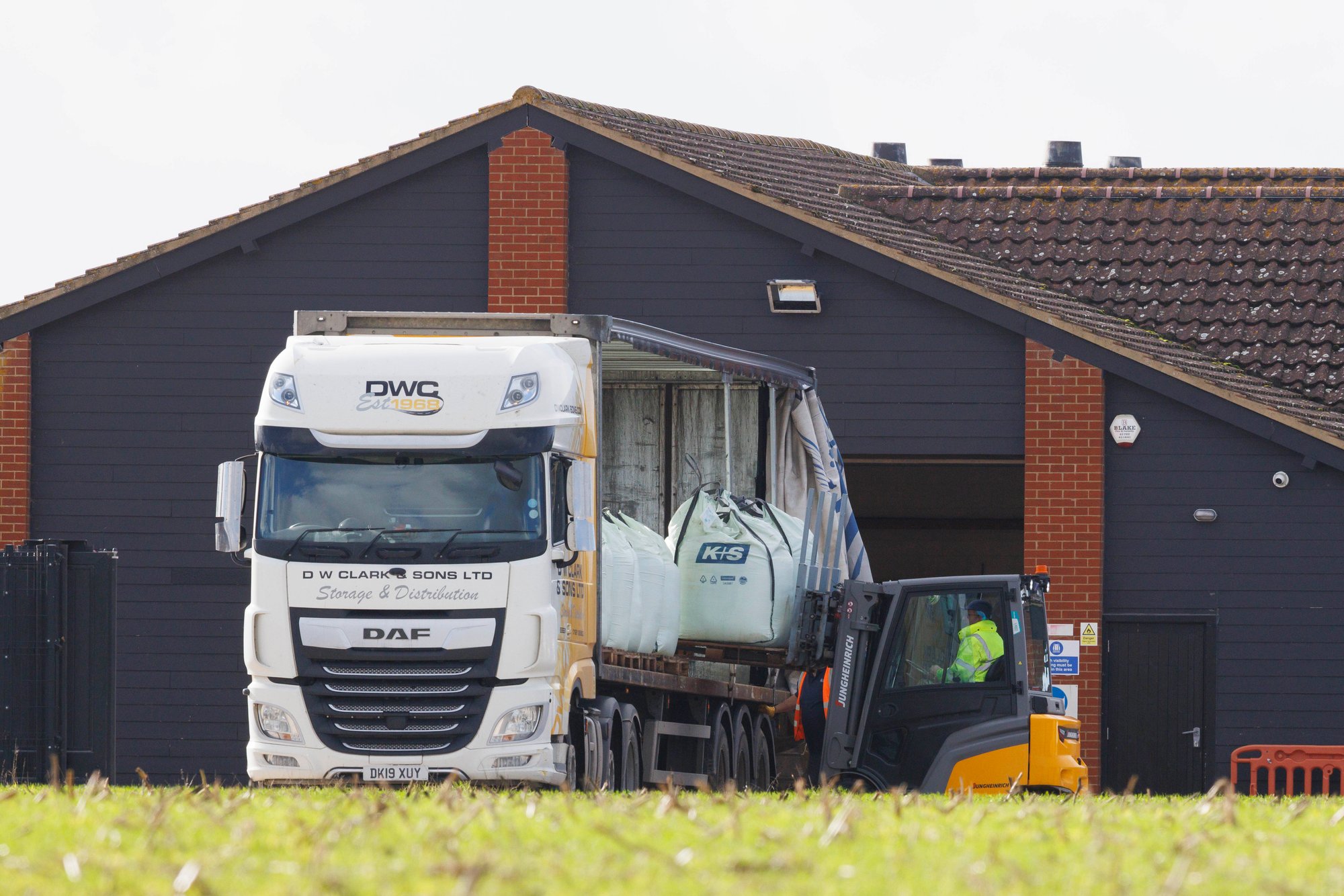
Following Observer monitoring of Maldon Salt’s main production site on the estuary of the Blackwater river, lorries delivering bulk bags of salt from the German mining company K+S were seen being delivered during a two-day period. The site is in a sensitive environmental area and is only permitted to “be used for the production of salt using water collected from the River Blackwater”.
•
Maldon Salt updated its website after being approached by The Observer to disclose it uses a “long-established salt on salt process”. It says rock salt mined in Germany is used as a filtration agent and to “enrich the seawater” with minerals, but does not dispute that additional rock salt is in the final product.
•
Essex trading standards supported by the FSA investigated the site in 2019 and 2020. They concluded there were no failures in regulation, with no legal definition to differentiate one grade of salt from another.
•
Some of the description on packets of Maldon Sea Salt in Canada has been changed to Maldon Salt. The firm has not commented on the change in labelling, but Canada’s labelling requirements prohibit labelling mined salt as “sea salt”.
“They should be clear about what they are doing,” said Linsay Everest, 52, a resident who lives near the plant and first recorded evidence of the salt deliveries. “People who are buying the product can then make an informed decision.”
A 250g box of Maldon Sea Salt Flakes costs £2.85 (£11.40 per kg), compared with Saxa rock salt costing £2.20 per 350g (£6.29 per kg) and a container of Saxa fine salt that costs £1.90 for 850g (£2.24 per kg).
The firm says its traditional salt-on-salt methods date back more than 100 years, and it has never sought to conceal it. It says its site has been independently audited with the FSA and trading standards officials confirm that labelling and production complies with all relevant laws.
In a four-page document outlining its production methods called “The Magic of Maldon Sea Salt” it says water is extracted from the estuarine waters during tides when salt content is at its maximum. It describes how, after filtering, these salty waters are transferred to pans, brought to a “galloping boil”, and then harvested for their pyramid-shaped crystals.
Like most of its marketing and promotional material published to date, there is no reference to the use of imported salt.
In 2006, the firm expanded to a new site on the estuary of the Blackwater river, about four miles east of Maldon. The unit, Longwick Farm, is in the middle of a wildlife haven and the permission was granted on the condition the new plant would “only be used for the production of salt using water collected from the River Blackwater”.
Residents who lived in the few scattered dwellings around the Maldon Salt plant opposed industrial development in the remote rural area. When new plans for further expansion for the Longwick Farm site were unveiled in October 2010, they agreed to conduct covert surveillance at the site to track the number of lorry movements.
“I would stand on a step ladder and basically record as much as I could,” said Everest. “It was fairly easy for me to film directly into the site. I was very nervous. If I saw anybody, I would try and duck down.”
Residents who co-ordinated the surveillance were surprised that lorry loads of salt were being delivered to the site in large, white one-tonne bags. They would have only expected the harvested sea salt flakes to be collected for distribution and export. They were even more surprised to see the delivered salt bags emptied out on the production line.
“They would use a forklift truck to lift the bag,” said Everest. “There was a cord they would untwist, then they would cut it with a knife. It just emptied into [the metal container] which contained what I suspect would be Blackwater estuary water.”

Local resident Linsay Everest.
Maldon Salt had not referred to any salt deliveries in early planning documents for the site in 2005 and 2010, and its publicity material has not mentioned any additional salt required for production. Residents submitted their evidence to planning officials at Maldon District Council.
After the evidence gathered by the residents, a new condition was stipulated on operations for a new unit that was given approval in February 2011. It was stipulated that “no salt shall be delivered to the site for the purposes of salt manufacture or sale”.
The next year, Maldon Salt applied to have the ban on salt deliveries lifted. The council refused and the case went to planning appeal which the firm ultimately won. The residents went back into battle.
They questioned whether the delivered salt was increasing the volume of the final product.
In a letter composed by Everest and a fellow resident to the inquiry, they wrote: “Our DVD footage shows up to six tonnes per day of this rock salt being emptied into the steel tank that contains the extracted estuary water, this mixture is then pumped through into a drying room where this water is left to evaporate.
“Once this rock salt is blended with the estuary water, how is it possible to separate the two elements? This is chemically impossible as obviously salt from any source will dissolve once making contact with water.” The residents alleged the process meant the company was able to “substantially increase the amount of salt the company is able to produce”.
JTS Partnership, the planning agent for Maldon Salt, did not respond to many of the detailed allegations made by residents, but accepted additional salt was being used on the production line as a filtration agent.
It said the rock salt was added to the salty water of the Blackwater river in a steel container called a hopper. It appeared a significant admission and the first public acknowledgement that delivered salt was being used on the production line.
JTS Partnership said: “This manufacturing process has remained essentially unchanged for over 130 years.”
The production method described by JTS is a traditional and historic method of sea salt production known as “salt-on-salt”. This uses additional salt to strengthen the salinity of the water, reducing the energy required to evaporate the water and extract the salt crystals.
Andrea Sella, professor of chemistry at University College London, said once two sources of salt had been blended together, they were impossible to separate. “Once they are mixed, they are mixed,” he said. “Sodium chloride [salt] is indistinguishable from other sodium chloride. It is not possible to separate them afterwards.”
Andrew Fielding, co-author with Annelise Fielding of the book The Salt Industry, said the salt-on-salt method was used by coastal works in the 18th century when there was limited transport. “People realised they could mine rock salt out of the ground, and you could carry that then to coastal areas and dissolve it in seawater to make a stronger brine for evaporating to make a white salt,” he said.
He said the coastal works closed one by one, leaving Maldon as the sole traditional salt works in the UK. A number of artisan salt works have since opened for businesses, including Cornish Sea Salt and Anglesey Sea Salt.
Fielding said that while the salt-on-salt method was traditional, it should be disclosed if used in modern food production. He said the addition of other salt may be acceptable to customers, but he considered they should be informed about it.
In May 2017, Food Standards Scotland announced it had looked into the firm Hebridean Sea Salt and found 80% of the salt in the product was imported. It said “deception of consumers on this scale” was not acceptable. No similar finding has been made regarding Maldon Salt or any other sea salt company in the UK.
The entrepreneur who launched the brand, Natalie Crayton, claimed the practice of adding foreign salt crystals to local seawater, described as “seeding”, was common among high-end brands. This was denied by the Cornish Sea Salt Company, Halen Môn, an Anglesey-based firm, and Skye Sea Salt in Scotland.
It was perhaps an opportunity for Maldon Salt to explain that it was also adding extra salt to its product in a traditional process. It appears to have passed on the chance.
Maldon Salt told reporters it did not bulk up its products using seeding. “Our customers should be assured of the provenance of Maldon sea salt,” the firm’s boss Steve Osborne told The Grocer. “Maldon salt is 100% British and every flake is produced at our salt works in Maldon, as it has been for the last 135 years.” In an interview with the publication Vice in 2015, Osborne said sand was used on the production line as a filtration agent.
A YouTube video posted in 2021 of operations at the Longwick Farm site suggested rock salt was still being used on the production line. It was filmed by two Polish employees who had worked at the site. The pictures were similar to what had been observed by Everest.
The footage appears to show a worker slitting open a white bag of rock salt and pouring it into the filtration hopper. There are images of the salt swilling with white foam and what is claimed to be estuarine water. The video is not available in the UK because of a defamation complaint, but can be viewed in other countries, including the US, Canada, Germany, France and Switzerland
Residents who live near the Longwick Farm site insist the bulk salt deliveries to the site continue to this day. Richard Arnold, 70, who lives nearby and regularly drives past the plant, said he saw salt deliveries at the site on an almost daily basis. “There are lorries that come in with salt and are unloaded,” he said. “You can see the white bags being taken off.”
The Observer monitored the Longwick Farm site for three days. On Tuesday 27 October, we recorded two lorries delivering large white bags. The bags were marked with the logo/lettering emblem of K+S, one of the world’s largest salt producers. The Observer recorded four lorries being unloaded over two days, each carrying about 12 tonnes of salt. By a conservative estimate, it would suggest about 50 tonnes of rock salt is being delivered each week to the plant.
After The Observer contacted Maldon Salt with its finding, the company updated its website on 11 November to describe the “salt-on-salt” method used on its production line for the first time.
The website states: “The water is settled and filtered, then prepared as brine using our long-established salt-on-salt process, in which natural, ancient sea salt forms part of the brine-making, to enrich the seawater with natural minerals.”
It is understood that rock salt was sourced until around 2020/21 from a Cheshire company using salt mines in the county.
The firm since then has largely obtained its rock salt supplies from Germany. It considers there is no difference between the rock salt source from Cheshire or Germany, but it is extracted from the same seam that stretches from the UK and across the European continent.
Everest said she considered the public had been “let down” by the regulators. She said: “Up until this point, consumers have been buying Maldon sea salt under the impression that what is in that box comes purely from the Blackwater estuary.” She said it was unacceptable that rock salt was not included on the label on the Maldon sea salt box.
Maldon Salt considers it has never sought to conceal its production process and consumers are not in any way being misled by the labelling or product description. It considers it correctly describes its high-quality product as sea flakes.
The firm’s plant has been independently audited and inspected by regulators. The firm says FSA and Essex trading standards are satisfied with the product description, and have full information about how rock salt is used on the manufacturing line.
A Maldon Salt spokesperson said: “Maldon Salt company has been making Maldon sea salt in the town of Maldon for 144 years. We draw seawater from the Blackwater Estuary and use an historic artisan craft to create our distinctive pyramid-shaped flakes.
“We combine generations of salt-making expertise with modern food safety, quality and regulatory controls. The relevant authorities are familiar with our production methods and our products fully comply with applicable food and labelling requirements in the markets in which they are sold.”
Maldon Salt says it holds the correct permissions for the operation of its Goldhanger site. Its production activities have been considered through the planning process and no enforcement action has been upheld against it. The firm considers that the fact salt was delivered to the site had long been known by Essex County Council and Maldon District Council.
Essex County Council said trading standards officers had visited Longwick Farm on 6 November 2019 with FSA officials when there was an inspection of production processes and a taking of samples. On advice from a public analyst, the FSA and the Department for Environment, Food & Rural Affairs, which has responsibility for labelling, it was decided no further action was required.
An Essex County Council trading standards spokesperson said: “There are no specific legislative parameters to aid in establishing whether a description ‘sea salt’ could be considered accurate or inaccurate.”
Maldon District Council said it was responsible for a range of regulatory functions in relation to the Maldon Salt sites. A spokesperson said: “These primarily relate to planning and environmental health. There are no planning or environmental health concerns in relation to Maldon Salt’s operating sites.”
The council said the firm was a key local employer and commitment to the area had recently been demonstrated with investment in a new site for their global headquarters in Maldon.
The salt firm K+S said it delivered salt to the UK from sites across Europe, but could not comment on deliveries to specific clients.
Photographs by Jamie Lorriman for The Observer and John Tarlton / Getty Images,
Source: observer.co.uk