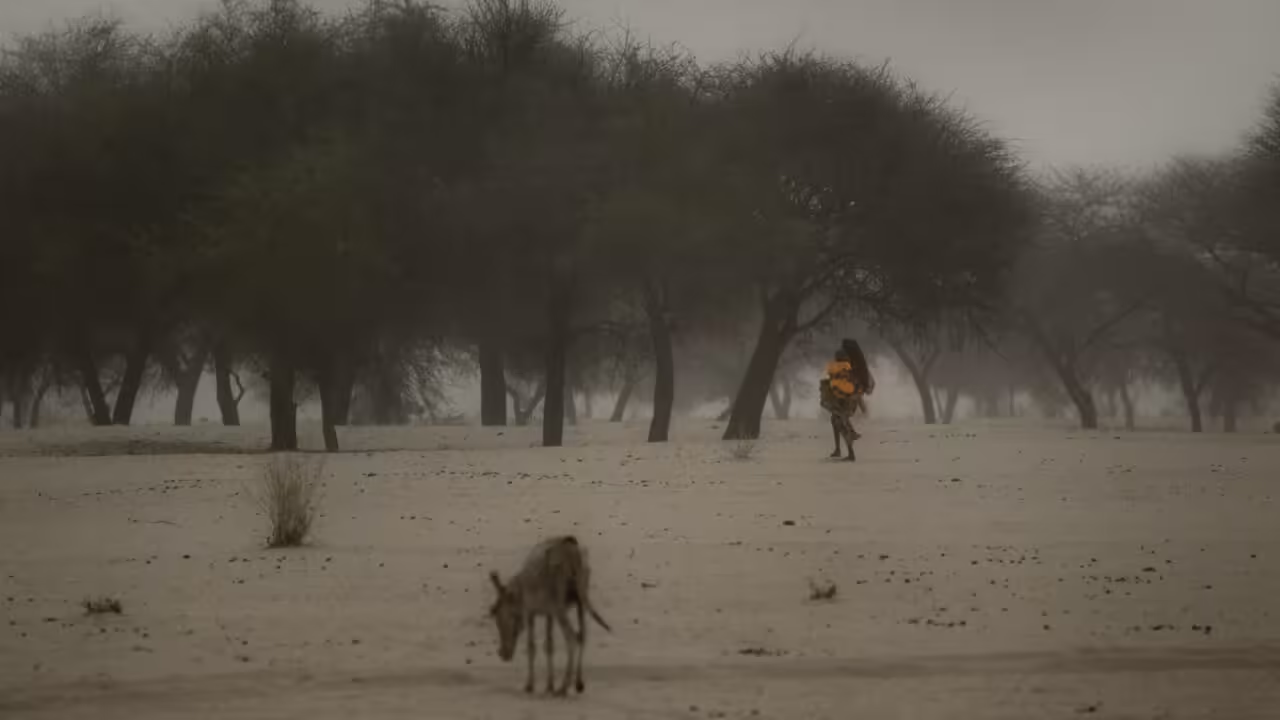

Antalya, Turkey – As world leaders meet at the COP31 United Nations climate summit in Antalya, Turkey, health experts are warning that women and children in Africa are bearing the brunt of rising temperatures, and that the continent’s health systems are not equipped to cope.
Kerina Akinyi Gombe, an early childhood educator in Kisumu County in western Kenya, walks a kilometre to fetch water every day. She has learnt to go early in the morning or in the evening to avoid the worst of the heat.
“Sometimes, when I am doing household chores, I feel fatigued and dizzy because of the heat,” she said at the Cop31 summit.
As a woman, she is responsible for all the household chores and is also expected to help on the farm. “I have to fetch water and do other household chores in the evening or early morning so that I reduce the heat stress,” she said.
Extreme heat affects everyone, but women and girls are particularly vulnerable because of a combination of biological, social and economic factors.
Mothers at risk
The danger is greatest for pregnant women.
“For pregnant women, exposure to extreme heat can have serious consequences for both their health and the health of their babies. Heat exposure is associated with an increased risk of premature birth, low birth weight, stillbirth and maternal complications,” said Professor Marina Romanello, executive director of the Lancet Countdown on Health and Climate Change.
African push to triple climate adaptation finance left off Cop31 agenda
The Countdown’s 2026 report, published last month, finds that people worldwide experienced an average of 13.5 heatwave days in 2025, 83 percent of which would not have occurred without climate change. Africa was among the hardest-hit regions, with heat-related income losses equal to 3.2 percent of its GDP.
The risks to babies in Africa are stark. A study published in Nature Medicine last year, carried out in four sub-Saharan African countries, found that babies whose mothers were exposed to extreme heat in the week before giving birth faced a 34 percent higher risk of stillbirth or death within 24 hours of delivery.
Health workers say they are seeing the effects. In a Wellcome Trust survey of more than 1,000 maternity staff in five countries, including Zimbabwe, 73 percent said they had seen more heat-related cases or complications in pregnant women.

Too hot to learn
Children are also struggling. Alana Nicky Chelangat, a 14-year-old junior school student from Nairobi, found it hard to concentrate as she prepared for her national examinations in October.
The Kenyan capital recorded unusually high temperatures that month, despite forecasts of heavy rain linked to an expected El Nino, which typically brings wetter conditions to East Africa and drier weather to southern Africa.
“It was hard for me and other students to concentrate. I tried to read, but the heat was too much, even with the windows open,” Chelangat told RFI at the summit.
“I felt dizzy and weak. It was difficult. We could not even play outside.”
AI midwife seeks to fill gaps in Zimbabwe’s maternal health care
She said some of her friends had collapsed because of the heat. Her classroom has no air conditioning, only a fan, which is not enough to cool the room.
Other parts of Kenya were hotter still. Kisumu reached around 35C in October, according to the Kenya Meteorological Department.
Gombe has seen the effects on the young children she teaches. “You can clearly see the level of concentration changing as the temperature rises at midday,” she said.
Her school’s classrooms have corrugated iron roofs, which make matters worse. Metal absorbs a great deal of solar energy and conducts heat well, so the sheets heat up quickly and pass that heat into the rooms below.
Finding solutions
Extreme weather events such as droughts and floods have become more frequent in Africa, with devastating effects on vulnerable communities.
Wessam Mankoula, a doctor and head of the Continental Incident Management Support Team at the Africa Centres for Disease Control and Prevention (Africa CDC), said cases of heat stress and heatstroke were rising across the continent.
“This increase is not equal among continents. For example, when we speak about heatstroke, you will find that in susceptible regions like ours on the continent, the number of cases will be 15 times higher than in other regions. This is a result of climate change,” he said.
Mankoula said Africa’s health systems lacked the resources to deal with the health impacts of climate change, and that leaders at COP31 must move from declarations to action without delay.
“We need finance to strengthen health systems and make them resilient. Those contributing to global warming need to pay,” he said.
That money would pay for new health facilities, for heatstroke treatments such as fluids and drugs, and for training health workers, he added.
UN chief urges world leaders to tackle ‘dinosaur’ fossil fuels at Cop31
Some of the answers are coming from young people themselves. Chelangat has developed a web-based application, Dunia Alerts, which uses forecasts from the Kenya Meteorological Department to warn teachers, students and parents about extreme heat. She plans to launch it early next year.
The alerts will be sent to schools via WhatsApp in English and Kiswahili, and will include advice for students with underlying conditions such as asthma to stay indoors when it is hot. The app will also teach students how to protect themselves, for example by drinking more water.
The young climate campaigner says schools should also introduce more water breaks and suspend sports and other physical activities, or move them indoors.
In the long run, she wants to install weather stations in schools across Kenya, along with classroom monitors that display forecasts.
For now, she says, even a simple warning can make a difference.
“This helps children prepare. If it is going to be hot at school, they will carry more water.”
Source: www.rfi.fr