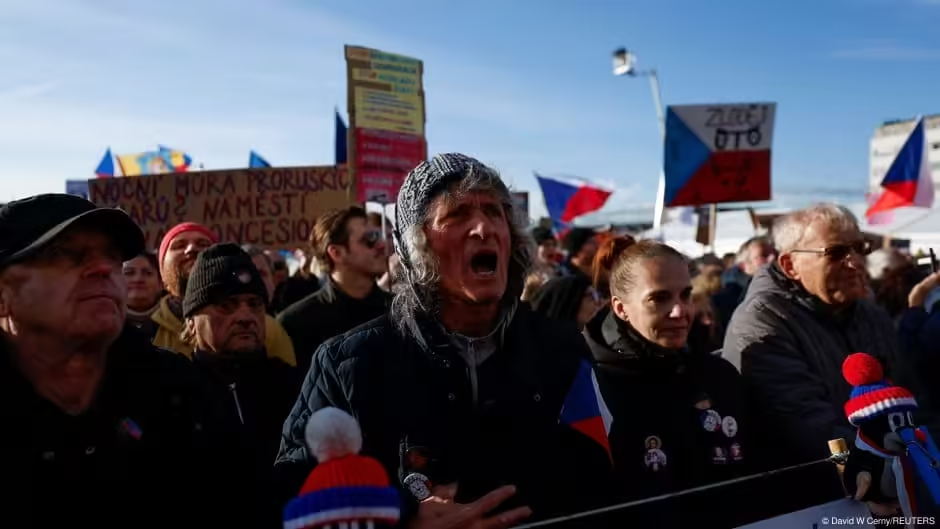

A protest against plans to abolish broadcasting fees in Czechiadrew between 350,000 and 450,000 people in Pragueorganizers said.
The amount of protesters resulted in overcrowded public transport, with many people traveling from other cities by bus and train.
According to protesters, the plan could bring public broadcasters under the control of the country’s right-wing government under billionaire Prime Minister Andrej Babis.
Government denies takeover attempt
Babis himself defended the plan last week, saying that his government is not interested in controlling or nationalizing public media.
“None of what the people are protesting against… is true,” he said. Foreign Minister Petr Macinka also replied to the criticism by accusing the protest’s organizers of turning demonstrations into a business model.
Since its introduction in April, the plan resulted in several large-scale protests, with Czech TV and radio going on a one-day strike in protest against it.
International groups have criticized the plan, including the European Broadcasting Union, the European Federation of Journalists and Reporters Without Borders.
The government would like public broadcasters to be financed by the state budget rather than through fees, arguing that while the plan will not affect editorial independence, broadcasters need to cut costs. Critics accused the Czech government of wanting to secure more influence through the decision.
International criticism
The suggested media reform would result in public media’s budget being cut down by 15 percent.
The current coalition in Czechia is made of Babis’s ANO party, the far-right SPD and the Eurosceptic Motorists.
While the protests also saw the current coalition being criticized, polls show ANO still enjoys some 30 percent of support.
Per the Reuters Institute Digital News Report for 2026, trust in the media in Czechia is low and stands between 30 and 33 percent, with public broadcasters still being considered “the most trusted brands.”
Source: www.dw.com