
For Will Heynes, the big cat is in the blood. His grandfather William ‘Bill’ Heynes was chief engineer at Jaguar Cars, working on everything from the SS100 through to the XK range, the E-Type and the XJ6. His father worked for the company for more than 25 years. Now Heynes himself — with his wife, Amy — works on Jaguars, plural. ‘We look after some of the best-preserved Jaguars in the world,’ he tells me from his office, wearing blue overalls.
William Heynes Ltd, his business, is five years old, but has an order book that stretches for six years and employs 16 people full time. It specialises mainly in E-Types and XKs, offering full restoration, servicing, procurement and preservation. ‘Everything we work on here is a direct result of my grandfather or his team at the time,’ he says. ‘We build cars for people who want things done correctly and without compromise.’
You would not know that Heynes is such a young man until you see him in the flesh. At 33, he speaks calmly, but authoritatively. He may seem relaxed, but he knows what is at stake. ‘It is the family silver. I’m the only direct bloodline linked to an automotive brand doing what we’re doing, so I can’t mess it up.’
Classic-car restoration, conservation and collecting is not often considered a young man’s game. A walk through the pit lanes at the Goodwood Revival usually involves a conversation with white-haired men in oily overalls, standing proudly next to hand-beaten aluminium that gleams in the late-summer sun. Classic cars require a lot of money and time, things in short supply to the modern millennial, but the new generation of collectors is slowly making itself known, changing tastes and teaching themselves how to keep these heritage machines on the road.
Will Heynes is Jaguar and Jaguar is Will Heynes.
(Image credit: Amy Shore)
‘Who would you rather talk to at a party? Someone who does ‘wall balls’ or a loveable rake with an E-Type?’
Some, including Heynes, have turned their interest into a very successful business. Others simply do it because it beats Hyrox or open-water swimming as a hobby. Who would you rather talk to at a party? Someone who does ‘wall balls’ or a loveable rake with an E-Type? Forget avocados and Netflix — these millennials are about grease and carburetors.
‘When I was only a small boy, my first sentence was, apparently, “Dada, car wash”,’ Benjamin Veiga-Lane, aged 30, tells me over a coffee at his flat in London. On the street outside, a Range Rover Classic and an Aston Martin V8 are parked on the cobbles facing each other. ‘We were at some theme park and there was a water fountain with a car coming out of it and, ever since that day, I’ve been truly addicted to cars.’
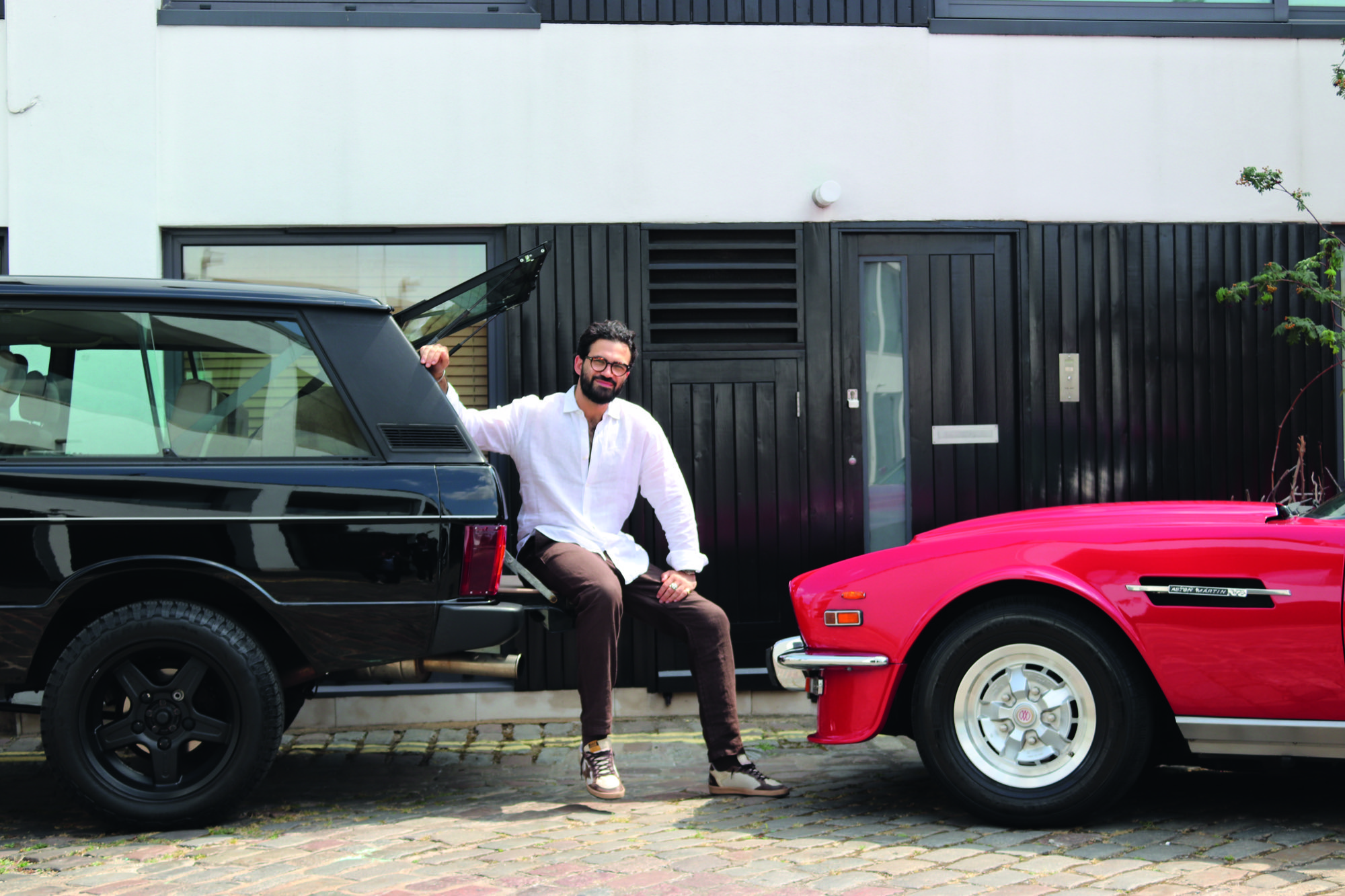
Benjamin Veiga-Lane with his Range Rover and Aston Martin V8.
(Image credit: Will Hosie)
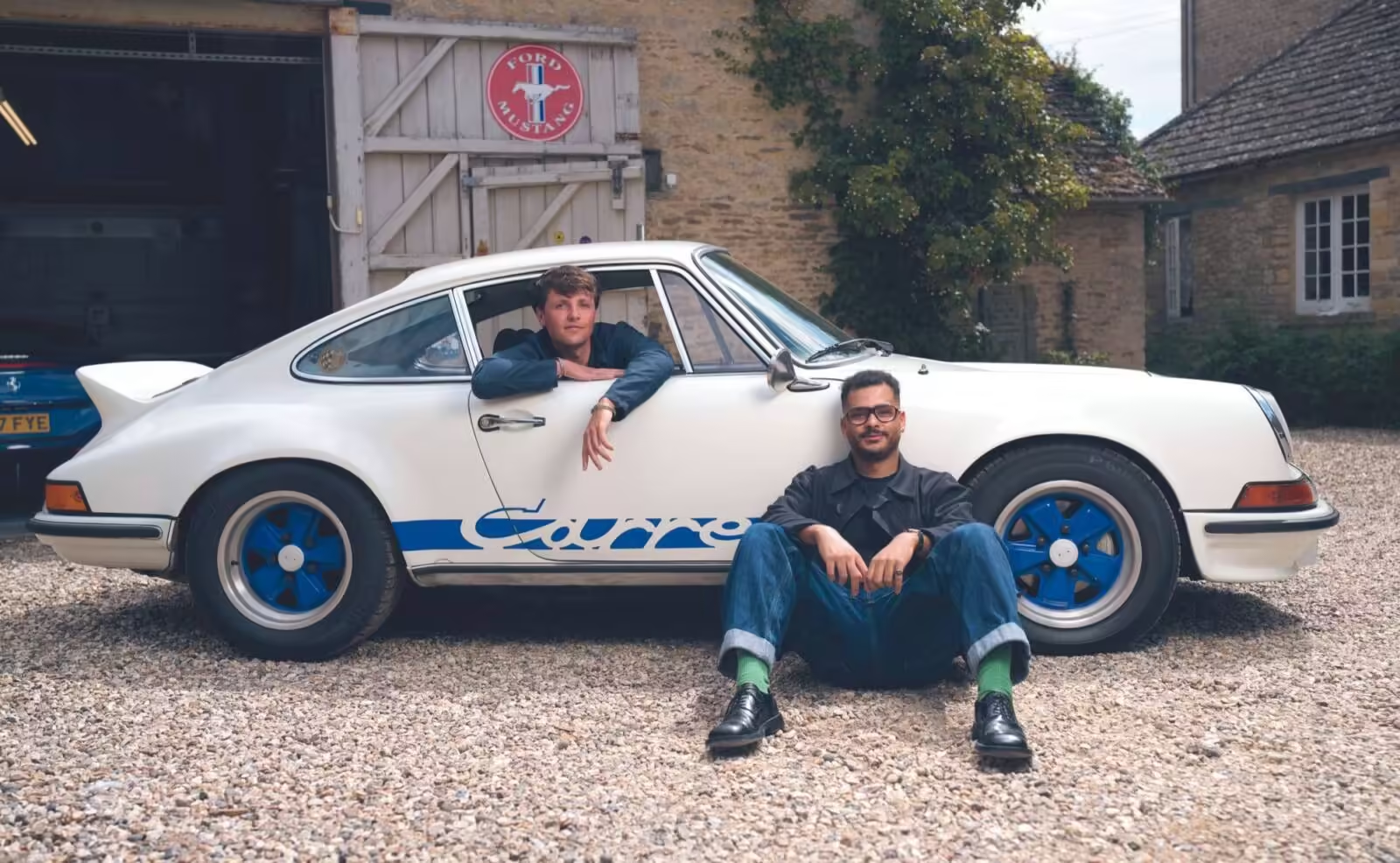
‘I was being taken to race meetings before I was old enough to know what was going on,’ concurs Cosmo Lindsay, aged 27, ‘and then grew up karting, going to race tracks around the UK and obsessively drawing cars as a child. I’ve been fortunate to attend every Goodwood Revival in my lifetime, bar one.’ Benji Kändler, also 27, was ‘obsessed with taking things apart and putting them back together again,’ he says. ‘Most kids were obsessed with Lamborghinis and modern cars — which are cool — but I was more interested in these raw, mechanical things. They were clean, classic and hand built.’
Turning a childhood dream into a reality isn’t the easiest thing, especially when it comes to classic cars. ‘The thing about this world is that you’ve either been born into it, you’ve been exposed to it through friends or family friends who have cars or you fall into it by accident,’ says Heynes. ‘Falling into it by accident is the hardest part of the chessboard.’
Lindsay grew up around his father’s iconic English Racing Automobile, called Remus, from 1936. Originally driven by Prince Bira of Siam, it’s believed to be the most raced car in the world. ‘It was capable of more than 150mph, with no seatbelts, which is fairly extraordinary when you think about it,’ he says. Lindsay’s grandfather, the Hon Patrick Lindsay, had a supreme collection that included an Alfa Romeo Monza and the Napier-Railton (which holds the all-time Brooklands lap record at 143.44mph, powered by an enormous 24-litre engine). These are not machines that everyone has on their driveway. However, inaccessible doesn’t mean impossible.
‘I taught myself to read wiring diagrams. I’d be sitting upside down in the footwell with a head torch on at 10pm in the cold, trying to trace things. Bit by bit, it came together’
Kändler simply rolled up his sleeves. He spent most of the covid lockdowns restoring a 1972/73 Triumph Spitfire. ‘I’d wanted a classic car for a long time. I’d never really been able to afford one or find the time because I was working like mad,’ he says. ‘I was furloughed for three months and had a little bit of money, so thought, why not? I started asking myself what I could afford. I was looking at MGs, Spitfires, older motors and Minis, but I just fell in love with the shape of a Spitfire.’
He had a budget of £1,500 and the car that was delivered was basically a shell. ‘It was dumped on my mum’s driveway when I was living at home for a bit,’ he says. Armed with a Haynes manual, old blogs and Facebook groups, he got to work. ‘I rebuilt the engine, repainted the car, rebuilt the interior, fitted new glass, brakes and suspension and rewired it,’ he says. ‘Over the course of three months, I sometimes spent 18 hours a day working on it because I had a deadline: my mum was moving, so the car had to be driveable and off her driveway.’ It was not an easy task. ‘I taught myself to read wiring diagrams. I’d be sitting upside down in the footwell with a head torch on at 10pm in the cold, trying to trace things,’ he says. ‘Bit by bit, it came together.’

Heynes has been racing Jaguars at the Goodwood Revival for years.
(Image credit: Amy Shore)
Beyond the white fences of Goodwood, the classic-car community exists in cyberspace. It is there that Kändler found a community to help him bring the Spitfire to life. Parts could be sourced, advice given and mistakes avoided: hard work, but worth it. ‘I was 22 at the time, and you’d have an 80-year-old man coming up and saying: “This is wicked. It’s just what we need. Don’t worry about the noise. Don’t worry about the black smoke going up the street.”’
As this new generation of collectors comes through, however, tastes will change. ‘The Diana era was peak car!’ Heynes tells me excitedly. ‘Old Volvos, old Saabs, particularly from the turbo era, are cult cars. Lots of us in our thirties and early forties have now started making grown-up money and are buying back what our parents had, because we think it’s cool.’ As with any collection, the value isn’t necessarily measured by money, but by how it makes you feel. ‘You want to apply the same rules to cars that you would to the art you would choose to keep or collect,’ says Veiga-Lane. ‘They have to be unique or important to you.’ These cars, after all, are a lot of work. ‘You really have to love what you have.’
Lindsay and his brother shared a 1974 BMW 3.0 CSL originally owned by Hans-Joachim Stuck. It had been the BMW Motorsport test car, with a wonderful provenance and a great connection to the racing world. However, he sold it last year and decided to buy something many consider to be a ‘modern classic’, a 2009 Audi R8 V8 with a gated manual gearbox. ‘I think that generation of cars is just beginning to become properly collectible,’ he says. ‘The R8 is naturally aspirated, manual, relatively simple by modern supercar standards and, now that Audi has discontinued the model entirely, belongs to a period we are not going back to. More importantly, however, I loved them as a child. It was the car I always chose on Gran Turismo. Each generation eventually wants the cars it grew up with.’
(Image credit: Gareth Iwan Jones for Country Life)
As many people reading this are probably aware, it is not long before the new generation becomes the old generation. For the classic-car economy — worth some £7.3 billion annually — to keep on thriving, people have to learn how to make them, mend them, paint them and show them. Heynes is already looking over his shoulder, working as a trustee to a charity called StarterMotor and taking on apprentices at his own workshop. He says that access into the classic-car world is improving, thanks to organisations such as the Heritage Skills Academy and events such as Goodwood Revival and Festival of Speed in West Sussex, Le Mans Classic in France and the Pebble Beach and Monterey car spectacular in California. Social media is also bringing these events to millions of eyeballs beyond those who attend in person.
In the grand scheme of artistic endeavour, the car is a relatively new phenomenon. Yet anyone who has ever laid eyes on an E-Type, a Ferrari 250 GTO or an Aston Martin DB6 will be under no illusions as to the excellence of the work on show and the skill of those who designed and built them. Will we still see them driving around in 100 or 200 years? Impossible to say, but, if they have owners like these, there is plenty to be confident about. As the old saying goes: ‘The kids are alright.’ We should add that their cars are better.
‘See more of the best and skip the rest — add us as a preferred source in Google and you’ll see more from Country Life when you’re online.’
Source: www.countrylife.co.uk