
Some years ago, in a courtyard in Mali, someone handed me a calabash of millet beer. It was warm, a little sour, and it was not really mine. That was the point. You took your sip, someone cracked a joke, everyone laughed, and the gourd moved on to the next pair of hands. Within minutes, strangers were not quite strangers any more. Nobody had to explain the rules. The calabash going round the circle did that for us.
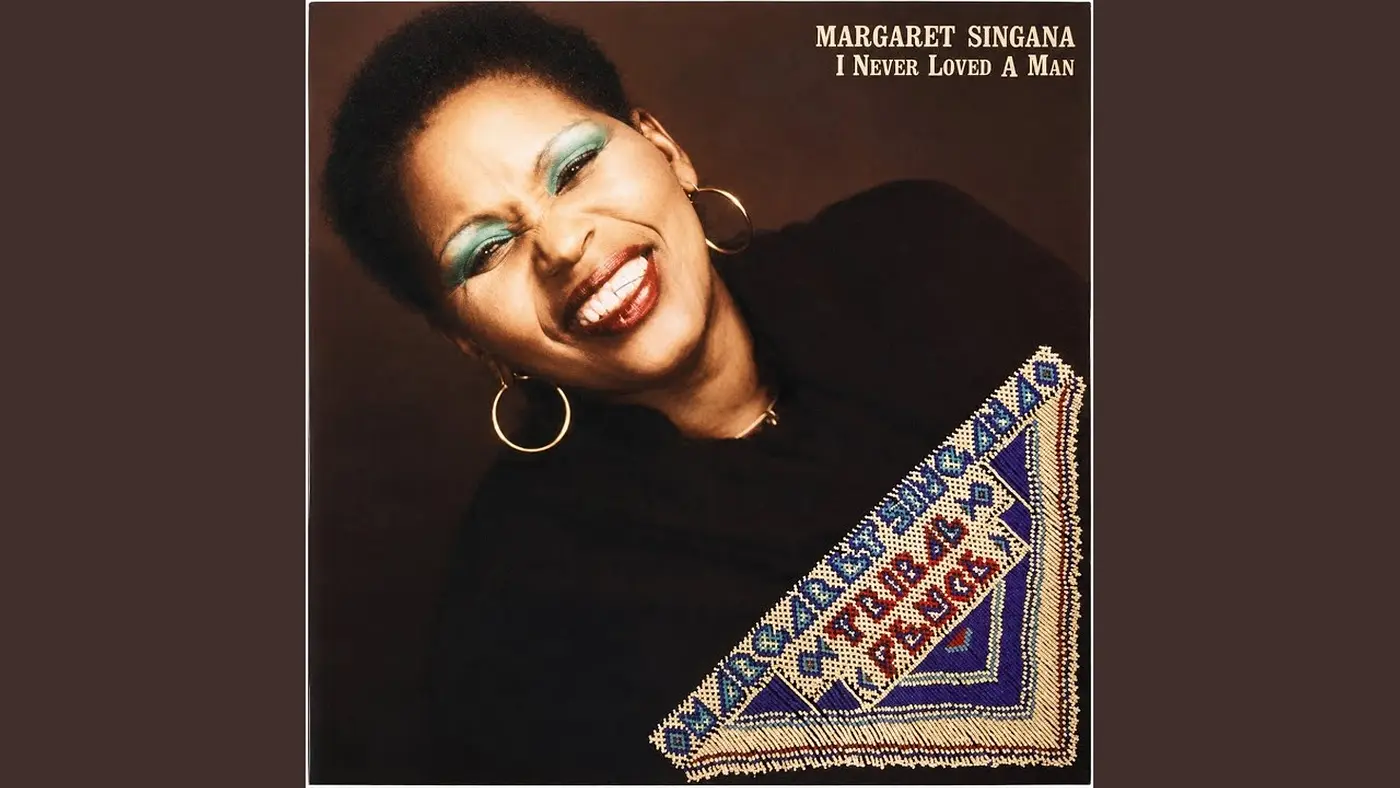
That afternoon came straight back to me the first time I heard Margaret Singana sing „Pass the Calabash“. This is a very Africa-rich Sunny Side Up, opening with seven minutes of Ghanaian sunshine from the late Ebo Taylor. But the big star of the show is a woman with a big voice, whose life also tells the story of South Africa.
A voice that fills the courtyard
From her first notes there is no doubt about who is in charge. Singana’s voice is deep, warm and huge, the kind that does not so much sing at you as pull you into the circle. Underneath, the groove rolls along easily, in no hurry at all, and the chorus is an open invitation: everybody joins in, nobody sits this one out.
It is a party song, but it is a generous one. You can hear the clapping, the call and response, the sense of a crowd leaning in. Listening to it on a cold November morning in Vienna, I could almost feel the warmth of that courtyard wall again.
Go on, pass it along
Across Southern Africa, the Nguni peoples, among them the Xhosa and the Zulu, have long gathered in a circle to share umqombothi, a thick, sour home brew of maize and sorghum. It is traditionally made by women, over a fire outside the house, from recipes handed down from mother to daughter. The big clay pots are for brewing; smaller pots, or a ladle made from a gourd, travel from person to person. Often the first drop is offered to the ancestors. Guests who come to taste the brew bring a bottle of brandy as a thank-you.
In Xhosa, the vessel doing the rounds is called ibhekile, and that is the word in the song’s title. „Hamba“ means go. So „Hamba Bhekile“ is a cheerful order to the cup itself: keep moving! Do not get comfortable in one pair of hands.
There is a word for the spirit behind all this: ubuntu, the idea that you cannot be rich while your neighbour is poor, or happy while your neighbour is sad. In a township bar, ubuntu means the quart of beer you buy gets shared around. Singana’s song is ubuntu you can dance to.
Singing over the housework
She grew up in Queenstown, in the Eastern Cape, and went to Johannesburg in the 1950s to become a singer. Apartheid’s pass laws had other ideas, and she ended up cleaning other people’s houses. But she could not stop singing while she worked. Her employers were so struck that they recorded her voice and sent the tape to a record company.
Her story holds the whole contradiction of the country. In 1973, as the cultural boycott isolated white South Africa, she became the lead voice of Ipi Tombi, an all-Black musical that toured the world and that anti-apartheid activists picketed abroad. She was the first Black artist on the hit parade of Radio 5, then a station for white listeners, and the first Black South African on the TV music show Pop Shop. By 1977 she was the country’s artist of the year, and to her fans she was simply Lady Africa.
„I don’t need any sympathy“
What shines through every account of her is spirit. A stroke left her in a wheelchair, and she kept recording anyway. In 1986 she lent her voice to the theme of the television epic Shaka Zulu, and „We Are Growing“, an English version of this very song, became a hit as far away as the Netherlands and Belgium.
When the Mail & Guardian visited her in Soweto in 1998, she had not been on stage for years, yet her neighbours in Zola still treated her like royalty: any child in the street could lead you to her door. She was writing songs, watching television with her husband, the jazz bassist Mongezi Velelo, and waiting for the good feeling to come back. What she did not want was pity. „I don’t need any sympathy,“ she said.
She died in April 2000, aged 62, in far poorer circumstances than a star of her stature deserved. Five years later, the South African Music Awards honoured her with a lifetime achievement award.
Pass it on
Margaret Singana’s best-loved song is about not hanging on to good things, but sharing them. So, in the spirit of that courtyard in Mali, here it is for you this Sunday. Take a sip, enjoy it, and pass it on.
Source: fm4.orf.at