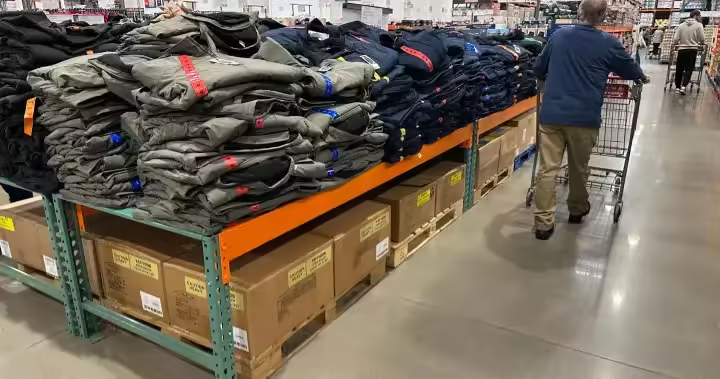

I’m a Costco disciple. I can spend an hour or more wandering the aisles, buying quantities of things I didn’t know I needed and availing myself of a variety of food samples before having my traditional $1.50 hot dog and drink after checkout. It’s my happy place.
I do have one complaint: Costco stores are sonically sterile. There’s never any music playing. However, there’s a very good reason for this.
When a place of business plays music, it requires a performing rights licence. The rationale is that if you’re using an artist’s labour as part of your business, i.e. creating an entertainment environment for your clients, artists should be compensated. Playing music in a store, office, garage, club, arena, stadium, amusement park or any other place of business is no different from a song that’s played on a radio station, aired on TV or streamed via a platform like Spotify. Music is NOT free nor should it be. Artists have to be paid for the value of their talents.
Let’s break this down. I promise that we’ll get back to Costco.
In Canada, a licensce to use music as part of a venture must be granted by SOCAN, our main performing rights organization, which enforces fees set by the Copyright Board of Canada. The cost of the licence is assessed on the value of music to the business. A dance club, for example, will pay more than a hair salon (where it is largely used as background music) because music is central to the club’s very existence. If you run an arena or a stadium where both live and recorded music is played for crowds, the licence fee is calculated on a percentage of ticket sales. There are tiers of payment rates that top out at around three per cent of ticket sales. There’s usually a minimum fee per event, too.

Get daily National news
Get daily Canada news delivered to your inbox so you’ll never miss the day’s top stories.
Fitness and dance classes must also pay for the privilege of playing music that pumps up clients. The annual fee is determined by the average weekly attendance multiplied by a negotiated rate per attendee. The same thing goes for your gym.
There’s also a special licence for things like fireworks displays set to music, although that’s a bit tricky if the event is public. But if it’s a ticketed show, then SOCAN asks for a small percentage, usually less than 1 per cent of gross ticket sales. A flat minimum fee can also be negotiated.
Restaurants are also required to pay under something called Tariff 15.A. This covers all recorded music played in the establishment, whether it comes from a central sound system, a streaming service or TVs that might be showing sporting events. How much does it cost? It depends on the square footage of the restaurant. The minimum fee usually runs between $100 and $200. Peanuts, really.
Things change if there’s live entertainment, which is where Tariff 3.A comes in. The fee must include 3 per cent of the total annual compensation paid to all performers over the course of a year. There’s a minimum of about a hundred bucks. Finally, if tables are cleared for dancing later in the evening, Tariff 18 kicks in. It’s based on the capacity of the room and the number of days per year the space is used for dancing. Hotels are the biggest payers of this fee because of wedding receptions and similar events.
What about the music played in your dentist’s office? That requires the same licence that covers lobbies, break rooms, reception areas and waiting rooms. There’s also a special licence for corporate events, including the Christmas office party. Those are based on an event-by-event basis and the capacity of the room where the party is being held. The only exception to the office music rule is if your employees listen to their own music on headphones (so no one else can hear it) and purchased music services that are pumped in to the business from afar. The service contract usually has the necessary performance fees baked in.
Even the on-hold music for your phone system is subject to a fee if the music is copyrighted. The fee includes calculations based on the number of phone lines that come into your business. This explains why when you’re put on hold the music tends to be utterly generic and dull. It’s copyright-free music (or music that has lapsed into the public domain) that doesn’t add to overhead.
Finally, let’s talk about retail spaces. The licence required to play copyrighted music depends entirely on the square footage of the business. The bigger the space, the more the business has to pay. And here’s where we get back to Costco.
The average size of a Costco is around 150,000 square feet, although bigger stores can hit near 240,000. That’s big, so the required licence fee for music would be … substantial. And given Costco does whatever it can to reduce overhead in order to offer the lowest prices possible, not playing music in the stores is a no-brainer. Note that even the TVs on display are completely muted and use special store programs. All savings from being music-free are passed on to the customer.
This doesn’t deter anyone from shopping at Costco. Hey, if it means that one-gallon bottle of ketchup is a few cents cheaper, I can live with it.
© 2026 Global News, a division of Corus Entertainment Inc.
Source: globalnews.ca