
When I first moved to Rome, I spent my time living in the past.
At the turn of the century, I drifted through a vintage postcard of postwar Italy: old women sitting around tables they had dragged into the street, old men playing cards in caps, cats arching their backs on the hoods of snub-nosed Fiats.
As newspapers filled with talk of Silvio Berlusconi, a media mogul with ambitions and appetites worthy of a Roman emperor, my meanderings inevitably took me toward Tiber Island, a sliver of land in the middle of the river that divides Rome.
An ancient bridge on the island’s left bank had a strange statue of weather-beaten faces positioned back-to-back as if they couldn’t stand one another. The heads rose out of the shared torso of a square pillar and represented Janus, Rome’s god of the past and future, the deity of transitions and change.
Back then, I didn’t see the change around me, but now, more than a quarter-century later, after spending decades reporting on Italian politics and changes across Europe, I have come to understand that I was living in the future.
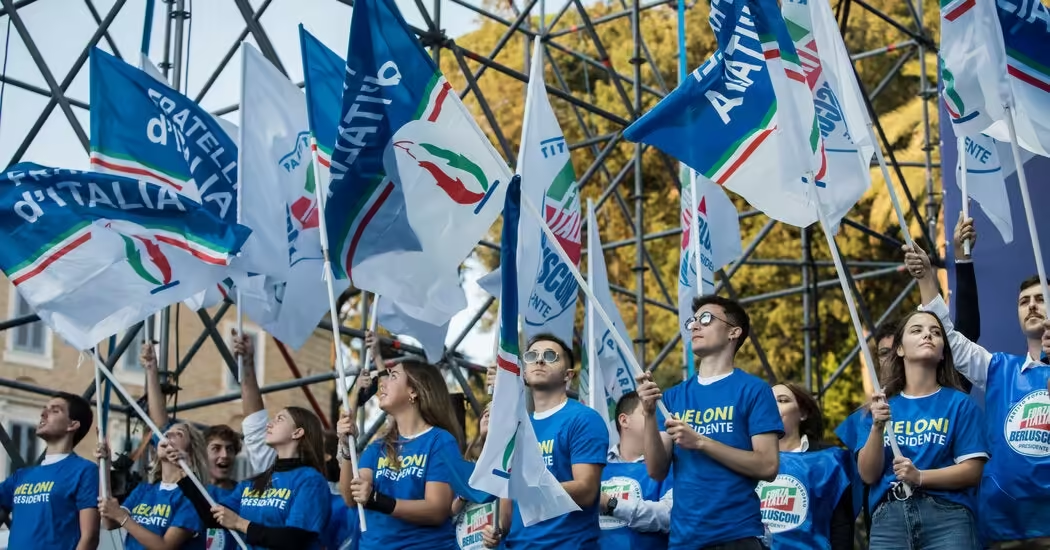
In the time since, I have seen an Italianization of politics all around the continent, with coalitions of small parties resulting in instability, with fed-up voters desperate for new saviors. But more than anything, I have seen — in Britain, France, Germany — countries following the Italian model by allowing the far right into the political mainstream.
Source: www.nytimes.com