
Photo by Paul Faith / AFP via Getty Images
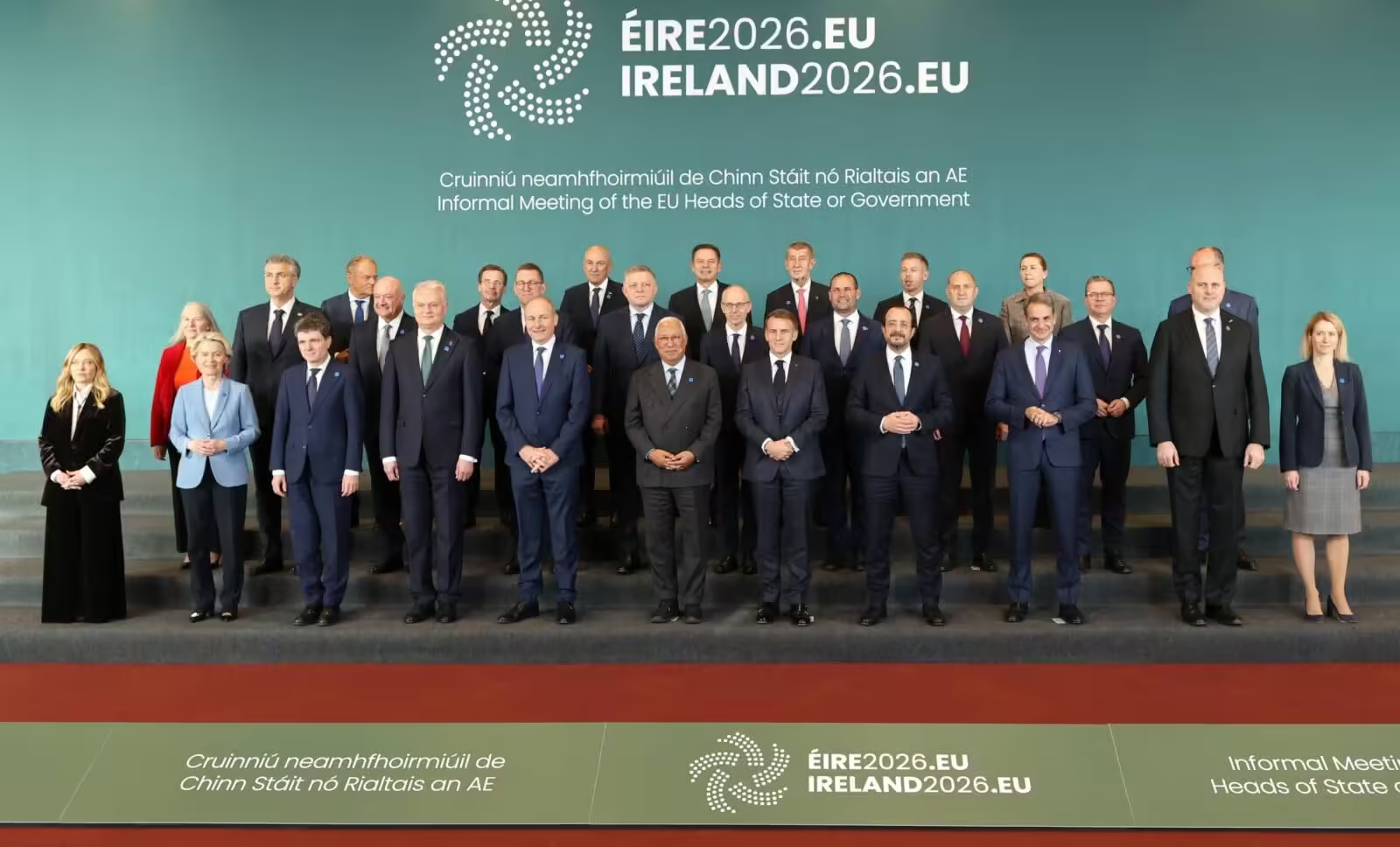
European Union leaders wrapped up an informal summit in Dublin on Friday by announcing a collective negotiating team for Ukraine peace discussions — rejecting calls from Washington, Kyiv, and Moscow for a single European envoy in favor of a six-seat format that drew immediate skepticism from the Kremlin.
A Team Format, Not a Single Voice
Rather than naming one individual to represent the bloc, EU heads of state settled on an arrangement that pairs the bloc’s main institutions with its most powerful member states. European Council President António Costa announced the agreement at a press conference following the summit in Dublin.
“The leaders agreed that our European team for the negotiations on peace in Ukraine are the EU institutions and the E5 — Germany, France, Italy, Poland, and the United Kingdom — of the Coalition of the Willing,” Costa told reporters. “Europe must speak with a clear and united voice,” he added.
Under the arrangement, the European Commission and the European Council share a seat alongside the five E5 nations, bringing the total delegation to six. Costa defended the collective format as a reflection of Europe’s strength in numbers, stressing that the team would operate in “close coordination and full unity” because achieving a durable peace is, in his words, “ultimately a team effort.” The Coalition of the Willing framework will serve as the specific venue for discussions around security guarantees for Ukraine.
Abu Dhabi and Moscow Set the Stage
The Dublin announcement came directly on the heels of a fast-moving sequence of diplomatic events. Trilateral talks between Russia, Ukraine, and the United States — the first since February 2026 — concluded in Abu Dhabi on November 11 without a formal breakthrough, though both sides agreed in principle to a prisoner exchange. U.S. envoys Jared Kushner and Steve Witkoff then flew to Moscow the following day to brief Russian President Vladimir Putin on the outcome, before traveling to Dublin to consult with Ukrainian President Volodymyr Zelenskyy.
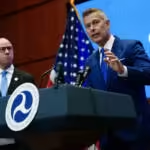
At a press briefing in Abu Dhabi, Kushner described the discussions as “tough and substantive,” saying the American side saw “certain opportunities” ahead. Zelenskyy had made clear his desire for European governments to also have a formal role in the talks, arguing that unity and sustained pressure on Moscow were essential to any lasting settlement. The American envoys reportedly conveyed to European counterparts that the continent would be included in the next phase of negotiations — a signal that underpinned Friday’s EU summit discussions.
Moscow Pumps the Brakes
Hours after Costa’s announcement, the Kremlin moved to complicate the picture. Spokesman Dmitry Peskov reiterated that the Abu Dhabi process is designed as a trilateral framework involving Russia, Ukraine, and the United States, brokered by Washington. He acknowledged that the Americans and Ukrainians maintain separate lines of communication with European governments, but framed those channels as entirely distinct from the main negotiating track.
Peskov went further, conditioning any direct European engagement on a demonstration of intent. “Once we understand their true intentions and their willingness to contribute to the peace process, then we can make a decision on holding negotiations in an expanded format,” the Kremlin spokesman declared. He also set a threshold for direct dialogue with the bloc: Europe would need to present someone “authorized to speak” who “genuinely” had the will to engage.
Merz Dismisses the Kremlin’s Objections
German Chancellor Friedrich Merz wasted little time pushing back against Moscow’s latest round of skepticism. The Kremlin had suggested Europe was struggling to agree on who would represent it — a charge the chancellor rejected outright.
“It’s the Kremlin’s usual game,” Merz said, characterizing Moscow’s posture as a familiar diplomatic tactic. He asserted that a clear understanding with Washington on European participation had been established the previous Thursday — the same evening Kushner and Witkoff met Putin in Moscow — leaving little room for the ambiguity the Kremlin was attempting to introduce.
Merz also drew a firm line against one of Russia’s stated conditions for broadening the talks. Moscow has signaled an interest in using any expanded negotiations to revisit the European security architecture — a scope that Merz flatly rejected. “Russia wants to talk about issues related to the European security architecture. We don’t need to debate that — it already exists,” he said.
The Stakes of Being Left Out
For Europe, participation in the Ukraine talks carries consequences well beyond diplomatic symbolism. The continent is expected to bear much of the burden of any postwar security arrangement for Ukraine — including the deployment of peacekeeping forces and the structure of long-term defense guarantees — making a seat at the table a practical necessity rather than a point of prestige.
The E5 format, centered on the five largest military and political actors in Europe, is designed to present a credible collective weight that neither Washington nor Moscow can easily dismiss as merely institutional. Whether Russia ultimately accepts that framework, however, remains an open question that the coming rounds of diplomatic maneuvering are likely to test.
© {{Year}} Latin Times. All rights reserved. Do not reproduce without permission.
Source: www.latintimes.com