
Photo: Brandon Bell/Getty Images
The Democratic Party’s dominant midterms performance transformed the electoral map in America. With any luck, it also ended the confused debate over what the common man or woman supposedly wants. It’s not about being a strictly working-class candidate or a woke one, pushing an abundance agenda or social moderation. Democratic candidates this cycle did not stick to narrow, pundit-approved lanes. Although a few, like Josh Turek in Iowa, ceded ground to the right on issues like trans athletes and “taxpayers paying for sex changes,” most managed to win without sacrificing minority or disenfranchised groups to the wolves. Instead, they made the case, individually and collectively, that Democrats were better equipped to address an increasingly unaffordable America — and voters responded. They elected Abdul El-Sayed, a progressive Muslim, and Rebecca Cooke, who was endorsed by Senator Bernie Sanders and the more centrist Blue Dog PAC. Allison Montgomery will become the state of Alabama’s first trans lawmaker when she enters the legislature next year.
Outrage may be the most salient feature of any wave election. Donald Trump promised voters prosperity and opportunity, but delivered corruption, brutality, and worsening inequality. By rejecting him, voters not only demanded change but also sparked a conversation about workers that is much sharper than the hazy, reactionary arguments that dominate our politics. Most of us work in exchange for a wage, but the substance of who we consider to be “working class,” and why, can get murky. If we exclude college graduates, we ignore a sizable downwardly mobile demographic that is powering union campaigns and radicalizing to the left. If we only consider income, we can miss other sources of financial pressure, like student loan debt or rent. Whether you have a four-year degree or not, precarity is becoming pervasive. Our definition of working-class politics must reflect it.
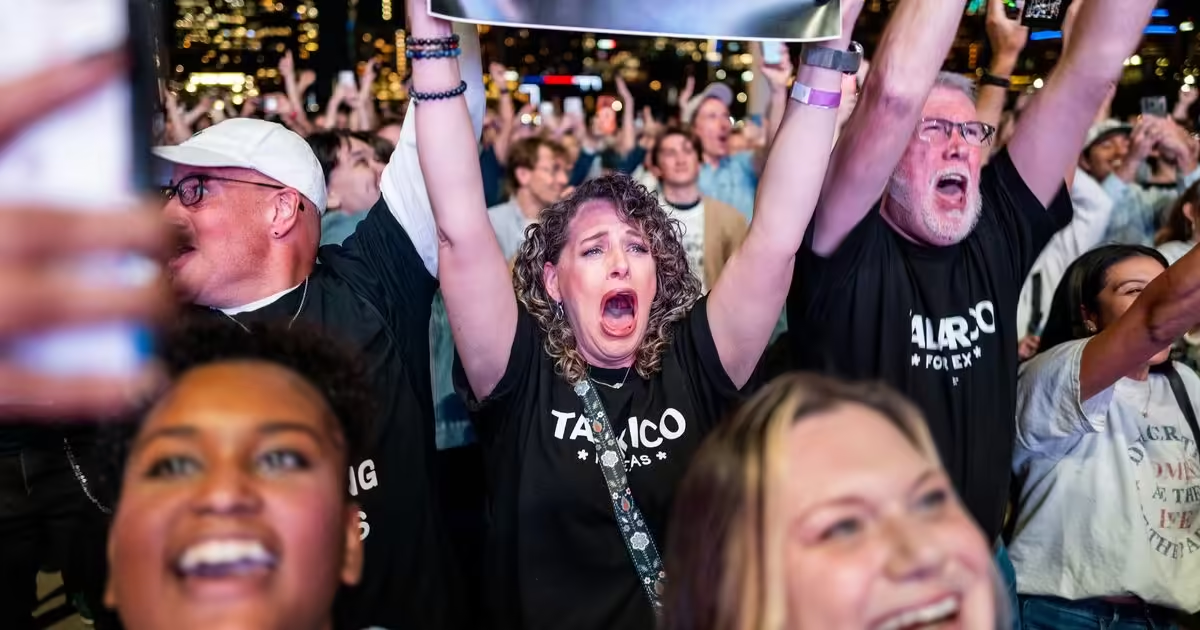
Consider El-Sayed, who faced months of attacks on his electability because he is a Muslim and a left-wing insurgent opposed to Israel’s genocide in Gaza. He ran on Medicare for Allrallied with Sanders (and Barack Obama), and won, comfortably. On election day he swung young men from Trump by an astonishing 55 points, and overall, white voters without a college degree shifted left by 11 points across Michigan. Or there’s Montgomery, who said Republicans attacked her womanhood “because they have failed at governing.” Voters cared more about education and affordability than her identity as a trans woman, she explained to AL.comadding: “Ask yourselves: If I hadn’t transitioned, would gas be cheaper? Would your utilities be cheaper? Would groceries be more affordable? Would your medical debt go away? Would your rent stop getting higher?” Gina Hinojosa barely mentioned race or gender in her successful campaign for Texas governor and railed against billionaires instead, the New York Times noted. When a voter asked James Talarico if he was pushing “class warfare,” he refused to back down. “We already have class warfare in this country,” he said. “It’s the billionaires waging war against the rest of us.”
Talarico is no democratic socialist, but it’s hard to imagine that kind of rhetoric without the influence of Sanders or the Democratic Socialists of America. Although moderates charge DSA-linked candidates with an out-of-touch, academic radicalism, the attack doesn’t always reflect voter sentiment. Francesca Hong did not win Wisconsin’s Democratic primary for governor, but she lost by less than a point. Labor organizer and DSA member Angie Nixon came within three points of her Republican challenger in Florida, despite a lack of investment from the Democratic establishment. During New York’s mayoral race, Andrew Cuomo attacked Zohran Mamdani for being “a child of wealth” who never had a real job; Mamdani beat the nepo baby a few weeks later. In New York’s 13th congressional district, Democratic incumbent Adriano Espaillat attacked his opponent, Darializa Avila Chevalier, for being a far-left “transplant”; that didn’t work, either.
Class warfare, whether it is referenced by Talarico or a Democrat to his left, sounds less abstract against the backdrop of MAGA. When Trump took power for the second time in 2024, he did so with a row of tech billionaires in attendance. Elon Musk dumped a half-billion dollars into Republican candidates this cycle alone. Meanwhile, the White House champions a folkish fantasy of the American worker that excludes women and people of color while placing new obstacles in the path to economic security. Food prices have increased by 33 percent since 2019, and 1.5 million fewer children receive food assistance from SNAP after congressional Republicans enacted cuts to the program last year. In October, hospital executives told the New York Times they’re treating more patients who lost coverage through the Affordable Care Act because the GOP let subsidies lapse. Over 11 percent of American adults now lack health insurance, up from a rate of 8.9 percent in 2024. CBS News reported the cost of childcare is rising faster than rent, but again, the administration has no real solution. A proposal from JD Vance would take childcare funds from working-class and low-income families to pay a married parent to look after their children at home, but experts fear it would create as many problems as it theoretically solves. At worst, it would deprive childcare providers of income and pit “stay-at-home, married parents” against single, working parents, as Jessica Grose observed at the Times.
Vance’s childcare proposal is a reminder that identity matters too. At the root, MAGA is a project about hierarchy; its goal is to stratify society by class, race, gender, and religion. Trump and Vance ran on a pledge to purge the nation of migrants, and their mass-deportation strategy depends in part on racial profiling. The migrants they target are delivery drivers, day laborers, and union members like Kilmar Abrego Garcia — all workers. Elsewhere, Defense Secretary Pete Hegseth abandoned “a merit-based process” for military promotions in favor of “newly invented criteria that disproportionately removed from advancement women and people of color,” MS NOW reported. DOGE cut thousands of federal jobs, disproportionately affecting workers of color. The midterms occurred this year in this context, not in 2016, with Hillary Clinton and superficial appeals to history on the ballot. The conflict between identity and working-class politics has never looked more fictitious than it does right now.
Voters are moving on, even if pundits and consultants have trapped themselves in amber. At minimum, their overwhelming rejection of MAGA begs for a more serious reckoning with inequality and its influence on the electorate. If inequality only refers to a kind of economic unfairness, and not the results of an abortion ban in Texas, we miss the full story of the election. People don’t abandon their identity at the polls any more than they can forget the state of their bank account; the former is as material as the latter. “As far as ‘Woke 2’ exists, it is usually dated to Zohran Mamdani’s election, and seems to mean less a focus on symbolic victories or a false binary between material interests and one’s gender or racial status—things that were never separable in the first place—but rather a willingness to brazenly combine them,” Quinn Slobodian observed in The New York Review of Books. Mamdani “began his victory speech by shouting out his fellow immigrants,” he added, and El-Sayed did something similar on election night. When the senator-elect from Michigan introduced himself “with his full name with proper Arabic pronunciation” it was a provocation, “proudly flaunting the identity markers that moderates and DNC strategists had warned were electoral suicide,” he concluded. The very LGBTQ groups that centrists malign “spent months advising Democratic candidates” to “respond authentically, focus on key issues and don’t take the bait” when Republicans attack them on trans rights, The 19th noted.
A wave of this scale could signal a new era in American politics. As inequality swallows up more American households, the pressure is on Democrats to show more conviction, imagination, and will than they have in a long time. Most voters have priorities beyond the culture wars, like corruption, and with it, an assault on fairness and merit. The cost of health care is even more of an emergency since Sanders first ran for president in 2016 and popularized Medicare for All. Address that, and candidates won’t have to be reactionary in order to win. There won’t be a single, obvious solution to every injustice, but the party should be clear-eyed about the reality before them and respond accordingly. Democrats will fail voters – the flesh-and-blood workers who gave them a chance – by clinging to old fantasies of moderation and caution. The party has an opportunity. It won’t last forever.
Source: nymag.com