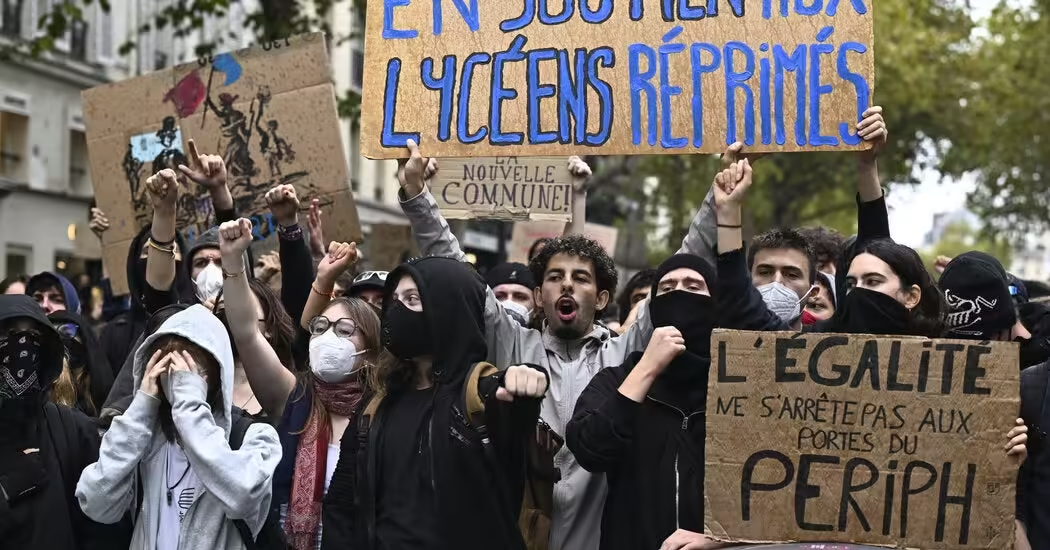

Sébastien Ducros, a French data analyst who supports the widespread student protests in his country, has identified an obvious culprit for the lack of government funds for dilapidated schools.
“A huge portion of the money is going toward retirees, while many other things are being neglected,” said Mr. Ducros, 36. “I honestly think — even if it feels strange to say — that people like my parents are in a position where they should and could” surrender some of their pension payments, he added, saying that they were about to retire.
But Laurent Grinwald, 72, who retired recently after decades as a postal worker, isn’t eager for his pension to be reduced, particularly to pay for other state-funded services. Especially, he said, as rents and the cost of living have shot up.
“We’ve been working all this time,” Mr. Grinwald said, “and now, suddenly, the stance is, ‘Well, no, we’re going to start taking a bit more?’”
This disagreement embodies a broader question for Europe, one that is at the heart of mass antigovernment demonstrations planned for Saturday in France, as well as recent protests driven by frustrated young people in countries including Belgium, Germany, Greece, Italy and Portugal. As Europeans live longer, should the needs of the young be eclipsed by their parents’ and grandparents’ pensions, routinely the largest items in Europe’s national budgets?
“It’s a generational clash,” said Jorge Galindo, the director of EsadeEcPol, an independent think tank in Spain, which has some of the most generous pensions in Europe.
Source: www.nytimes.com