
THE GIST
Our analysts just identified a stock with the potential to be the next Nvidia. Tell us how you invest and we’ll show you why it’s our #1 pick. Tap here.
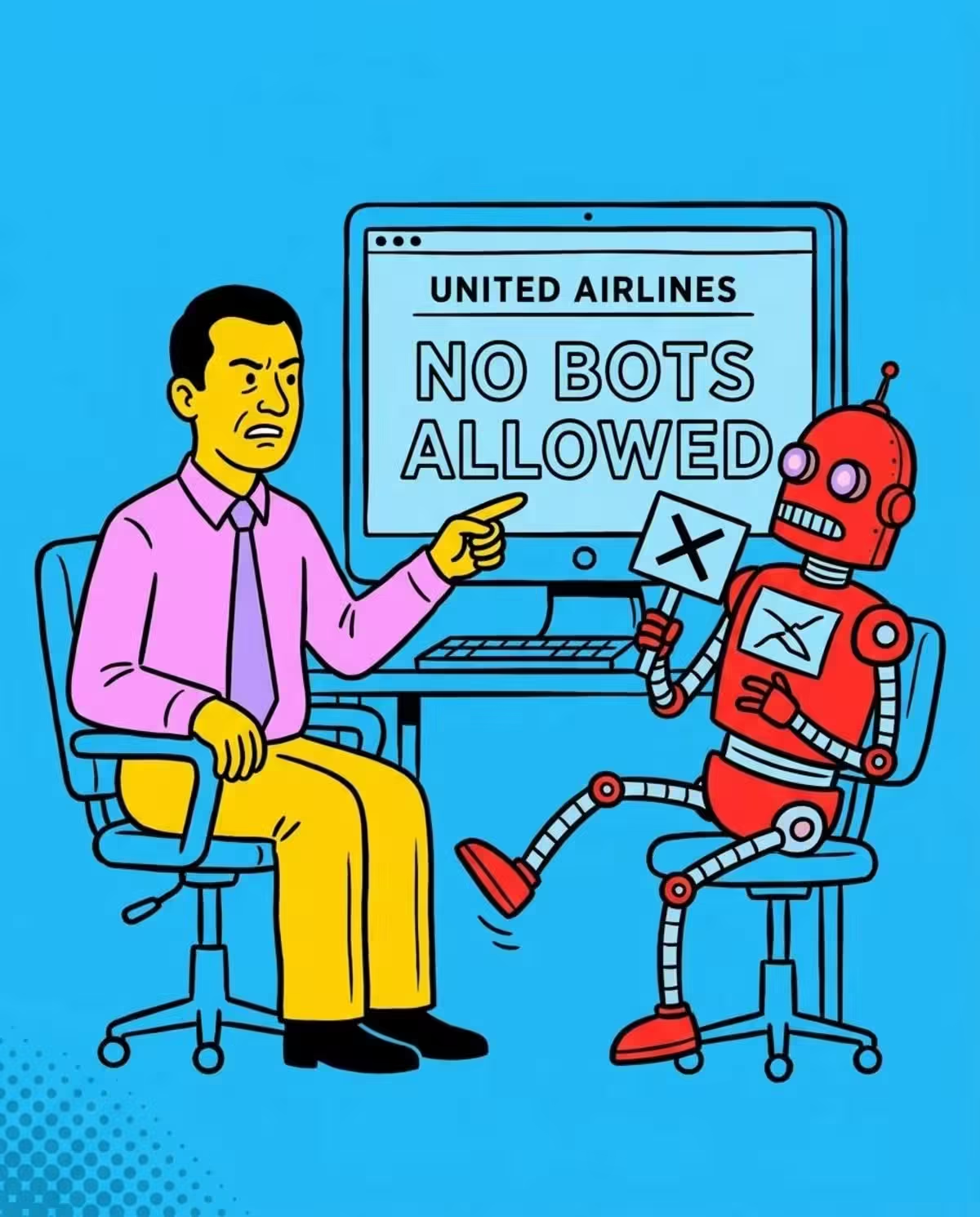
United Airlines is stepping off the AI bandwagon. It’s the first carrier to explicitly ban third-party AI bots from making bookings or upgrades. There are multiple reasons for this: Security and federal compliance are the obvious ones. But each query costs the airline money, and United doesn’t want to pay for AI bot queries.
WHAT HAPPENED
United Airlines is spooked by AI travel agents. The airline updated its contract to bar AI agents from making, changing, or servicing tickets and from buying seats, upgrades, or other products. This is even when the traveler supervises or approves each step.
United has the right to cancel such reservations without notice, and the ban reaches AI tools offered through travel agencies. AI agents can search and display fares, but the traveler must personally complete the booking. The airline is concerned that consumers sharing credentials with AI agents is an inherent security risk. And check-ins need to be done personally as per federal laws to declare that the bags carry no banned items.
The airline has read the pulse of the people on this one: A fraud-detection survey found 43% of Americans would let AI book with final approval, but only 12% would allow fully autonomous booking. Similar data from 2025 stated that over 40% of the respondents were not comfortable with letting AI plan their trips.
WHY IT MATTERS
The real motive here is to avoid added costs, especially when fuel costs are eating airlines’ lunch. AI bots from large metasearch engines can produce 100 billion inquiries a day and that costs airlines money. There are no accurate estimates for the cost but an Air France-KLM 2024 policy shows an excess fee of €0.70 per 1,000 queries once a seller passes a 1,000-to-1 search-to-booking baseline. So it’s not much per search but it adds up, especially when AI agents make billions of queries a day.
One stock. Nvidia-level potential. 30M+ investors trust Moby to find it first. Get the pick. Tap here.
It’s only United that’s implemented an outright ban. Meanwhile, other industry rivals are actively working with AI. Delta allows authenticated AI assistants to complete bookings, with added safeguards for sensitive trips such as unaccompanied minors. Southwest lets ChatGPT users browse its seats and find trips.
But across the board, companies are still sitting on the fence about AI. Amazon won a preliminary injunction against Perplexity’s Comet agent in March. JPMorgan Chase blocks agents. Meanwhile, Walmart lets outside agents buy within customer-set limits such as $50 or $100.
Source: finance.yahoo.com