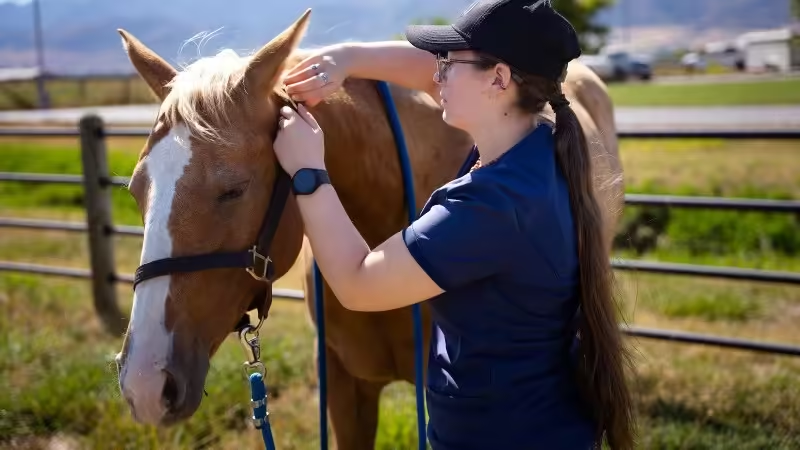

Utah State University has launched a new Associate of Science in Veterinary Technology degree program to prepare students for high-demand careers in animal healthcare and to help meet critical workforce needs across Utah and the Intermountain West.
The program combines flexible learning opportunities, hands-on clinical training, and stackable educational pathways to create a comprehensive route into the veterinary profession.
There is a current severe shortage of veterinary technicians. A 2024 publication from the Veterinary Hospital Managers Association reported 20 open positions for every one veterinary technician in the United States. Clinics are competing for a very small pool of qualified candidates, leaving many roles unfilled.
Dr. Melinda Hillegass, a veterinarian and the new program’s director, knows how vital veterinary technicians are in caring for patients and their people.
“After more than 30 years in veterinary medicine private practice, I can say without hesitation that skilled, credentialed veterinary technicians are absolutely essential to the care we provide our patients,” Hillegass said. “Much like nurses in human medicine, they are the people who spend countless hours providing hands-on, one-on-one care — watching our patients, recognizing subtle changes, anticipating their needs, and helping turn the veterinarian’s treatment plan into actual healing.”
USU’s program aims to provide consistent, standardized training that prepares graduates to enter the workforce with confidence and competence. The two-year curriculum prepares students to sit for the Veterinary Technician National Exam (VTNE) and with state credentialing become certified veterinary technicians, which dramatically expands clinic capacity.
The degree program is designed for students seeking careers as certified veterinary technicians while also creating opportunities to continue their education in veterinary medicine and animal sciences. The program is available at USU’s Logan campus, helping students in different parts of the state to pursue a career in veterinary medicine. Students complete coursework online and participate in hands-on laboratory training in person, providing the flexibility of remote learning while gaining the practical experience employers expect.
“Our veterinary technology program represents a significant step forward in providing our students with the skills and knowledge they need to succeed in a rapidly evolving field,” said Abby Benninghoff, head of USU’s Department of Animal, Dairy and Veterinary Sciences. “This program not only fulfills a critical workforce need but also aligns with USU’s mission to expand educational opportunities and strengthen communities throughout Utah.”
The program allows students who have completed a veterinary assistant certificate through participating Utah technical colleges to apply qualifying coursework toward the associate degree. Graduates can enter the workforce immediately or continue their education through bachelor’s, master’s, and professional degree programs, including USU’s bachelor of science in veterinary science as well as doctor of veterinary medicine opportunities.
Students gain practical experience working with companion animals, livestock, equine species, and exotic animals while developing competencies in:
- Clinical veterinary procedures.
- Diagnostic and laboratory testing.
- Surgical preparation and patient monitoring.
- Animal nursing and medical treatments.
- Veterinary office management.
- Client communication and professional practice.
The curriculum combines classroom instruction with extensive hands-on learning, allowing students to develop the technical and professional skills needed for success in veterinary clinics, animal hospitals, research facilities, animal shelters, zoos, wildlife organizations, and related industries.
Hillegass said the best technicians she has worked with have been far more than an “extra set of hands” and have become trusted colleagues.
“They are people I rely on for their knowledge, observations, ideas, technical skills, compassion, and ability to recognize and solve problems,” Hillegass said.
Prospective students, advisors, industry partners, and community members can learn more about the Veterinary Technology Associate of Science degree and admissions requirements at: usu.edu/degrees-majors/veterinary-technology_as.
“There is simply no substitute for a knowledgeable, compassionate, well-educated veterinary technician working beside you,” Hillegass said. That’s one of the reasons I am so passionate about educating the next generation of veterinary technicians. Our profession needs them. Veterinarians need them. Most importantly, our patients need them.”
Source: www.usu.edu