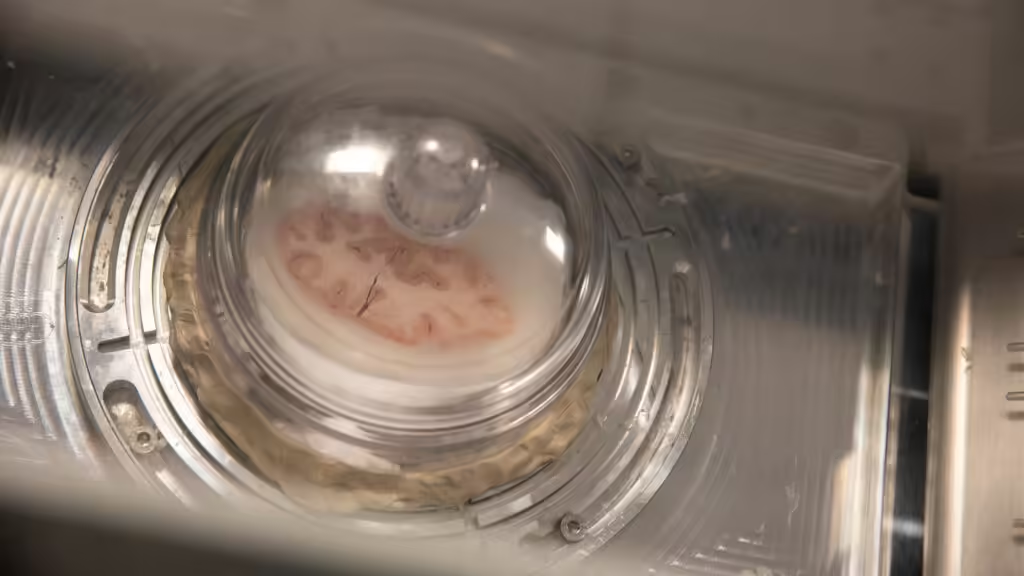

A massive scientific collaboration meant to unravel the mysteries of the human brain has produced the most detailed map yet of the basal ganglia, a region closely associated with a wide array of psychiatric and neurologic disorders.
Researchers profiled more than 25 million cells, generating a deluge of data that allowed them to generate a “parts list” of what cells are present in the basal ganglia and how they’re arranged. In the process scientists discovered a new type of neuron that appears to play a role in schizophrenia. They also identified cell types linked to depression, bipolar disorder, and post-traumatic stress disorder.
Demonstrating the value of the work, the scientists produced preliminary evidence that they can use their more detailed understanding of brain cell types to deliver therapies with increased precision. Authors working in mouse models of Parkinson’s disease showed that a gene therapy designed to work in a subset of basal ganglia cells was as effective as a blanket approach; it was also safer.
Continue to STAT+ to read the full story…
Source: www.statnews.com