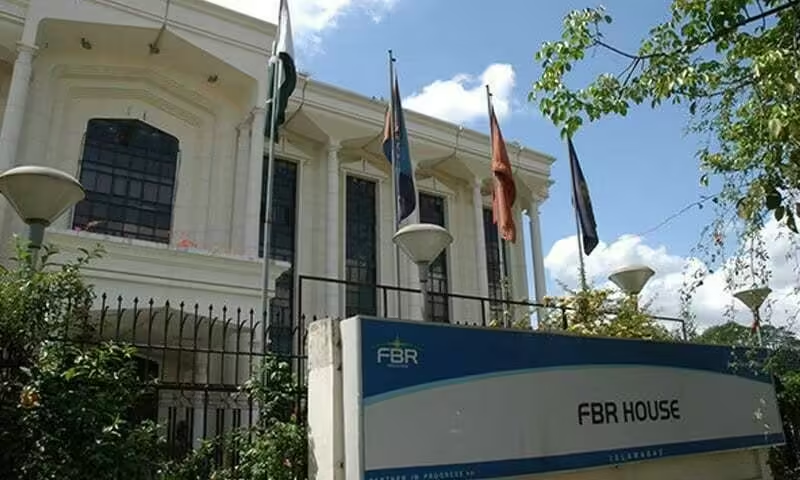

ISLAMABAD: The Federal Board of Revenue (FBR) has expanded the use of artificial intelligence to scrutinise individual tax returns, enabling its automated system to detect factual and legal errors and discrepancies before initiating legal or penal action.
Under the mechanism, taxpayers will first be informed electronically about discrepancies detected in their income tax returns and allowed to clarify or rectify them through a prescribed mechanism.
The new procedures were notified through SRO 2098 of 2026, released on Wednesday. The new procedures are titled “38B. Procedure for electronic scrutiny and intimation of issues detected by the automated system”, amending the Income Tax Rules 2002.
An important feature of the new arrangement is the automated analysis and cross-matching of information available with the tax authorities. This will allow the system to compare information declared in income tax returns with other available data and flag potential discrepancies for taxpayer clarification.
The tax system will notify taxpayers about issues it detects through an online advisory or advance intimation sent via IRIS. These notices may highlight factual errors, legal mistakes, or discrepancies in tax records. The purpose is to allow taxpayers to explain the issue, correct any errors, or take necessary remedial action before any legal or penalty proceedings are started.
The same system-generated advance intimation may also be issued by the Officer of Inland Revenue having jurisdiction over the taxpayer.
The notice must clearly state the response period, which cannot be less than seven days. During this time, the taxpayer may provide an explanation, correct the identified errors, or take other steps to resolve the discrepancies mentioned in the notice.
It further states that if the taxpayer does not respond within the specified period, a reminder will be issued. The reminder must provide at least seven additional days for the taxpayer to respond.
Details of the issues or discrepancies identified by the system, the notices sent to the taxpayer, and any responses received will be shared with the Officer of Inland Revenue responsible for the taxpayer.
All notices issued, responses received, and actions taken will be recorded in the system’s dashboard for monitoring and reference.
The Inland Revenue officer would review the taxpayer’s response, if any, and assess the matter. Based on this review, the officer may take appropriate action under the relevant provisions of the Income Tax Ordinance 2001, and the rules made under it.
Published in Dawn, November 12th, 2026
Source: www.dawn.com