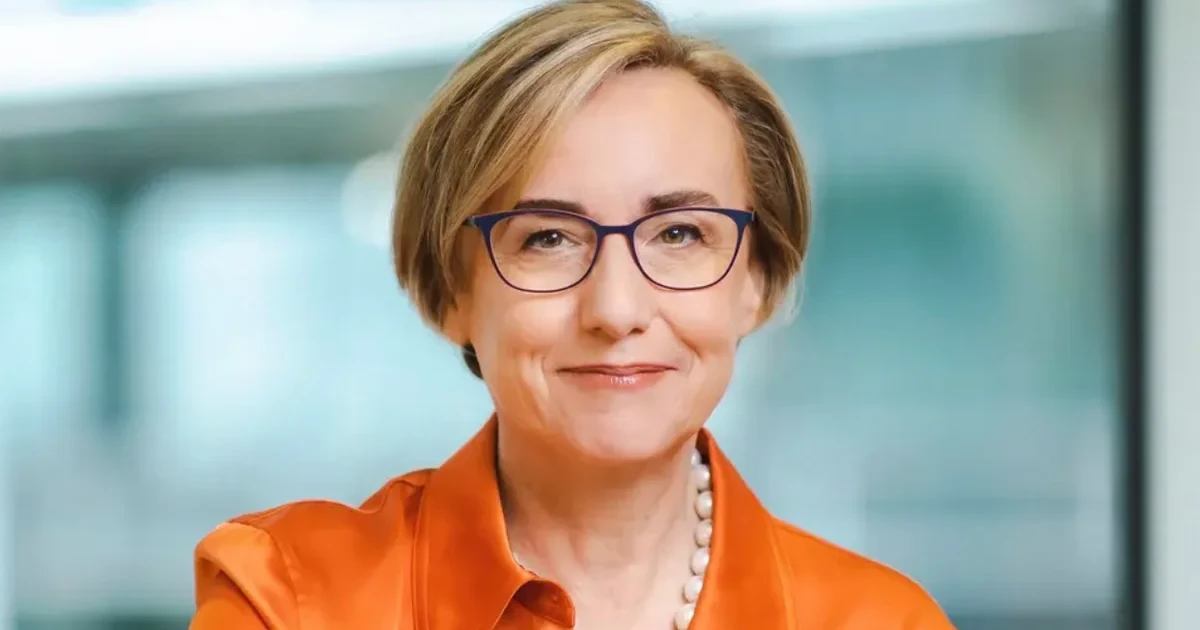

Vodafone eliminated approximately 3,000 roles across Europe and its shared operations during the six months ended September. It has now announced another 2,300 job cuts in Germany.
The reductions bring the identified number of positions already removed or marked for elimination to about 5,300, as chief executive Margherita Della Valle seeks to simplify the sprawling telecoms group and lower costs.
The restructuring comes as Vodafone reported a €3.6 billion loss, approximately $4 billion, for its first financial half. The company had made a €1.1 billion profit during the corresponding period a year earlier.
According to Reuters, strong growth in Africa and Vodafone’s business division helped counter declining service revenue in Germany and allowed the company to raise its full-year earnings and cash-flow forecasts.
Vodafone writes $5.4 billion off Germany
Vodafone recorded a €4.85 billion non-cash impairment against its German business, equivalent to approximately $5.4 billion.
The company attributed the charge mainly to higher German government bond yields and a revised assessment of the operation’s financial performance.
Germany is Vodafone’s largest individual market, but service revenue there declined 0.5% organically during the second quarter after growing 1.2% in the preceding three months.
The business has struggled since a July 2024 change in German law allowed residents of housing-association properties to select their own television providers. Vodafone consequently lost customers who had previously received its services through housing contracts.
“We need to be simpler, hence the job reductions, and we need in parallel to continue to invest in our customer experience,” Della Valle said.
Despite the reported loss, Vodafone’s adjusted earnings before interest, taxes, depreciation, amortisation and leases increased to €6.45 billion, approximately $7.24 billion.
The company raised its full-year earnings forecast to between €13.2 billion and €13.4 billion, equivalent to between $14.8 billion and $15 billion. Its adjusted free-cash-flow forecast was increased to between €2.8 billion and €3 billion, or approximately $3.1 billion to $3.4 billion.
The results show that Vodafone’s reported loss was heavily influenced by non-cash accounting charges rather than an equivalent amount leaving the company.
Africa becomes Vodafone’s fastest-growing region
Africa delivered a sharp contrast to Vodafone’s difficulties in Germany.
Vodafone’s African service revenue grew organically by 13.4%, with every Vodacom market reporting growth across telecommunications and financial services.
Vodafone owns 65.1% of Johannesburg-listed Vodacom, giving the British company direct exposure to South Africa, Egypt, Ethiopia, Kenya, Tanzania, Mozambique, the Democratic Republic of Congo and Lesotho.
Vodacom’s latest results show that the African group now serves 250 million customers, including 108 million financial-services customers.
Revenue increased by 25.6% to R102.5 billion, approximately $6.1 billion, although part of that jump resulted from consolidating Safaricom into its accounts.
Headline earnings per share increased by 25.7%, while earnings before interest, taxes, depreciation and amortisation climbed 40% to R42.7 billion, approximately $2.5 billion.
Financial-services revenue almost doubled to R15.9 billion, about $942 million. Vodacom said customers used its platforms to initiate more than $575.5 billion in transactions over the past 12 months.
The group invested R13.3 billion, approximately $788 million, in its network and built 3,388 new fourth-generation sites and 4,328 fifth-generation sites over 12 months.
Safaricom gives Vodafone’s African business greater scale
Vodacom’s African footprint expanded substantially after it increased its ownership of Kenya’s Safaricom to 55%.
The $1.6 billion transaction helped lift Vodacom’s exposure to M-Pesa, one of Africa’s largest mobile-money platforms, and contributed to the growth recorded in its consolidated revenue.
A Kenyan court has declared the acquisition invalid, finding problems with public participation and disclosure surrounding the government’s sale of the shares.
Vodacom and the Kenyan government are appealing. The Court of Appeal has ordered that the existing ownership structure remain in place while it considers the case, meaning Vodacom remains the registered owner of the shares for now.
The dispute has not prevented Vodafone from incorporating Safaricom into its group results. Vodafone recorded a separate €3 billion, approximately $3.4 billion, accounting gain from revaluing its previous interest in Safaricom.
Vodafone’s performance therefore presents two sharply different pictures. Its largest European market is cutting jobs, losing service revenue and carrying a multibillion-dollar writedown. Its African operation is adding customers, expanding mobile money and delivering double-digit growth.
Source: africa.businessinsider.com