
LONDON – The potential of a new global health pandemic, an untick in extreme weather events, and the increased threat of insecurity, conflict and hybrid warfare in Europe has prompted the British government to launch a “Be Ready” campaign, aimed at ensuring the nation is prepared for any emergency.
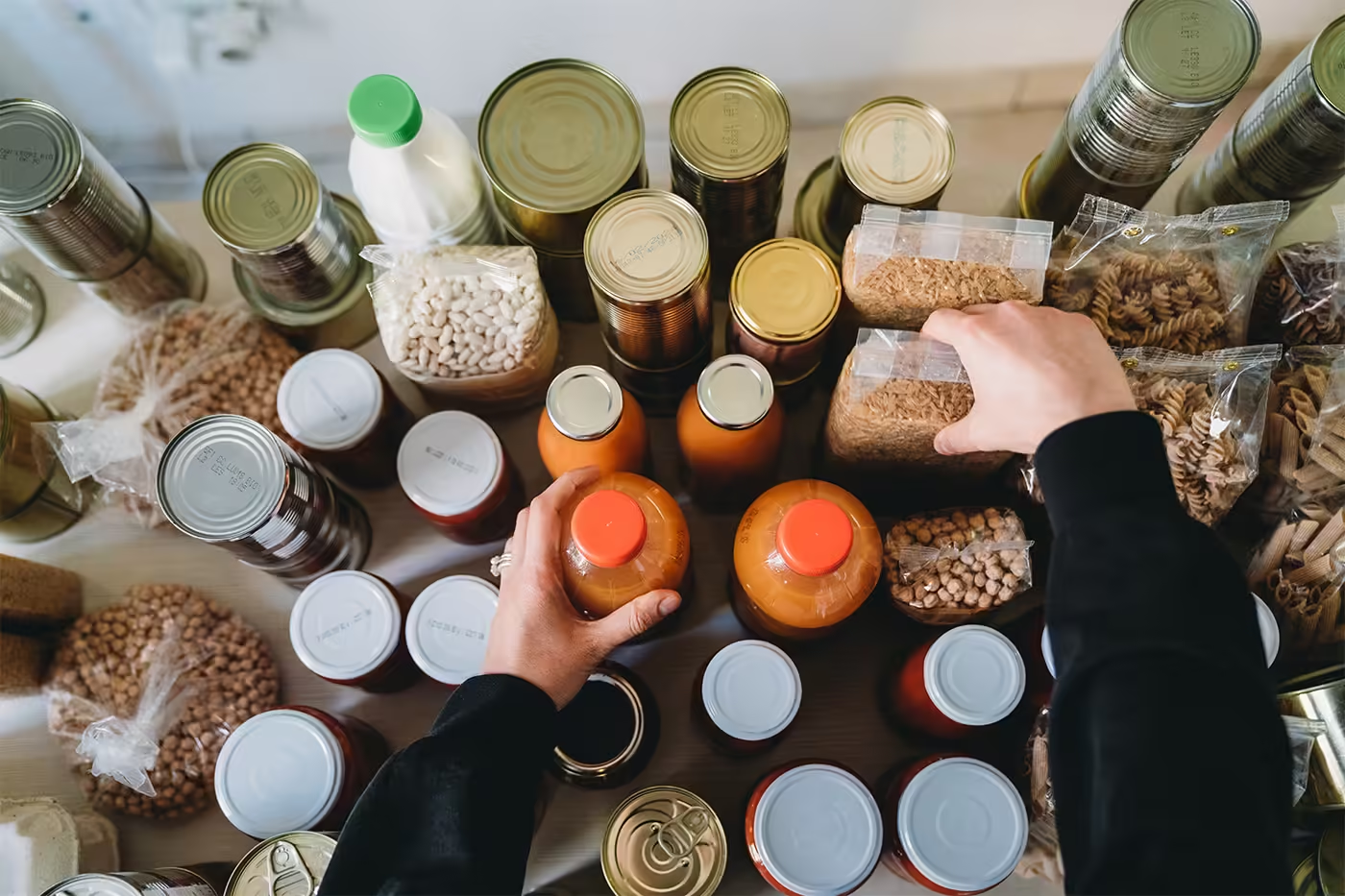
The new public awareness campaign urges British households to stockpile essential supplies – to cover three days – in the event of a natural disaster, cyberattack or assault by a hostile state that could trap citizens in their homes.
The call to prepare for these worst-case scenarios comes amid heightened geopolitical tensions and recent military posturing by Russia. In recent months, Moscow has been linked to a drone attack on a German airport and cyber attacks targeting several EU nations, including France, Belgium and Germany. In August, the Kremlin threatened the U.K. with “consequences” after reports that British drones were used by Ukraine to strike targets in Russia.
France, Germany, Latvia, Lithuania, Finland and the Netherlands are among the European nations also urging its citizens to stockpile an emergency supply that would last at least three days. Poland has a similar program as it faces military provocation on its border with the neighboring Russian territory of Kaliningrad.
Britain’s “Be Ready” campaign, introduced in October, calls for households to store essentials, including bottled water, non-perishable food, a first aid kit, an FM radio, medication, hand sanitiser and wet wipes. The aim is to keep people alive and safe in the event they cannot exit their homes because of flooding, a catastrophic storm, a cyberattack that disrupts essential services, according to information published on the campaign’s website.
Encouraging people to stockpile essentials isn’t uncommon. The U.S. has urged standard emergency and disaster preparedness for years, to ensure that households are self-sufficient should services or utilities be disrupted. But some countries, including the U.K., have updated their standard advisories in the face of the new global insecurities.
The British government “clearly deems there to be a real threat,” said Josephine Harmonassistant professor in political science at Northeastern University London. “The government appears to be adapting its policies to this new era, where preparedness is more necessary because of the new geopolitical landscape of hybrid warfare. The nature of preparedness is that it’s addressing what could happen, not what necessarily will happen,” she added.
U.K. Defense Secretary Wes Streeting has attributed the need to be prepared to the threat of “state-sponsored terrorism” by Russia or other hostile nations targeting key infrastructure.
Since launching its war on Ukraine in 2022, Russia has threatened the U.K. several times with the potential use of nuclear weapons. Russian President Vladimir Putin has said that the U.S. “created a precedent” for the use of atomic bombs by its strike on Japan during World War Two. In the past few years, Russia has also sabotaged undersea fiber-optic cables in the Baltic Sea affecting the transfer of internet data in Europe, according to the U.K. government.
Harmon believes there could be more of the same intentional damage, including targeting essential infrastructure in an effort to intentionally disrupt and “sow panic.” It could include the loss of electricity and the shutdown of internet connectivity, she said.
“The fact that there is a need to be precautious is just a sign that we are in a new era today,” Harmon said. “Changing public awareness of this is a part of the campaign’s objectives.”
Jalal Ozkizanassistant professor in international relations and politics at Northeastern University London, questioned the viability of the Be Ready campaign at a time when many British households are struggling with the cost of living and may not have expendable cash to buy up extra supplies.
“The government, ironically, asks people to stockpile, although even the government itself is aware of this irony,” Ozkizan told Northeastern Global News.
He criticized the British government for urging citizens to prepare for the impact of natural disasters linked to climate change that the country’s leaders – past and present – “are arguably not doing enough to prevent,” he said.
A further point is the UK’s increasing shift towards a “technological dependency” where digitization, AI and quantum computing are being heralded by the government as tools that need to be embraced to improve society – even though this shift puts sensitive data at risk of being remotely accessed.
While the government is encouraging dependency on what Ozkizan described as “arguably the most dangerous type of technological dependency,” at the same time it is urging its citizens to brace for the impact of this technological dependency, Ozkizan said.
Despite the contradictions, Harmon suggested that following the government’s guidance to stockpile essentials is probably a wise move.
“It might be most responsible,” she said.
Source: news.northeastern.edu