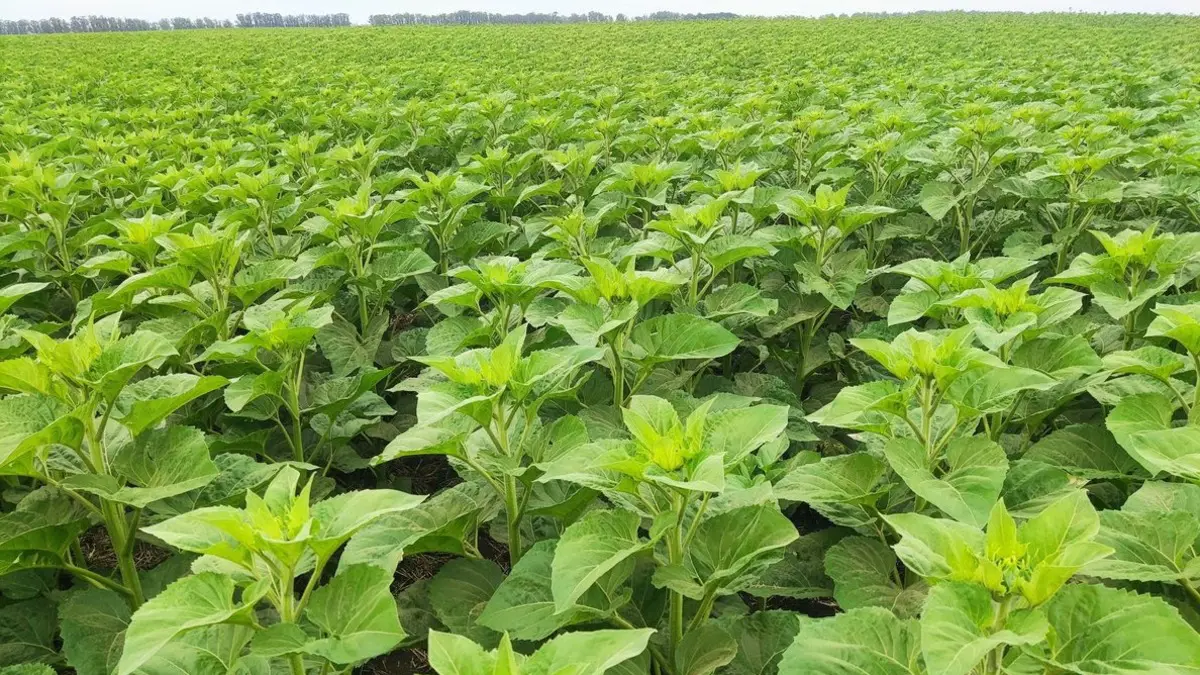

The planting of sunflower in Argentina faces complications due to the weather conditions of recent weeks. Excess moisture in the soil and low temperatures are delaying the implementation tasks between 7 and 12 days compared to the usual times in western regions of the country. Although there is still room to sustain good productive prospects, specialists warn that the calendar is beginning to become a determining factor for the performance of the campaign.
The crop regained prominence in the production schemes of different agricultural regions, both for its contribution to rotations and for its capacity to improve economic results in environments where other alternatives, such as soy, encounter greater limitations. However, the climate scenario forces us to closely monitor the evolution of the work and the possibilities of completing the sowing within the optimal window.
The greatest difficulties are observed in regions such as the south of Córdoba and San Luis, where implementation tasks are delayed between 7 and 12 days compared to the usual dates.
This is how he explained it Luciano Belloni, coordinator of the Aapresid Corn and Sunflower Networkswho pointed out that the optimal planting window is approximately between October 25 and November 5. Current conditions are affecting the pace of work and forcing producers to review their planning.
Among the main causes, Belloni identified the excess moisture in the soila product of rainfall above normal values and more frequently than usual. Added to this are the low soil temperatureswhich can affect the uniform emergence of the crop and cause problems during the first stages of development.
The problem is not limited to the conditions of the lots. Excess water also causes operational complications, since it makes it difficult to move machinery, reduces the time available for work, and affects the general logistics of agricultural work.
Why late planting can affect yields
The shift in implantation dates represents an important factor for the productive potential of sunflower. Late sowing can reduce yield for two main reasons: it reduces the time available for crop development and modifies the environmental conditions to which it is exposed during its reproductive stages.
As Belloni explained, delays can also increase exposure to conditions favorable for the development of diseases towards the end of the cycle. This aspect becomes especially important in campaigns with high humidity, since health problems can translate into yield losses.
Therefore, in addition to observing the progress of the seeders, producers must pay attention to the evolution of environmental conditions and the health behavior of the plots.
What management decisions can help sustain productive potential
Faced with climate difficulties, one of the sector’s main concerns is determining what management tools can cushion the impact of delays.
However, Aapresid considers that not all alternatives are convenient at this stage of the campaign. Belloni pointed out that I would not recommend making changes to planting densities at this height.while it also does not observe a widespread substitution of hybrids for shorter cycle materials.
According to his explanation, the differences between the cycles of the most widespread hybrids on the market are not very significant and, in addition, shorter materials usually have lower performance potential.
On the other hand, one of the strategies that is beginning to gain relevance is the use of preventive fungicides. In humid campaigns, the probability of obtaining a favorable response may be greater, especially when seeking to protect yield from greater exposure to diseases.
Belloni considered that, with sunflower prices remaining firm, investing in the health care of the crop may represent a wise decision for producers.
November 15, a key date for sunflower planting
Despite the delays recorded, the outlook still offers room to sustain productive expectations. For the western regions of the country, Belloni identified the November 15 as a reference date to evaluate the impact of delay in implementation.
As he explained, until then the yield potential can still be maintained. However, subsequent plantings would force expectations to be revised, especially in environments with high productive potential.
The tests mentioned by the specialist show that, when implementation is delayed beyond these dates, the relative bonus performance can be below 90% of potential.
In that context, The next ten days will be decisive to know how the progress of the seeders is evolving and how far the implementation window can be extended with good prospects.
The climate scenario poses difficulties for the start of the campaign, although it still does not represent a reason to rule out good productive prospects. The sunflower maintains arguments to continue gaining space in agricultural rotations, especially for its contribution to economic results and its adaptation to different environments.
Source: regionmardelplata.com