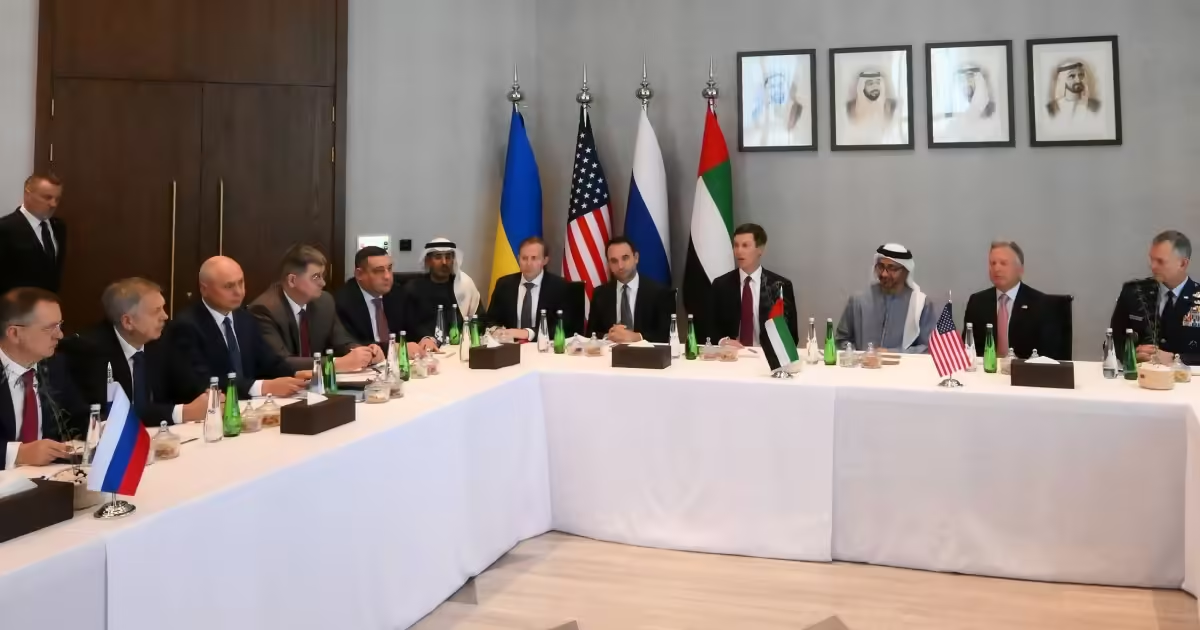

Three-way talks between Russia, Ukraine and the United States opened Tuesday in the United Arab Emirates, as Washington renews its push to end the war that followed Moscow’s all-out invasion nearly five years ago.
The two-day session in the UAE’s capital, Abu Dhabi, is the first such meeting since February. It will focus on security guarantees, the White House said before the discussions. Russia sees NATO as a threat, and Ukraine wants to prevent future Russian invasions.
The first day of talks concluded after nearly four hours, Russia’s RIA Novosti news agency said. They are expected to resume Wednesday, according to the press office of the Foreign Intelligence Service of Ukraine.
President Donald Trump’s son-in-law, Jared Kushnerwho along with U.S. envoy Steve Witkoff is trying to broker a settlement, said he believed there were “some good ideas how to bridge” the differences between the two sides.
But hopes of progress in ending Europe’s biggest conflict since World War II are tempered by the absence of any significant breakthroughs in three previous rounds of talks early this year. The war has already killed hundreds of thousands of soldiers and thousands of civilians, analysts and humanitarian organizations say.
There are no signs the fighting is abating, and the talks took place against a backdrop of new long-range strikes between Russia and Ukraine. The two armies are largely deadlocked on the front line.
Russia launched 162 drones of various types and a ballistic missile at Ukraine overnight, Ukraine’s air force said.
Meanwhile, Russia’s Ministry of Defense said that its forces shot down 155 Ukrainian drones overnight above eight Russian regions, as well as the Crimean Peninsula, which Russia annexed from Ukraine in 2014.
“I don’t have overly high expectations” for the talks, German Chancellor Friedrich Merz said in an interview with ZDF television on Monday night.
Kushner said in opening remarks at the talks that the goal is to “create a new framework and a new understanding building upon the different institutions and understandings of the past.”
“We take what’s worked, we try to identify what’s failed, why we’re in this position and hopefully create a new framework that leads us for decades, if not centuries, of peace,” Kushner said.
NATO commander U.S. Gen. Alexus Grynkewich, who was also present, pointed to “some great progress in the past in a military-to-military dialogue in a trilateral format.”
He said that the U.S. delegation looked forward “to working with both sides as we seek to advance the progress we’ve made in the past and continue this pursuit to set the foundations for a lasting peace.”
Rustem Umerov, the head of Ukraine’s Foreign Intelligence Service who is leading Kyiv’s delegation, thanked the U.S. for its efforts to end Russia’s invasion.
“Our people are waiting to end this war. And we hope that we will achieve the lasting peace for Ukraine,” he said.
The head of the Russian delegation, Vladimir Medinsky, expressed hope the meeting “will allow us to advance on the path towards peace in the interests of the people of Russia and the people of Ukraine.”
Umerov said that the day began with a meeting between the Ukrainian team, the U.S. envoys and representatives from the United Kingdom, France, Germany, Italy, NATO and the European Commission.
The Russian and Ukrainian governments remain far apart on key elements of any prospective deal.
Russian President Vladimir Putin wants Ukraine to pull its troops back from Donetsk, Luhansk, Zaporizhzhia and Kherson — the four regions that Moscow annexed in September 2022 but never fully captured. He also demands that Ukraine abandon its bid to join NATOaccept strict limits on its military and drop restrictions on the Russian language and the Moscow-affiliated Orthodox Church in Ukraine.
Putin wants a comprehensive peace deal on those conditions and won’t agree to a general halt in hostilities, arguing that it would only allow Ukrainian troops to rest and replenish their weapons stockpiles. He has warned that Russia will achieve its goals by force if Kyiv refuses to meet its conditions for peace.
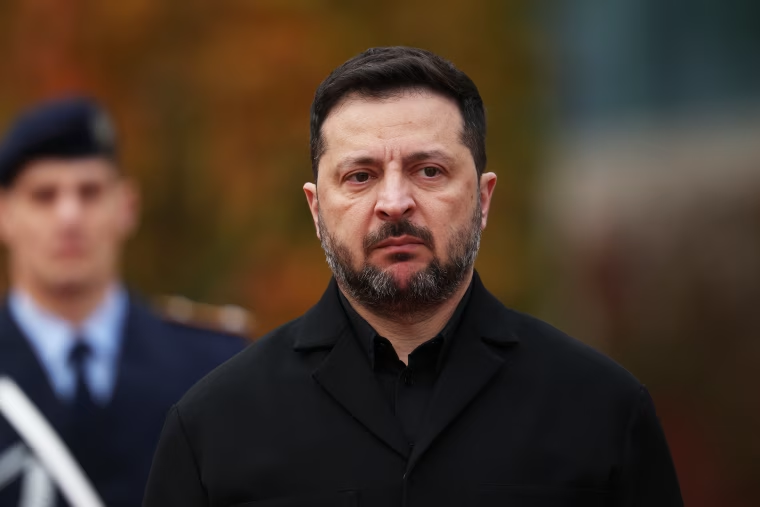
Ukrainian President Volodymyr Zelenskyy, who was visiting Denmark on Tuesday, rejects Putin’s demands to voluntarily cede territory that Russia hasn’t been able to take on the battlefield. Zelenskyy also rejects any limits on Ukraine’s military or its arrangements with Western partners, which Kyiv sees as essential security guarantees to stop Moscow from invading again.
Ukraine argues that an immediate ceasefire is the necessary first step toward negotiating a wider settlement and says a direct meeting between Putin and Zelenskyy is the only way territorial issues can be settled.
The Russian and Ukrainian delegations include senior officials who have attended previous rounds of talks.
Russia’s chief negotiator is Medinsky, a Putin aide who has led Moscow’s team since the first direct peace talks with Ukraine in Istanbul in March 2022. The Russian delegation also includes deputy foreign ministers Sergei Ryabkov and Mikhail Galuzin, military intelligence chief Igor Kostyukov and deputy chief of the General Staff’s operational department, Yuri Zhigarlovsky.
Besides Umerov, the Ukrainian delegation also reportedly includes Zelenskyy’s chief of staff, Kyrylo Budanov, his deputy, Sergiy Kyslytsya, and Davyd Arakhamia, the parliamentary faction leader of Zelenskyy’s Servant of the People party.
Last week, Trump declared that some kind of grand deal about European security was in the works, describing it as “a big agreement” that is “going to involve more than Ukraine.”
Kushner said Monday on X that a “comprehensive and lasting settlement will also require direct engagement between Russia and our European partners on the broader security arrangements that affect them.” The discussions in Abu Dhabi will set the stage for “that engagement to begin in the near future, as part of a broader multilateral process,” he said.
Moscow has praised the broad approach.
Source: www.nbcnews.com