
Industry @ Tallinn & Baltic Event, one of Northern Europe’s largest training and industry confabs, is celebrating its 25th anniversary with a packed program where the Baltics stand at its core, as part of Tallinn’s Black Night Film Festival’s own milestone 30th edition.
A record 900 accredited professionals from 54 countries – including around 100 sales agents, distributors and festival programmers – have signed up for the event which will showcase 71 projects (44 films and 21 series) and focus on audience design, sales and distribution through 100-plus panels, on top of industry training via the Discovery Campus strand.
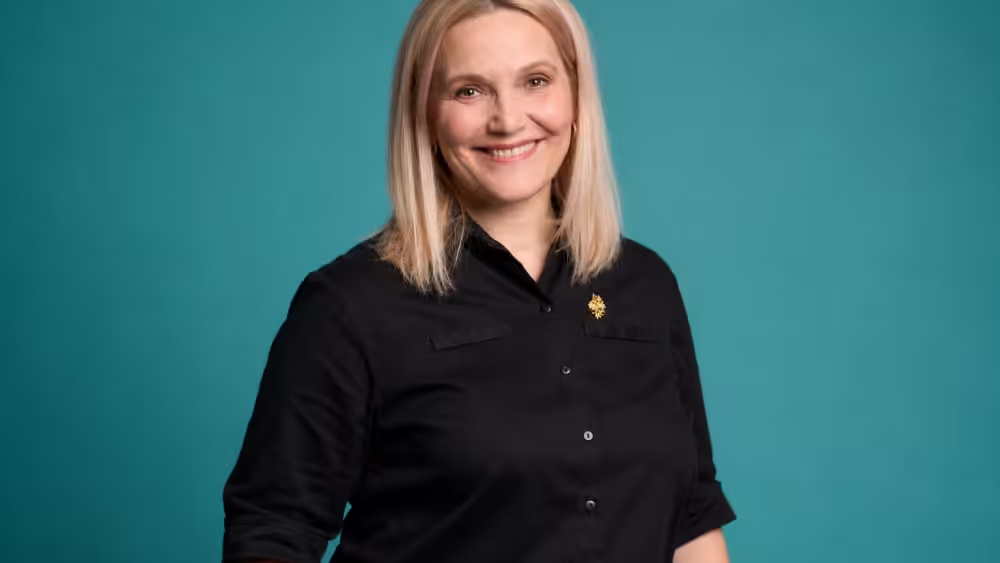
Speaking with Variety as the 12-day industry event just kickstarted, Marge Liiskethe industry boss of it all, drilled down on the program’s highlights, its past achievements and prospects for the gigantic industry showcase which has played a key role in developing the audiovisual industry in Estonia, Latvia and Lithuania.
Industry @ Tallinn & Baltic Event (ITBE) Turns 25. Could you take us through the changes that you’ve experienced since you joined the confab, and the next steps ahead?
Marge Liiske: I joined in 2013 to run the Baltic Event Co-Production Marketafter seven years at the Estonian Film Foundation. In 2016 I took over the whole platform. My first priority was to merge our two strands, Industry@Tallinn and Baltic Event, so that guests would have a single entry point, program and set of services. Today that umbrella is a brand of its own, and it works seamlessly. Another boost came gradually: PÖFF [the Black Nights Film Festival] had received its A-category status in 2014, and over the following years it brought more press, sales agents and producers to Tallinn.
Since then, we have grown by adding new layers rather than by enlarging one market. Series arrived in 2017 with the world premiere of “Babylon Berlin” and have grown into TV Beatswith its conference program, co-financing market, screenings and showcases. Our talent programs grew strand by strand and are now united under the Discovery Campus, with seven programs. The short film industry program followed in 2021, children’s and youth film got its own industry days in 2023 and its own category in the Co-Production Market a year later.
Next, we want to do more for distributors and exhibitors, an area we would like to strengthen. Documentary is another: this year at least 15 documentary projects in development asked to join the co-production market, and we regularly get requests for documentary works in progress. The Discovery Campus also has exciting plans for 2027, which we will announce early next year. And we have some new ideas for the Co-Production Market, which we will reveal in spring 2027.
What are your main focal points this year?
Liske: Each year we choose a focus. Last year it was financing; this year it is audience design, sales and distribution, both theatrical and digital. We want to give producers very hands-on tools: how to design an audience strategy from the start, when a sales agent should come on board, and how a film can reach viewers in cinemas and online. Friday Nov. 20 is dedicated entirely to sales, distribution and audience design, so producers can spend a full day with the people who will bring their films to audiences. Then our Focus Countries this year are the Baltics, with 310 Baltic professionals, 81 films, 21 projects, 19 talents in Discovery Campus. We are so excited to present them in different screenings and sessions, plus a showcase on Nov. 19. We also have a Spotlight on Basque Audiovisual with a delegation of 10 professionals, nine films and three projects.
What structural changes have you made? All 16 works in progress are on Nov. 19, and there seem to be new venues…
Liske: We have made the schedule more concentrated. The Script Pool and Co-Production Market projects now all present on the afternoon of Wednesday Nov. 18. The works in progress follow in the morning and early afternoon of Thursday Nov. 19, leaving the teams the rest of Thursday and all of Friday to talk, mingle and build partnerships before the closing ceremony [Nov. 20]. The Discovery Campus now has its own Discovery Hub at the Tallink Spa & Conference Hotel, giving talents a home base where they can spend more time with each other.
Baltic films are thriving internationally and new studios are being built. What challenges still lie ahead for the Baltic audiovisual industry?
Liske: The biggest challenge is turning visibility into continuity in our small markets. A “Flow,” a “Smoke Sauna Sisterhood” or a “Toxic” creates a moment, but producers need the next film, and companies need to survive between projects. Our national funds alone cannot finance ambitious work, so international partners are a necessity.
The new studios are an important step, and we present the new IDA Hub film complex at the event this year. But infrastructure also needs projects and skilled crews to fill it, and those take time to build. Keeping talent in the region while giving them international careers is part of that. And our national films need to keep finding their audiences, both at home and at festivals.
We are also very proud to showcase two Estonian startups: the IRIS casting database and Mureel platform, building sustainability and ESG compliance infrastructure for the European audiovisual industry.
What trends do you see in co-productions with the Baltics?
Liske: Producers bring in partners earlier, and those partners come from further away: no longer only neighbours, but France, Italy, Poland and beyond. Our Co-Production Market brings together 15 projects from 10 countries this year, and eight of them are by debut directors, which shows how early international co-production now begins in a filmmaker’s career.
We also see growing interest in the Baltics from established production countries. That’s why this year we organise meetings between French and Baltic producers, and a meet-up for emerging Finnish and Estonian producers. Children’s and youth films and genre projects are other clear trends: children’s and youth projects have their own category in the market, genre projects have the European Genre Forum, and the quality keeps rising.
TV Beats continues to grow. Could you comment on this year’s program, including the screenings opening with the latest season of ‘Babylon Berlin’?
Liske: “Babylon Berlin is a home-coming for us. The series had its world premiere at PÖFF in 2017, the year we brought series into our industry program, so it is a pleasure to present the new season here among the seven TV Beats screenings.
TV Beats has grown step by step: the forum, then the co-financing market, the screenings, and last year Coming Soon from the Baltics. This year, for the first time, we opened international calls for both the Screenings and Coming Soon.
This year’s forum looks at how creators can shape new ideas into scripts and attract international attention. It also looks both east and west, with the Finnish-Japanese journey of “Blood & Sweat” and “Dear X” from Korea. A session on the showrunner model explores how history and politics shape it across European traditions, and the European Writers Club invites writers to create stories together. And with seven series screenings, there is always something to binge between meetings.
Training of Baltic -and international- professionals-is at the core of PÖFF and ITBE. What are the Discovery Campus highlights? Could you also briefly discuss the Tallinn Industry Academy and Breaking into the Industry strands?
Liske: Discovery Campus opens with Sir Christopher Hampton, Academy Award winner for “Dangerous Liaisons” and “The Father,” speaking about adaptation. Craft sessions follow with cinematographers Julio Macat (“Home Alone”), Roberto Schaefer (“Finding Neverland,””The Kite Runner”), David Stump (“X-Men,””Deep Blue Sea”), Dan Laustsen (“Frankenstein”) and Michael Bauman, composer Martin Phipps, production designer Inbal Weinberg (“The Room Next Door,” “Three Billboards Outside Ebbing, Missouri”), and casting directors Yngvild Haga (“Sentimental Value”), Pauline Hansson and Nina Haun (“Triangle of Sadness”), among others.
Bringing the Tallinn Industry Academy and Breaking into the Industry into the Discovery Campus this year gives emerging talents and future filmmakers more chances to meet, exchange ideas and build their networks. The Campus also has its own dedicated space for the first time, the Discovery Hub.
How are issues related to the younger generation, integrated into the Just Film Industry Days program for children and youth?
Liske: Children and young people are tomorrow’s audience, so understanding how they think and what they value matters to the whole industry. That’s why we don’t keep children’s and youth film in a separate bubble. Just Film Industry Days, now in their fourth edition, run alongside the rest of the market, and the professionals mix.
This year, film literacy is at the heart of the programme. We look at how young viewers discover films as their access to social media changes, why audiovisual literacy deserves our attention, and what research reveals about the visual language of children’s films.
Children’s and youth projects also take part in both the Co-Production Market and the Works in Progress, so they get the same attention from sales agents and distributors as any other film.
What’s your take on current AI trends, and how is the topic explored at ITBE?
Liske: What interests me most is not the tools themselves, but how they change who gets to tell stories, and how. AI can open doors for small teams and smaller countries like ours, but only if the human vision stays in charge. Otherwise it does not make any sense.
AI was very present in our program in recent years. We ran AI ateliers and approached AI not as something to fear, but as something we can shape. This year we have consciously taken some distance: AI has entered our lives so deeply that it is almost impossible to talk about it as a separate entity.
That doesn’t mean we’ve stopped working on it. Throughout the year, we have run Mastering AI for European Film Professionals, a five-module training program supported by Creative Europe MEDIA. In November, we keep one focused session, which asks whether AI can serve hand-crafted, cross-cultural storytelling with a human storyteller in charge. Edmond Yang, Gold winner at Project Odyssey and Gullhaien and a creative partner of Runway and Luma, will open up the workflows behind his animation and hybrid films.
How do you deal with higher costs and inflation in Estonia? Who are your main backers and key partners?
Liske: We have had to become more efficient, but also reduce the number of free services for our guests, which of course is sad, but it’s life; Estonia has become quite an expensive country. We are also more selective about whose expenses we cover: we invest in guests who actively engage with our projects.
Our main backers are Creative Europe MEDIA, which has just renewed its support for our market, the Estonian Ministry of Culture, the Cultural Endowment of Estonia, the Estonian Film Institute, the City of Tallinn and the Estonian Business and Innovation Agency, as well as neighbouring film institutes. Our key partners include Eurimages, which gives the Co-Production Development Award, and the Council of Europe, with its €50,000 ($56,000) Series Co-Production Development Award at TV Beats. We are also very grateful to long-standing partners such as Studio Beep, ATM Virtual and many others. This year we counted 72 partners, and without exaggeration, every one of them is valuable to us.
Source: variety.com