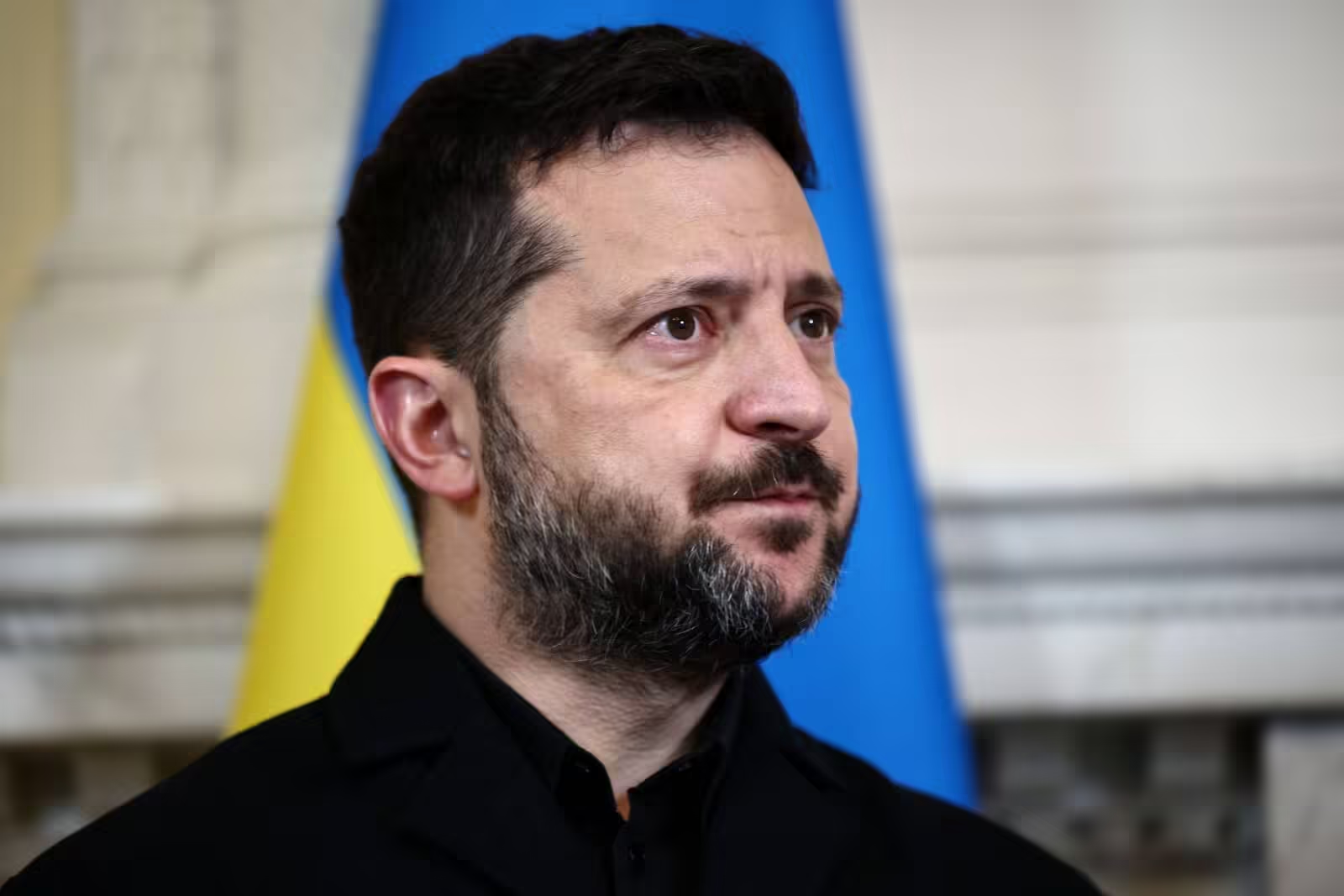

Ukrainian President Volodymyr Zelenskyy is facing the most serious corruption crisis of his political career. Investigations into some of his closest business associates and senior political advisers have exposed alleged schemes involving approximately $100 million in illicit transactions, substantial kickbacks on state energy contracts, and the laundering of money through luxury property developments. The scandals have reached individuals who have exercised extraordinary influence over the presidency and enjoyed longstanding personal relationships with Zelenskyy. For a president elected on a promise to confront the corruption of Ukraine’s political establishment, the consequences are considerable. The question is no longer simply whether corruption exists within the Ukrainian government, but how networks operating so close to the centre of political power were able to establish themselves and what responsibility Zelenskyy bears for their activities.
Zelenskyy came to power in 2019 on the promise that he would break with Ukraine’s entrenched political and economic establishment. His appeal rested on his status as an outsider, a television entertainer who had portrayed an ordinary citizen unexpectedly elevated to the presidency after exposing government corruption. Ukrainian voters, frustrated by decades of political patronage, oligarchic influence, and weak public institutions, gave him a decisive electoral victory. His central political proposition was that the country could be governed differently and that the relationships between political office and private enrichment could be broken. Seven years later, investigations are exposing alleged corruption among individuals drawn from the very business and political circle that accompanied him into government.
Questions about the president’s financial relationships first emerged in October 2021, when the Pandora Papers investigation revealed an offshore company network connected to Zelenskyy and his former business associates. The documents identified companies registered in jurisdictions including the British Virgin Islands, Cyprus, and Belize, some associated with the television production company Kvartal 95. Records showed that Zelenskyy transferred his beneficial interest in one company, Maltex Multicapital Corp, to his close associate Serhiy Shefir shortly before his election in 2019. Other documents raised questions about whether his family could continue receiving payments from the business. Companies within the wider network were also linked to expensive London properties. The disclosures revealed financial arrangements that sat uneasily alongside Zelenskyy’s image as a political outsider determined to bring transparency to Ukraine’s governing elite.
The most damaging recent scandal emerged in November 2025, when Ukraine’s National Anti-Corruption Bureau and Specialised Anti-Corruption Prosecutor’s Office uncovered an alleged corruption network operating around Energoatom, the state nuclear energy company. The investigation, known as Operation Midas, concerned approximately $100 million in suspected illicit transactions. Investigators alleged that companies seeking contracts or payments were required to surrender between 10% and 15% of contract values in kickbacks. The alleged operation suggested that a network of politically connected individuals had established effective control over important commercial decisions at one of Ukraine’s most strategically significant state enterprises.
At the centre of the investigation was Timur Mindich, a businessman closely associated with Zelenskyy through their earlier involvement in Kvartal 95. Investigators identified Mindich as an alleged organiser of the network, alongside other individuals connected to the energy sector and government. The significance of this relationship cannot be dismissed as a coincidence of political acquaintanceship. Mindich belonged to the president’s longstanding business circle, and the investigation raised the possibility that access to that circle had translated into influence over the allocation of state resources. A president who fills positions of influence with trusted associates cannot reasonably separate himself from the political consequences when those associates become central figures in major corruption investigations.
The Energoatom allegations are particularly serious because they concern Ukraine’s electricity infrastructure during a war in which that infrastructure has been repeatedly attacked by Russia. Generating facilities and transmission networks have suffered extensive damage, requiring substantial expenditure on repairs, maintenance, and reconstruction. The allegation that connected individuals were extracting kickbacks from the energy sector during such a period raises fundamental questions about the government’s stewardship of national resources. Every amount diverted through corruption represents resources unavailable for infrastructure, essential services, or the wider defence of the country. It also calls into question the controls governing public expenditure at a time when Ukraine relies heavily on financial assistance from Western governments and taxpayers.
The investigations moved still closer to the presidency in May 2026, when Andriy Yermak, Zelenskyy’s former chief of staff and one of his most powerful political allies, was named as a suspect in a money-laundering investigation involving approximately $10 million. Yermak had exercised exceptional influence over presidential administration, government appointments, and Ukraine’s diplomatic relationships. His authority derived from the confidence placed in him by Zelenskyy, making him one of the most important unelected figures in the Ukrainian state. Investigators alleged that illicit funds had been laundered through the construction of a luxury residential development near Kyiv, including private estates and extensive leisure facilities.
The allegations raised further questions about how individuals operating at the highest levels of government were financing expensive private assets.
The political implications are substantial. Yermak was not a minor official whose activities could reasonably have escaped the attention of the presidential administration. He was central to the exercise of presidential power and one of Zelenskyy’s most trusted representatives. The emergence of serious allegations involving such an individual points to failures in political judgment, internal oversight, or the systems intended to prevent the abuse of public office. It also strengthens the case for examining whether the concentration of authority within a relatively small circle of presidential associates created opportunities for improper influence that would have been more difficult to exercise under a more independent system of government.
The corruption investigations continued to expand in August 2026, when authorities announced another operation involving allegations that more than $3 million had been laundered through a state-owned bank to finance bail for a former senior government official connected to the energy scandal. The investigation implicated additional political and financial figures and suggested that the consequences of the original Energoatom operation were spreading through a wider network of relationships. What began as an investigation into alleged kickbacks at a state enterprise had developed into a series of inquiries involving politically connected businessmen, senior officials, financial institutions, and individuals associated with the presidential administration.
The administration’s conduct towards Ukraine’s anti-corruption institutions has compounded these concerns. In July 2025, Zelenskyy signed legislation that weakened the independence of the National Anti-Corruption Bureau and the Specialised Anti-Corruption Prosecutor’s Office by expanding the authority of the prosecutor-general over their work. The decision provoked protests across Ukraine and criticism from European governments concerned that the presidency was undermining institutions responsible for investigating corruption among senior officials. Zelenskyy subsequently reversed the measures following public pressure.
The episode nevertheless demonstrated that the government was prepared to reduce the independence of precisely the institutions that would later pursue investigations involving people close to the president.
These developments have consequences extending beyond Ukraine’s domestic politics. Since the early days of its war with Russia, Ukraine has received extraordinary financial and military assistance from the United States and European governments. Western taxpayers have helped finance the country’s defence, sustain its public finances, and maintain essential services. That assistance creates a corresponding obligation to ensure that public resources are administered transparently and that politically connected individuals cannot exploit state institutions for private gain.
The fact that a president is governing during a national emergency does not weaken the case for demanding integrity from the institutions under his authority. Wartime governments exercise exceptional powers, command enormous resources, and make decisions with consequences for national survival.
Source: www.thecommonsense.co.za