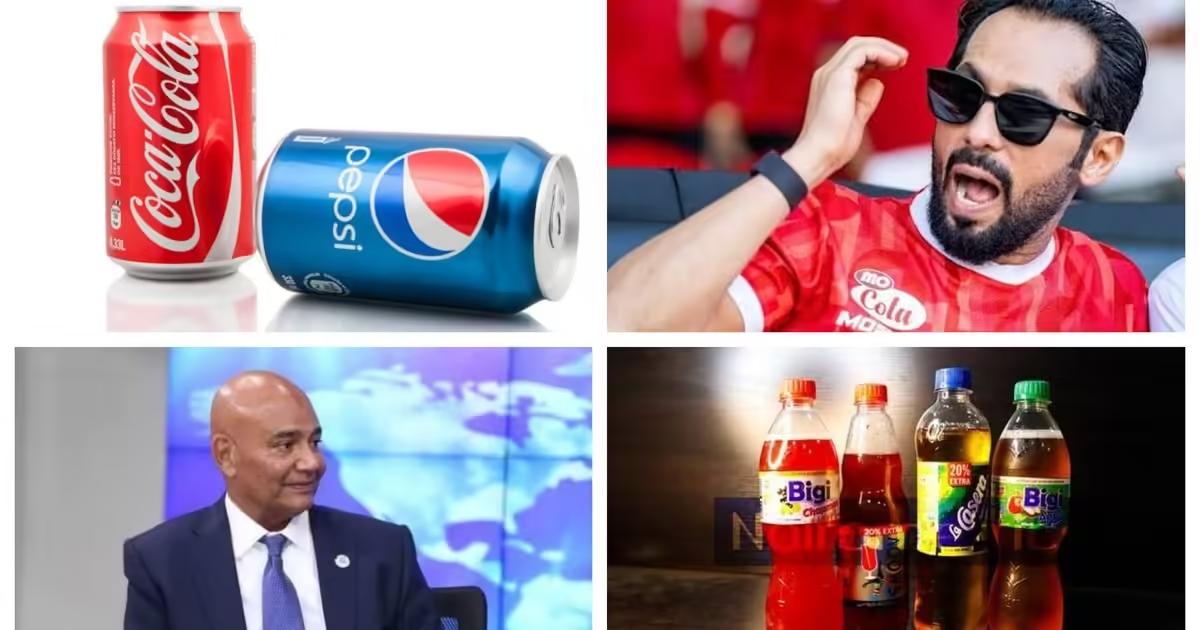

Coca-Cola has gained major American customers from Pepsi but faces a growing challenge in Africa, where Tanzanian billionaire Mohammed Dewji, business tycoon Said Salim Bakhresa and Nigeria’s Rite Foods are investing in factories, expanding distribution and offering cheaper drinks to capture market share.
PepsiCo suffered its latest setback in October 2026 when Kentucky Fried Chicken (KFC) announced plans to replace Pepsi products with Coca-Cola drinks at 3,600 restaurants across the United States, ending a partnership that had lasted four decades.
American businesses switch sides
KFC’s decision adds to Coca-Cola’s recent commercial victories, including wholesale retailer Costco’s return to its products in food courts and a similar supplier change at the Indianapolis Motor Speedway.
Marriott International also dealt PepsiCo a setback in 2026, ending a 34-year relationship and selecting Coca-Cola as its global beverage supplier across more than 9,700 properties worldwide.
However, PepsiCo has secured important gains of its own, taking over Subway’s US beverage contract from Coca-Cola and extending its longstanding agreement with Taco Bell through 2036, keeping the contest for major corporate customers competitive.
African manufacturers invest millions to challenge US beverage giants
In Africa, a different battle is unfolding as local manufacturers invest millions in factories, expand distribution networks and introduce cheaper drinks to challenge Coca-Cola and Pepsi’s dominance.
Tanzanian billionaire Mohammed Dewji has been vocal about his ambitions, declaring in a 2023 interview with CNN that he intended to compete directly with the American beverage giants.
“In the colas, I am positioned to compete with giants such as Pepsi and Coca Cola,” Dewji said, adding, “I am setting up factories everywhere where Pepsi and Coca Cola are.”
His ambitions have since extended to Kenya, where his MeTL Group announced plans in May 2026 to invest $50 million in a soft drinks factory in Mombasa, aiming to produce cheaper alternatives to the American beverage giants’ products.
Meanwhile, fellow Tanzanian business tycoon Said Salim Bakhresa announced a $500 million expansion of his group’s Azam beverage factory in Mwandege in 2025, with plans to double daily production from 150,000 to 300,000 cartons.
The company already distributes beverages across East and Central Africa, with the planned expansion bringing the two Tanzanian manufacturers’ combined announced investments to $550 million.
In Nigeria, Rite Foods, owned by the Adegunwa family, has invested more than ₦30 billion ($22.3 million) in production capacity at its Ososa facility in Ogun State, helping triple output and expand its Bigi soft drinks range, which competes directly with Coca-Cola and Pepsi.
Another Nigerian manufacturer, Mamuda Beverages, has expanded production and distribution of its Pop Cola brand, with Euromonitor International identifying it as the country’s most dynamic carbonated drinks company in 2025.
Egypt’s V7, founded by entrepreneur Mohamed Nour and other partners, is also expanding its manufacturing operations, opening a new factory in May 2026 and reporting total investments of EGP1.5 billion ($26.8 million), with plans to increase spending to EGP4 billion ($71.4 million) by 2030.
Similarly, Mali-founded Gaselia Group has pursued a €35 million investment programme covering a beverage factory in Guinea and additional production lines in Mali and Côte d’Ivoire, strengthening its manufacturing presence across West Africa.
In Uganda, Hariss International has expanded its Riham beverage operations, with company executives reporting nearly $100 million invested in manufacturing and distribution facilities in 2023.
Although Coca-Cola and Pepsi remain dominant players, African beverage manufacturers are investing in factories, expanding production and strengthening distribution to challenge their market share, potentially threatening their dominance in the coming years, as local brands have done in parts of Asia and Europe.
Source: africa.businessinsider.com