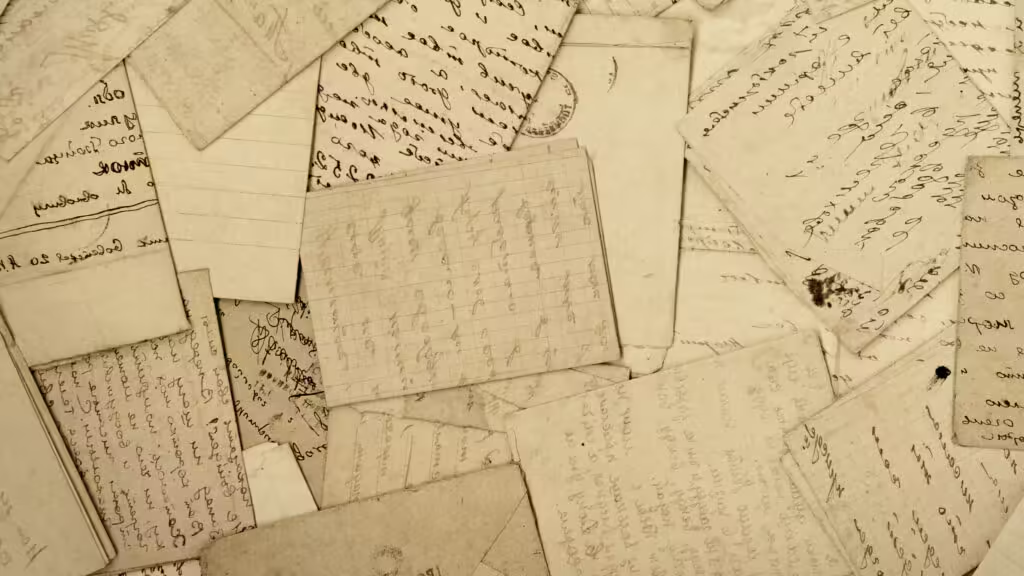

On Sept. 23, I sat in a small glass reading room at Yale’s medical library, turning the rag-paper pages of the Medical Dissenter, a London journal from the 1830s. At the bottom of one page, under the headline, “Report from Mrs. Butt to Mr. Hudson,” I met Jane Butt. Her letter was dated Sept. 23, 1834. I was reading it 192 years later to the day.
Jane lived in the village of Broughton and explained that measles had spread through the children around her earlier that year. She described how one of her own children had caught it. She then reported 36 other cases in her community. Some, she noted, developed severe inflammation of the lungs, one of the complications that can make measles deadly. She believed a cold east wind aggravated their symptoms. Nevertheless, she reported, all of them recovered.
Jane attributed the recoveries to Morison’s pills. James Morison was a merchant with no medical training who believed that a purgative could expel “impure blood” from the body and restore its natural balance. She administered the pills to the sick — sometimes twice a day — and gave as many as six at once to a toddler not yet 2 years old. She also gave the pills to women and, later, to their newborns, she wrote.
Morison’s followers called themselves Hygeists and attacked physicians as a monopoly that bled and poisoned its patients, which was not inaccurate in the 1830s. Much of medicine before the advent of germ theory and bacteriology provided incorrect diagnoses and problematic treatments.
When Jane wrote her letter, women could not train as physicians and were being displaced as midwives by the growing professional authority of doctors. She lacked medical credentials or the authority that came with them, but the Hygeist movement gave her a platform and a space to speak. She said that because “so much [was] said and done to prejudice the public mind against Mr. Morison’s most invaluable medicine,” she was left with no choice.
The journal that printed Jane’s letter sold the cure she praised. The office of the Medical Dissenter on the Strand was one of Morison’s official London depots for the pills in 1837. The same periodical mocked Edward Jenner, who had effectively used cowpox as a vaccination for smallpox, and ridiculed “vaccinic mania.”
After reading Jane’s story, I pulled out my iPhone and took photos of it, which I turned into a PDF. As a historian of medicine, I have seen cases of measles often in historical sources from the Civil War to life among the poor in tenement houses, but when I read those cases measles had long been the province of the past.
As I read Jane’s letter measles was back and raging in my home state of Pennsylvania, where six measles-associated deaths have been reported and federal health officials have disputed how many of them to count. In 2026, the United States has already recorded more than 4,500 measles cases, the largest number since 1991. Last school year, a record 4.2% of kindergartners were exempted from at least one required vaccine, and coverage for the measles vaccine fell to 92.4%, below the level needed to keep outbreaks from spreading. In some communities, the percentages of children who are vaccinated are far lower.
The current explosion of measles in the present had changed how I see the past. I didn’t preserve Jane’s story to indict her or to provide an antecedent to the unfounded arguments against vaccination, which have directly harmed innocent children. I documented her story instead because I had just finished a book on the ways ordinary people changed health care in the United States, and yet their stories have often been neglected, marginalized, or perceived to interfere with the real work of physicians. I wrote the book to show that medical knowledge is not an unalloyed concept created by professionals, but that ordinary people have continually provided evidence, offered interpretations, or even, in the case of Jane, simply counted the number of people who were sick in their communities.
Today, health populism takes shape in the Make America Healthy Again movement, which is rooted in part in grievances over how medical authority has dismissed patients, especially women. According to Politico, MAHA is “made up largely of women who followed Robert F. Kennedy Jr. into the MAGA fold.” Many of these women are moms. MAHA has, in turn, capitalized on the chauvinism of medical authority that began nearly 200 years ago that dismissed women as caregivers and often neglected their insights, their concerns, and their fears about epidemics.
The very act of counting, which might seem obvious or like a natural response to an epidemic, was part of a broader movement that eventually provided a framework for public health. Long before epidemiology developed as a discipline, patients and practitioners observed contagion — that disease seemed to spread from person to person, through households and across villages and nations. Before there was an official public health authority to count, people counted. Counting was also a move toward empiricism. It offered a bird’s-eye view of an epidemic and could provide local physicians or municipal authorities with some sense of the extent of an outbreak.
Counting mattered more than it might seem. Jane lived between two ways of explaining illness. In 1832, when a cholera pandemic reached New York City, clergy called for a national day of fasting and prayer. President Andrew Jackson refused to proclaim one, citing the separation of church and state, so states and churches held their own. Meanwhile, the city published daily counts of the sick and the dead. As the historian Charles Rosenberg showed in “The Cholera Years,” Americans read the epidemic as a judgment on sin even as they tracked it case by case. Jane blamed the wind and thanked God for her family’s recoveries, and she counted, reflecting the beginning of the shift from supernatural explanations to an empirical rationale. Documenting which children grew sickest and following an illness from house to house was a method aimed at articulating an explainable pattern. That method was not dissimilar to what physicians, ship surgeons, and military officials did in the first half of the 19th century when an epidemic erupted.
Jane’s method of dosing pills suffered from one problem: She did not observe what happened if a child did not receive the pills. Most children who caught measles in 1834 survived it, with or without pills. Thirty-seven recoveries indicated to her that the pills worked. They could not tell her what the pills did, or whether children like that toddler recovered despite them. Around the same time, the Paris physician Pierre Louis was also counting patients, and his numbers challenged bloodletting, one of medicine’s most trusted treatments, as a treatment for pneumonia. Louis asked what happened to comparable patients treated differently.
The vaccine does what Jane believed her pills did, and it was tested in ways her pills never were. Parents who refuse it are making Jane’s mistake in reverse. She credited a cure that did nothing. They discount a protection that works, because measles has become a stranger.
Jane wrote her letter two years after the Provincial Medical and Surgical Association, a precursor to the British Medical Association, was founded in 1832 and more than a decade before the American Medical Association was founded in 1847 — a period in which men on both sides of the Atlantic were defining themselves as the institutional medical authority.
Ordinary people have been actively involved in the conversation since the beginning, but the medical populism of MAHA is making it appear as a new, novel, and even groundbreaking rebellion. Jane’s document reveals that ordinary people’s ideas have often been part of medicine, but medical authority has grown in ways that make them appear as dissenting.
Jane could not be heard in traditional medical circles. Sexism landed her in a fringe periodical, and her endorsement of the quackery of purgatives gave her a headline.
If men had not systematically excluded women from medicine and had recognized that ordinary people’s ideas, insights, and concerns are part of it, Jane might not have reached for purgative pills, and women today might not be reaching for pyrotechnic platforms to be heard.
I have been trained not to write in the conditional tense but instead to explain what happened and how it all went down. I wasn’t looking for her. I found her by accident, but I am drawn to ordinary people’s stories. That’s why I found Jane’s letter so appealing. Before I contextualized it and realized it was part of a radical publication, I was amazed to see the name of a woman in a headline in boldface in a rare book.
Although Jane does not appear in my book, she embodies its thesis — even though her method was wrong. In fact, much of medical practice was wrong or ineffective before the late 19th century, and plenty remained so afterward. There were many ordinary people, like Jane, who witnessed outbreaks and illness in their communities and reported what they saw.
When I closed the volume containing Jane’s letter and walked out of the secure room, through the Victorian reading room, through the rotunda, and past the portraits of physicians whose names circle its walls, Jane’s name was not there, nor were those of any other women from 200 years ago.
It does not have to continue to be that way. Ordinary people’s voices matter and they often begin not in the throes of a national polemic or screamed through a speaker at a MAHA rally but begin, like Jane, with an observation of a child’s health.
Jim Downs is the author of “Medicine by the People: How Ordinary People Changed American Healthcare” (W. W. Norton, October 2026). He is the Gilder Lehrman–NEH professor of history at Gettysburg College and a visiting faculty fellow at Brown University’s Center for the Study of Race and Ethnicity in America. He is a 2025–26 Guggenheim fellow.
Source: www.statnews.com